
The muscle car is usually told as a story about horsepower. The more interesting version is a story about business. In roughly eight years, the American auto industry rewrote how it marketed cars, who it sold them to, and how it made money on a single model line. The engines get the attention. The balance-sheet consequences were the part that actually changed Detroit, and they outlasted the cars themselves.
History & Heritage
6 min read
How the Muscle Car Reshaped the American Auto Industry
The muscle car wars changed how Detroit marketed, priced and profited from performance. Here is how the era rewrote the American auto business.
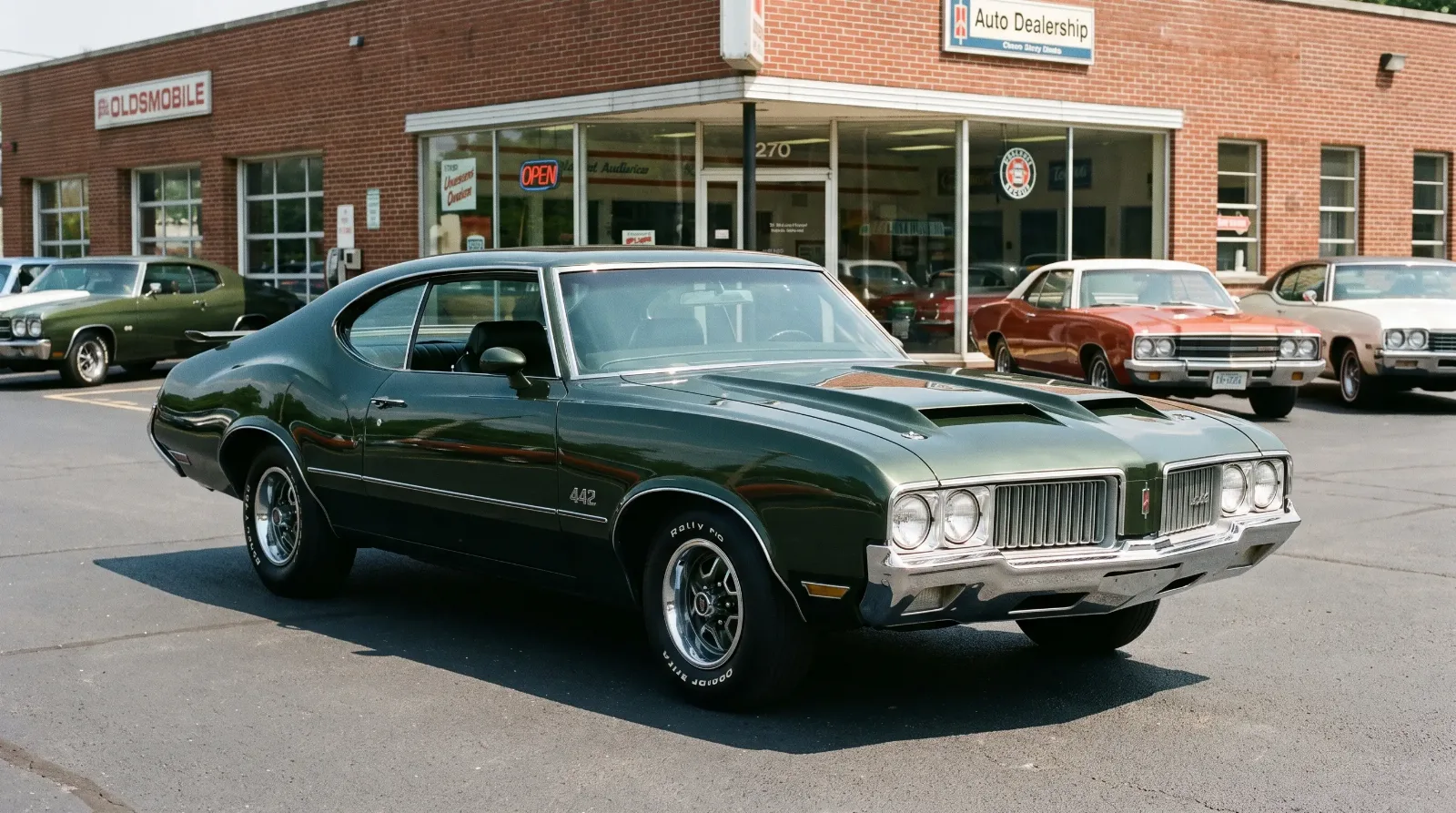
Look at what the industry did before 1964 and what it did by 1970 and you are looking at two different businesses. The muscle era forced a change in strategy that the manufacturers never fully reversed, even after the cars were gone. For the full context on how the machines evolved alongside the money, Muscle Car History covers the mechanical side that ran in parallel.
Selling to a buyer Detroit had ignored
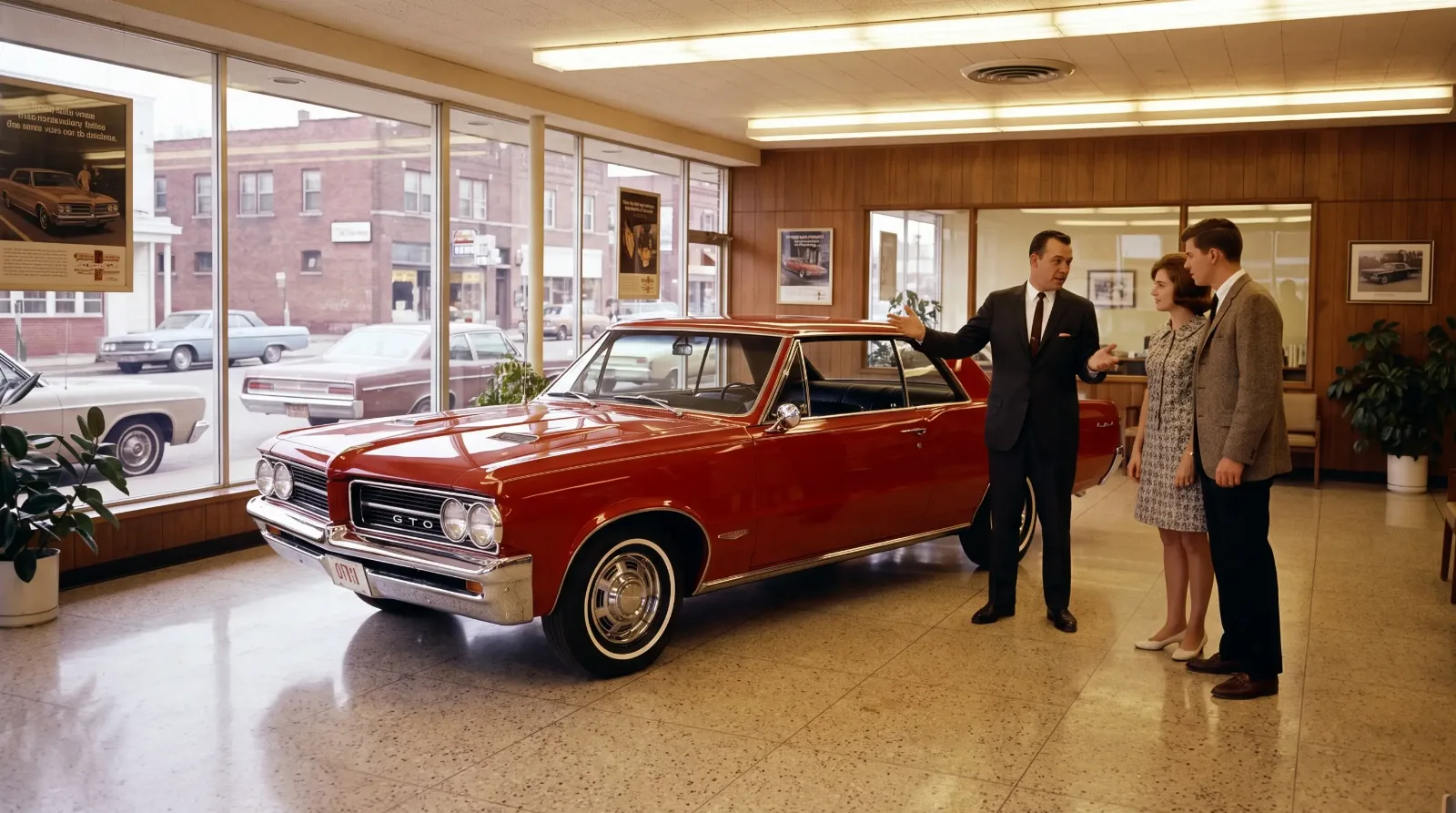
The demographic math drove everything. By the mid-1960s a huge share of the American population was under 25, the leading edge of the postwar baby boom reaching driving age with money to spend. Detroit had spent decades selling to fathers. Now there was a young, performance-hungry market that had never been served directly, and the first company to speak its language would take the sales.
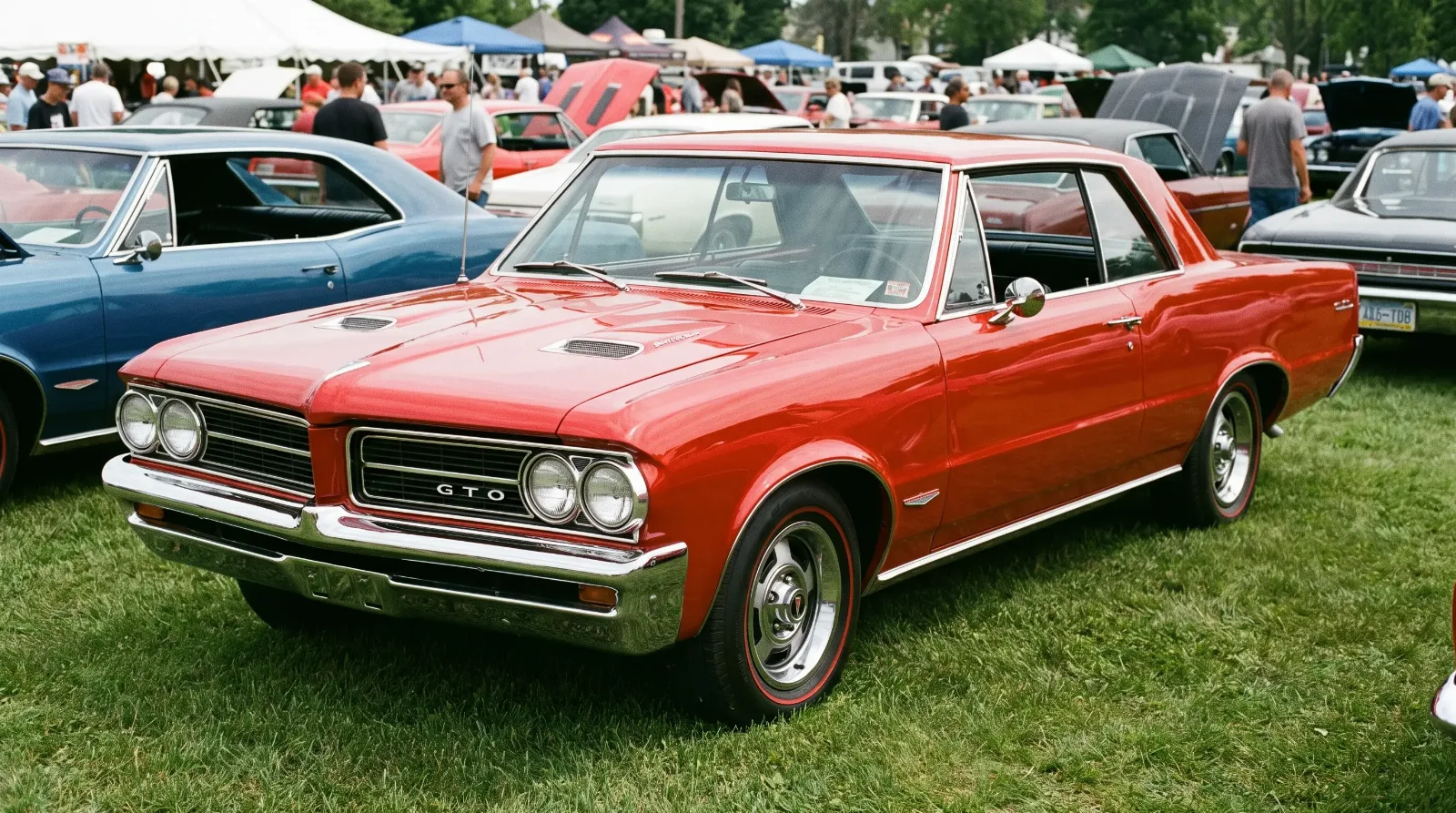
Pontiac spoke it first with the GTO and watched a car planned for modest volume sell in the tens of thousands. That result was the signal. Every division realigned its product planning around the young buyer, because the numbers said that is where the growth was. The muscle car was, before anything else, a demographic bet that paid off.
The bet reshaped product planning in a way that outlived the cars. Before the muscle era, a division's lineup was organized around price and size, from economy to luxury. After it, every major brand carved out a performance identity as a distinct pillar, because the young buyer had proven willing to pay for it. That change in how a lineup gets structured, with a performance flagship anchoring the emotional top end, became standard practice and remains so. The muscle car taught the industry that image and speed were their own product category.
The options business changed the math
The genius of the muscle car was not the engine. It was the way it was sold. Most of these cars were option packages layered onto an existing body, which meant the manufacturer added high-margin performance content to a car it already tooled and built. A big engine, a heavy-duty axle, a special trim, all sold as extras at strong profit.
"The engine sells the car, but the option sheet is where the money lives. Detroit figured out in the sixties that you could charge a premium for performance on a body you had already paid to build. That lesson never left the business."
David Mercer
The regular production option code became the mechanism. Buyers checked boxes, and each box carried margin. This was a far more profitable way to sell speed than engineering a bespoke performance car from scratch. The model still runs the industry today, and it started with muscle-era option sheets.
Marketing muscle as image
The era also changed advertising. Pontiac under John DeLorean pushed the GTO with a swagger the industry had not used before, and the car crossed into pop culture. There was a hit song about the GTO in 1964, shoes and merchandise, and a youthful image that sold far more than the cars themselves. The halo car lifted the whole brand.
That halo effect is a measurable thing. A division with a credible performance flagship sold more of its ordinary sedans and wagons, because the image rubbed off. Manufacturers learned that a relatively low-volume performance car could move the perception of an entire lineup. The muscle car was a marketing instrument as much as a product, and how American muscle happened is inseparable from how it was advertised.
Rivalry became a deliberate strategy
Internal competition was engineered, not accidental. General Motors ran five divisions selling near-identical A-body cars, each with its own engine family, marketing, and identity, all fighting for the same buyer. That structure forced constant escalation. Every division had to top the last one, and the customer got more car each year as a result.
| Business shift | Before the era | By 1970 |
|---|---|---|
| Target buyer | Family / mainstream | Young performance buyer |
| Profit mechanism | Base model sales | High-margin option packages |
| Marketing tool | Comfort and value | Halo performance image |
| Distribution wrinkle | Factory catalog only | Dealer specials and COPO orders |
The rivalry extended to the racetrack, where NASCAR and drag-strip wins fed straight back into showroom marketing. Win on Sunday, sell on Monday was not a slogan. It was a documented sales strategy that shaped which cars got built, including the low-volume aero homologation specials that exist only because the rulebook required a street version.
That racing pressure is why some of the most valuable cars of the era exist at all. A manufacturer needed to sell a minimum number of street cars to make a part legal for competition, so it built exactly that minimum and no more. The result was a set of cars produced in the hundreds rather than the thousands, engineered for a purpose that had nothing to do with the buyer who drove one to work. Those production numbers, set by a rulebook decades ago, now drive the auction values, and a documented example can outsell a common big-block many times over.
What the era left behind
The muscle car business collapsed under insurance surcharges, emissions law, and rising fuel prices by the mid-1970s. But the strategies survived. The option-package profit model, the halo-car marketing, the youth focus, and the factory performance division all became permanent features of the industry. When manufacturers relaunched performance cars decades later, they used the exact template the muscle era wrote.
There is a collector-market coda too. The cars that were profit centers when new became appreciating assets, and documented, high-option examples now sell for figures the original planners would not have believed. The debate over which car truly started all of this still runs hot, and you can read the full story on the contenders for the first-muscle-car title. Whatever the answer, the industry it reshaped never went back to how it worked before.
Related Reading
Have a
Classic Car
for Sale?
Reach thousands of serious classic car collectors across the US.
Sell It Here →
Are You a Classic Car Dealer?
List your full inventory and connect with targeted classic car buyers.
Join as a Dealer →

About the author
David Mercer
Classic car market analyst with two decades of experience tracking collector car valuations, auction results, and investment trends.
More in History & Heritage
Comments
Be the first to comment on this article.