
Twenty-seven years of production means a lot of engine changes, and most C10 buyers only know the one that's currently sitting between the fenders on the truck they're looking at. That's a problem, because plenty of these trucks have been re-powered at least once, and if you don't know what actually came from the factory in a given year, you can't tell an honest original from a truck wearing a later engine with no paperwork to back it up. Here's what Chevrolet actually put under the hood, generation by generation, and what the numbers tell you.
History & Heritage
6 min read
Original Factory Engine Options, 1960–1987
What Chevrolet actually put under the hood of the C10 from 1960 through 1987, from the base inline sixes through the small blocks, big blocks, and late diesel option.
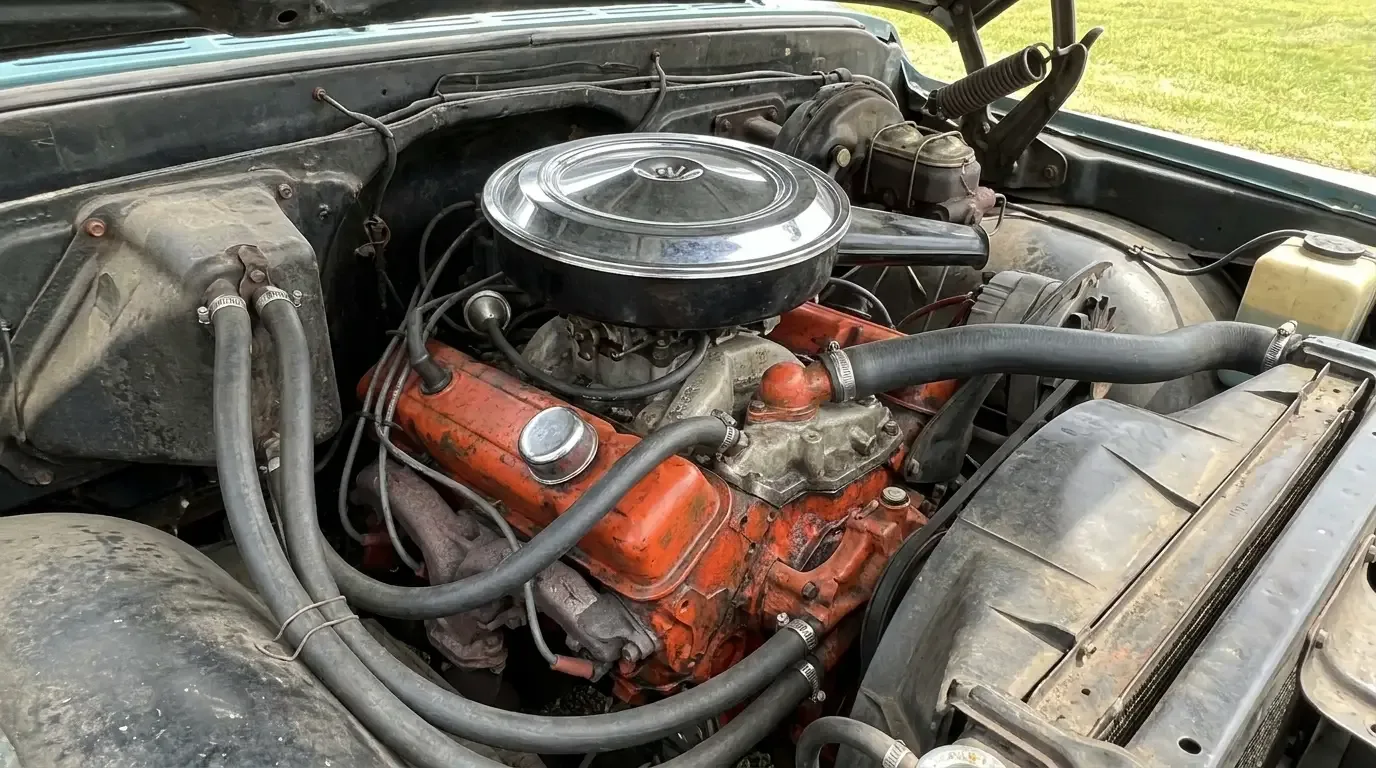
First-gen, 1960-1966: sixes standard, small blocks optional
The base engine on early C10s was an inline six, starting with the 235 cubic inch Thriftmaster (135 hp) for 1960-1962, replaced by a 230 cubic inch six (140 hp) for 1963-1965 and then a 250 (155 hp) for 1966, with a heavier-duty 292 six offered as an option from 1963 on. These were not exciting engines. They were durable, simple, and cheap to fix, which is exactly what a work truck buyer wanted. The small block V8 arrived as an option early in the run as a 283, rated around 160 hp when it launched in 1960 and retuned to roughly 175 hp by 1963, with a 327 added for 1965 (first on 3/4-ton and 1-ton trucks, then across the whole pickup line for 1966) rated around 220 hp. Those are the widely documented factory ratings, but always check the exact number for a given year and configuration against a factory build sheet rather than assume it, since carburetion and compression varied within a model year.
Second-gen, 1967-1972: the 350 becomes the story
This is the run where the small block 350 shows up and becomes the engine most people picture when they think "C10 V8." The 307 and 327 stuck around early in the generation before the 350 took over as the volume small block by the early 1970s. Sixes remained standard equipment, with the 250 cubic inch six as the workhorse base engine for most of this era. A 396 big block became available in 1968 for buyers who needed to tow or haul more than the small block comfortably handled, and it grew to 402 cubic inches for 1971-1972 (still marketed as a "400" on the fender badge), though exact availability by year and body style is still worth confirming against factory literature before you assume one belongs in a specific truck. The C10's full history covers how these drivetrain changes lined up with the body and trim updates happening at the same time, if you want the complete picture instead of just the engine bay.
Third-gen square body, 1973-1987: the widest spread of options
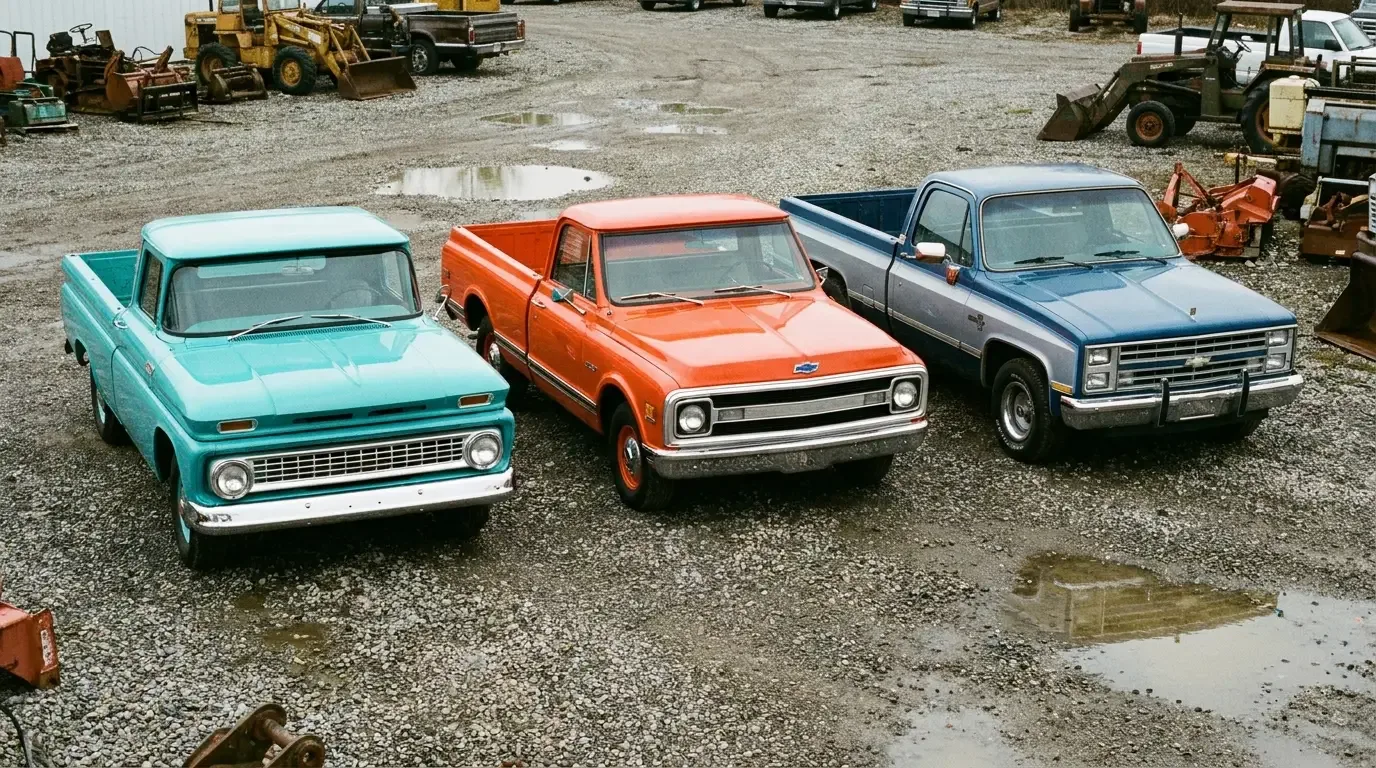
The square body run had the longest production life and the widest engine spread of any C10 generation. The 250 six stuck around as the base engine into the early 1980s before Chevrolet eventually dropped six-cylinder power from the half-ton lineup entirely. On the V8 side, buyers could get a 305 as the entry-level small block, a 350 for more capability, and a 400 small block for a middle ground between the 350 and the big blocks. Big block options included the 454, and the 366 on heavier 3/4-ton and 1-ton configurations, mostly aimed at buyers hauling real weight or running the heavier-duty camper package built around these engines for people who wanted a truck that could carry a slide-in camper without straining. Toward the very end of the square body run, a diesel option also became available for buyers prioritizing fuel economy and towing torque over outright horsepower, though diesel take rates on half-tons were low and surviving examples are correspondingly rare.
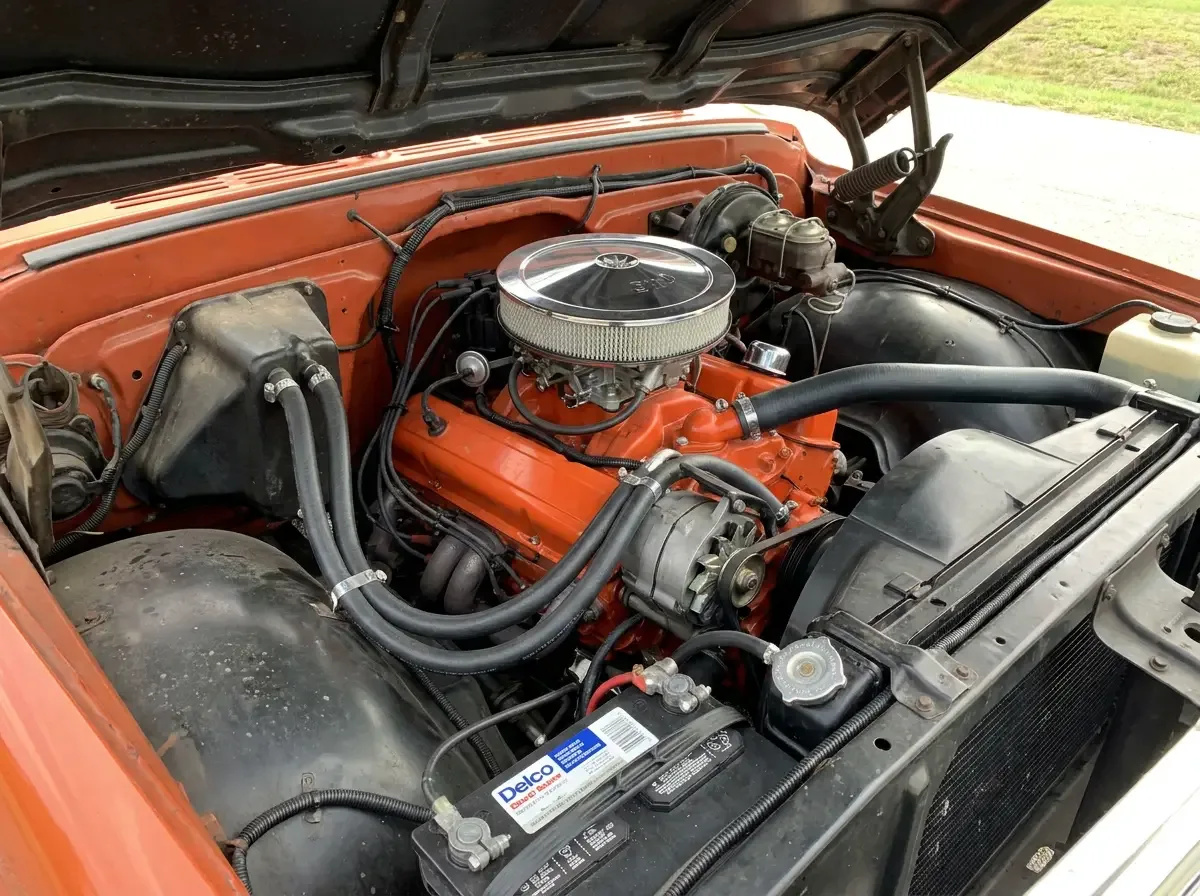
| Engine family | Approx. years available | Typical use |
|---|---|---|
| 235-292 inline six | 1960-1984 | Base work-truck power across most of production |
| 283-307 small block V8 | 1960-1976 | Entry-level V8 upgrade over the six |
| 327-350 small block V8 | 1965-1987 | Volume V8 choice, most common survivor engine |
| 400 small block V8 | Approx. 1975-1980, mostly 4WD trucks | Middle ground between 350 and big block |
| 396-454 big block V8 | 1968-1986 | Heavy hauling, towing, camper duty |
| Oldsmobile diesel V8 | 1978-1981 | Fuel economy and towing torque, low take rate |
What the swap history means for buyers
Here's the number that actually matters when you're standing in front of a truck. Original engine, numbers matching, and documented drivetrain adds real value on top of whatever that particular engine is worth on its own. A 350 that's been swapped into a truck that came from the factory with a six isn't a bad truck. It might even run better than stock. But it's not the same truck on paper, and it shouldn't be priced like it is. Check the VIN-to-engine code match before you pay a premium for "original" anything, and don't trust a seller's word over the actual stamped codes. That's not being difficult. That's just reading the data instead of the story.
Engine swaps on these trucks have been common for decades, mostly because parts interchangeability across Chevrolet's small block family made a 350 swap into an old six-cylinder truck a straightforward weekend job for anybody with basic tools. That's good news if you're buying a driver and don't care about matching numbers, since a well-done small block swap is a known quantity with cheap parts support. It's bad news if a seller is passing off that same truck as original just because the engine bay looks period-correct at a glance. Ask which one you're actually buying before you agree on a number.
"The seller swore up and down it was numbers matching. The engine code said otherwise. I've stopped taking anybody's word for it. The stamp doesn't lie, and neither does the dyno."
Dan Reeves
The bottom line on factory power
A six for work, a small block for most buyers, and a big block or diesel for the ones hauling real weight. That's the shape of C10 engine options across almost thirty years of production. The details shift year to year and body style to body style, so confirm the specifics against the truck in front of you rather than a general rule, but the broad pattern holds across the whole run.
Sources and notes
- Chevrolet C/K first generation (1960-1966) engine specs, Wikipedia
- 1967-1972 Chevrolet C/K Base: 2nd-Gen Specs & Guide, MotoGallery
- Chevrolet C/K third generation (1973-1987 square body) engine options, Wikipedia
- Squarebody C10 Complete Guide (1973-1987), FullSizeChevy.com
- Oldsmobile Diesel engine, on the 1978-1981 pickup application, Wikipedia
- The Squarebody Wasn't Supposed to Last 15 Years, Fesler USA
Related Reading
Have a
Chevrolet C10
for Sale?
Reach thousands of serious classic car collectors across the US.
Sell It Here →
Are You a Classic Car Dealer?
List your full inventory and connect with targeted classic car buyers.
Join as a Dealer →

About the author
Dan Reeves
Performance engine builder from North Carolina's motorsports corridor, focused on swaps, forced induction and making real, repeatable power.
Related Listings - Chevrolet C10
More in History & Heritage
Comments
Be the first to comment on this article.