
Slide-in campers took off with families in the late 1960s, and half-ton trucks took the beating for it. A camper full of water, propane, and gear sits almost entirely over the rear axle, and a stock C10 wasn't built to carry that kind of static load mile after mile. Chevrolet noticed the warranty claims before most buyers noticed the problem, and the Custom Camper Package was the fix.
History & Heritage
6 min read
The C10 Custom Camper Package and Heavy-Duty Chassis
The Custom Camper Package quietly beefed up springs, cooling, and brakes on the C10 platform so half-ton trucks could actually carry a slide-in camper without falling apart.
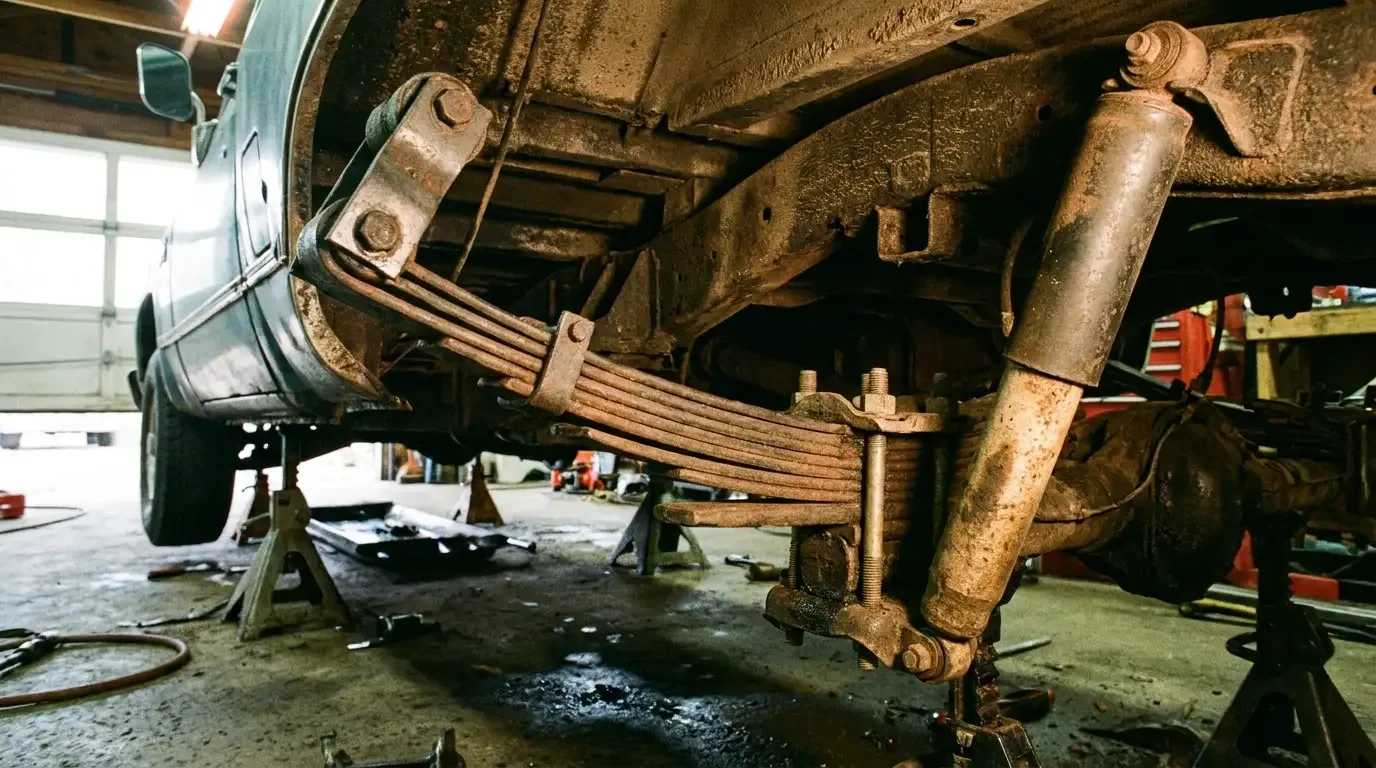
I've looked underneath enough of these trucks to know the difference between a truck that came from the factory ready for a camper and one that's just been sagging under one for forty years. The two don't look the same once you're on your back with a light.
Why the camper craze forced Chevrolet's hand
Through the mid-1960s a half-ton pickup was still, on paper, a work truck with a bed. Then the recreational camper business exploded, companies started building slide-in units that could weigh close to a thousand pounds or more once loaded with water, propane, and gear, and owners started bolting them into beds that were never engineered for that kind of concentrated weight sitting still over the rear axle instead of moving around like cargo would. Shocks failed early. Rear springs went flat. Brakes faded on grades because nobody upgraded them to match. If you want the full year-by-year picture of how the trucks themselves evolved around problems like this, the C10 generations guide lays it out in order.
Chevrolet's answer wasn't a new truck. It was an options package that took the existing C10 and C20 platform and beefed up the parts that actually mattered for a camper load, without pretending the truck was something it wasn't.
What the Custom Camper Package actually added
The package -- cataloged as RPO Z81 (with a Deluxe version under Z83) on the square-body trucks it's most associated with, though the code and exact contents shifted across generations -- bundled a specific list of hardware rather than a single heavier spring. Front coils went up in rate. Rear leaf springs picked up additional leaves or a higher rating. Shock absorbers were revised for the extra static load. A front stabilizer bar and a dedicated camper wiring harness were part of the standard bundle, and cooling capacity was addressed on trucks so equipped, because a loaded camper truck idling at a scenic overlook in July needs more margin than a truck running empty. Power brakes moved from optional to effectively mandatory on camper-package trucks, and a higher-output alternator came along to run the extra electrical draw a camper brings with it, lights, a furnace fan, sometimes a small refrigerator.
| Component | Standard C10 | Custom Camper Package |
|---|---|---|
| Front springs | Standard rate | Heavier rate (exact figure varies by year and generation) |
| Rear leaf springs | Base leaf count | Additional leaves or a higher-rated pack |
| Radiator | Standard core | Larger core reported on many trucks so equipped |
| Brakes | Manual drum, optional power | Power brakes standard |
| Alternator | Base amperage | Higher-output unit |
None of this shows up as a separate model name on the fender. It's an options code buried on the cowl tag, and that's exactly why so many of these trucks get misidentified today, sold as plain C10s when they left the factory built for a specific job.
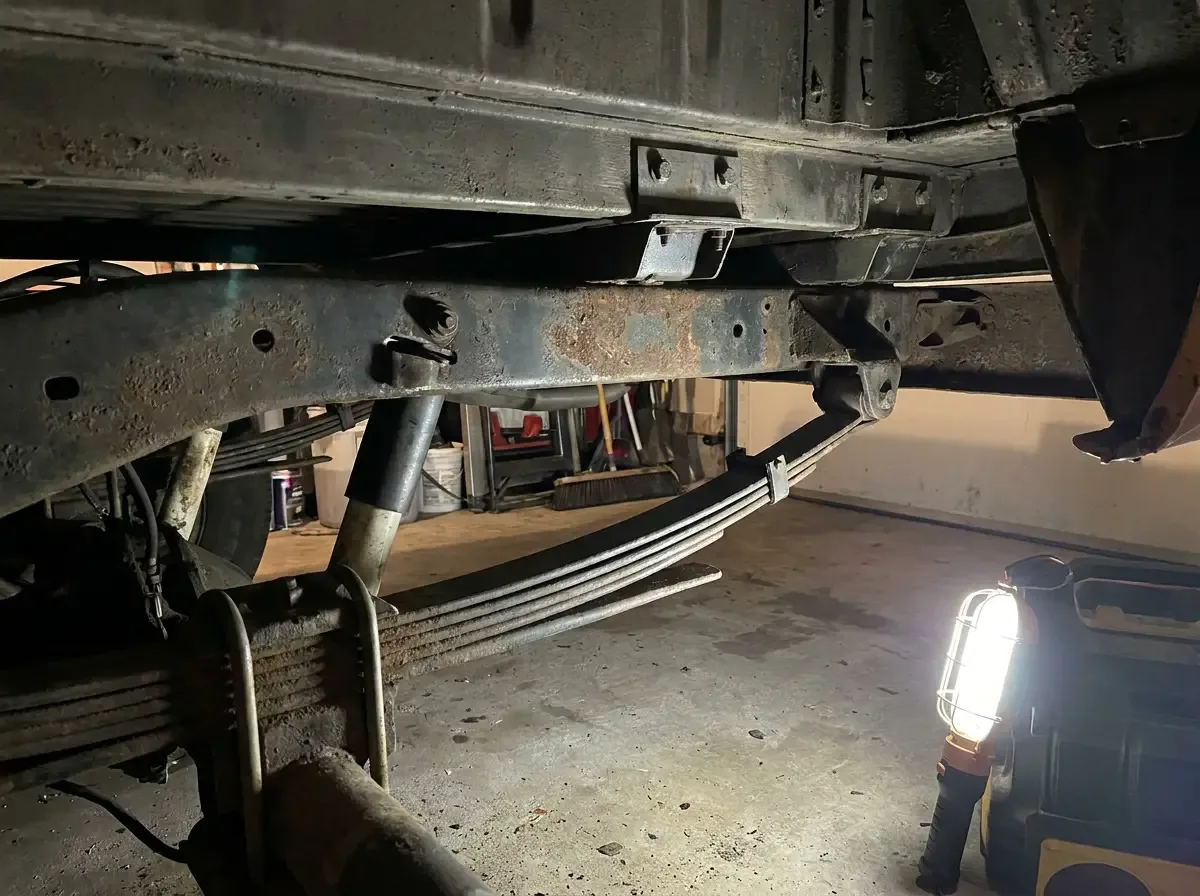
The heavy-duty pieces that matter most
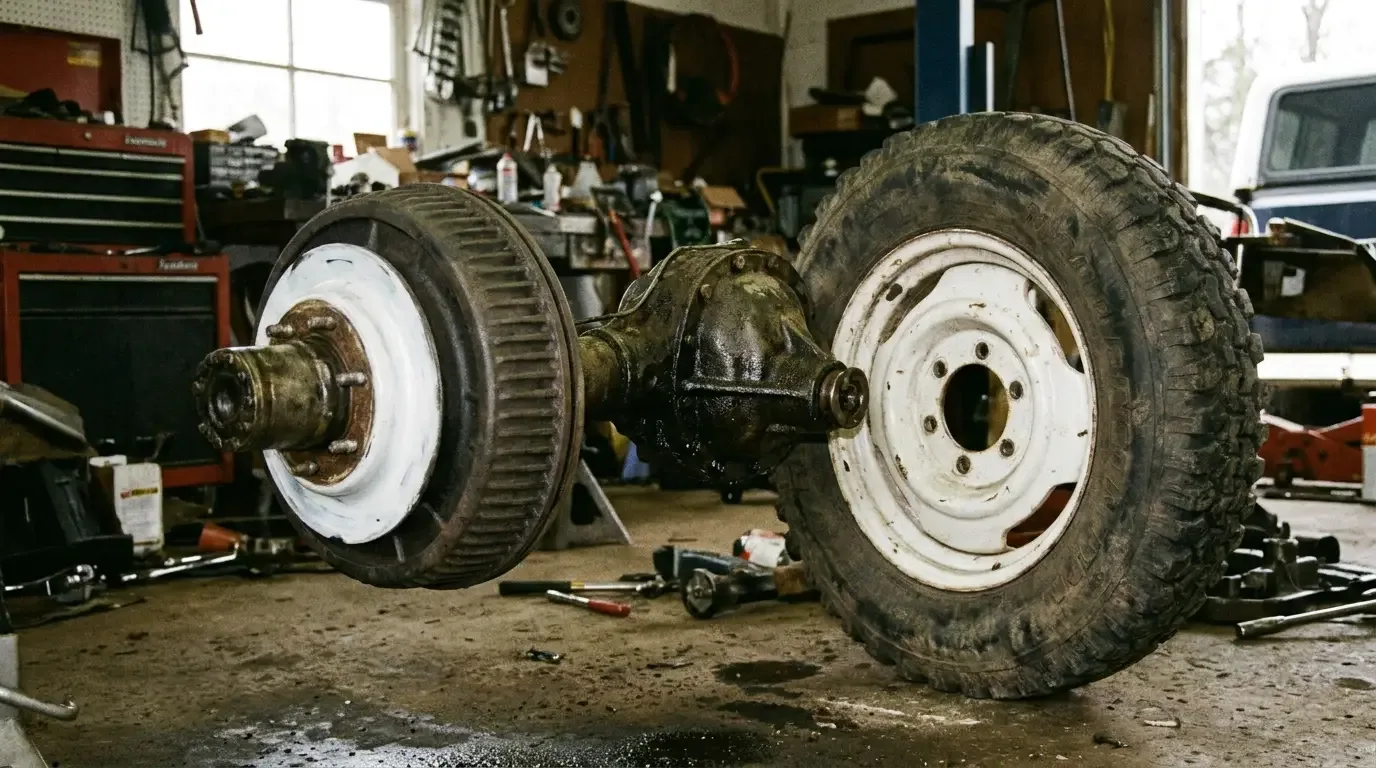
The suspension and cooling changes get the attention, but the part I'd tell a buyer to actually care about is the axle and brake combination underneath. A camper-package truck was speced closer to what a 3/4-ton buyer would order, without fully crossing over into the Big 10's own heavy-duty story, which solved a similar payload problem from the opposite direction, half-ton badge, heavier internals. Both approaches came from the same place: Chevrolet's engineers watching real trucks fail in the field and building a parts bin fix rather than a whole new truck.
Wheels and tires sometimes changed too, a wider six-lug wheel or a higher load-range tire showing up on order sheets, though this varied enough by year that I wouldn't call it a guaranteed marker on its own.
Spotting a real camper-package truck now
Start with the cowl tag, not the springs. Rust, sag, and forty years of replacement parts will lie to you about ride height. The option code doesn't lie, assuming the tag is still legible and hasn't been swapped with another truck's data plate, which happens more than buyers want to admit. After that, look for the bigger radiator core, a heavier front sway bar if the truck has one, and the mounting holes for camper tie-downs in the bed rails, factory holes look different from a home-drilled add-on kit.
Camper mirrors are the part everyone notices and the part least worth trusting. They bolt on and off in twenty minutes, get swapped between trucks constantly, and prove nothing about what the truck actually is underneath. I've seen plenty of base trucks wearing camper mirrors because somebody liked the look, and plenty of real camper-package trucks running stock mirrors because the extendable ones got bent and thrown away decades ago.
What it means for a buyer today
A documented camper-package truck isn't automatically worth more money at a swap meet, most buyers don't ask the question. But if you're planning to actually use the truck the way it was built, hauling a slide-in unit, pulling a trailer, working it hard, the heavier springs and cooling are worth real money in parts you don't have to source and install yourself. Buying that capability already built in beats fabricating it later.
"Everybody wants to talk about the mirrors because they're the part you can see. The part that actually kept these trucks from destroying themselves under a loaded camper was the springs and the cooling system, and that's the part nobody photographs for the online listing."
Robert Halloran
If you're cross-shopping trucks for real camper duty, price the springs, the radiator, and the brake upgrade separately before you decide the base truck is the better deal. Sometimes it is. Often it isn't once you add up what you'd have to buy to catch up to what the camper package already gave you from the factory.
Sources and notes
- Hagerty: GM's Camper Special is the square-body you've always needed
- Hagerty: The Camper Special was a long-bed's best friend
- Curbside Classic: 1969 Chevrolet C20 Custom Camper
- Pirate 4x4 forum: What's the deal with the Chevy Camper Special
- 67-72chevytrucks.com: Can someone summarize the "Custom Camper" option
- Truck Camper HQ: Reviving the Legends, the 1972 Chevy Camper Special
Related Reading
Have a
Chevrolet C10
for Sale?
Reach thousands of serious classic car collectors across the US.
Sell It Here →
Are You a Classic Car Dealer?
List your full inventory and connect with targeted classic car buyers.
Join as a Dealer →

About the author
Robert Halloran
Texas-based classic truck enthusiast with decades of experience buying, restoring, and writing about American pickups from the 1940s through the 1980s.
Related Listings - Chevrolet C10
More in History & Heritage
Comments
Be the first to comment on this article.