
Nobody at Chevrolet called it the Square Body. That name came from owners and swap meets, and it stuck because it describes the truck better than any brochure copy from 1973 ever did. After six years of the rounder Action Line design, Chevrolet went back to a clean sheet and drew a truck with squared-off fenders, a bigger cab, and a lot more glass. It ran from 1973 to 1987, fifteen model years under one basic body, and that's a long enough run that a truck from the first year and a truck from the last year barely look related once you know what changed in between. If you want the six-year run that came right before this one, the C10 generation guide lines it up next to Square Body so the differences are obvious.
History & Heritage
7 min read
Square Body C10 (1973–1987): A Year-by-Year Breakdown
A year-by-year look at the 1973-1987 Square Body C10, from early emissions changes to the mid-run facelift and the fuel injection that arrived near the end.
1973 to 1976, the first square bodies
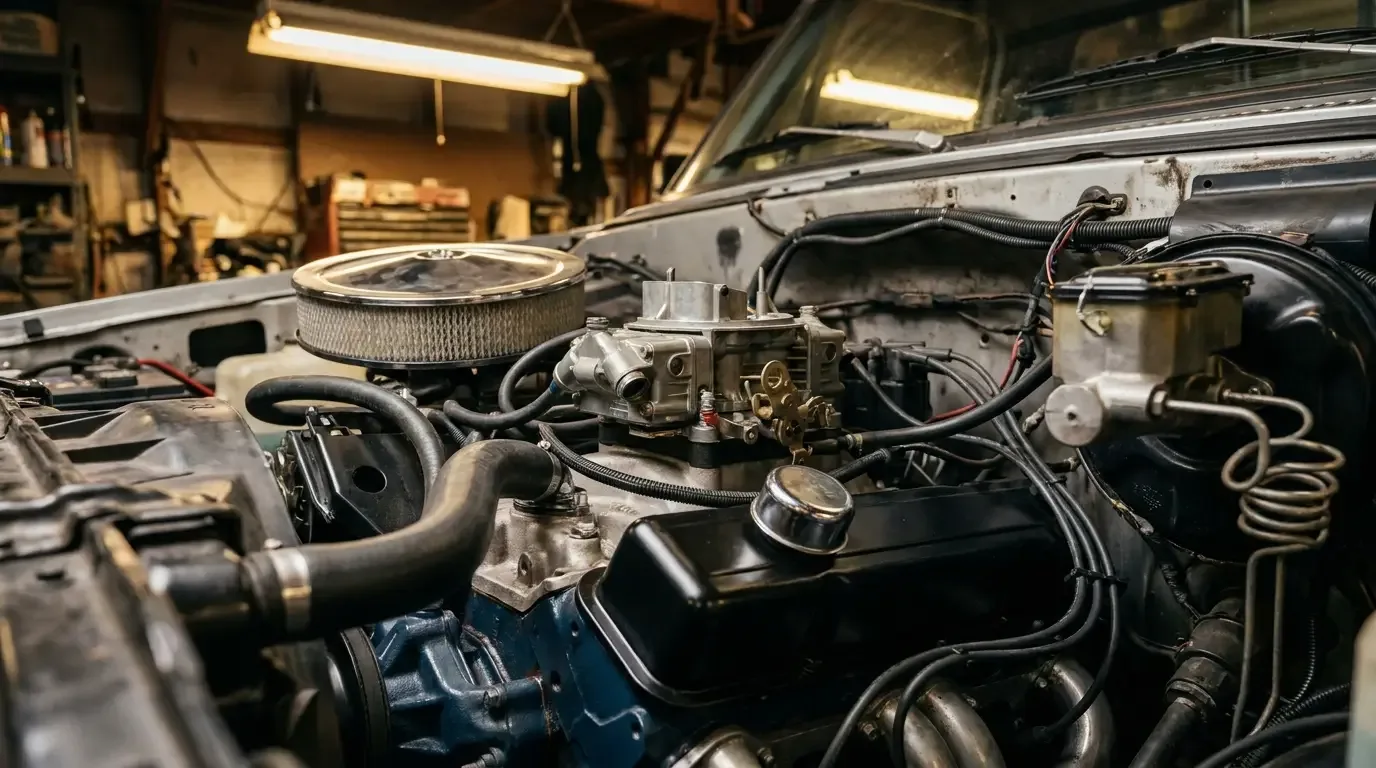
The 1973 truck was a genuine departure. Bigger cab, better visibility, a frame that finally matched what buyers wanted out of a daily driver instead of just a work truck. The grille got revised almost every year through this stretch. 1973 and 1974 shared a recessed egg-crate insert (1973 used round turn-signal lenses, 1974 switched to rectangular), then 1975 and 1976 moved to a flush-mounted grille with a simpler three-bar pattern, small changes that matter to a purist and mean nothing to anyone else. The bigger story in these years is what was happening under the hood rather than on the face of the truck. Catalytic converters arrived nationwide on these trucks for the 1975 model year, which meant unleaded fuel became mandatory for the first time, and the compression ratios and timing on these engines got detuned to meet the new emissions rules. A 1973 350 with a two-barrel carburetor (rated around 145 to 155 horsepower) and a later four-barrel Quadrajet version pushing closer to 170 are not making the same numbers, and if somebody quotes you a horsepower figure without naming the year and carburetor, ask again.
1977 to 1980, running changes and the diesel option
This stretch is where Square Body trucks quietly became more complicated to own than people give them credit for. High Energy Ignition had already replaced points ignition across the GM lineup by 1975, a genuine improvement for anybody who's ever set points on the side of a road, and it carried through the rest of this run. Chevrolet also brought in a diesel engine option for 1978, aimed at buyers chasing fuel economy after the gas crunches of the decade. It's a fine engine to know about and a rough one to inherit unknowingly, since diesel-specific parts and know-how are a different animal from the small-block gas trucks most shops are set up to handle. Trim packages kept shuffling too, with Cheyenne and Silverado both getting pushed as the aspirational choice over a stripped Custom Deluxe cab.
That diesel option was the Oldsmobile-built 350-cubic-inch (5.7-liter) diesel V8, rated around 120 to 125 horsepower and shared across several GM light truck and passenger car lines from 1978 through 1980 before the in-house 6.2-liter Detroit Diesel took over as the truck-only diesel option in 1982, and it inherited that engine's reputation for head bolt and gasket trouble under sustained heavy loads. A diesel Square Body can be a genuinely good tow rig once the engine's been properly sorted, but buying one sight unseen without knowing that history is how people end up with a truck that strands them on the first long grade it climbs. Ask for maintenance records before anything else if a diesel is on your shopping list.
1981 to 1987, the facelift and fuel injection years
Square Body got its one real facelift in 1981, swapping the dual round headlights for a squared-off face with quad rectangular or square headlamps depending on trim. It's the single fastest way to sort an early Square Body from a late one at a glance, the same way marker lights sort a 1967 from a 1968. Under the hood, the biggest change of the whole generation landed near the end of the run. The final model years brought throttle body fuel injection to the gas V8s, replacing the carburetor that every earlier Square Body had used. That's not a small update. Cold starts, drivability, and fuel economy all improved, and it's part of why the last couple years of this body style are often the ones mechanics point to first when a buyer wants a Square Body they can actually rely on day to day rather than fuss over.
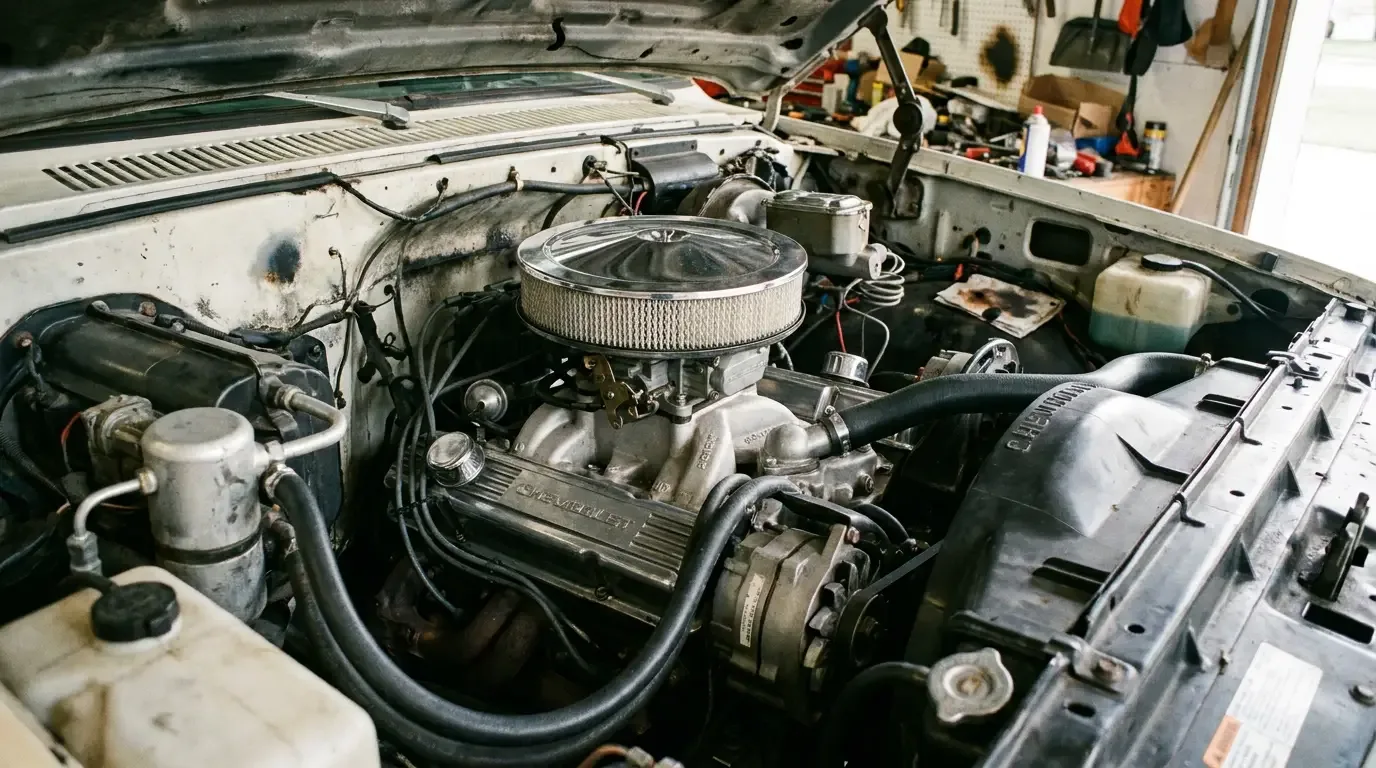
A mismatch under the hood is more common than you'd think
I had a 1979 long bed come through here a couple years back, caliche dust packed into every seam of the frame from years of ranch work, and the grille badge faded to where you couldn't read Custom Deluxe from six feet away. The paint told you nothing about the truck. What told you something was popping the hood and finding a 400 small block instead of the 350 the door tag called for, a swap some previous owner had done decades earlier and never bothered to document. The VIN itself carries an engine-code letter (its meaning shifts some by year and GVW class, so cross-check it against a decoder for that specific model year), and the door tag's engine RPO should match. That's the kind of mismatch that trips people up on this generation more than any grille or trim difference ever will, and it's exactly why the door tag matters as much as the year.
Why the C10 name ends in 1987
Chevrolet retired the C10 designation after the 1987 model year, folding light-duty trucks into a new C/K 1500 naming scheme as a fresh, rounder-bodied truck took over for the light-duty lineup in 1988. The Square Body didn't vanish overnight, though. The heavier-duty and specialty configurations, crew cabs and dually models among them, kept the Square Body platform going through the 1991 model year, several years after the half-ton C10 name was retired (the line was renamed R/V starting in 1987 to make room for the new C/K badge on the redesigned trucks). For a buyer today, that matters less than the name on the fender. What matters is which of these fifteen years you're looking at, because the truck changed more between 1973 and 1987 than a lot of people assume from the outside. Anyone shopping this generation should also spend time with the truck that came right before it. The one-year-only quirks of 1967 show just how much a single model year can carry its own personality, a lesson that applies just as well to sorting out a 1976 from an 1982.
"Fifteen years is a long time for one body style to stay on the lot, and these trucks used every bit of it. I've had a 73 and an 86 side by side in the same shop, same basic shape, and they might as well be different trucks once you pop the hood. Know your year before you buy your parts. That's the whole ballgame with a Square Body."
Robert Halloran
The Square Body's long production run is exactly why it's still everywhere today, parts are plentiful and the platform is well understood. But that same length is why buyers get burned assuming any two Square Bodies are interchangeable under the skin. Pin down the year first, then the trim, then the drivetrain, and the rest of the shopping process gets a lot more honest.
Sources and notes
- Chevrolet C/K third generation overview, Wikipedia
- Square Body Chevy identification guide, CJ Pony Parts
- Oldsmobile Diesel engine history, Wikipedia
- History of the classic Chevy Square Body truck, 1987-1991, Velocity Restorations
- 350 horsepower output by year discussion, GM Square Body forum
- 73-87 Chevy/GMC pickup emissions equipment by year
Related Reading
Have a
Chevrolet C10
for Sale?
Reach thousands of serious classic car collectors across the US.
Sell It Here →
Are You a Classic Car Dealer?
List your full inventory and connect with targeted classic car buyers.
Join as a Dealer →

About the author
Robert Halloran
Texas-based classic truck enthusiast with decades of experience buying, restoring, and writing about American pickups from the 1940s through the 1980s.
Related Listings - Chevrolet C10
More in History & Heritage
Comments
Be the first to comment on this article.