
First-year trucks always carry a few quirks that get ironed out by the second year, and the 1967 C10 is a textbook case. It launched the Action Line design that would run through 1972, but a handful of details on that opening year never made it past the 1967 build sheet. Some of that came from new federal safety rules landing a year later. Some of it was just Chevrolet fine-tuning a brand-new truck once real-world feedback started coming in. Either way, a 1967 has a short list of things that make it genuinely different from a 1968 built off the same basic design, and knowing that list matters if you're trying to verify a truck is what the seller says it is.
History & Heritage
6 min read
Why the 1967 C10 Had One-Year-Only Features
The 1967 C10 launched the Action Line design but carried a short list of features unique to that first year, from missing side marker lights to trim details ironed out by 1968.
Why a launch year behaves differently than the years after it
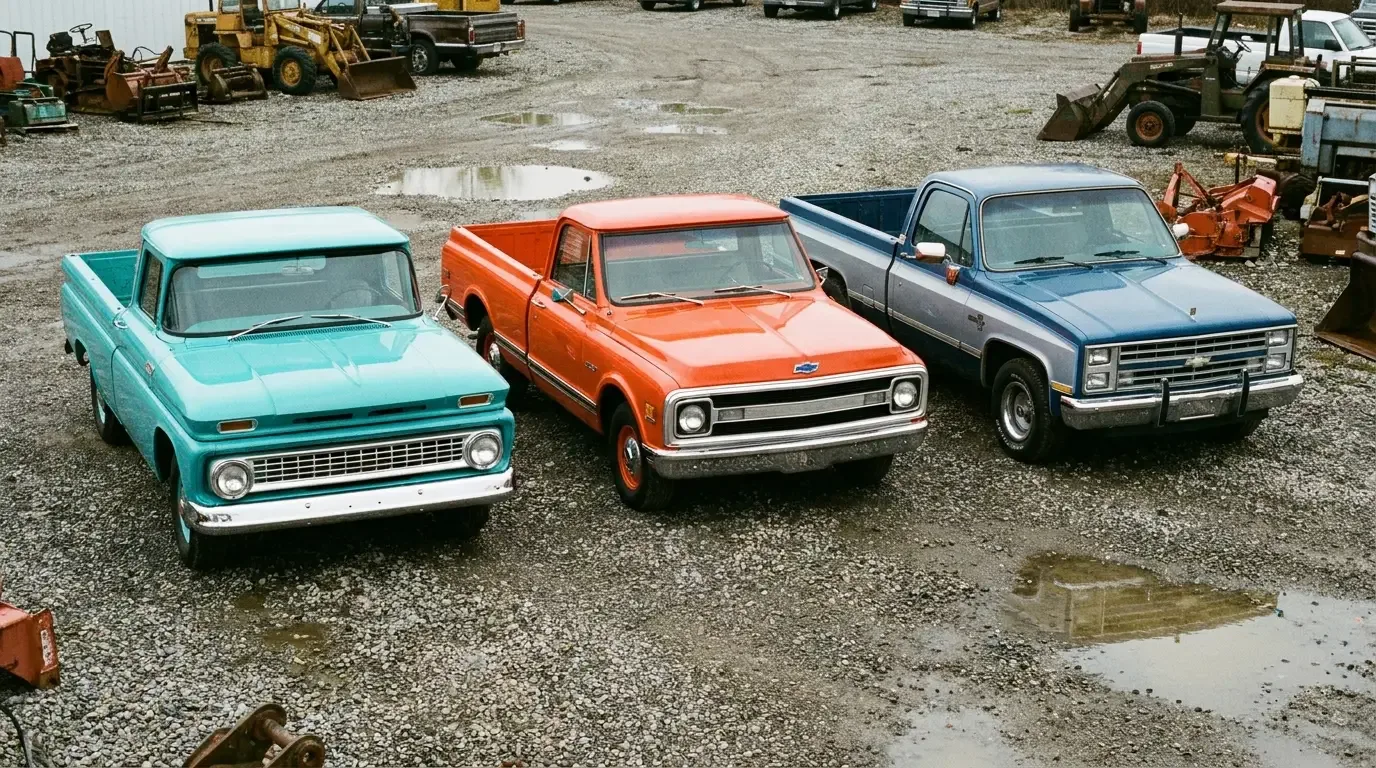
Any all-new vehicle gets adjusted after its first year on sale. Suppliers change, regulations catch up, and engineers fix the small stuff nobody caught before the first trucks hit dealer lots. The 1967 C10 is a clean example because the truck that replaced the old solid-axle design was different enough, coil-spring independent front suspension, a wider cab, curved glass, that Chevrolet had a lot of new ground to cover in one model year. If you want to see where 1967 sits against the five years that followed it under the same basic Action Line body, C10 generations breaks the whole run down side by side.
The safety feature that arrived a year late
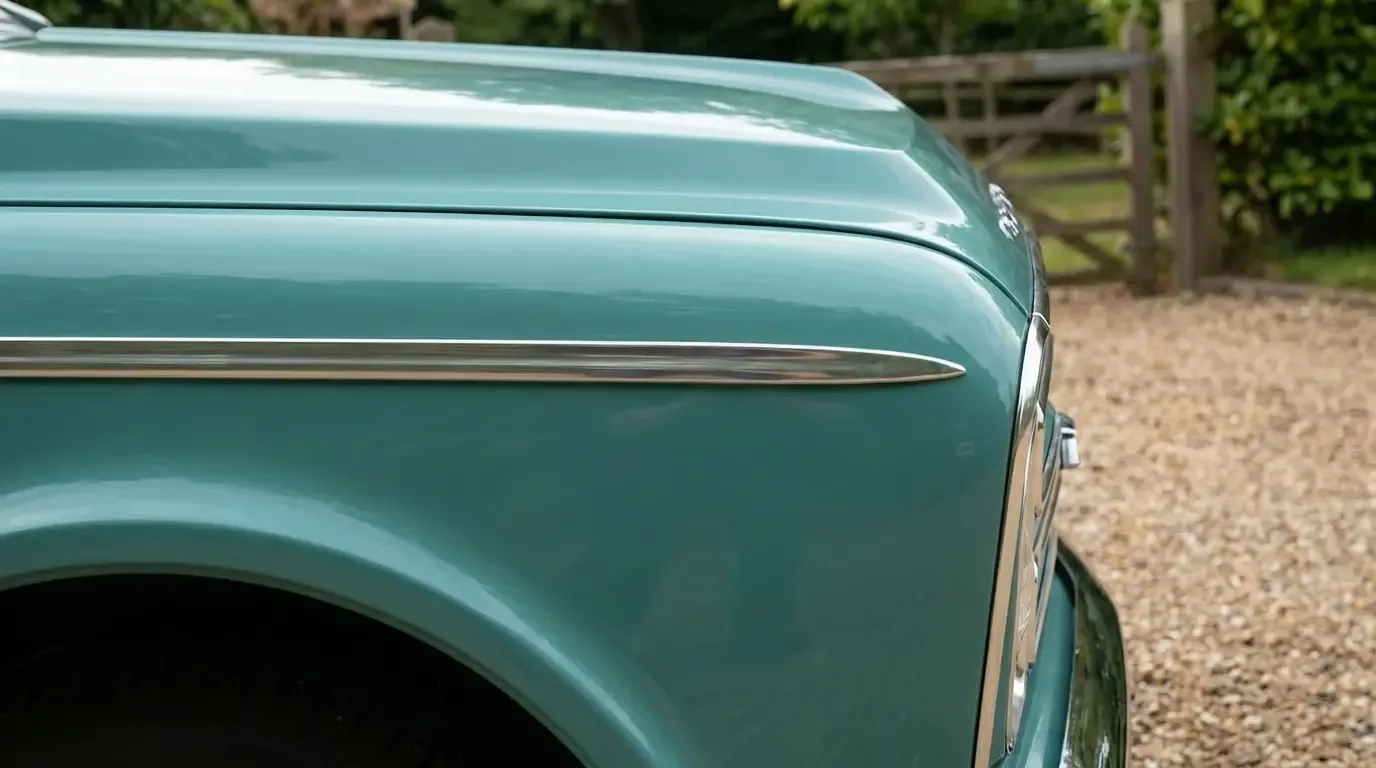
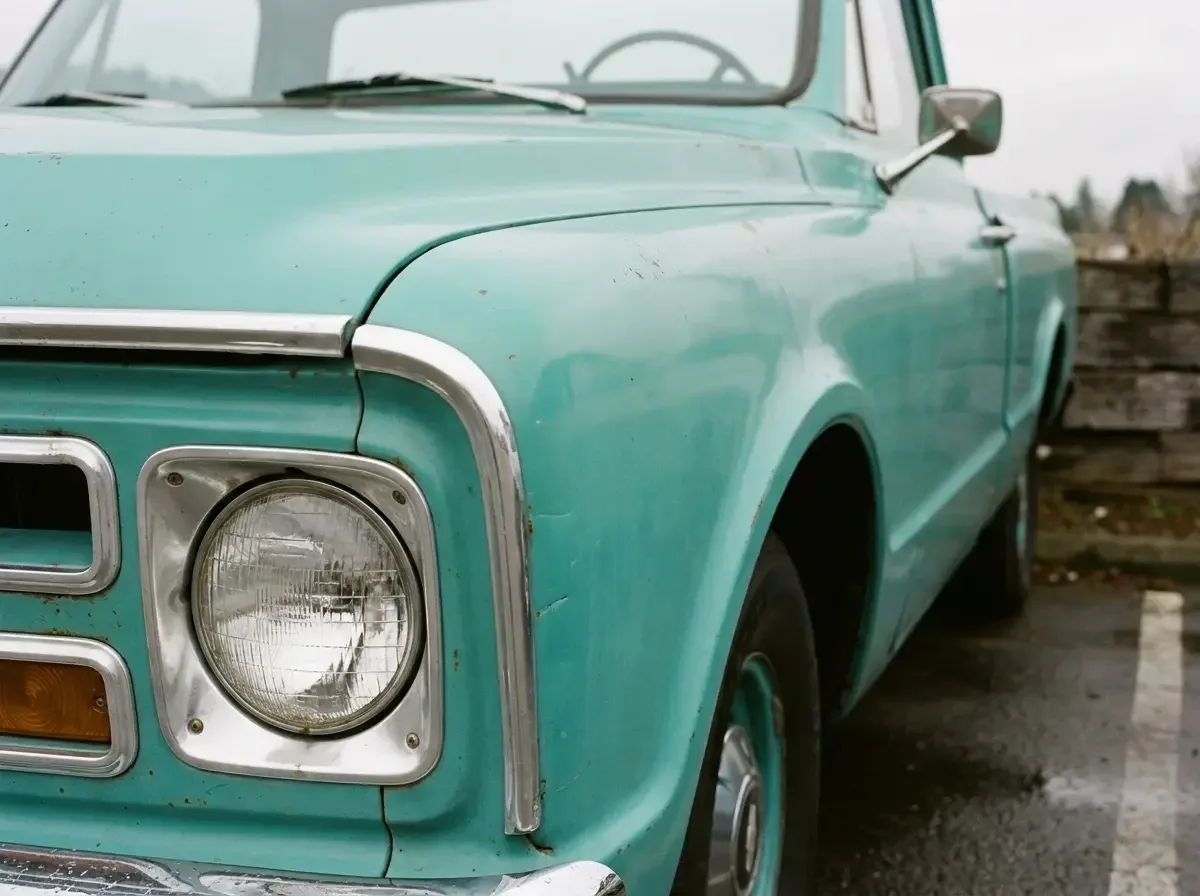
The most reliable one-year-only marker on a 1967 is what's missing, not what's there. Federal law required side marker lights, the small amber lenses on the front fenders and red ones out back, starting with the 1968 model year across the entire U.S. auto industry. A genuine 1967 has none of that. The fenders and quarter panels run smooth and unbroken front to back. It's a small detail, but it's close to foolproof, and it settles more disputes about a truck's real year than a title or a bill of sale ever will, since paperwork gets swapped and reprinted a lot more easily than sheet metal gets un-drilled.
Trim and brightwork unique to the first year
Beyond the marker lights, a few smaller trim details are commonly claimed as specific to 1967 versus 1968, though the sourcing on them is thinner than the marker-light rule. Some restorers describe minor differences in parking and turn signal lens shape or grille insert detailing between the two years, but parts suppliers largely sell 1967-68 lenses as a shared, interchangeable part number today, so treat any specific lens or grille distinction as unconfirmed rather than settled fact. Some restorers also point to differences in the hood trim and steering wheel design between the two years, though sourcing on the exact specifics varies enough that I'd want a parts manual in hand before betting money on any single piece being correct to one year versus the other. What isn't in question is that Chevrolet was still settling the design in that first year, and a handful of small parts changed hands between 1967 and 1968 that never got much attention outside people who work on these trucks regularly.
Engine options that shifted the following year
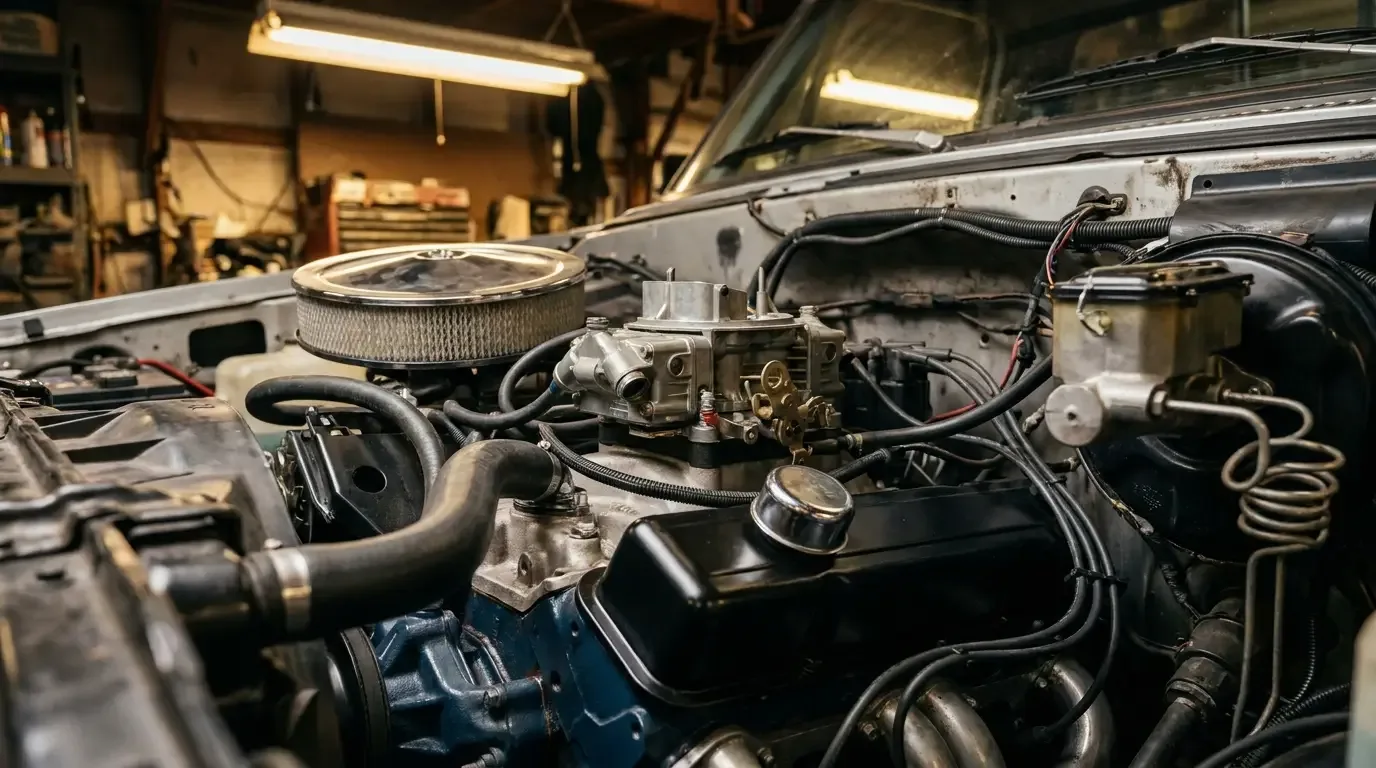
The 1967 lineup carried over its four-engine range unchanged for one final season, the 250 and 292 inline sixes alongside the 283 and 327 small-block V8s, before Chevrolet reshuffled the lineup for 1968, enlarging the 283 into a 307 and adding a 396-cubic-inch big-block as an option, the first time a big-block V8 had been offered in a light-duty GM truck. If a seller's paperwork lists a 307 or a 396 on a truck titled as a 1967, that's as reliable a tell as the fender marker lights, just harder to check without a build sheet or invoice in hand. It's not something I'd lead with standing in a driveway, but if the marker lights check out and something about the drivetrain paperwork still feels off, it's worth digging into before you finalize a price.
Federal safety rules didn't all land at once in 1968 either. The dual-circuit brake master cylinder, splitting the front and rear brake lines so a failure in one half didn't take out the whole system, became a federal requirement under FMVSS 105 effective January 1, 1968, meaning it applied starting with the 1968 model year across passenger vehicles and light trucks alike. That one doesn't show up as a visual tell the way the marker lights do, but it's part of the same story. The late 1960s were a stretch where federal safety mandates rolled out one regulation at a time, and each one left its own small fingerprint on a specific model year.
What this means for buyers and restorers today
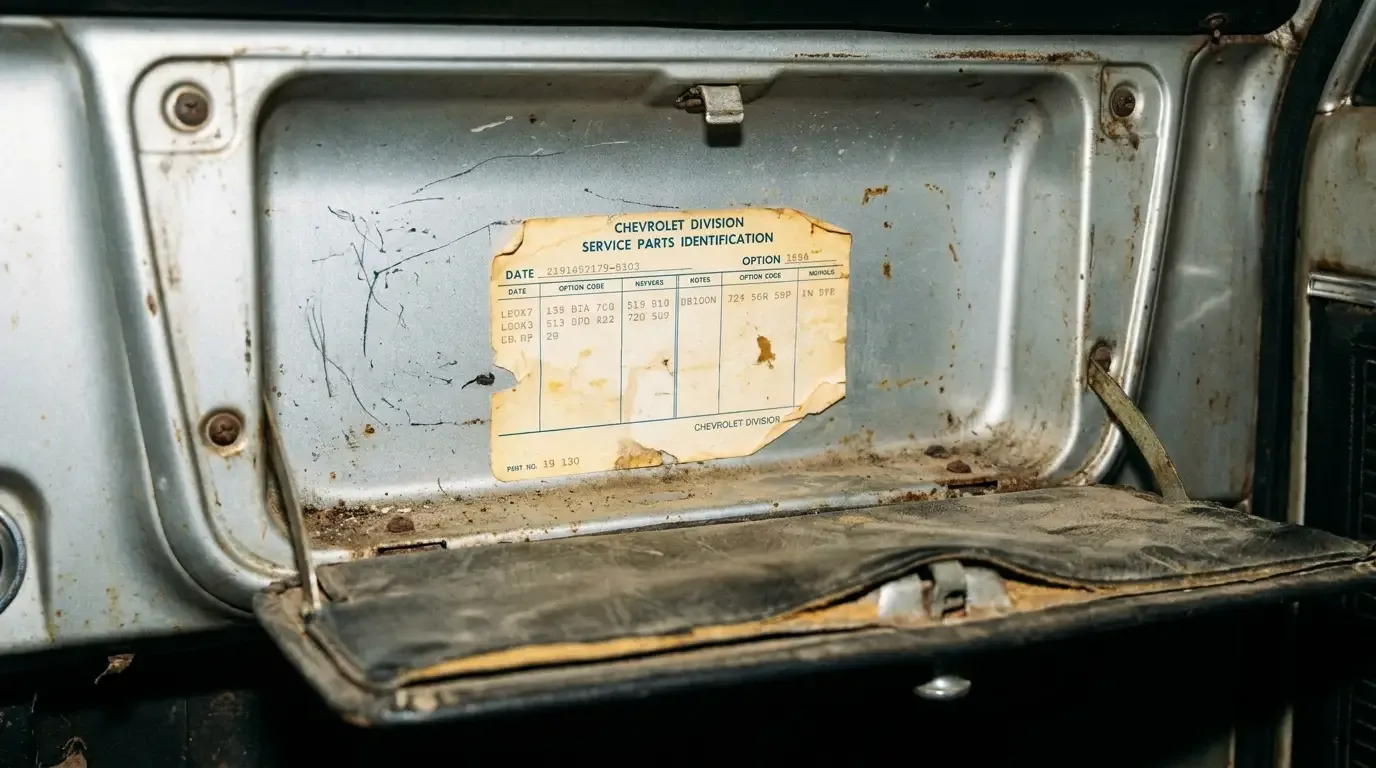
A genuine 1967 carries a bit of a premium among people who care about first-year trucks specifically, and that premium only holds up if the truck is actually correct to the year. Smooth fenders with no marker lights are the fast check anybody can do standing in a driveway. From there, matching the smaller trim pieces takes more homework, a data plate check, and ideally someone who's handled enough of these to know a reproduction part from an original one. The build plate and option codes on the truck can help confirm details a visual inspection alone can't catch, and decoding its factory option codes is worth doing before you finalize a purchase, not after. If you're actively shopping this specific year, there are usually a handful of 1967 C10s for sale at any given time, and knowing what to check before you call is worth more than any story the listing tells you.
"I've had guys try to sell me a 68 as a 67 because the paperwork was wrong and they either didn't know or didn't say anything. Look at the fenders first. No marker lights, no argument. Everything after that is homework, but that first check takes ten seconds and it's the one nobody can fake without redoing the whole panel."
Robert Halloran
None of this makes a 1967 a better truck than a 1968 to actually drive and work on. Mechanically they're close enough that most of what matters to a daily driver carries over. But if the goal is a correct first-year truck, or just an honest answer about what you're buying, these are the details that separate the real thing from a truck wearing the wrong badge.
Sources and notes
Related Reading
Have a
Chevrolet C10
for Sale?
Reach thousands of serious classic car collectors across the US.
Sell It Here →
Are You a Classic Car Dealer?
List your full inventory and connect with targeted classic car buyers.
Join as a Dealer →

About the author
Robert Halloran
Texas-based classic truck enthusiast with decades of experience buying, restoring, and writing about American pickups from the 1940s through the 1980s.
Related Listings - Chevrolet C10
More in History & Heritage
Comments
Be the first to comment on this article.