
1970 put two SS Chevelles on the same order form, and I still get asked which one somebody should buy at least a few times a year. It's not a simple answer, and anybody who tells you the 454 automatically wins the argument hasn't actually driven both back to back. Once the displacement cap that had held Chevrolet back through 1969 was lifted, the SS396 didn't disappear. It kept selling right alongside the new SS454, and for 1970 a buyer walking into a Chevrolet dealer genuinely had to pick a lane.
History & Heritage
6 min read
SS454 vs SS396: Chevelle's 1970 Identity Crisis
In 1970 the SS Chevelle badge could mean a 396/402 or the new 454. Here's how the LS5 and LS6 stack up against the carryover big-block, and how to verify one.
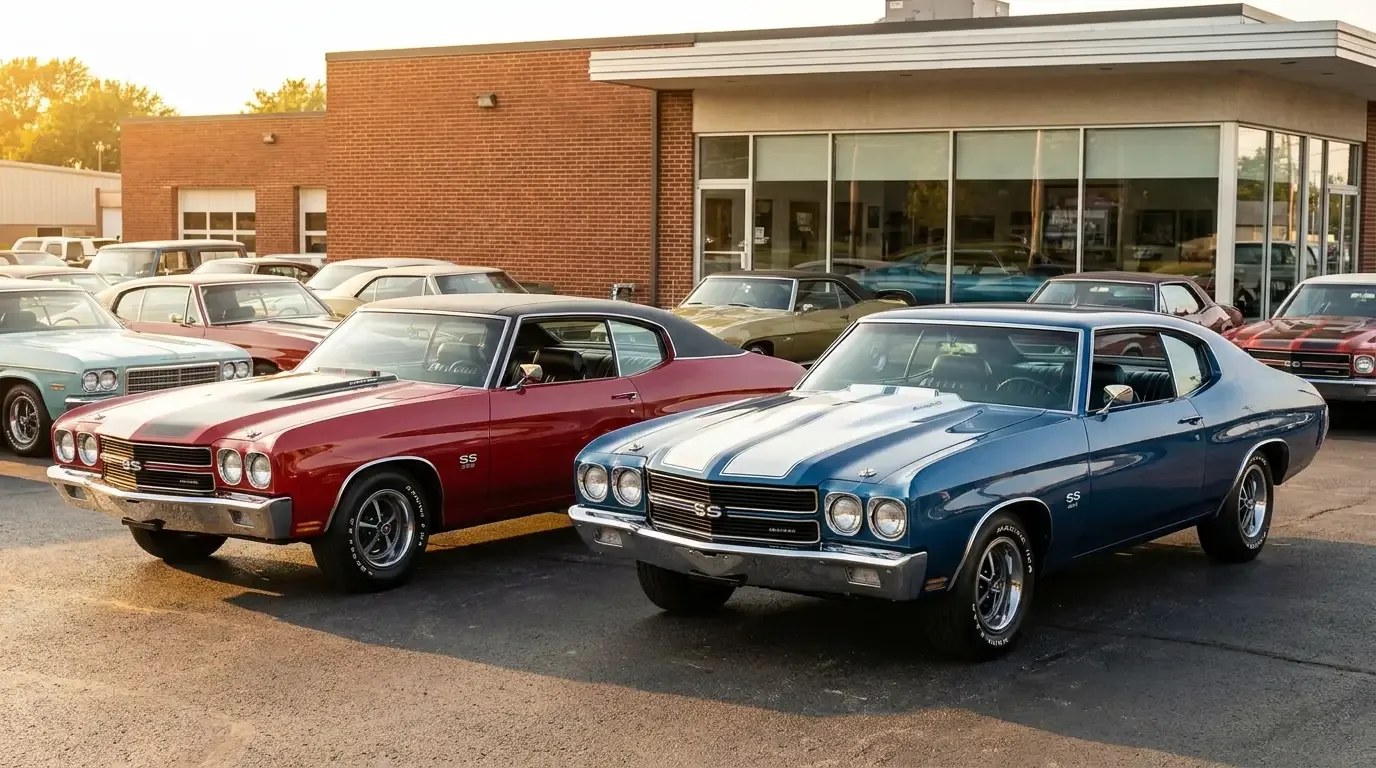
This is one small piece of the second-gen Chevelle story, but it's the year the badge on the fender actually meant something different depending on which box got checked on the order sheet.
Two engines, one badge, real confusion
The SS396 name had been carried on Chevelles since 1966, even though by this point the actual displacement was closer to 402 cubic inches. Chevrolet kept calling it the 396 for brand recognition even after the numbers didn't quite match, and in 1970 that engine was still available in the SS package alongside the brand-new 454. So a "SS Chevelle" badge in 1970 could mean either engine, and the only way to know which one you were looking at, or bidding on today, is the RPO codes on the cowl tag.
The 396/402 came in a couple states of tune: the base RPO L34 at 350 horsepower, and the solid-lifter RPO L78 at 375, carried over largely unchanged from the year before. The L78 is the rarer of the two for 1970, since Chevrolet cancelled the option in October 1969 shortly after the LS6 454 was announced, and only about 2,144 were built that model year. It was the known quantity, a proven engine with a track record.
Head to head: what actually separates them
The SS454 came in two forms. The LS5 was the milder big-block, rated at 360 horsepower gross, hydraulic cam, and built for a buyer who wanted the bigger displacement and the bragging rights without living with a solid-lifter engine's maintenance demands. The LS6 was the serious one, rated at 450 horsepower gross with 500 lb-ft of torque and 11.25:1 compression, forged internals, solid lifters, and a genuine track-capable engine that happened to come with a factory warranty. Chevrolet built 4,475 LS6 engines for 1970, all of them going into Chevelles.
| Dimension | SS396/402 | SS454 (LS5) | SS454 (LS6) |
|---|---|---|---|
| Rated hp | L34: 350. L78: 375 (rare, 2,144 built) | 360 | 450 (500 lb-ft, 4,475 built) |
| Valve train | Hydraulic | Hydraulic | Solid lifter |
| Character | Proven, known quantity | Bigger, milder-mannered big-block | Track-capable factory hot rod |
| Cost to buy today | Lower entry point | Mid-range | Highest, especially documented cars |
Weight is the practical difference that doesn't show up on a spec sheet. A 454-equipped car carries more nose weight than a 396/402 car, which changes how it turns in and how it feels on a back road versus a drag strip. If you're building a car to actually drive on a curvy road, don't assume the bigger number under the hood automatically makes for a better experience behind the wheel.
The identity crisis, and why it matters to buyers now
The reason this year gets called an identity crisis isn't that Chevrolet did anything wrong. It's that for one model year, "SS Chevelle" stopped meaning one specific car and started meaning a range of possible builds, from a mild automatic 396 wagon-adjacent driver to a manual LS6 that could embarrass cars that cost three times as much. That range is exactly why documentation matters so much on any 1970 SS you're considering.
I've seen plenty of "SS454" cars at shows that turned out to be SS396s with 454 badges added later, and I've seen genuine LS6 cars that got dismissed by buyers who didn't know what they were looking at because the seller undersold it. Learn to read a cowl tag before you shop this year, not after you've written a deposit check.
🔧 Inspection Priorities
- Cowl tag and engine casting number cross-check. This is the single most important thing you can do on any 1970 SS Chevelle. Don't trust exterior badging alone.
- Block casting date versus car build date. A correct-for-year engine should have a casting date that makes sense against the assembly date on the cowl tag.
- Suspension and front spring rate on 454 cars. Verify the springs and sway bar match the heavier engine, since a mismatched setup changes handling and points to a swap.
- Transmission and rear gear correctness. LS6 cars were commonly paired with specific transmission and rear axle combinations. A mismatch is a flag worth investigating, not necessarily a dealbreaker, but worth knowing before you negotiate price.
Which one should you actually buy
If you're chasing value and appreciation, the documented LS6 is the obvious answer, but it's also the hardest car to buy correctly and the easiest one to get burned on if you skip the paperwork. If you want a genuinely quick car you can actually afford to insure and drive on weekends, the LS5 gives you most of the big-block experience without the LS6 premium or the solid-lifter maintenance schedule.
The 396/402 cars are the ones I'd point a first-time buyer toward if this is their first Chevelle and they're not chasing investment value. They're proven, parts are everywhere, and a good one drives every bit as satisfying as people expect a muscle car to feel, without the six-figure conversation hanging over every decision you make about the car.
If you're actively shopping this year, go shop SS454 and SS396 Chevelles and don't let a badge alone tell you which engine is actually sitting in the bay.
"People come in wanting the 454 because it's the number everybody's heard of. I ask them what they're actually going to do with the car. Plenty of guys are happier with a 396 they can drive every weekend than a 454 they're afraid to put miles on. Both are good Chevelles. They're just not the same car."
Mike Sullivan
The story of this displacement rule change goes deeper than just the Chevelle badge fight. Read on to next: 1970 for the full corporate history behind why this year happened at all.
Sources and notes
- 1970 Chevelle's "SS" options (Malibu series): ChevelleStuff.net
- Chevelle Engine Options for 1970: Chevy Hardcore
- The Ultimate Muscle Car: The 1970 LS6 Chevelle: Heacock Classic
- 1970 Chevelle Super Sports: Auto Appraisal Group
- 1970 Chevrolet Mid-Size Cars Fact Sheet: Over-Drive Magazine
- Chevrolet Chevelle: Wikipedia
Related Reading
Have a
Chevrolet Chevelle
for Sale?
Reach thousands of serious classic car collectors across the US.
Sell It Here →
Are You a Classic Car Dealer?
List your full inventory and connect with targeted classic car buyers.
Join as a Dealer →

About the author
Mike Sullivan
Detroit-area muscle car enthusiast and restoration specialist with three decades of hands-on experience working on American iron.
Related Listings - Chevrolet Chevelle
More in History & Heritage
Comments
Be the first to comment on this article.