
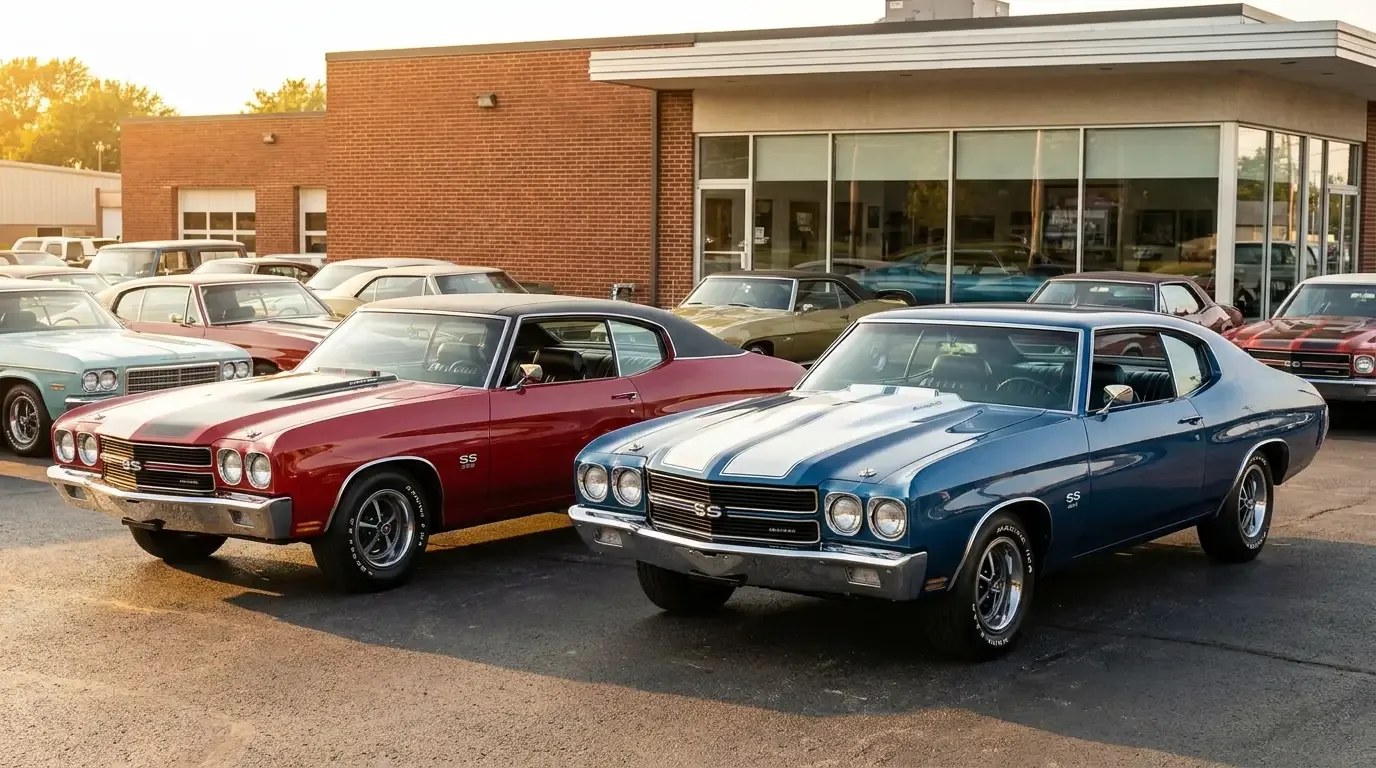
Ask ten Chevelle guys which year is the best one and eight of them will say 1970 before you finish the question. I'm one of them, and I've had enough of these on my lift over the years to back it up with more than just gut feeling. It's not that 1970 changed the car dramatically from 1969. It's that one rule change at GM's corporate level opened the door for the engines that made this the year the Chevelle actually became a genuine muscle car in the fullest sense of the word.
History & Heritage
6 min read
Why 1970 Is Considered the Peak Chevelle Year
GM lifted its displacement cap for 1970, giving the Chevelle the SS454 LS5 and LS6. Here's why collectors call this the peak model year.
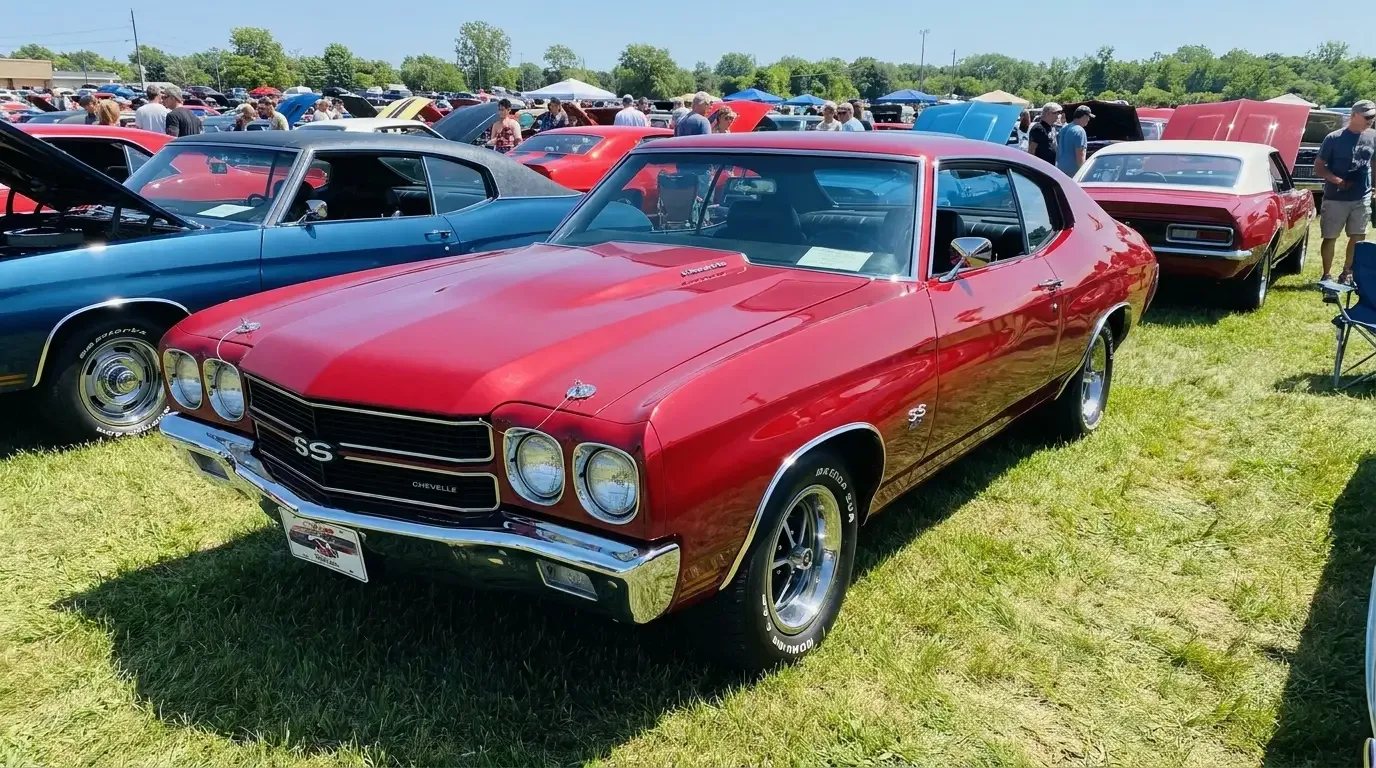
If you want the full run of the 1968-1972 era, this is one stop on that road, but it's the stop most people care about most. Here's why.
The rule that changed everything
Through 1969, GM had an internal corporate policy capping engine displacement in its intermediate-size cars at 400 cubic inches. It wasn't a law, it was a self-imposed rule that came out of the mid-60s insurance and safety climate, and every GM division that wanted to put a big-block in a mid-size car had to work around it. Pontiac got the GTO's 400 in under the cap. Chevrolet stuck the Chevelle with a 396 that was actually closer to 402 cubic inches in actual displacement but kept the 396 name for marketing reasons, because that name still tested under the cap on paper.
For 1970, GM dropped the rule. That's the whole story in one sentence, and it's the reason 1970 exists the way it does in Chevelle history. Once the cap was gone, Chevrolet could finally put its biggest engines into the Chevelle without any internal politics standing in the way.
The SS454 arrives
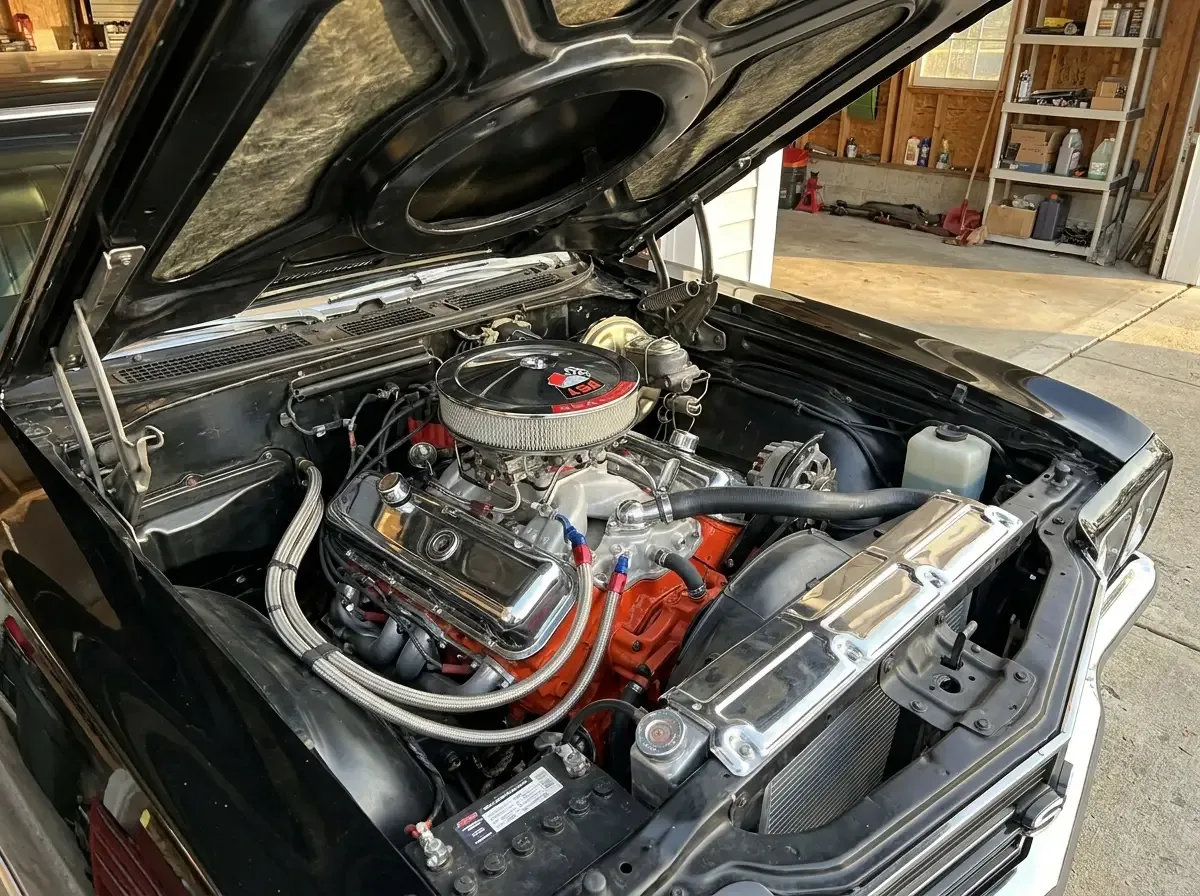
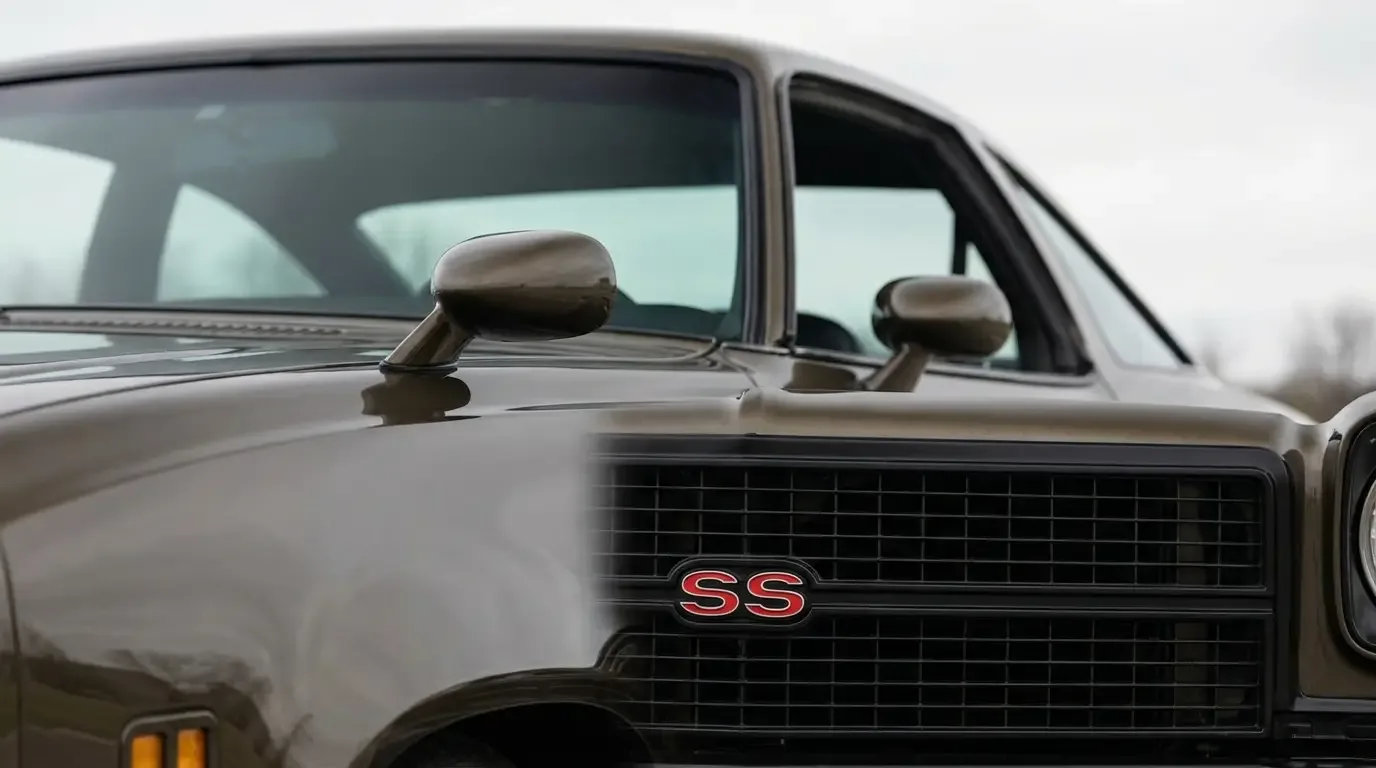
With the cap lifted, Chevrolet introduced the SS454 package for 1970, and it came in two flavors. The LS5 was the milder of the two, rated at 360 horsepower (gross) with a hydraulic cam, a legitimately strong engine on its own. The LS6 was the one that made the reputation, rated at 450 horsepower gross with 500 lb-ft of torque and 11.25:1 compression, and depending on who you ask and which dyno you trust, that number was conservative even by the standards of the era's underrated factory figures. Chevrolet built 4,475 LS6 engines for 1970, all of them Chevelle-based.
The LS6 454 in a Chevelle is one of the genuine high points of the entire muscle car era, not just the Chevelle's own history. It's also one of the reasons documented, numbers-matching 1970 SS454 LS6 cars command serious money today. If you're chasing one of these, the paper trail matters as much as the car itself.
| Engine | Approx. rated hp | Notes |
|---|---|---|
| 396/402 (SS396 badge retained) | L34: 350 hp. L78: 375 hp | Carryover engine (actually .030-over at 402 cid), still offered alongside the 454. L78 was cancelled in October 1969, making it rare for 1970 (2,144 built) |
| LS5 454 | 360 hp | Standard SS454 engine, hydraulic cam |
| LS6 454 | 450 hp / 500 lb-ft | Solid-lifter, forged internals, 11.25:1 compression, 4,475 built, the halo engine of the year |
Styling that finally matched the engine bay
1970 also brought a genuine facelift, not just the trim tweaks 1969 got. The grille went to a more aggressive eggcrate design that sat lower and wider, the front end got a subtly different look with a more pronounced hood, and the SS package could be ordered with a cowl induction hood that pulled cooler air from the base of the windshield into the engine bay under hard acceleration. It's a functional feature, not just a scoop for show, and it's one of the details buyers look for specifically when they're evaluating whether a car is correctly equipped.
The interior got attention too, with revised instrument panel details and trim options that made the top-spec cars feel like they belonged next to their price tag, not just their horsepower rating.
🔧 Inspection Priorities
- LS6 documentation and originality. Because these engines command such a premium, verify the block casting numbers, the cowl tag, and the build sheet against each other. A mismatch here is the single biggest value question on any 1970 SS454.
- Cowl induction hood function and correctness. Check that the flapper valve under the hood actually operates and that the hood itself is the correct factory piece, not a reproduction fitted to a car that wasn't originally optioned that way.
- Frame and subframe condition on a 450-horse car. These cars get driven hard, then get driven hard again by the next owner. Check subframe mounts and body bushings for wear that's beyond normal age.
- Cowl and floor rust, same as every second-gen Chevelle. The body shell hasn't fundamentally changed since 1968, and neither has its rust behavior.
What it actually costs to own one now
Documented LS6 cars are the outlier at the top of the market, and they're priced like it. A genuine, numbers-matching LS6 SS454 with solid paperwork can bring six figures at a major auction, and the gap between a documented car and an undocumented "believed to be" LS6 is enormous. LS5 cars are more attainable and still deliver a serious driving experience without the six-figure premium. The carryover 396/402 cars from 1970 sit below both, and they're the most sensible entry point if you want a genuine big-block second-gen Chevelle without competing at the top of the market.
Parts availability across all three engine families is good today, better than it was even a decade ago, so the real cost driver on a project car is body and interior condition, not whether you can source a correct carburetor or intake. Buy the straightest, most rust-free body you can find and worry about matching numbers on the drivetrain after that, unless documented originality is specifically what you're chasing.
If you're shopping the year, see 1970 Chevelles for sale and pay close attention to whether you're looking at a genuine LS6 car or a well-built tribute, since the difference in price can run into six figures depending on documentation.
"I've had 1970 LS6 Chevelles in my shop that scared me a little when I fired them up cold. That's not a compliment I hand out easily. This was the year Chevrolet stopped holding anything back on this car, and you can feel it the second you get on the throttle."
Mike Sullivan
For the wider view of the Chevelle nameplate across every generation, there's the full Chevelle story. And for the direct comparison between the two big-block paths this year offered, read on to next: SS454 vs SS396.
Sources and notes
- The Ultimate Muscle Car: The 1970 LS6 Chevelle Was America's King Of The Streets: Heacock Classic
- 1970 LS-5 horsepower: Team Chevelle forum
- 1970-1972 Chevrolet Chevelle SS 454: Specs, History, Performance: Motogallery
- 1970 Chevelle's "SS" options (Malibu series): ChevelleStuff.net
- 1970 Chevelle SS 454 LS6: A Look Back at Chevy's HEMI-Slaying Muscle Car Legend, autoevolution
- 1970 Chevrolet Mid-Size Cars Fact Sheet: Over-Drive Magazine
Related Reading
Have a
Chevrolet Chevelle
for Sale?
Reach thousands of serious classic car collectors across the US.
Sell It Here →
Are You a Classic Car Dealer?
List your full inventory and connect with targeted classic car buyers.
Join as a Dealer →

About the author
Mike Sullivan
Detroit-area muscle car enthusiast and restoration specialist with three decades of hands-on experience working on American iron.
Related Listings - Chevrolet Chevelle
More in History & Heritage
Comments
Be the first to comment on this article.