
I've pulled apart enough trucks to know that a seller's story and the factory's own paperwork don't always agree, and when they don't, the paperwork wins. The Service Parts Identification label, most people just call it the SPID label, is the factory's record of exactly what left the plant on a given truck. It's not glamorous. It's a small sticker with a grid of codes on it. But it tells you more in thirty seconds than a seller will tell you in twenty minutes, and it doesn't have a reason to lie to you.
History & Heritage
7 min read
Understanding the C10 SPID Label and Factory Option Codes
A hands-on guide to reading the Chevrolet C10's SPID label and RPO codes, covering paint, trim, and drivetrain options and why they matter before you buy.
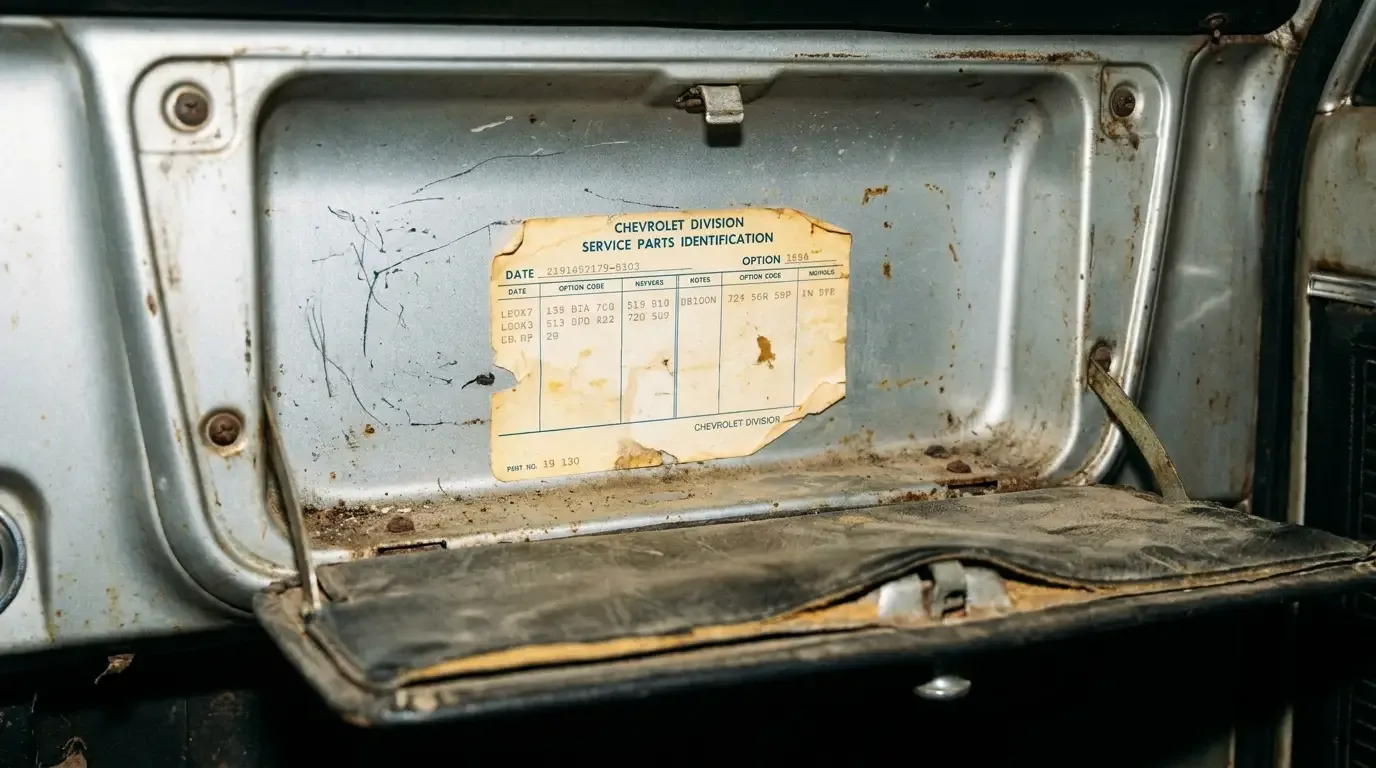
What the SPID label actually is
The SPID label is a factory-applied sticker listing the Regular Production Option codes, RPO codes, that describe everything Chevrolet built into that specific truck. Paint color. Interior trim. Engine and transmission. Axle ratio. Options like air conditioning or a heavier suspension package. Every one of those got a short alphanumeric code, and the label is the master list for that individual vehicle. It's the same idea as a build sheet, just condensed onto a sticker instead of a full page of paper, and unlike a build sheet, it's usually still attached to the truck decades later because it was designed to survive under the hood or in a door jamb rather than get tossed in a glovebox and lost.
Where to find it on a C10
Location moved around some depending on the model year, which is half the reason people can't find it the first time they go looking. On 1967-1972 Action Line trucks it was typically stuck inside the glovebox; later Square Body and modern GM trucks are more likely to carry it on the driver's door jamb, the radiator support, or inside the trunk or spare tire well on car-based platforms. If it's been repainted or the door's been swapped at some point, that last spot is the first thing to go missing, which is exactly why a truck with an intact SPID label in an untouched location is worth more to a serious buyer than one where the seller says "trust me, it's original." Trust me isn't a code I recognize.
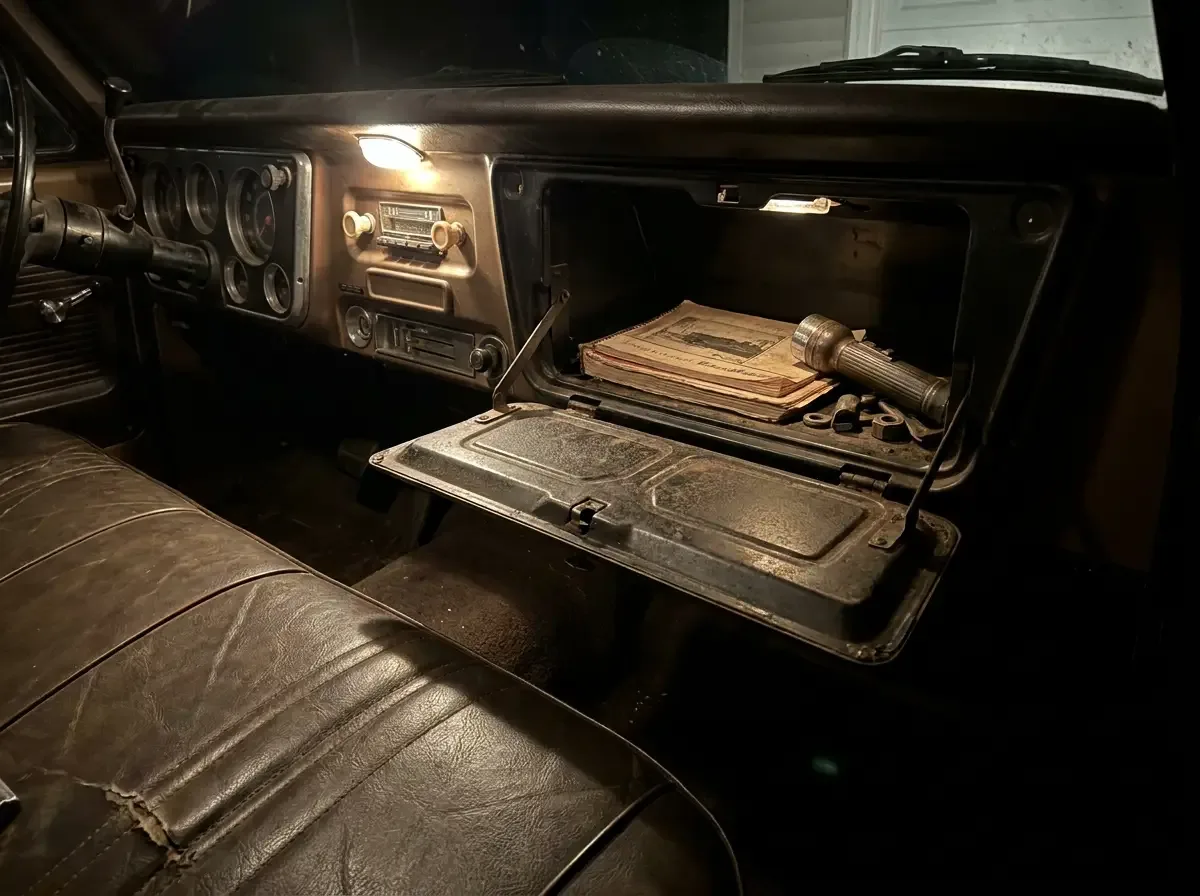
Reading the RPO codes: paint, trim, and options
Most labels break down into a few clear sections once you know what you're looking at. There's a paint code, usually a two or three digit number that cross-references to the factory color name. There's a trim code that ties to the interior color and material. Then there's a longer list of three-character RPO codes covering everything else Chevrolet bolted on at the factory, engine displacement, transmission type, rear axle ratio, and options like power steering or a tow package. A few examples from GM's broader RPO system: G80 flags a locking rear differential, GT4 calls out a specific rear axle ratio, and engine codes each tie to one specific powerplant for that model year. The codes themselves aren't intuitive on their own. You need a reference sheet specific to the model year to translate "this three-character code" into "this is a heavy-duty cooling package." Guess at it and you'll get it wrong. Look it up and it's not complicated at all.
Common codes buyers ask about
The two questions I get more than any others are the engine code and the bed style. Engine codes are worth confirming against the actual block in the truck, because engines get swapped a lot more often than people admit up front, and a matching code on the label doesn't mean the engine currently sitting in the bay is the one that left the factory. Bed style is the other one, and it's an easy check once you know what you're reading. How bed style shows up on the option codes walks through that specific detail if you want the longer version, but the short version is that the label will confirm Fleetside versus Stepside the same way it confirms every other factory-installed detail, which matters if a bed's ever been swapped and the seller either doesn't know or isn't saying.
| Label section | What it tells you | Why it matters to a buyer |
|---|---|---|
| Paint code | Factory exterior color | Confirms whether a repaint matches the original color or not |
| Trim code | Interior color and material | Flags a mismatched or reupholstered interior |
| Engine/drivetrain RPO | Original engine, transmission, axle ratio | Catches an engine swap that isn't disclosed |
| Option RPOs | Factory-installed extras like A/C, tow package, gauges | Verifies a "loaded truck" claim against what actually shipped |
SPID label versus the cowl tag
People mix up the SPID label with the cowl tag, and they're not the same document. The cowl tag predates the SPID system on the earlier trucks and uses its own stamped code format rather than a printed RPO list. GM started attaching SPID labels as early as 1967, and RPO codes themselves weren't fully standardized across the lineup until 1969, so trucks from that transition period can carry a cowl tag, a SPID label, or both. If a truck happens to carry both, they should agree with each other on the basics, paint, trim, engine. If a truck only has one, that's often normal depending on the year and doesn't automatically mean something's wrong. What actually matters is whether the documentation you do have contradicts itself, because two mismatched codes on the same truck usually means one of them came off a different vehicle at some point down the line.
If the label's gone or too faded to read, don't just give up on it. Photograph what's left under raking light before you touch it, since a worn label often reads better in a photo than to the naked eye, and a reproduction sticker can be sourced later if you can get even a partial code off the original first. I've had guys hand me a phone photo of a label they thought was a total loss, and half the codes were still legible once I blew the image up and looked at it properly instead of squinting at the actual sticker in a dim garage.
Why the label matters when you're buying
None of this replaces a proper mechanical inspection, and a truck can be a great driver without a perfectly matching label. But if somebody's asking a premium for "numbers matching" or "all original," the SPID label is where you check the claim instead of taking their word for it. If the generation you're shopping had any running changes to options or trim, cross-reference that against the generation-by-generation C10 guide so you know what should have even been available on that specific year before you go verifying codes that couldn't exist on that truck in the first place. It takes ten minutes to read a label properly. It can save you from a five-figure mistake.
"I don't care how good the story sounds standing in somebody's driveway. Show me the label. If it's there and it's intact, we're having a real conversation about the truck. If it's gone and nobody can explain why, that's a conversation too, just not the one the seller wants to have."
Mike Sullivan
The label isn't decoration and it isn't a formality. It's the closest thing to a factory affidavit that a truck this old is going to carry, and once you know where to look and what the codes actually mean, you stop having to take anybody's word for anything.
Sources and notes
- Chevy/GM RPO codes from 1967-1986, CJ Pony Parts
- GM RPO label vs SPID label explained, WAMS Tech Notes
- Regular Production Option, Wikipedia
- Definitive Chevrolet pickup buyer's guide, Hagerty Media
- GM build sheet, RPO codes and SPID label guide, CarCheckerVIN
- How to decode a 1967-1972 Chevy C10/K10 VIN number, Rust Belt OffRoad
Related Reading
Have a
Chevrolet C10
for Sale?
Reach thousands of serious classic car collectors across the US.
Sell It Here →
Are You a Classic Car Dealer?
List your full inventory and connect with targeted classic car buyers.
Join as a Dealer →

About the author
Mike Sullivan
Detroit-area muscle car enthusiast and restoration specialist with three decades of hands-on experience working on American iron.
Related Listings - Chevrolet C10
More in History & Heritage
Comments
Be the first to comment on this article.