
Stand at the back of a 1959 Cadillac and you understand the argument immediately. The fins rise above your waist, tipped with twin bullet taillights, sharp enough that people who grew up around these cars still tell stories about catching a hip on one in a crowded parking lot. Now walk to a 1961 Lincoln Continental parked a few spaces down. The change is almost physical. The Lincoln is flat-sided, low, and quiet, with a straight beltline running clean from headlight to taillight and not a fin in sight. Two cars, two years apart, and a complete disagreement about what a luxury car was supposed to say.
History & Heritage
5 min read
Tailfins vs Clean Lines: The Cadillac-Lincoln Design War
The 1959 Cadillac's towering fins against the 1961 Lincoln Continental's clean lines. How Cadillac and Lincoln fought a design war and who really won.
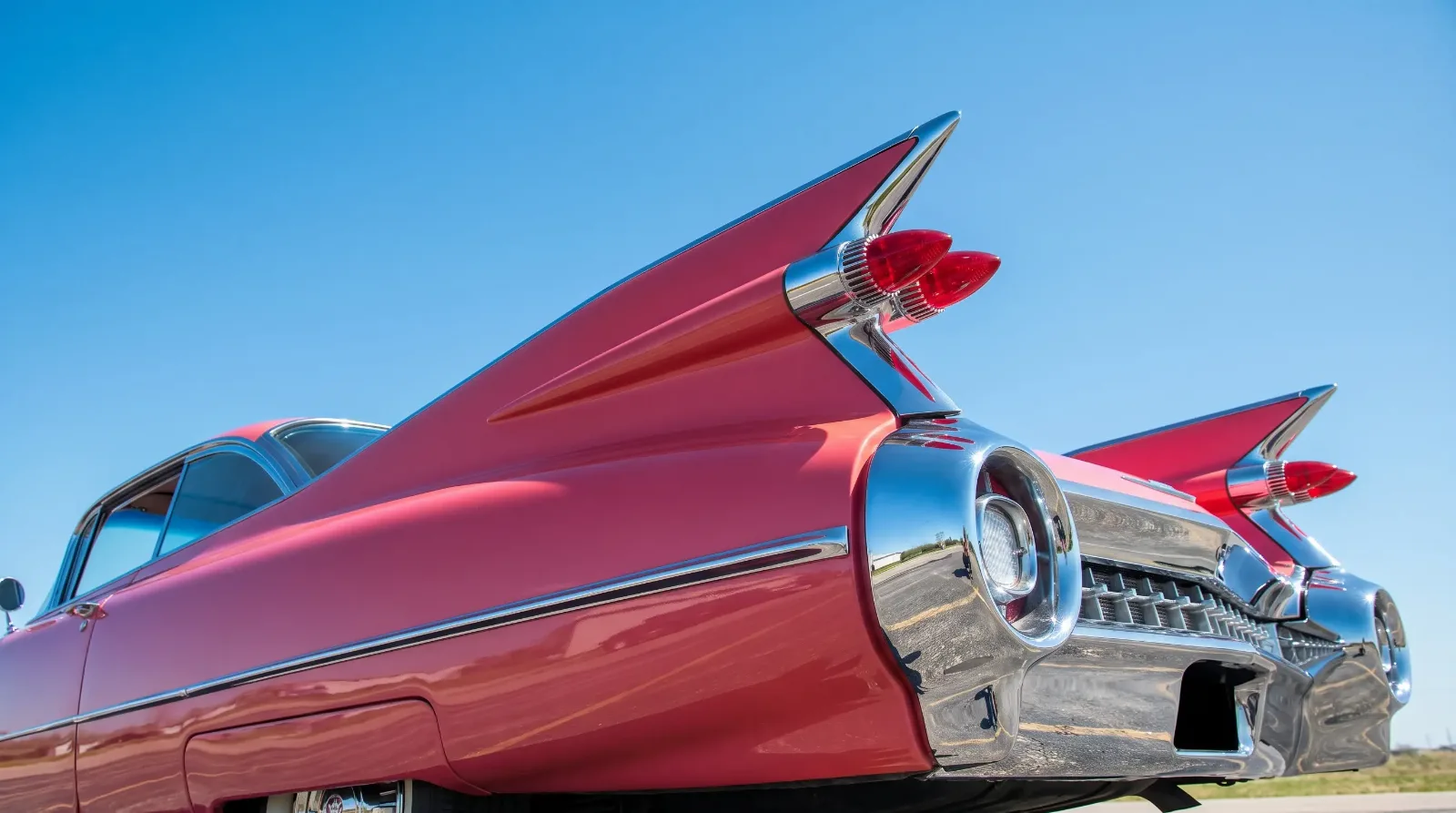
That disagreement was the design war, and it played out in showrooms while both companies insisted they were simply giving America what it wanted. They were also giving America two opposite answers to the same question.
How Cadillac made the fin an American icon
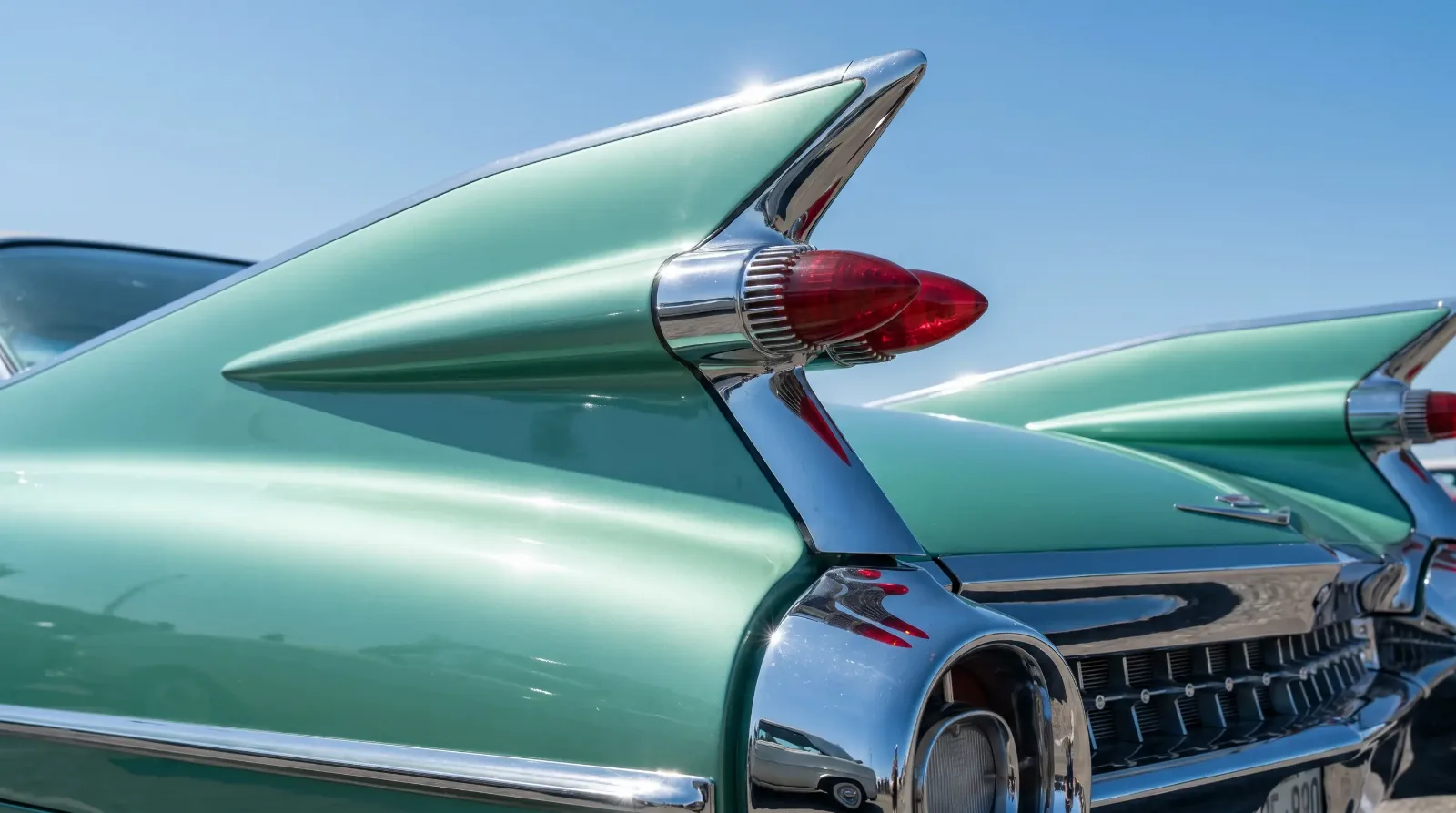
The tailfin did not appear overnight. Cadillac introduced modest fins on the 1948 models, and the story usually credits GM design chief Harley Earl and his team, who drew inspiration from the twin-boom tail of the P-38 Lightning fighter. For a decade the fins grew a little each year, a slow escalation that nobody thought strange at the time because everyone was doing it. Then came 1959, and Cadillac pushed the idea as far as it would go.
The 1959 Cadillac is the high-water mark of the whole era. The fins are enormous, the chrome is everywhere, and the car looks like it was styled to be seen from a passing jet. People loved it and people mocked it, sometimes the same people. What is not in dispute is that it worked as a statement. A 1959 Cadillac announced that its owner had arrived, and it did so from three blocks away. That was exactly the point.
There is a detail worth pausing on. The fin was never really about aerodynamics, whatever the jet-age styling suggested. It was about signaling, plain and simple, and Cadillac understood the psychology of it better than anyone. Each year's slightly taller fin gave last year's buyer a reason to feel dated and this year's buyer a reason to feel current. The whole industry ran on that annual model-year churn, and the tailfin was the most visible expression of it. By 1959 the escalation had reached a point where the design could not sensibly go any further, and Cadillac knew it. The only direction left was down.
Lincoln's answer was to erase the noise
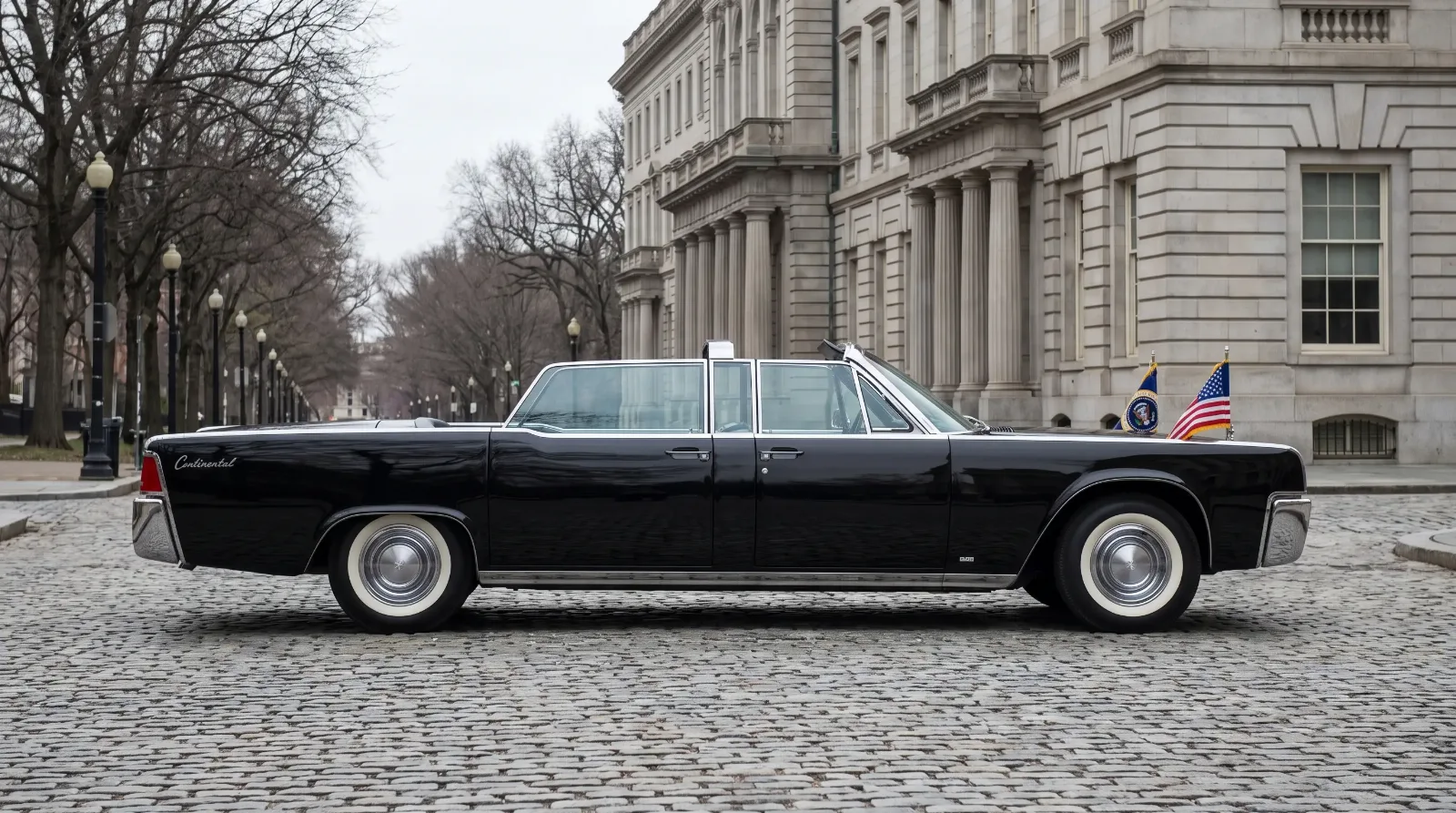
While Cadillac was reaching the top of the fin mountain, Lincoln was preparing to walk in the opposite direction. The 1961 Continental, styled under Elwood Engel, threw out fins, threw out excess chrome, and replaced the whole vocabulary with clean, slab-sided restraint. It had rear-hinged back doors, a design choice that gave it real presence, and a simplicity that made everything around it suddenly look busy.
The industry noticed. The 1961 Continental earned a design award and became the car that design-minded buyers pointed to when they wanted to argue that less was more. It was a genuine turning point, because it proved a full-size American luxury car could sell on taste rather than spectacle. Where the 1959 Cadillac shouted, the 1961 Lincoln lowered its voice and dared you to lean in. This was one of the sharpest exchanges in the ongoing Cadillac-Lincoln feud, and it was fought entirely with sheet metal.
The two philosophies, side by side
| Design element | Cadillac, late 1950s | Lincoln Continental, 1961 |
|---|---|---|
| Signature shape | Towering tailfins, bullet taillights | Flat sides, straight beltline, no fins |
| Chrome | Heavy, abundant | Minimal, restrained |
| Doors | Conventional | Rear-hinged rear doors |
| Design lead | Harley Earl era, GM styling | Elwood Engel |
| Statement | Seen from a distance | Appreciated up close |
"You can date a person's taste by which of these cars they reach for. Some people want the 1959 Cadillac and everything it promises across a parking lot. Others want the 1961 Lincoln, and the quiet confidence that never has to raise its voice. Neither is wrong, and that is what made the fight so good."
Patrick Walsh
Who really won the design war
The short answer is that Lincoln won the direction and Cadillac won the memory. Within a few years of 1959, Cadillac itself began shrinking its fins, and by the mid-1960s the whole industry had moved toward the cleaner, straighter lines the Continental helped make fashionable. In that sense Engel's Lincoln pointed the way forward and the rest of Detroit followed.
Yet the fin never really died in the culture. When people picture a classic American car in their minds, a big finned Cadillac is often what they see, tail up and chrome gleaming. The Continental earned the respect of designers, but the 1959 Cadillac earned the imagination of everybody else. Both cars are collectible now, and prices reward condition and originality more than they reward one philosophy over the other.
The rivalry did not stop at the curb. The same instinct for making a statement carried both marques straight to the most public stage in the country, and that story continues in next: Presidential Cars, where the two companies competed for the highest profile client of all.
Related Reading
Have a
Classic Car
for Sale?
Reach thousands of serious classic car collectors across the US.
Sell It Here →
Are You a Classic Car Dealer?
List your full inventory and connect with targeted classic car buyers.
Join as a Dealer →

About the author
Patrick Walsh
Automotive journalist covering classic car shows, events, and the enthusiast community across North America.
More in History & Heritage
Comments
Be the first to comment on this article.