
Ask a room of collectors which company first put self-leveling suspension under an American luxury car and you will get a confident answer, usually the wrong one. The trouble is that the question hides several different technologies inside one phrase. Air springs, automatic load leveling, and height-controlled ride are related ideas, but they arrived at different times and solved different problems. Getting the chronology right matters, because the marketing departments of both Cadillac and Lincoln were happy to blur it.
History & Heritage
6 min read
Self-Leveling Suspension: Cadillac or Lincoln First
Cadillac's 1957 air suspension versus later load leveling. Untangling who really brought self-leveling suspension to American luxury cars first, and why it matters.
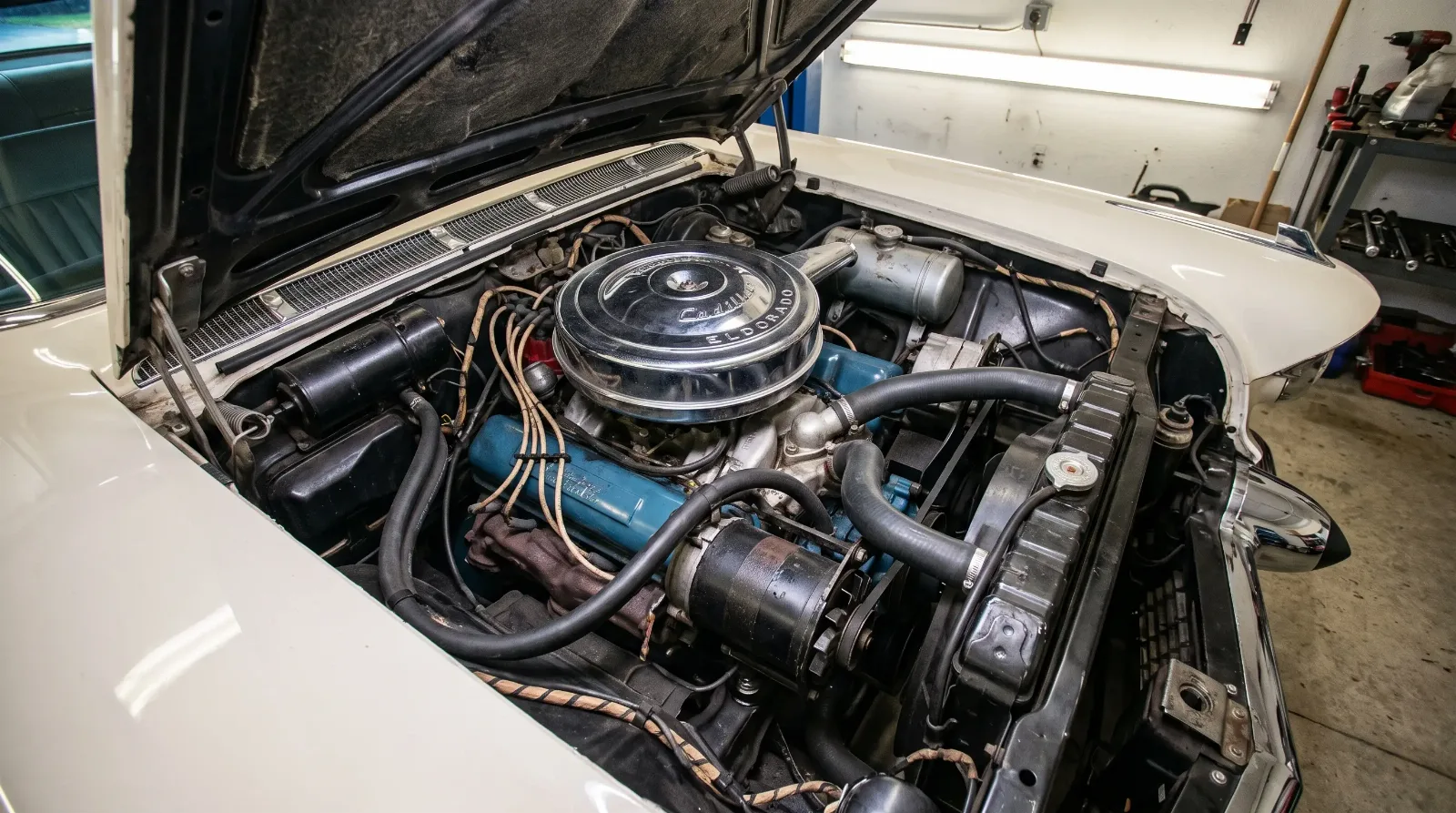
The honest version of the story starts with air. In the late 1950s General Motors made a serious, and ultimately troubled, attempt to replace steel springs with air, and Cadillac was the flagship for that experiment. Whether that counts as the "first" self-leveling system depends on how strictly you define the term, and that is exactly where the argument lives.
Cadillac's air suspension gamble, 1957 to 1958
The 1957 Eldorado Brougham introduced air suspension to the Cadillac line, using air springs at each corner in place of conventional steel. The system maintained ride height under load, which is the essence of self-leveling, and it gave the Brougham a genuinely advanced ride when it worked. It often did not. The air bags leaked, the compressor struggled, and dealers spent warranty hours chasing sag that returned overnight. Many owners eventually converted their cars to coil springs, and finding a Brougham today with its original air system intact and functional is rare.
For 1958 General Motors offered air suspension more widely across its divisions, and the reliability reputation followed the technology down the price ladder. The idea was sound and roughly two decades early. The execution, with the materials and seals available at the time, was not ready. That single fact colors any claim that Cadillac "had it first," because having a technology and having a working technology are not the same thing.
Load leveling versus full air suspension
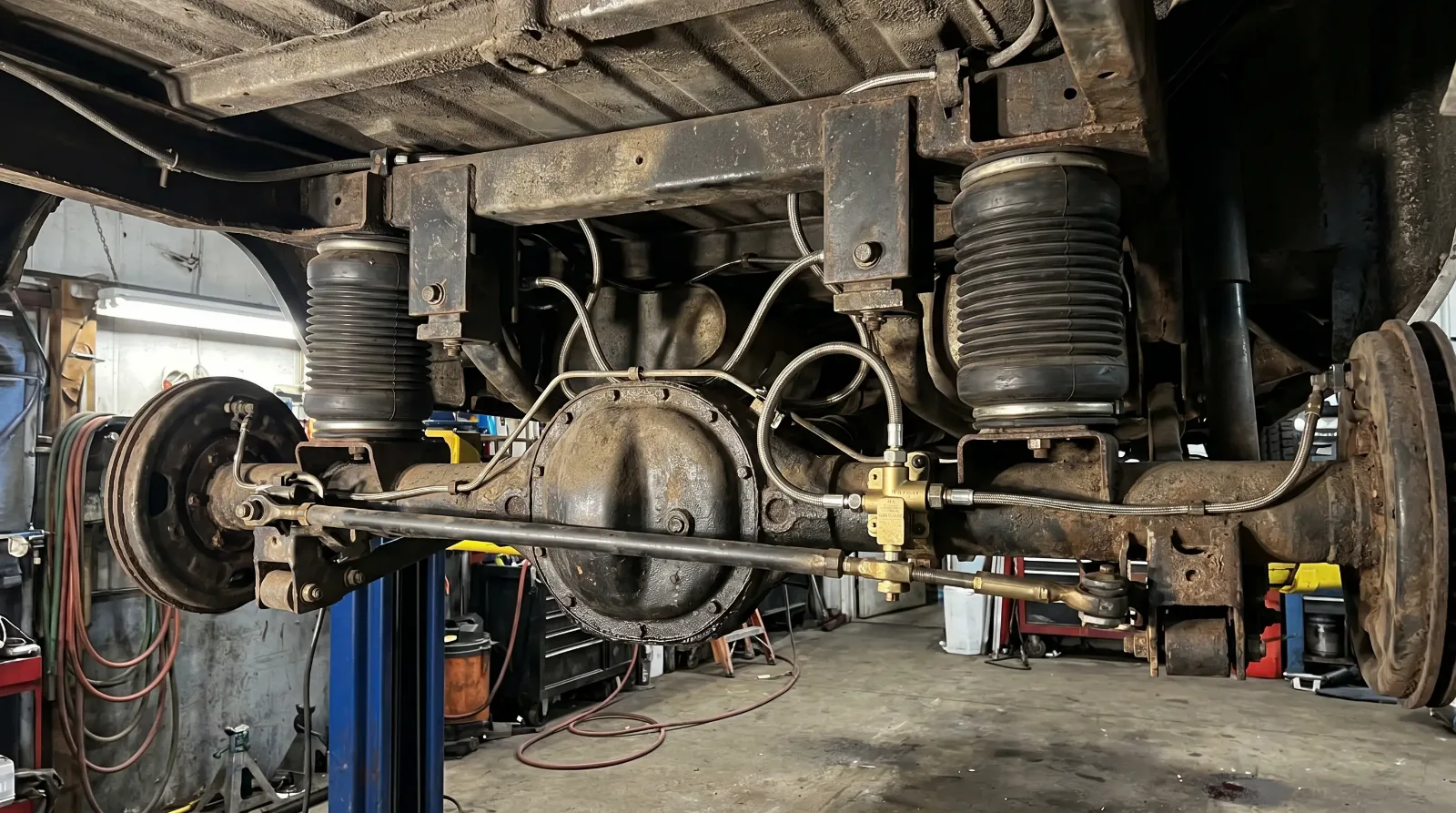
Here is the distinction that settles most of the confusion. Full air suspension replaces the springs entirely. Automatic load leveling keeps steel springs and adds a system, usually an air compressor, height sensor, and rear air shocks or auxiliary bags, that raises the tail of a loaded car back to its normal stance. The second system is far simpler and far more durable, and it is what most people actually mean when they praise a luxury car for staying level with a full trunk and four passengers aboard.
Both Cadillac and Lincoln offered rear load-leveling systems as the 1960s progressed, and the exact year each introduced its version, and whether it was standard or optional, deserves a careful source check rather than a confident recitation from memory. What can be said cleanly is that load leveling proved the lasting idea. It survived where full air suspension retreated, because it asked less of the technology and delivered the visible benefit buyers wanted.
The mechanical logic is worth understanding, because it explains why one approach lasted and the other did not. A full air system carries the entire weight of the car on columns of compressed air, so every seal, valve, and line is a potential failure point that drops a corner to the ground when it lets go. A load-leveling setup leaves the steel springs to do the heavy lifting and only calls on the air components to trim the last inch or two of sag. When a leveling system fails, the car simply rides low at the back. When a full air system fails, the car is undriveable. That difference in failure mode, not marketing, is what decided which technology the two marques carried forward into their big sedans of the 1960s and 1970s.
| System type | What it does | Where it first appeared here |
|---|---|---|
| Full air suspension | Replaces steel springs at all corners; holds ride height | Cadillac 1957 Eldorado Brougham |
| Automatic load leveling | Keeps steel springs; corrects rear sag under load | Adopted by both marques through the 1960s |
| Reliability in period | Air springs leaked; leveling proved durable | Leveling became the standard survivor |
Why the "first" question is a trap
The clean answer is that Cadillac put self-leveling air suspension on a production luxury car first, with the 1957 Eldorado Brougham, and that this was a full air system rather than a simple leveling device. The messier truth is that it barely worked, that Lincoln was not far behind in offering leveling of its own, and that the technology which endured was the humbler load-leveling approach both companies eventually settled on. Anyone who tells you one marque simply beat the other is skipping the part where the winning idea was the modest one.
"The Brougham's air suspension is one of those advances I admire more as intention than as execution. Cadillac reached for something the materials of 1957 could not yet support, and the cars that survive with the system intact are artifacts of ambition as much as engineering."
Sarah Whitfield
This pattern, one company reaching for a headline feature and the other refining the practical version, repeats across the whole history of these two makers. It is a recurring theme in America's luxury war, and it belongs to the broader arc of the classic luxury car story that ties the American marques to their European rivals.
What it means for buyers today
If you are looking at a car with original air suspension, treat it as a specialist restoration item, not a convenience. Parts are scarce, seals perish, and a shop that has never rebuilt one will learn on your budget. Load-leveling systems are more forgiving, but the compressors and sensors are old now too, and a dead system on a big rear-drive luxury car simply means the tail sags under load rather than that anything is dangerous. Judge the car on the whole, not the feature. A well-kept example with a converted or repaired suspension is usually a better ownership proposition than a rough original chasing period-correct air components.
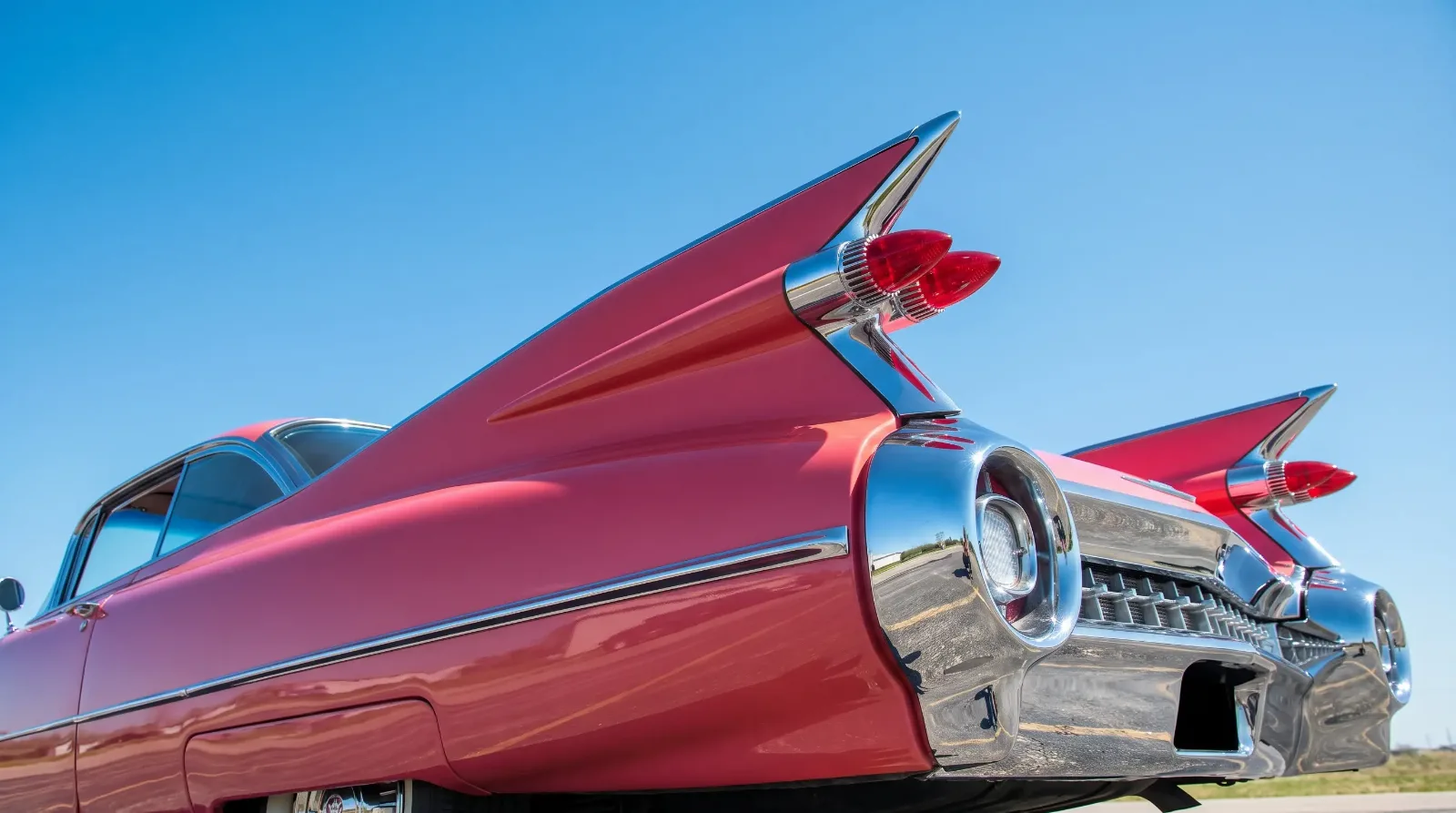
The suspension war was quiet, technical, and easy to overlook next to the styling battles fought in the same years. Those styling battles were anything but quiet, and they are worth the detour to next: Tailfins vs Clean Lines, where the two companies stopped whispering about engineering and started shouting about design.
Related Reading
Have a
Classic Car
for Sale?
Reach thousands of serious classic car collectors across the US.
Sell It Here →
Are You a Classic Car Dealer?
List your full inventory and connect with targeted classic car buyers.
Join as a Dealer →

About the author
Sarah Whitfield
Third-generation classic car collector specializing in pre-war American and European coachbuilt automobiles. Researcher and concours enthusiast.
More in History & Heritage
Comments
Be the first to comment on this article.