
For most of the twentieth century, Cadillac was the benchmark. "The Cadillac of" anything meant the best of its kind, a phrase that entered the language because the cars earned it. The 1980s are the decade when that reputation cracked, and the damage was largely self-inflicted. A series of decisions around shared platforms, rushed engines, and aggressive cost-cutting turned the standard of the world into a cautionary tale. The values of the cars from that decade still carry the discount today.
History & Heritage
6 min read
Cadillac's Badge-Engineering Decline in the 1980s
How badge engineering, the Cimarron, and weak engines drove Cadillac's 1980s decline and cost the brand its standard-of-the-world reputation.
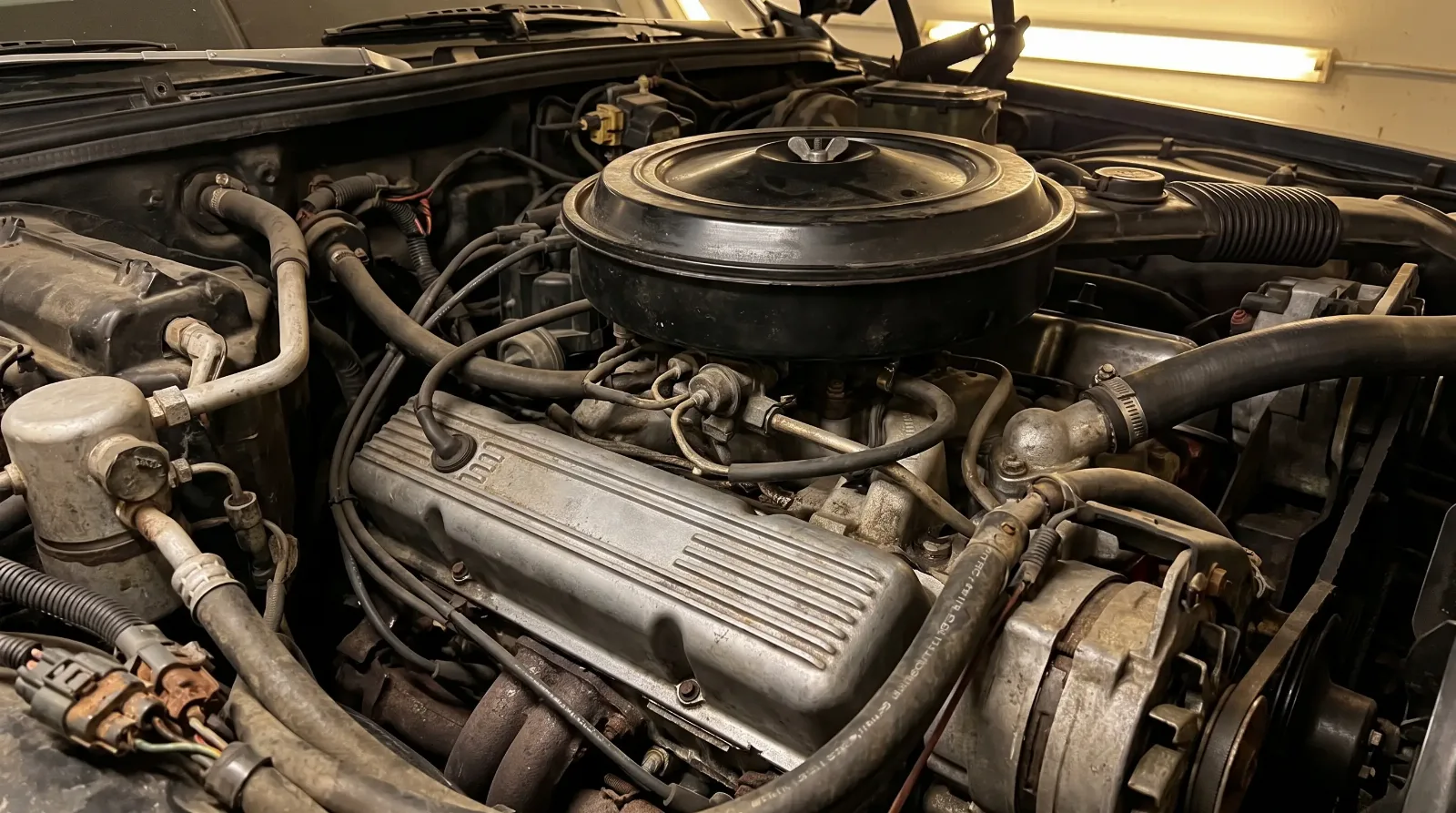
This is not a story of one bad model. It is a pattern, repeated across engines and body styles, of a company trying to defend margins while the ground shifted under it. To see how far Cadillac had climbed before it stumbled, it helps to read the classic luxury car's full history first, because the fall only makes sense against the height it fell from.
The engines that broke trust
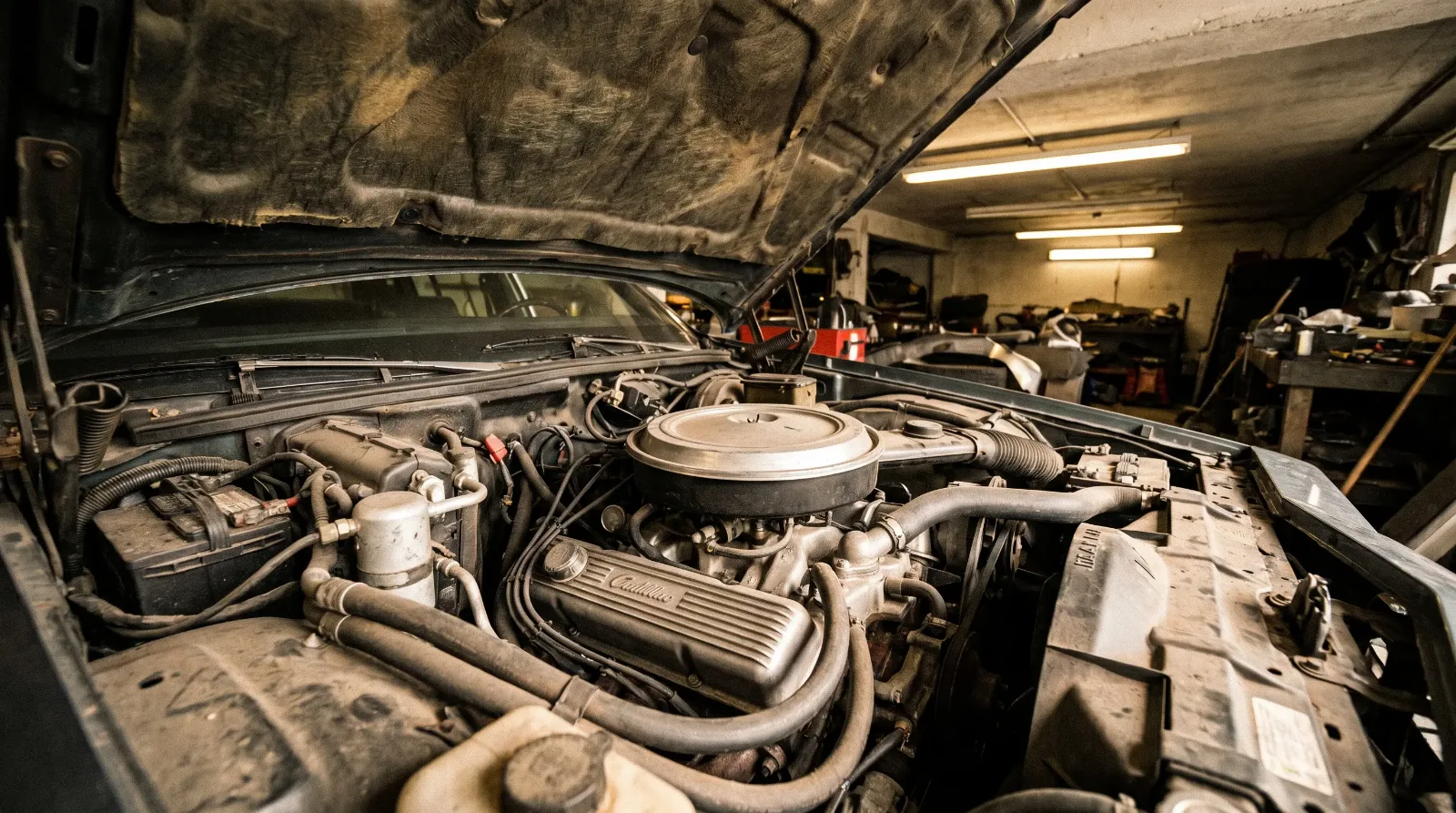
The trouble started under the hood. Facing fuel-economy pressure, Cadillac offered a diesel V8 in the late 1970s and into the 1980s, a 5.7-liter unit derived from Oldsmobile gasoline architecture. It was underpowered and prone to serious failures, and it soured a generation of buyers on diesels entirely.
Then came the 1981 V8-6-4, an early cylinder-deactivation system that shut off cylinders to save fuel. The concept was ahead of the electronics available to control it, and the drivability complaints were immediate. Cadillac dropped it from most cars after a single year. The replacement, the aluminum HT4100 V8 introduced for 1982, displaced just 4.1 liters and made around 135 horsepower in a heavy car. It was gutless by Cadillac standards and gained a reputation for reliability problems. Three strikes in engines alone, inside roughly five years.
The Cimarron problem
The single most damaging car of the decade was the 1982 Cimarron. It was a Chevrolet Cavalier, a compact economy car from GM's J-body program, given a Cadillac grille, more equipment, and a much higher price. Buyers were not fooled. Parking a Cimarron next to a Cavalier showed the same doors, the same roofline, the same basic car, with a badge doing the heavy lifting.
The Cimarron is now shorthand for badge engineering gone wrong, and executives who worked there later admitted it was a mistake. The problem was not just one weak model. It was the message it sent. If a Cadillac could be a dressed-up Chevrolet, then the word "Cadillac" no longer guaranteed anything, and that is the most expensive thing a luxury brand can give away. This is exactly the kind of episode that the complete classic luxury car story returns to when it asks how prestige is lost.
"Brand equity takes fifty years to build and one product cycle to spend. The Cimarron didn't just sell poorly. It taught buyers to look past the wreath and crest and check what was actually underneath, and Cadillac spent two decades earning that trust back."
David Mercer
When the big cars got small
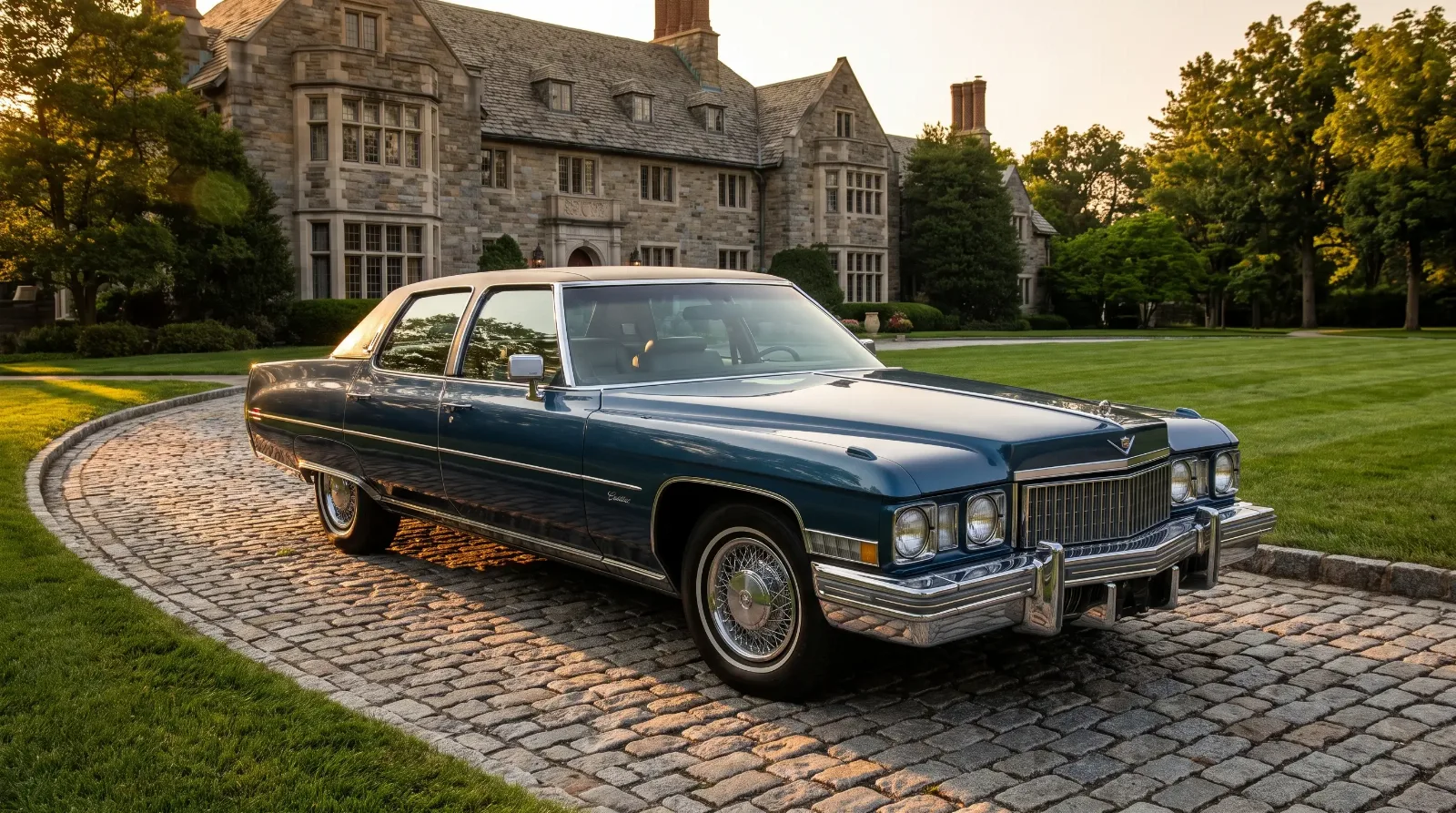
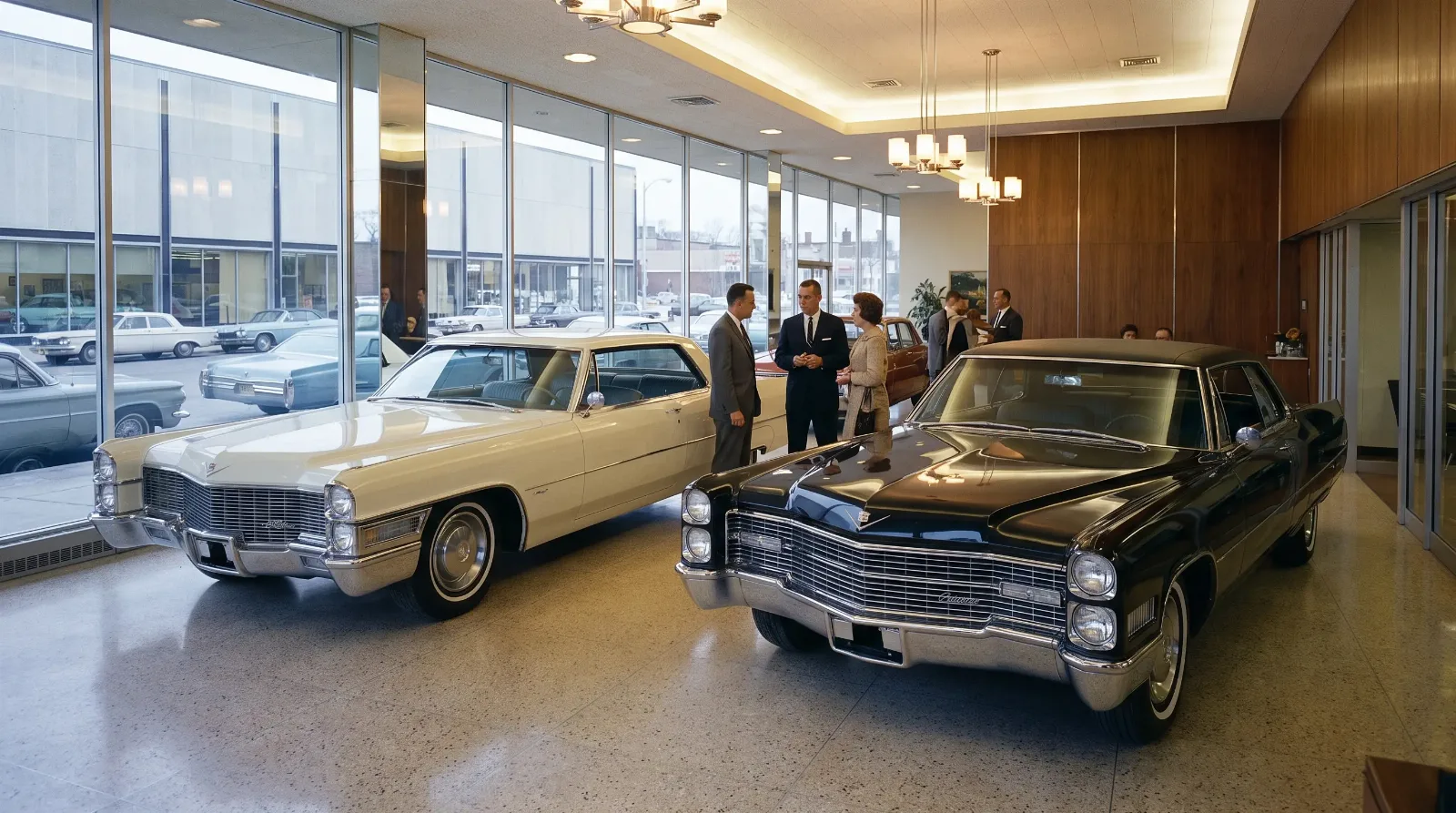
The look-alike problem spread to the flagships. For 1985 Cadillac moved the de Ville and Fleetwood to a downsized front-wheel-drive C-body, and for 1986 it did the same to the Eldorado and Seville. The engineering logic was sound on paper, but the styling was the issue. The new cars were so trim and so similar to smaller, cheaper GM models that buyers could not tell a Cadillac from an Oldsmobile or a Buick at a glance.
The market punished it immediately. Eldorado sales in particular fell sharply after the 1986 downsizing, because a personal luxury coupe that looks like a mid-size sedan has lost the one thing it was selling. Cadillac stretched some of the cars back out later in the decade to recover presence, an expensive admission that the original call had been wrong.
The deeper issue was corporate rather than stylistic. GM's platform-sharing strategy in this period pushed its divisions onto common bodies to save money, and the result was a lineup where a Cadillac, an Oldsmobile, a Buick, and even a Chevrolet could share doors, glass, and basic structure. That math works when the shared parts are invisible. It fails when a buyer paying a Cadillac premium can see the Buick in the sheet metal. Prestige is a promise that you are getting something others cannot, and a shared body quietly breaks that promise every time someone parks the two cars side by side.
Cadillac did try to answer at the top of the range. The 1987 Allante was a two-seat roadster with bodywork built by Pininfarina in Italy and flown to Detroit for final assembly, an expensive halo aimed at Mercedes-Benz. It was a genuine effort, but it arrived underpowered against its European targets and never sold in the numbers the investment demanded. Even Cadillac's ambition in the decade tended to fall short of the mark it was aiming at.
| Misstep | Year | Problem |
|---|---|---|
| Oldsmobile-based diesel V8 | late 1970s-80s | Underpowered, failure-prone |
| V8-6-4 cylinder deactivation | 1981 | Poor drivability, dropped fast |
| HT4100 4.1L V8 | 1982 | ~135 hp, reliability issues |
| Cimarron (J-body) | 1982 | Rebadged Chevrolet Cavalier |
| Downsized Eldorado/Seville | 1986 | Too small, sales collapse |
What the decade costs collectors now
The 1980s Cadillacs sit at the bottom of the brand's collector hierarchy, and the reasons are baked into the cars. Weak engines, shared architecture, and forgettable styling give buyers little to chase. A clean low-mileage example is cheap to buy and hard to sell, because scarcity means nothing when demand is absent. The Cimarron is collectible only as a curiosity, the automotive equivalent of a famous failure.
There is a longer lesson here about how a luxury reputation can be spent, and it was not only an American problem. Across the Atlantic, another storied name was navigating its own crisis of identity and ownership in the same era. That story is next: When Rolls-Royce Motors Split from Aerospace, and it shows a very different way a great marque can be pulled apart.
Related Reading
Have a
Classic Car
for Sale?
Reach thousands of serious classic car collectors across the US.
Sell It Here →
Are You a Classic Car Dealer?
List your full inventory and connect with targeted classic car buyers.
Join as a Dealer →

About the author
David Mercer
Classic car market analyst with two decades of experience tracking collector car valuations, auction results, and investment trends.
More in History & Heritage
Comments
Be the first to comment on this article.