
Automatic Chevelles outnumber manuals by a wide margin across 1968 to 1972. That's not opinion, that's just how the order sheets shook out once you look at what dealers actually stocked and what buyers actually checked on the option form. A four-speed car took more from the driver and gave more back, and the guys who ordered one knew exactly what they were signing up for. Fifty years later, that's the car most buyers are chasing, and most of them don't know which four-speed they're actually looking at.
History & Heritage
6 min read
The 4-Speed That Wouldn't Quit
M20, M21, or M22. How to tell Chevelle's three Muncie four-speeds apart, verify the tag, and avoid paying rock crusher money for a wide-ratio box.
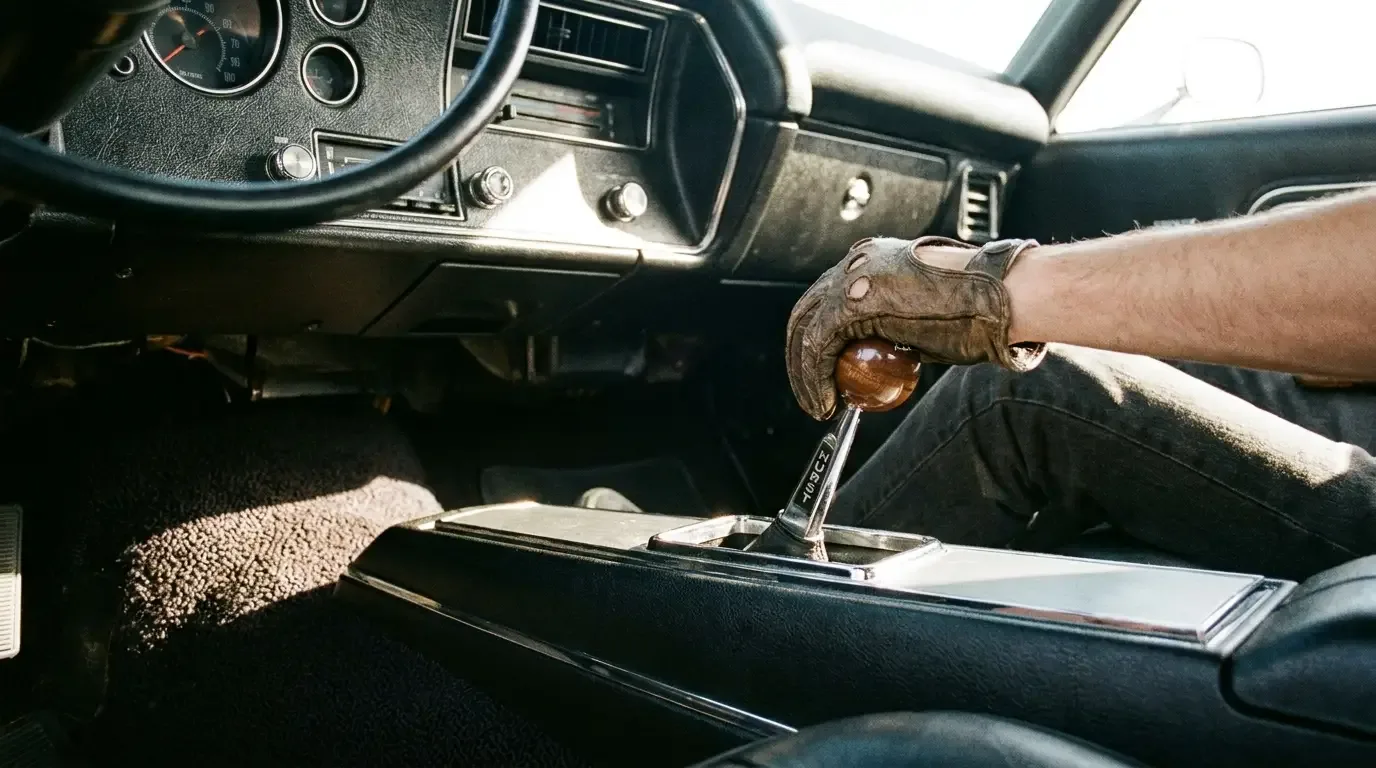
There were three Muncie four-speeds available behind Chevelle engines in this window, and they are not interchangeable in character even though they bolt to the same bellhousing pattern. Get the wrong one in your head when you're shopping and you'll either overpay for a transmission that isn't what you think it is, or underpay for one that's actually the rare piece.
Three transmissions, three different jobs
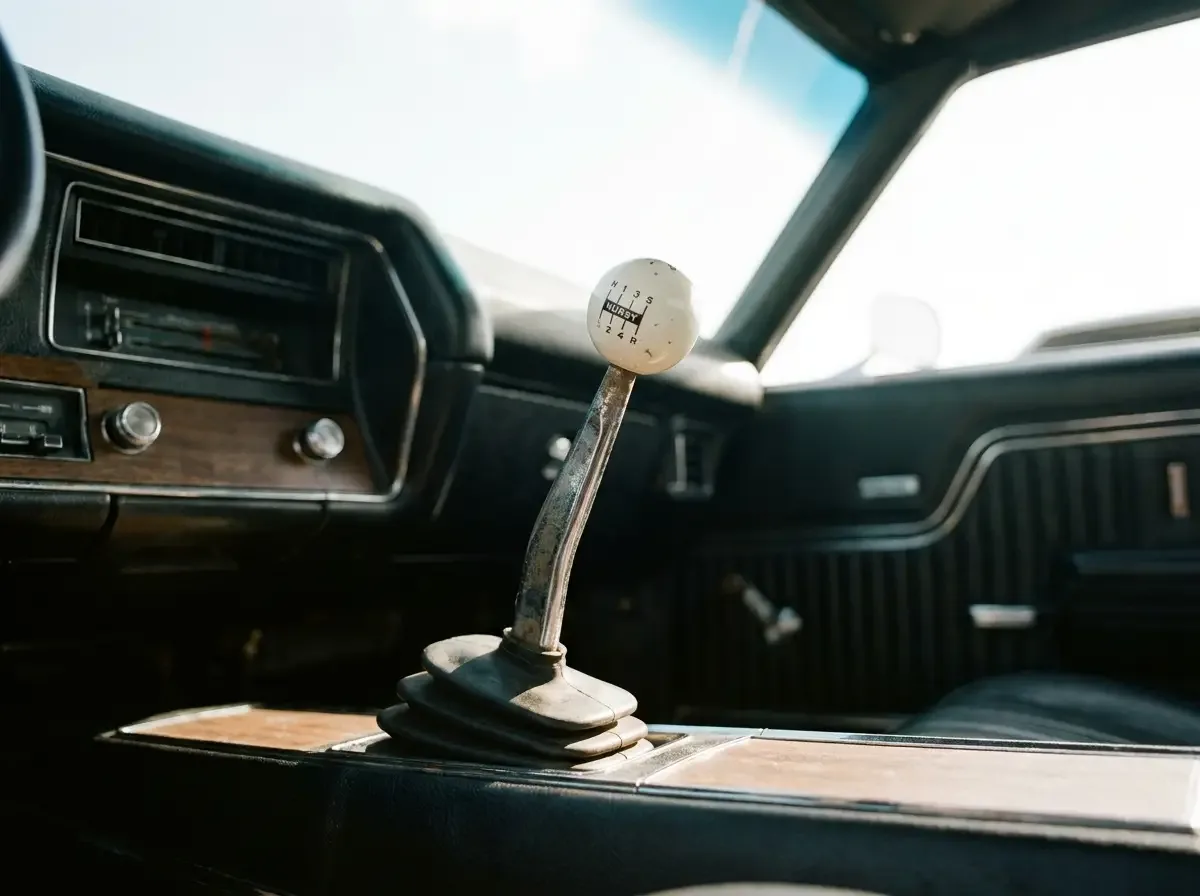
The M20 wide-ratio was the standard manual behind most V8 Chevelles, built for a broad spread that worked fine on the street and didn't punish you for missing a shift. First gear ratio sits high, the gap between gears is wide, and it's the transmission most manual Chevelles left the factory with. The M21 close-ratio tightens that spread considerably, designed for a car that's going to see the strip or at least get driven like it might. Shifts come faster, the engine stays in its power band longer between gears, and it's the transmission enthusiasts specifically ask for behind the higher-output big-blocks.
The M22, nicknamed the rock crusher for the gear whine it produces at speed, is the one people overpay for and the one most often misrepresented. It used a stronger set of internals designed to survive the torque of the highest-output engines, specifically built to hold up behind the L78 and later the LS6. The whine isn't a defect. It's the cut of the gears, and a real M22 makes noise a stock M20 never will. If someone's selling you a "numbers-matching M22" and it's whisper quiet in gear, ask more questions before you write the check.
| Transmission | Character | Typical application |
|---|---|---|
| M20 wide-ratio | Broad spread, easy street shifting | Most standard V8 manual orders |
| M21 close-ratio | Tighter gaps, faster successive shifts | Performance-oriented big-block and small-block orders |
| M22 rock crusher | Heavy-duty internals, audible gear whine | Highest-output engines, L78 and later applications |
Verifying which one you're actually buying
The tag clamped to the side of the case carries the identification you need, stamped with a code that decodes to the specific unit and its build date. That tag needs to be legible and it needs to match the paperwork the seller is presenting, the same way an engine block stamping needs to match a claimed numbers-matching motor. I don't care how good a transmission sounds or shifts in a five-minute test drive. The tag is the data point that matters. Everything else is a subjective impression, and subjective impressions don't hold their value at resale.
Case casting numbers and date codes are the second layer of verification, useful when a tag is missing or damaged, which happens more than owners want to admit after decades of engine bay work disturbing that corner of the car. A transmission rebuilt correctly with period-correct internals will still carry its original tag and casting if nobody's swapped the case itself. A transmission that's been through a shop with no documentation is a bigger unknown, and the price should reflect that unknown, not the seller's confidence.
What actually breaks and what it costs to fix
Synchronizer wear on second gear is the most common complaint on high-mileage Muncies, especially M20s that spent decades in daily driver service before the collector market caught up to them. Clutch linkage bushings wear out and introduce slop into the pedal feel long before anything inside the case actually fails. None of this is expensive to sort out compared to engine work. A synchro rebuild on a Muncie is a known, bounded job for a competent shop, not the kind of open-ended expense that turns into a bad surprise. The bigger cost risk isn't mechanical, it's buying a transmission represented as something it isn't and paying M22 money for an M20 with a whiny rear end bearing.
Bellhousing and input shaft compatibility is where first-time buyers make mistakes swapping transmissions between cars or engines. Not every Muncie bolts up to every small-block or big-block without spacer or clutch disc changes, and getting that wrong costs real time and real money in comebacks. If you're buying a car with a transmission swap already done, get the paperwork on what was actually installed, not just a verbal "it's the right one."
"A rock crusher badge on the shift knob doesn't make it an M22 any more than a cowl induction decal makes an engine an LS6. Pull the tag, read the code, and let the data settle it. Everything else is a story somebody's telling you to close the deal."
Dan Reeves
The verdict on buying manual
A documented M21 or M22 behind a strong big-block is the four-speed combination worth paying a premium for, and the premium is justified by real scarcity, not hype. An M20 behind a small-block is a perfectly good driver's car and shouldn't be priced like it's rare, because it wasn't. The number that should drive your decision isn't the reputation of the transmission, it's the tag code in front of you and what it actually says. Everything past that is negotiation.
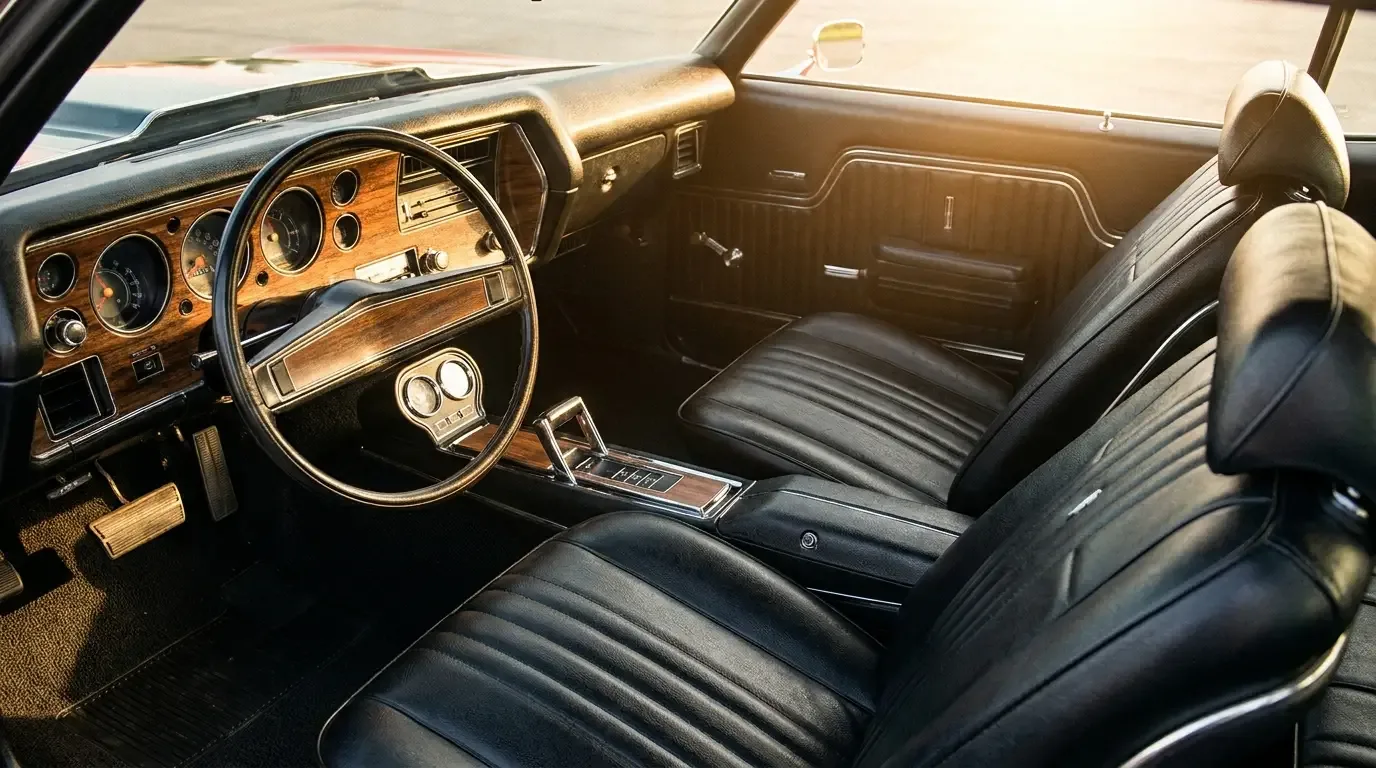
Manual transmissions were just one piece of how buyers configured a Chevelle to their taste across the 1968-1972 era, and the cabin those buyers sat in changed just as much as the drivetrain underneath them. Next: Interior Evolution 1968-72 picks up exactly where the shifter meets the driver.
Sources and notes
Related Reading
Have a
Chevrolet Chevelle
for Sale?
Reach thousands of serious classic car collectors across the US.
Sell It Here →
Are You a Classic Car Dealer?
List your full inventory and connect with targeted classic car buyers.
Join as a Dealer →
#manual transmission
#Chevrolet Chevelle
#second-generation Chevelle
#Muncie 4-speed
#M22 rock crusher

About the author
Dan Reeves
Performance engine builder from North Carolina's motorsports corridor, focused on swaps, forced induction and making real, repeatable power.
Related Listings - Chevrolet Chevelle
More in History & Heritage
Comments
Be the first to comment on this article.