
Ask three truck guys what a Big 10 is and you'll get three different answers, and two of them will be wrong. It's not a bigger truck. It's a half-ton badge wearing a heavier truck's underpinnings, built that way on purpose for reasons that had as much to do with paperwork as with payload.
History & Heritage
6 min read
What Made the "Big 10" Different: Payload Rules Explained
The Big 10 kept its half-ton badge and registration class while borrowing heavier axles, springs, and brakes from the 3/4-ton parts bin, a quiet workaround worth understanding before you buy one.
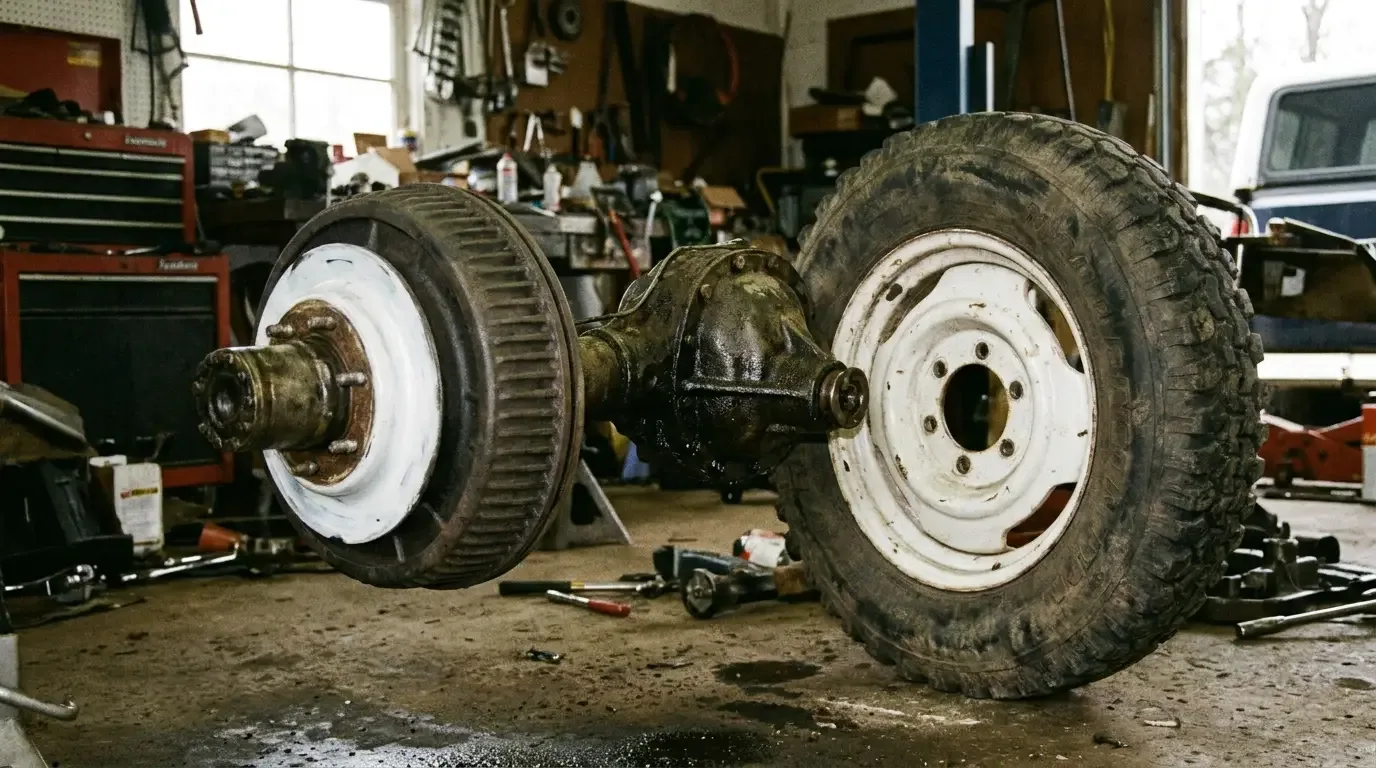
I've owned one of these and spent a long time explaining to buyers why the fender said C10 while the axle tag told a different story. Once you understand the reasoning behind it, the whole thing makes a lot more sense than it looks like at first glance.
Why "half-ton" and "3/4-ton" stopped meaning what they said
By the mid-1970s, a straight half-ton C10 and a 3/4-ton C20 were built for genuinely different jobs, but a lot of buyers wanted the durability of the heavier truck without registering, insuring, or fueling a bigger vehicle class. Chevrolet's answer was a package that let you order a C10 with a good chunk of the C20's underpinnings, heavier axle, upgraded brakes, stiffer springs, while the truck stayed classified as a half-ton on paper. If you want the full timeline of how the platform got here, the generational C10 guide covers the changes year by year.
That distinction, half-ton badge with 3/4-ton bones, is the entire story of the Big 10. It wasn't marketing fluff. It was a specific answer to a specific problem buyers kept bringing to dealers.
What the Big 10 package actually swapped underneath
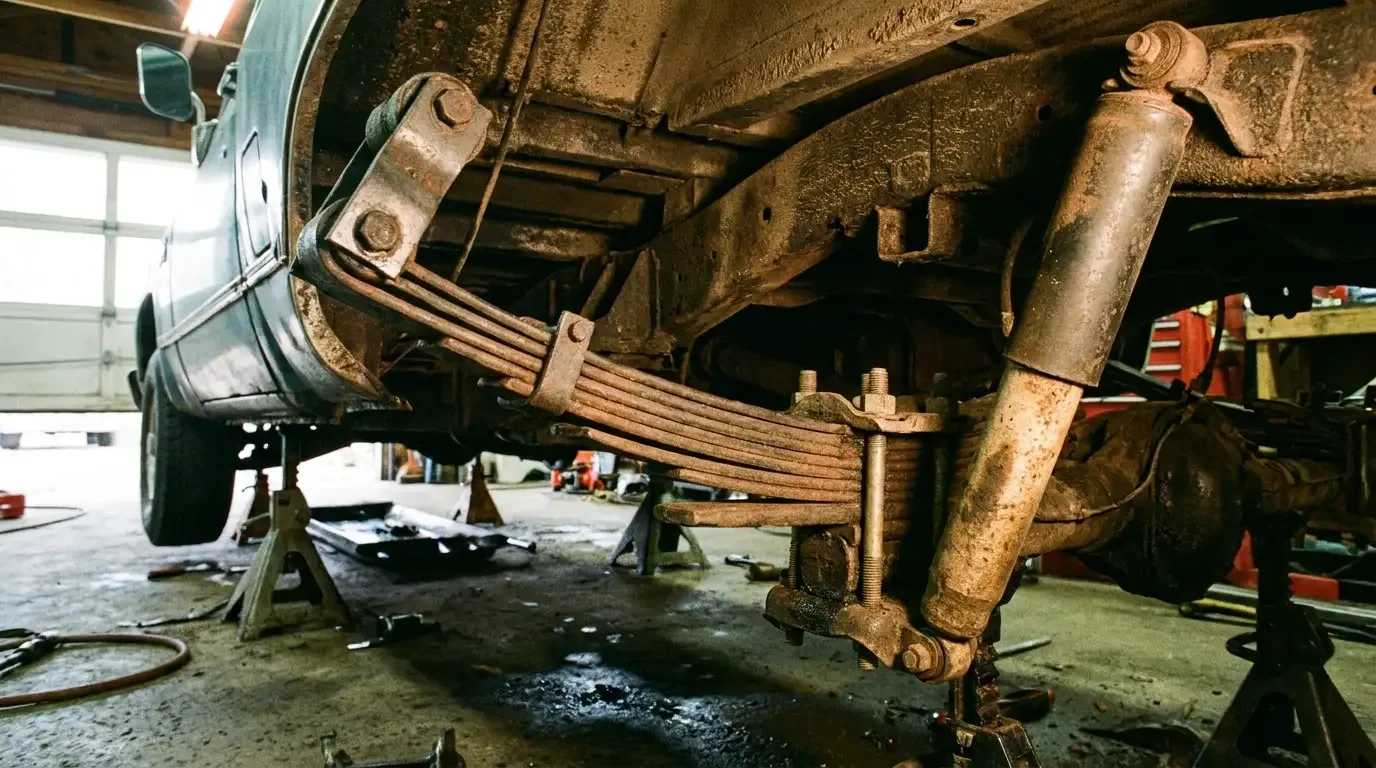
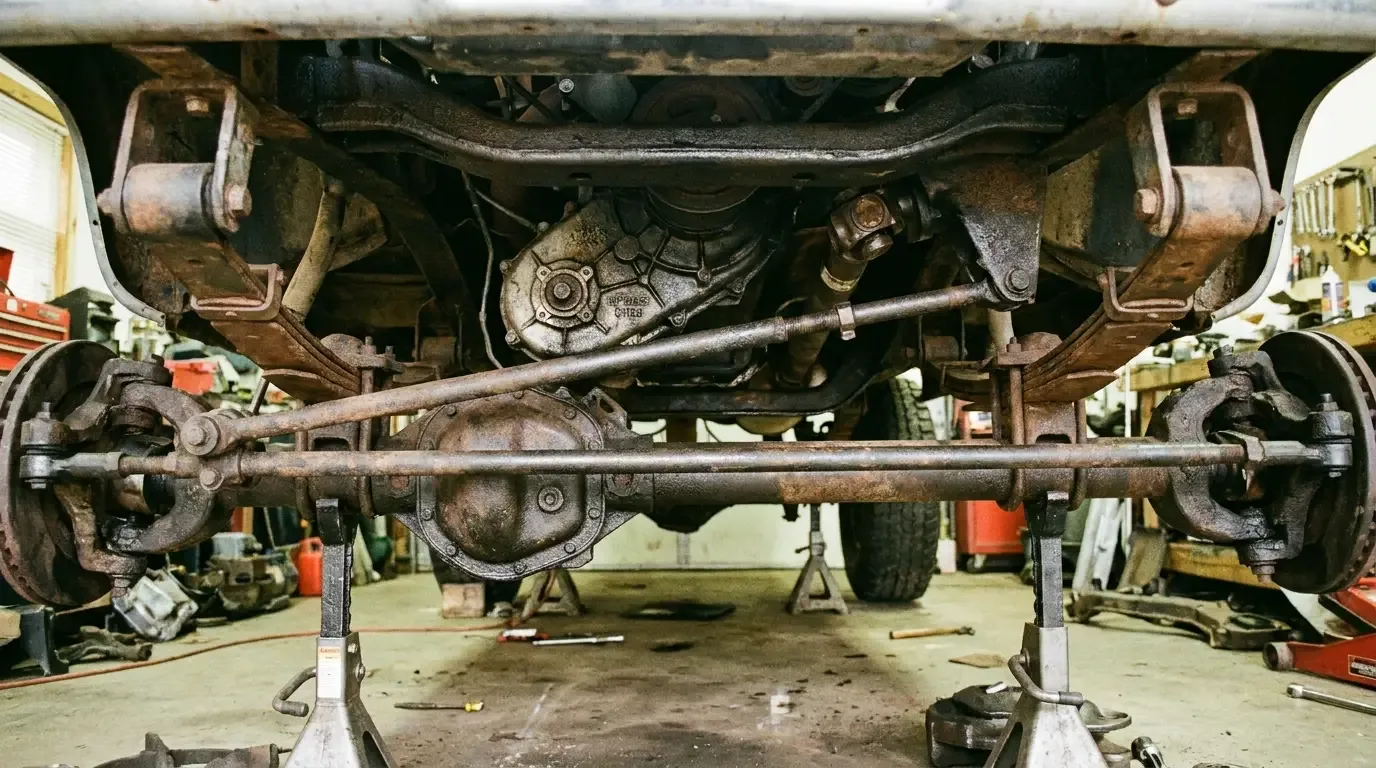
Under a genuine Big 10, you're generally looking at a heavier-duty rear axle than a base C10 carried -- part of the RPO F44 package, which pushed gross vehicle weight rating from roughly 5,600 pounds to about 6,200 pounds -- upgraded rear leaf springs, and in a lot of cases larger brakes pulled from the 3/4-ton parts bin. Wheels sometimes moved to a six-lug pattern shared with the heavier trucks rather than the lighter five-lug setup, though this varied by year and needs checking against the specific truck's build sheet before you assume anything. The frame itself typically stayed a C10 frame rather than a full C20 unit, which is part of why the payload gain, real as it was, never quite matched an actual 3/4-ton truck.
| Feature | Base C10 | Big 10 package |
|---|---|---|
| Rear axle | Standard half-ton unit | Heavier-duty unit (RPO F44) |
| Rear springs | Base leaf rating | Roughly 2,000-lb capacity pack |
| Brakes | Standard C10 brakes | Heavy-duty power brakes standard |
| Registration class | Half-ton | Half-ton, unchanged |
That last row is the whole point of the package. Nothing on the registration form changed. Everything underneath the bed did.
The payload and registration angle nobody put on the window sticker
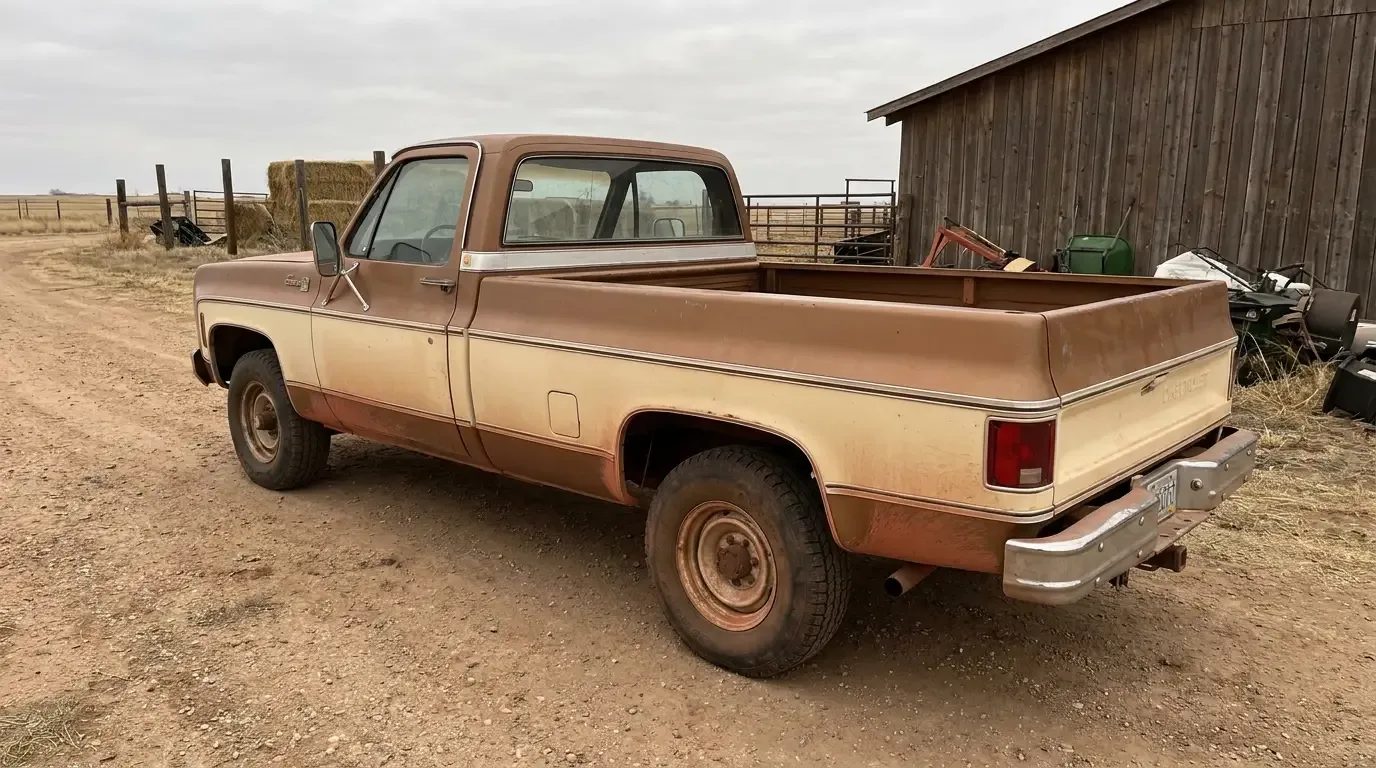
A heavier gross vehicle weight rating pushes a truck into a different bracket for licensing fees, insurance categories, and in some states commercial registration rules, and buyers who didn't need a full-size work truck's paperwork burden still wanted the strength. The Big 10 threaded that needle. You got meaningfully more payload capacity than a base half-ton without crossing the line into the classification that came with a straight 3/4-ton purchase.
That reasoning only makes sense once you stop thinking of these trucks as show pieces and start thinking about who actually bought them new. Ranchers, contractors, guys running a small operation who needed the strength but not the higher operating costs that came with a full 3/4-ton on the title.
The GMC version wore a different name
Chevrolet wasn't running this idea alone. GMC offered essentially the same heavier-duty half-ton package on its parallel truck line, sold as the "Heavy Half" on the GMC C15 rather than "Big 10," offered alongside the Chevrolet package through roughly the second half of the 1970s, which is worth knowing if you're cross-shopping the GMC side of the same basic platform and keep running into a badge that doesn't match anything on the Chevrolet side. The mechanical logic behind it was identical either way, a heavier package tucked inside a truck still classified as a lighter-duty half-ton, it just wore different lettering depending on which showroom sold it new.
How to identify a genuine Big 10 today
Fender badges get swapped, bed sides get replaced, and reproduction decals exist for nearly every trim level Chevrolet ever offered, so badging alone tells you nothing you can trust. Check the axle tag first, then compare the spring pack and brake components against what a base C10 of that model year should carry. A cowl tag with the correct option code is the strongest evidence, assuming it's still legible and original to the truck.
Rust and decades of parts swapping muddy the water further. A truck that's had its rear end replaced somewhere along the way might have picked up heavier components from an unrelated donor truck, which looks like a Big 10 signature but proves nothing about how the truck left the factory. Slow down and check paperwork before you pay a premium for the badge.
One more practical check that's easy to do standing next to the truck: count the leaves in the rear spring pack instead of just eyeballing ride height. Ride height alone gets thrown off by worn springs, an add-a-leaf somebody bolted in years ago, or a base truck that's simply sagging low on tired stock springs. A genuine heavy-duty pack usually carries more leaves than a base C10 unit, though the exact leaf count varies by model year and is worth cross-checking against documentation for that specific truck, and a leaf count is a lot harder to fake on the spot than a badge or a fresh coat of undercoating sprayed on to hide what's actually back there.
What it means next to the K10 and for a buyer now
The Big 10 solved a two-wheel-drive payload problem. It's worth knowing how that compares to the K10 badge, which solved an entirely different problem, four-wheel drive rather than load capacity, since buyers sometimes conflate the two when they're really asking about unrelated trucks.
"The Big 10 wasn't a gimmick. It was somebody at Chevrolet listening to buyers who kept ordering half-tons and then complaining they sagged under real work, and building a truck that split the difference honestly instead of just selling everybody a bigger, more expensive truck they didn't need."
Robert Halloran
If you find a documented one, it's a genuinely useful truck, more capable than a base half-ton without the operating costs of a 3/4-ton. Just verify what you're buying before you pay extra for a name that's easy to fake and hard to confirm.
Sources and notes
- C10 Trucks forum: What is a GMC C15 Heavy Half Square Body Pickup Truck?
- Curbside Classic: 1977 GMC Sierra Grande 15 Heavy Half
- 67-72chevytrucks.com forum: What is a Big 10 or Heavy Half?
- GR Auto Gallery: 1980 Chevrolet C-10 Big 10 listing
- Full Size Chevy: GM Rear Axle RPO Codes and Gear Ratios
- C10 Trucks forum: '79 C10 Big Ten info
Related Reading
Have a
Chevrolet C10
for Sale?
Reach thousands of serious classic car collectors across the US.
Sell It Here →
Are You a Classic Car Dealer?
List your full inventory and connect with targeted classic car buyers.
Join as a Dealer →

About the author
Robert Halloran
Texas-based classic truck enthusiast with decades of experience buying, restoring, and writing about American pickups from the 1940s through the 1980s.
Related Listings - Chevrolet C10
More in History & Heritage
Comments (1)
W
Walter J.
1 day ago
In 1978 I ordered a C10 with the Big 10 package new from a dealer near Hershey, chiefly to tow the Packard to meets, and the salesman could not explain the option to me at all; I had to explain it to him. The heavier rear axle and springs were the point, and a GVWR of roughly 6,200 pounds kept it a half-ton for registration while it carried what my previous half-ton would not. One learns quickly that the paperwork is the real option. It had the 350, which for towing a car of some 4,000 pounds was adequate if one was patient on the grades.
G
GrumpyOldGasser
1 day ago
Salesmen never knew the options. Had a fella at Englishtown swear his truck was a Big 10. Axle tag said otherwise. Never trust a salesman.
W
Walter J.
12 hours ago
Quite so. The axle tag is the first document one should read, and the spring pack the second. A badge costs a few dollars; a 6,200-pound rating on a surviving door sticker is far harder to counterfeit.