
You can date most of these trucks from thirty feet away without ever checking a VIN, and the grille is usually the fastest way to do it. Chevrolet reworked the front end of the C10 more often than a lot of owners realize, and each version tells you something about the truck sitting in front of it.
History & Heritage
7 min read
The Evolution of C10 Front Grilles, 1960–1987
From the plain first-generation grille through the Action Line's near-annual redesigns to the Square Body's squarer face, here's how to date a C10 by its front end alone.
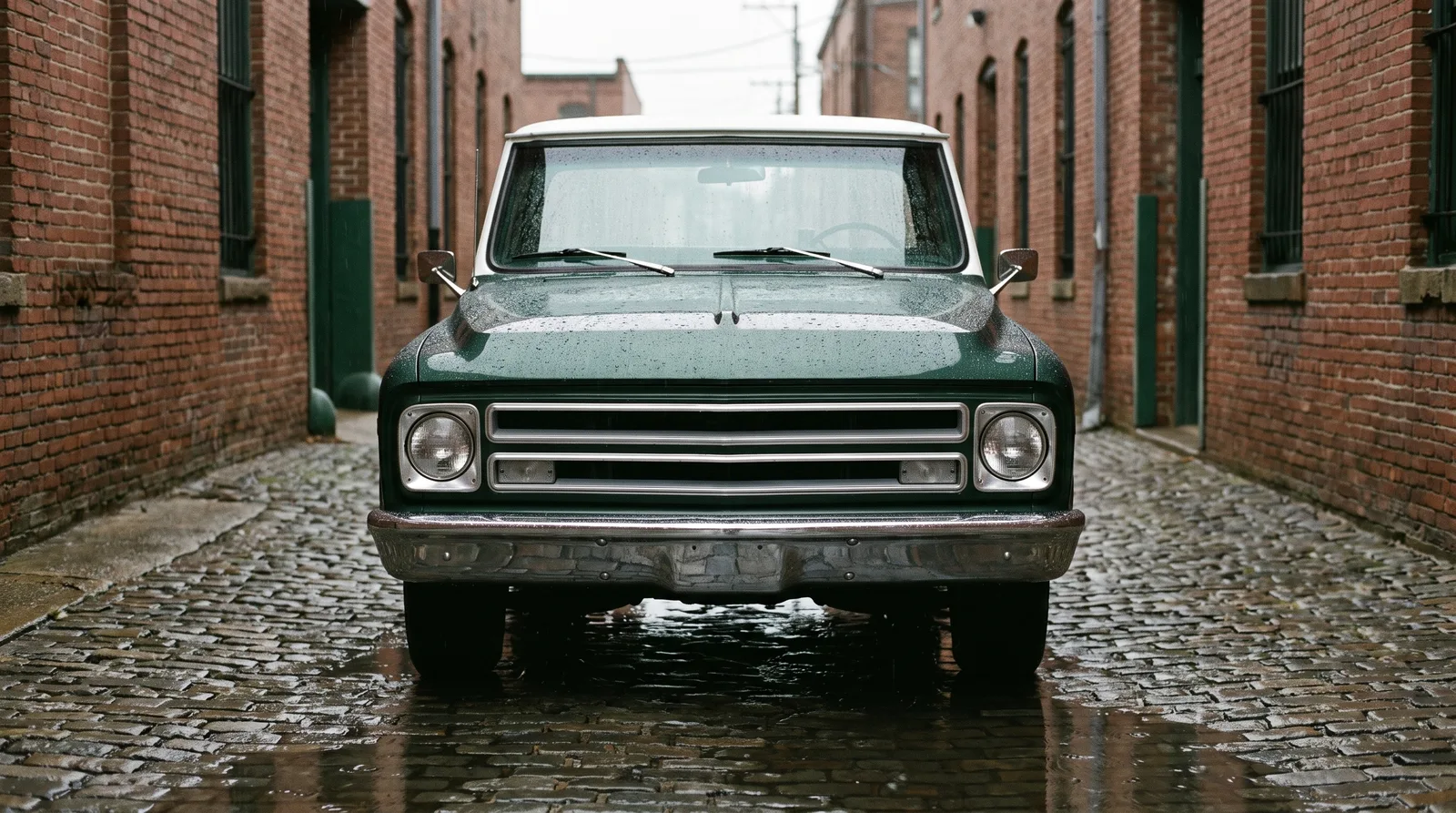
I've spent enough time squinting at front clips in parking lots and swap meets to have this mostly memorized, and it's worth walking through in order rather than trying to memorize every year in isolation.
First generation grilles, 1960 to 1966
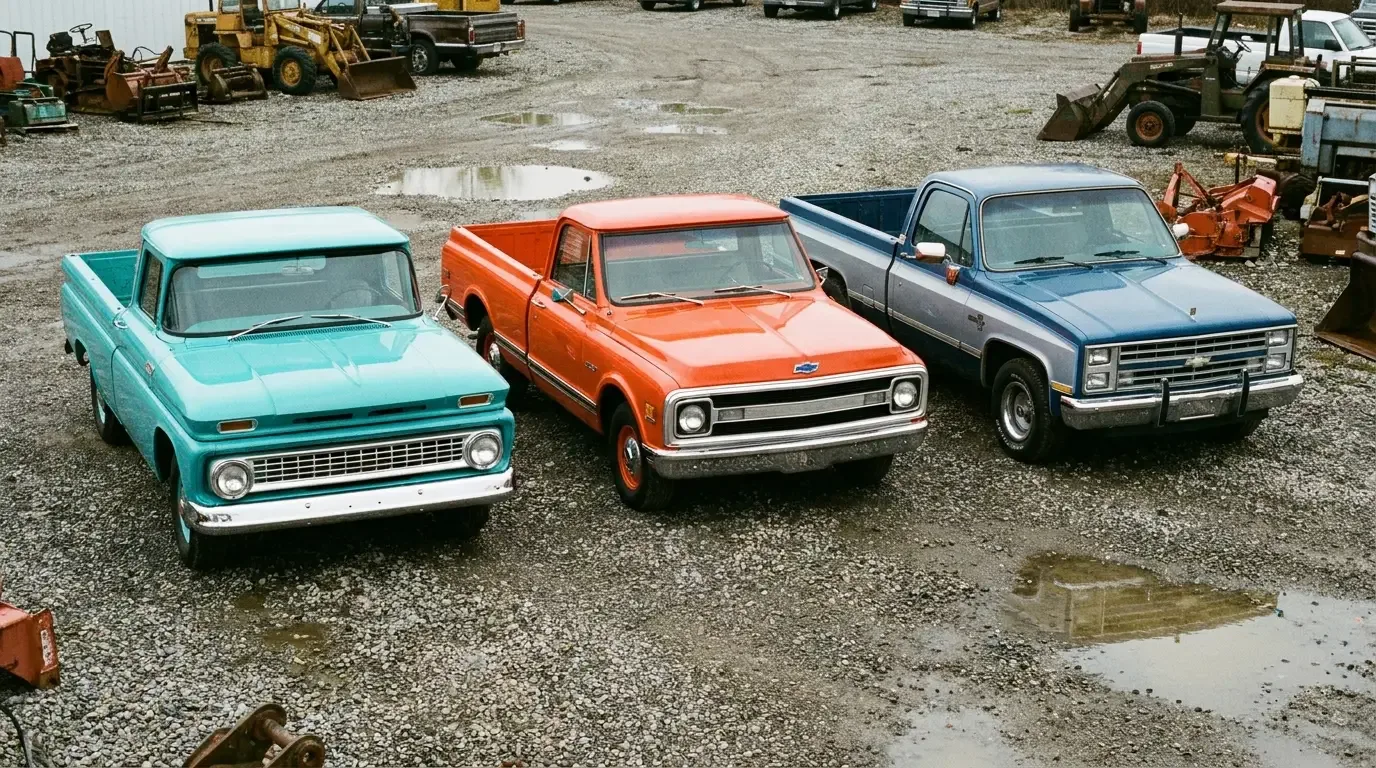
The earliest C10s carried a simple horizontal grille that changed in detail more than in overall shape across those years, a wide opening with varying bar patterns depending on model year and trim. These trucks read as plain and utilitarian compared to what came after, which fits, since they were built in an era when a pickup was still sold almost entirely to buyers who needed a work tool rather than a weekend cruiser.
Trim differences mattered more than most people expect. A base truck and a nicer trim level from the same model year could carry noticeably different grille inserts, so two 1964 trucks parked side by side don't necessarily look alike up front.
Pot metal trim rings around those early grilles don't hold up well in Texas heat, and I've pulled more pitted, bubbled surrounds off first-generation trucks than I care to count. The bright work corrodes from underneath the chrome plating long before the insert itself fails, so a grille that photographs fine can be crumbling at the edges the moment you get a fingernail under the trim ring, a common failure mode for the die-cast zinc alloy trim of that era once its thin copper-nickel-chrome plating gets a pinhole in it. Reproduction inserts exist for the more common years, but decent trim rings and surrounds are thinner on the market than most buyers expect, and a lot of what's out there is used-and-reconditioned rather than new production.
The Action Line grille, 1967 to 1972
Chevrolet redesigned the truck for 1967 with what's generally called the Action Line, and the front end got a cleaner, more integrated look than the first generation. This stretch is where things get genuinely tricky for dating a truck by eye, because Chevrolet made real changes to the grille almost every single year rather than settling into one design and leaving it alone. For the complete year-by-year breakdown across the whole platform, the full generation guide is worth reading alongside this.
| Years | General grille character |
|---|---|
| 1967-68 | Rectangular grille opening with parking lights flanking a center bowtie; 1968 adds federally mandated side marker lights |
| 1969-70 | Steeper hood angle with "CHEVROLET" lettering on the center bar (1969), then painted vertical bars replacing bright trim (1970) |
| 1971-72 | Eggcrate grille pattern debuts with the bowtie back in the grille and parking lamps moved to the bumper (1971); black trim line removed for the final year (1972) |
Headlight configuration also shifted by trim level in this window, some setups running single round headlights and others running the dual-headlight arrangement more associated with higher trim packages, so headlight count alone isn't a reliable dating tool without checking it against the grille pattern too.
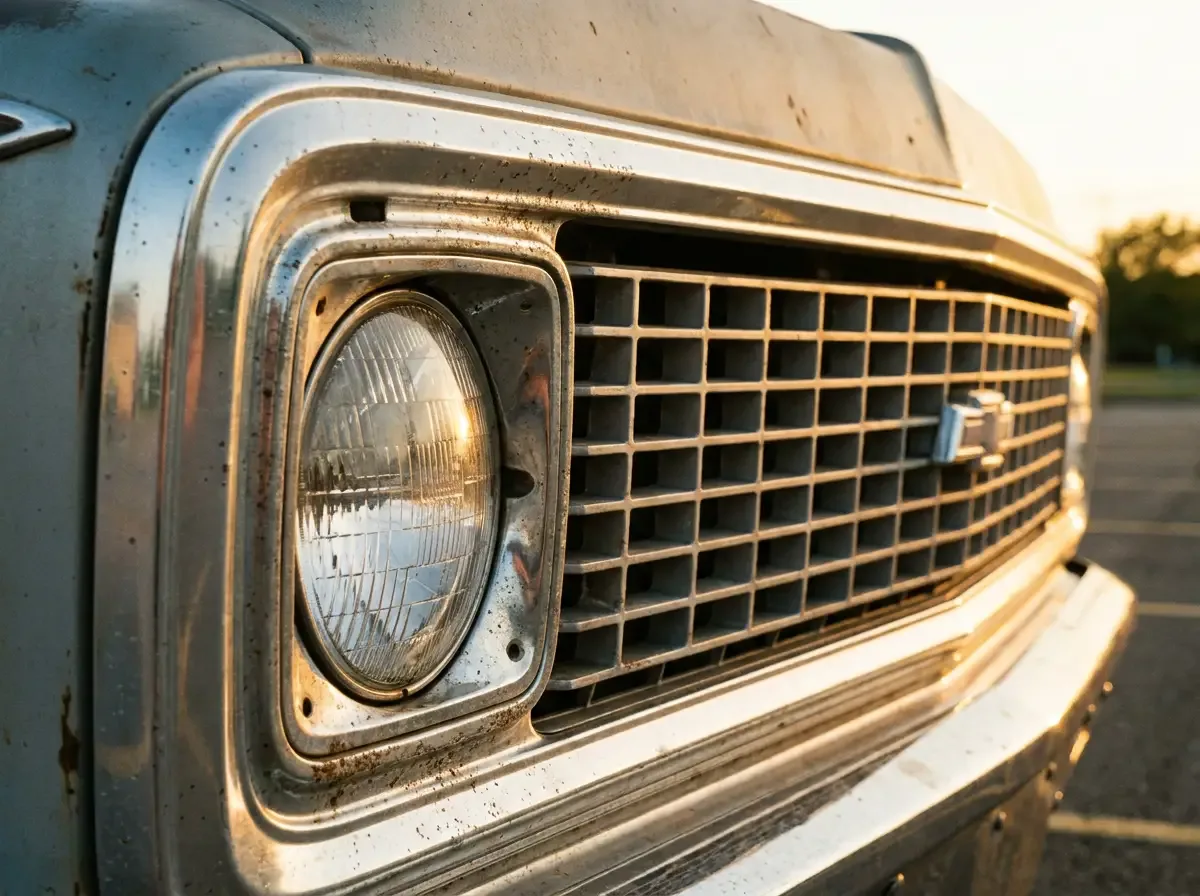
Why the grille changed almost every year in that stretch
Annual grille refreshes were partly a styling decision and partly a cheap way to make a running design feel current without the cost of retooling sheet metal underneath it. A new grille insert and some trim changes let Chevrolet mark a model year clearly on the showroom floor without touching the more expensive stampings for fenders, hood, and cab.
Within this generation, 1972 gets singled out by a lot of collectors as the version that got the details right before the whole platform changed over, and why 1972 is the generation's high point is worth reading if that year specifically interests you.
Square Body grilles, 1973 to 1987
The 1973 redesign brought a squarer, more upright front end, and the grille family that came with it ran, with updates, through 1987. Early Square Body trucks, roughly 1973 through 1980, carried a wider horizontal grille that got revised a few times through that run, while the 1981 update brought a different insert pattern that carried the truck through the final years of production before the C/K platform moved on entirely.
Trim level still mattered enormously here. A base Custom Deluxe and a loaded Silverado from the same model year wear noticeably different grille inserts and surrounds, chrome versus painted trim being the fastest tell at a glance, so trim level and model year both need checking before you're confident in a date.
Reading a grille to date a truck at a glance
Once you've seen enough of these front clips, dating a truck from across a parking lot gets fast. Overall shape narrows it to a generation, first gen, Action Line, or Square Body. Grille insert pattern and headlight configuration narrow it further within that generation. Trim-specific chrome or paint on the surround usually settles which trim level you're looking at, assuming nothing's been swapped from a donor truck along the way, which happens often enough on trucks that have been through a few owners.
"I can usually call the year within a two-year window before I've even looked at the VIN, and most of that comes from the grille and the headlight setup. Everything else on these trucks got reused and swapped so much over the decades that the front clip is often the most honest thing left on the truck."
Robert Halloran
I had a 1969 half-ton come through the shop a few years back with a grille that didn't match anything in my head at first glance, a chrome surround from one style wrapped around an insert that looked closer to a 1970 setup. Turned out a previous owner had swapped parts between two wrecked trucks sometime in the '80s rather than sourcing the correct pieces, and it took pulling the insert and checking the casting marks before I'd trust the year on paper over what my eyes were telling me. That kind of mixed-and-matched front clip is more common than most buyers assume on a truck that's been through several owners, which is exactly why I never call a year off the grille alone without also checking the cowl tag if the truck still has one. On these trucks that tag is typically found on the door hinge pillar or the firewall rather than under the hood on the radiator support, and it decodes model year, assembly plant, body style, trim, and paint, though the exact placement and format shifted across the generations, so it's worth cross-referencing against documentation specific to that model year.
Learn the sequence in order rather than memorizing isolated years, and the whole thing starts making sense as one continuous story of Chevrolet updating a working truck cheaply, year after year, rather than a random pile of trivia to keep straight.
Sources and notes
- Wikipedia: Chevrolet C/K (second generation)
- Hagerty: Your definitive 1967-72 Chevrolet C/K pickup buyer's guide
- Aldan American: 1967-1972 Chevy C10 History
- Fesler: 1967-1972 Chevy C10 and GMC Trucks History, Highlights and Hidden Gems
- Rust Belt Offroad: Identifying the key differences in Chevy/GMC C/K trucks, 1967-1987
- JEGS: GM & Chevy Truck VIN Decoder Chart
Related Reading
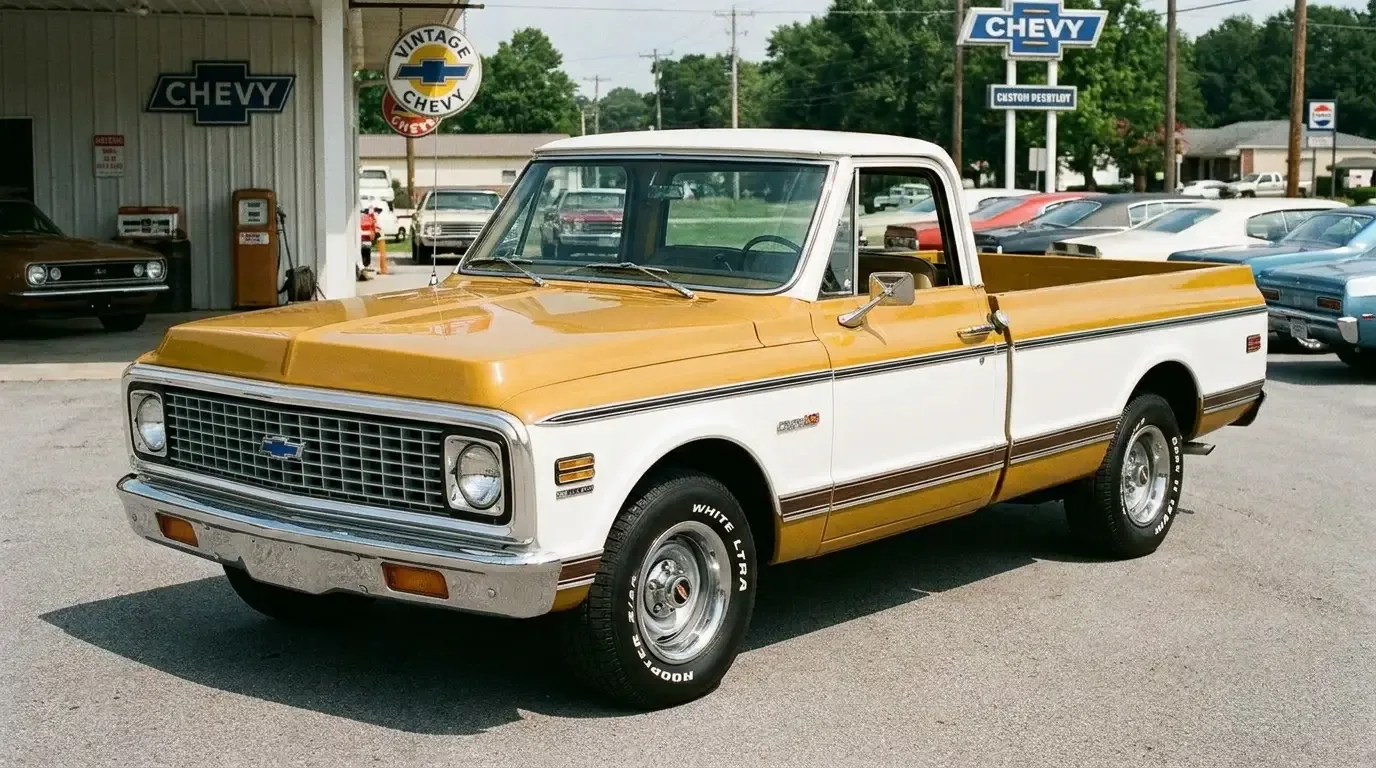
Have a
Chevrolet C10
for Sale?
Reach thousands of serious classic car collectors across the US.
Sell It Here →
Are You a Classic Car Dealer?
List your full inventory and connect with targeted classic car buyers.
Join as a Dealer →

About the author
Robert Halloran
Texas-based classic truck enthusiast with decades of experience buying, restoring, and writing about American pickups from the 1940s through the 1980s.
Related Listings - Chevrolet C10
More in History & Heritage
Comments
Be the first to comment on this article.