
People ask me this one more than almost any other question about these trucks, and it's got a simple answer buried under decades of confused forum posts. C10 and K10 aren't different trim levels or different eras. They're the same half-ton truck built two different ways underneath, and the letter tells you which way.
History & Heritage
7 min read
C10 vs K10: What the Badge Actually Means
C means two-wheel drive, K means four-wheel drive, and the mechanical differences underneath, axle, transfer case, ride height, matter more than any badge on the fender.
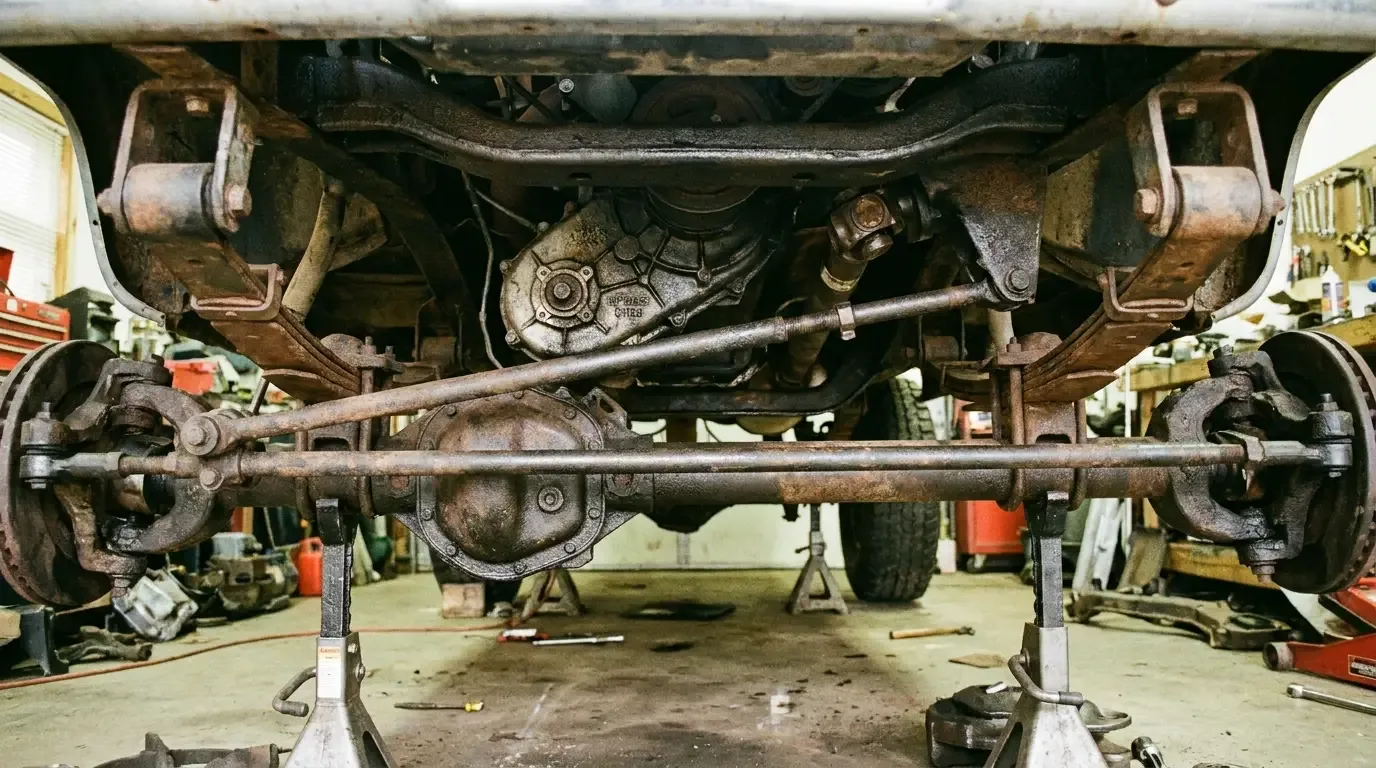
Once you know what to look for, telling them apart takes about ten seconds, badge or no badge.
What the letter actually stands for
C means two-wheel drive. K means four-wheel drive. That's the entire distinction Chevrolet's naming system was built to communicate, and everything else people assume about the difference, ride height, toughness, off-road capability, flows out of that one mechanical fact rather than being a separate design choice. The C10 story covers how the naming convention took hold across the lineup, but the short version is that the number after the letter tracked payload class, half-ton, 3/4-ton, one-ton, while the letter in front tracked drivetrain.
A K10, then, is simply a C10 with a transfer case and a front driveline added, aimed at buyers who needed to get somewhere a two-wheel-drive truck couldn't.
The mechanical differences that come with the K badge
Adding four-wheel drive to a half-ton platform wasn't a badge and a sticker. A K10 carries a solid front axle in place of the C10's independent front suspension on later generations, a transfer case bolted behind the transmission, and a front driveshaft running forward to that axle. The frame gets reinforced in spots to handle the additional stress, and the whole front clip sits higher to clear the front axle housing and provide the ground clearance the truck was actually built to use.
| Feature | C10 | K10 |
|---|---|---|
| Drivetrain | Two-wheel drive | Four-wheel drive |
| Front suspension | Independent (later generations) | Solid front axle |
| Transfer case | None | Yes |
| Ride height | Lower | Noticeably higher (commonly several inches, exact figure varies by generation) |
None of this is cosmetic. It's a genuinely different front end architecture bolted to what is, from the firewall back, largely the same truck.
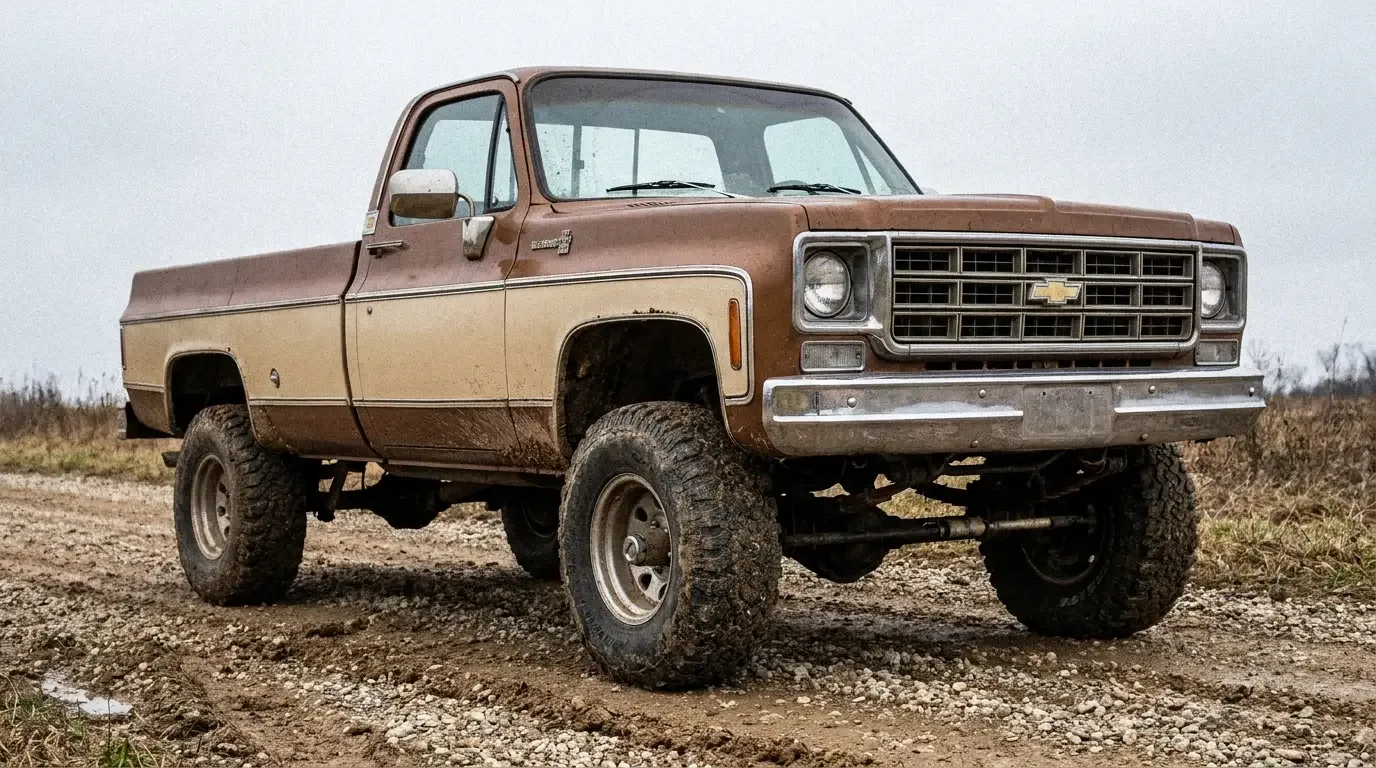
Ride height, stance, and how to tell them apart at a glance
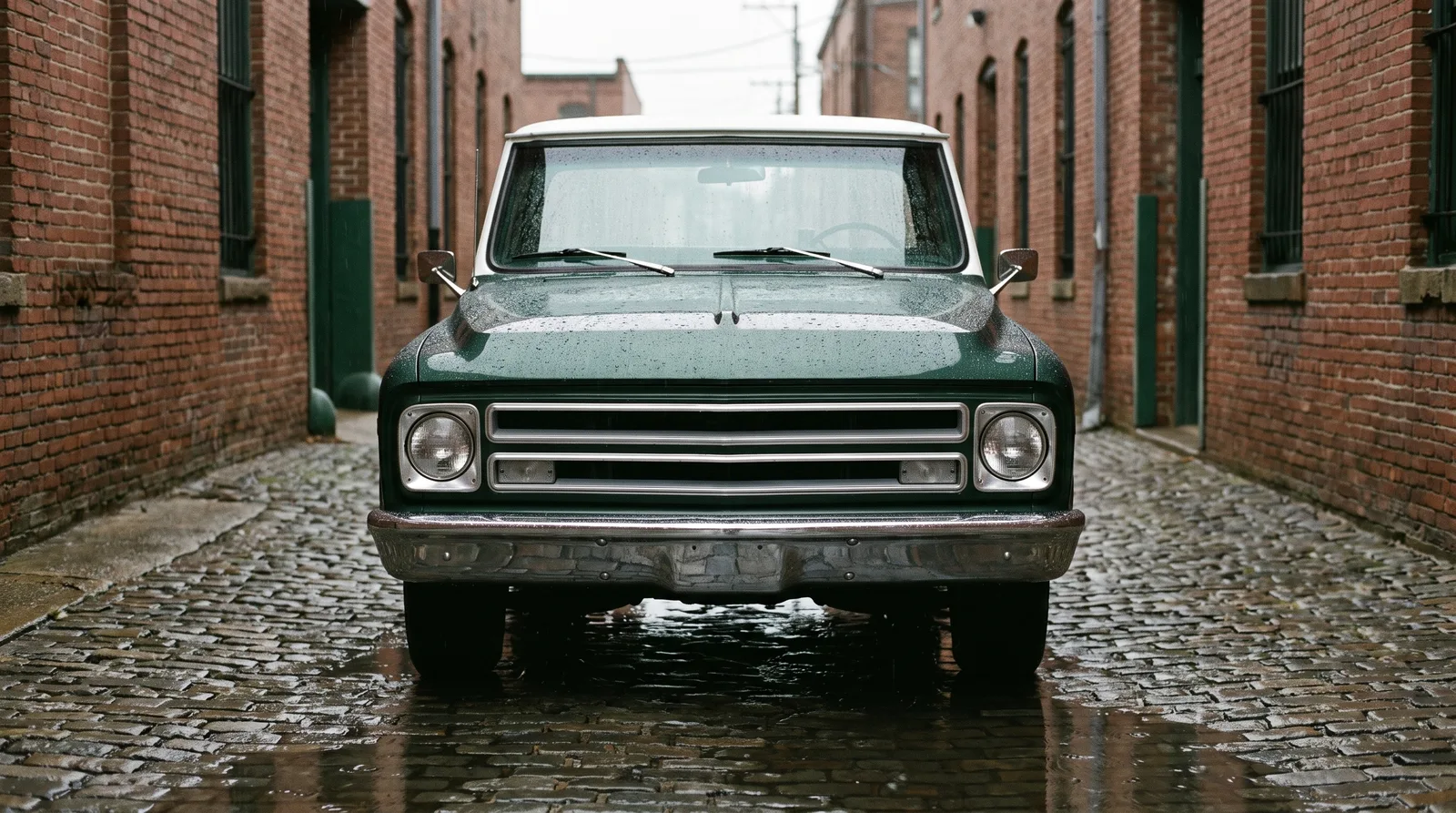
Stand a C10 and a K10 next to each other and the height difference is obvious before you ever look for a badge. The K10 sits taller at the front to clear that solid axle, which gives the whole truck a different stance, nose slightly higher, more visible daylight under the front bumper. Wheel and tire fitment differs too, since a K10 needs to clear the front axle housing and steering components a C10 simply doesn't have.
The front end sheet metal tells a story of its own across the years, and how the front end changed to tell them apart gets into that in more detail, since grille and clip changes sometimes get mistaken for drivetrain clues when they're really just model-year updates that applied to both C and K trucks equally.
Where the K badge came from
Four-wheel drive wasn't new to these trucks when the K designation showed up. Before Chevrolet built factory four-wheel-drive half-tons, aftermarket conversion outfits, NAPCO being the best known, took two-wheel-drive trucks off the lot and added the front axle, transfer case, and driveshaft themselves. GMC offered the NAPCO Powr-Pak conversion starting in 1956, and Chevrolet followed in 1957 under its own RPO 690, running through the end of the decade. Once Chevrolet redesigned its truck chassis for 1960 with independent front suspension, incompatible with the old Powr-Pak kits, it began building four-wheel drive in-house as the factory K-series instead of shipping trucks out to NAPCO for conversion, and the K prefix became the way to order that capability straight from the dealer instead of after the fact. A fair amount of what looks like a factory K10 quirk today actually traces back to engineering decisions made back when this was still somebody else's aftermarket job.
The same C and K logic wasn't limited to the regular pickup line either. The Suburban and, later, the Blazer used the identical letter system for the identical reason, C meaning two-wheel drive and K meaning four, which is worth knowing if you're cross-shopping body styles and see the same letters show up outside a standard cab-and-bed truck.
Common mix-ups and badge swaps buyers run into
Badges get swapped constantly, sometimes because a previous owner liked the look of one letter better, sometimes because a truck's fenders got replaced with whatever was on the shelf at the parts yard. A C10 wearing K10 fender emblems doesn't become four-wheel drive by doing so, and I've seen it happen more than once at a swap meet where somebody paid a premium for a badge that had nothing to do with what was actually under the truck.
The fix is the same as with most badge questions on these trucks. Get under the front end and look for the axle housing, the transfer case, and the front driveshaft. If they're there, it's four-wheel drive regardless of what the fender says. If they're not, no badge changes that.
Steering geometry is where the swap really shows up
The steering setup changes along with the front axle, and it's not a minor footnote. A solid front axle moves through a fundamentally different arc than an independent front suspension does, which is why the steering linkage, tie rod length, and even the drag link geometry differ between a C10 and a K10 built in the same year. Anybody swapping steering components between the two platforms without accounting for that difference is asking for bump steer they didn't have before they started the swap.
Why the distinction matters for value and use
A K10 costs more to maintain, generally, more driveline components to service, more parts that can wear out, but it does something a C10 fundamentally cannot: get through mud, snow, and rough ground a two-wheel-drive truck has to avoid. Neither is the "better" truck in absolute terms. It depends entirely on what you're going to ask it to do. For a Sunday cruiser that never leaves pavement, the C10's lighter, simpler front end is arguably the smarter buy, and C10 generations is worth a read if you're deciding which model year suits that use case best.
"I've had guys tell me a K10 is the tougher truck like it's a fact of nature. It's not tougher. It's built for a different job, and if you never do that job, you're carrying around driveline weight and maintenance cost for capability you'll never use."
Robert Halloran
Know which one you're actually looking at, and know which one you actually need, before you let a badge talk you into paying more for a truck than the job in front of you requires.
Sources and notes
- Wikipedia: Napco Four Wheel Drive Vehicles
- Barn Finds: Napco 4WD, 1960 Chevrolet K-10
- Tread Magazine: NAPCO 4x4, History and Impact of Factory 4WD Conversions
- Autowise: NAPCO 4x4 Conversion Kits
- Wikipedia: Chevrolet C/K (second generation)
- Rust Belt Offroad: Identifying the key differences in Chevy/GMC C/K trucks, 1967-1987
Related Reading
Have a
Chevrolet C10
for Sale?
Reach thousands of serious classic car collectors across the US.
Sell It Here →
Are You a Classic Car Dealer?
List your full inventory and connect with targeted classic car buyers.
Join as a Dealer →

About the author
Robert Halloran
Texas-based classic truck enthusiast with decades of experience buying, restoring, and writing about American pickups from the 1940s through the 1980s.
Related Listings - Chevrolet C10
More in History & Heritage
Comments
Be the first to comment on this article.