
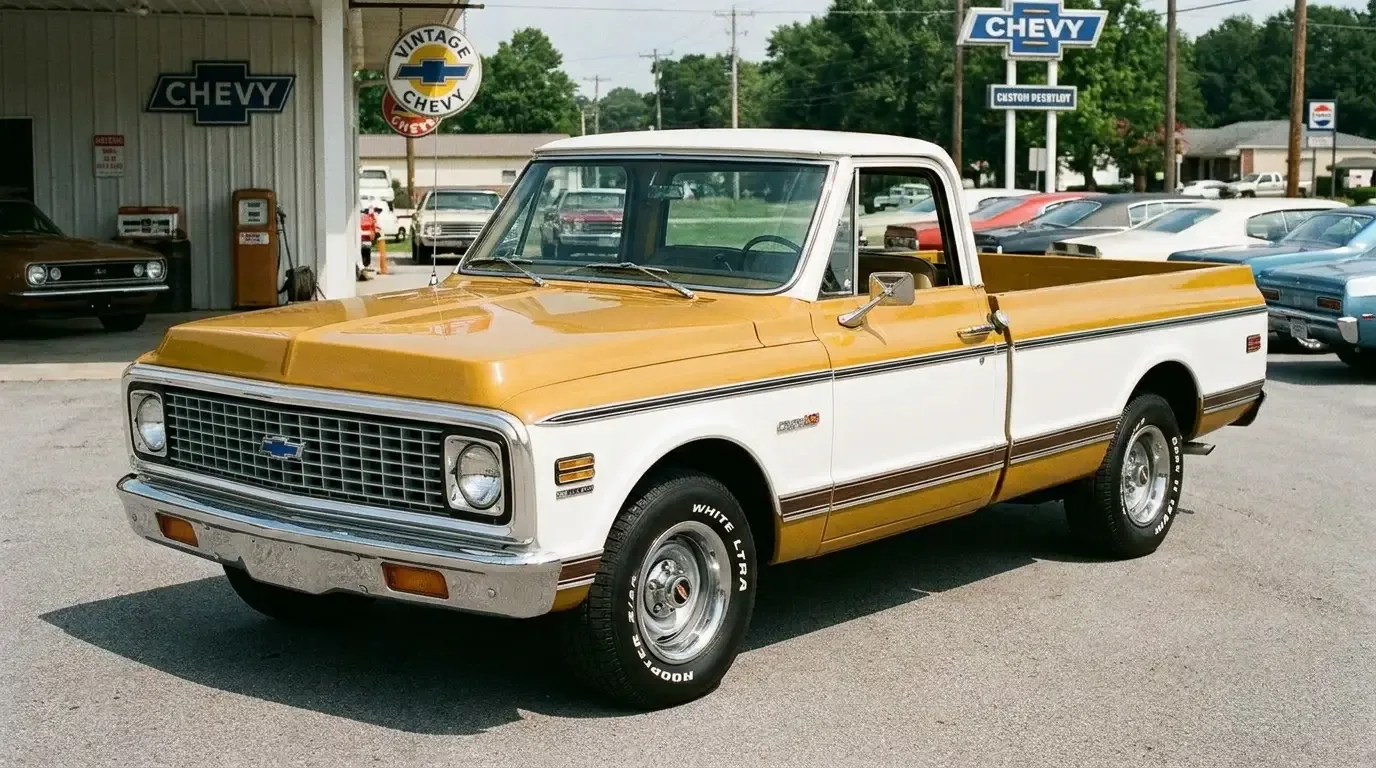
Chevrolet's first-generation C/K pickup ran from 1960, but the 1967 redesign is what everybody in this hobby means when they say "Action Line." Six model years is a long run for one basic body, and by the time 1972 came around, the factory had worked out most of the rough edges that showed up in the early Action Line trucks. That's really the short version of why so many buyers point at 1972 specifically instead of just saying "get an Action Line truck and don't worry about the year."
History & Heritage
6 min read
Why 1972 Is Considered the Peak Action Line Year
1972 closed out the Action Line C10 body with its most refined trim and drivetrain lineup, which is why collectors treat it as the high point of the run.
What Action Line actually meant
The name came from Chevrolet's own marketing for the 1967 truck line, built around a straighter beltline, a wider cab, and a ride that borrowed more from the passenger car side of the company than any truck before it. It was a real shift. Buyers who'd been driving the older, boxier trucks noticed the difference in seat comfort and steering feel right away. Chevrolet kept refining that same basic platform through 1972, so a 1972 truck shares its bones with a 1967 truck but not much else in terms of trim, options, and small engineering fixes.
If you want the full breakdown of what changed year to year across the whole run, the C10 generations guide covers it end to end. What I want to get into here is why 1972 in particular gets singled out.
What Chevrolet got right by 1972
Every year in a long production run fixes something the year before got wrong. By 1971, the truck had picked up its facelifted grille and the Cheyenne trim package, which was the first real attempt at a truck that looked good enough to park in front of a nice house instead of just a barn. 1972 carried that forward and, from what I've seen on actual trucks that have come through my shop, cleaned up some of the trim fitment and interior hardware that felt a little cheap in 1971. Door panels sit better. Dash trim doesn't rattle as much. Small stuff, but it adds up over a six-year run.
The Cheyenne Super package, which added extra brightwork and a nicer interior on top of the base Cheyenne, actually arrived as a running change partway through the 1971 model year, so 1972 was really its first full model year on the order sheet rather than a brand-new option. Worth knowing if a seller tries to sell you on how rare an "early" Cheyenne Super is, check the RPO codes on the specific truck rather than taking a build date at face value.
Engines and drivetrain in the last Action Line year
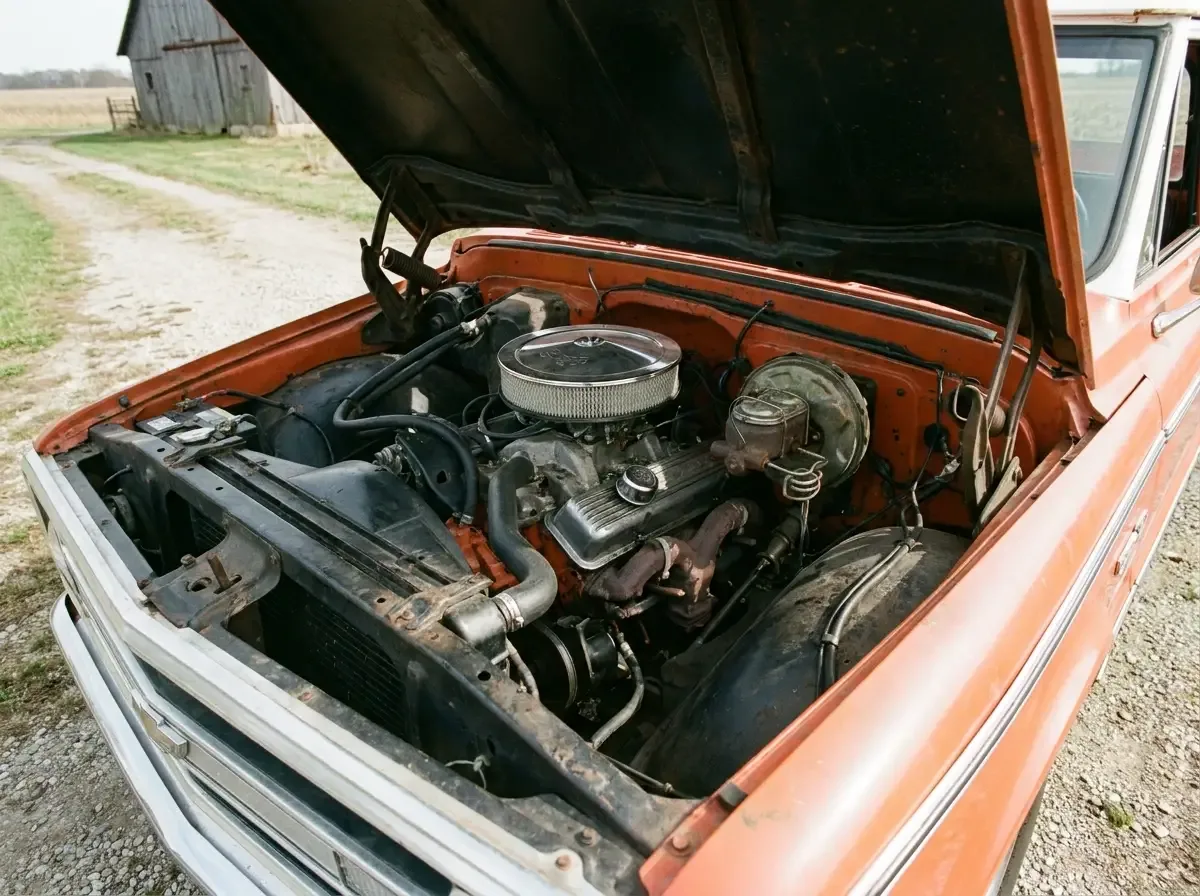
The base engine was still the 250 cubic inch inline six, which is about as unglamorous as it gets but will run forever if you change the oil. Above that sat the 292 inline six for guys who wanted more low-end pull without stepping up to a V8. The V8 lineup ran from the 307 up through the 350, with 402 and 454 cubic-inch big-block options available on some configurations for buyers hauling real loads or towing, the 402 was ordered rarely in a half-ton, so a factory 402 truck is a genuine find, while the 454 was the big-block most buyers actually drove home. 1972 was also the year Chevrolet switched published horsepower figures from gross to net ratings, so don't compare a 350's advertised output straight across to a pre-1972 truck without accounting for that change in measurement.
| Engine | Type | Notes |
|---|---|---|
| 250 I6 | Standard | Base engine, most common on work-spec trucks |
| 292 I6 | Optional | Torquier six for towing without going V8 |
| 307 V8 | Optional | Entry V8, rated around 130 net hp for 1972 |
| 350 V8 | Optional | The engine most buyers want today |
Transmission choices were a three-speed manual on the column as standard equipment, with a four-speed manual and the Turbo Hydra-matic automatic available depending on engine and trim. Most of the trucks I run across today have already had a transmission swap somewhere in their life, so the original combination isn't always what's under the truck now.
Why 1972 pulls a premium with buyers today
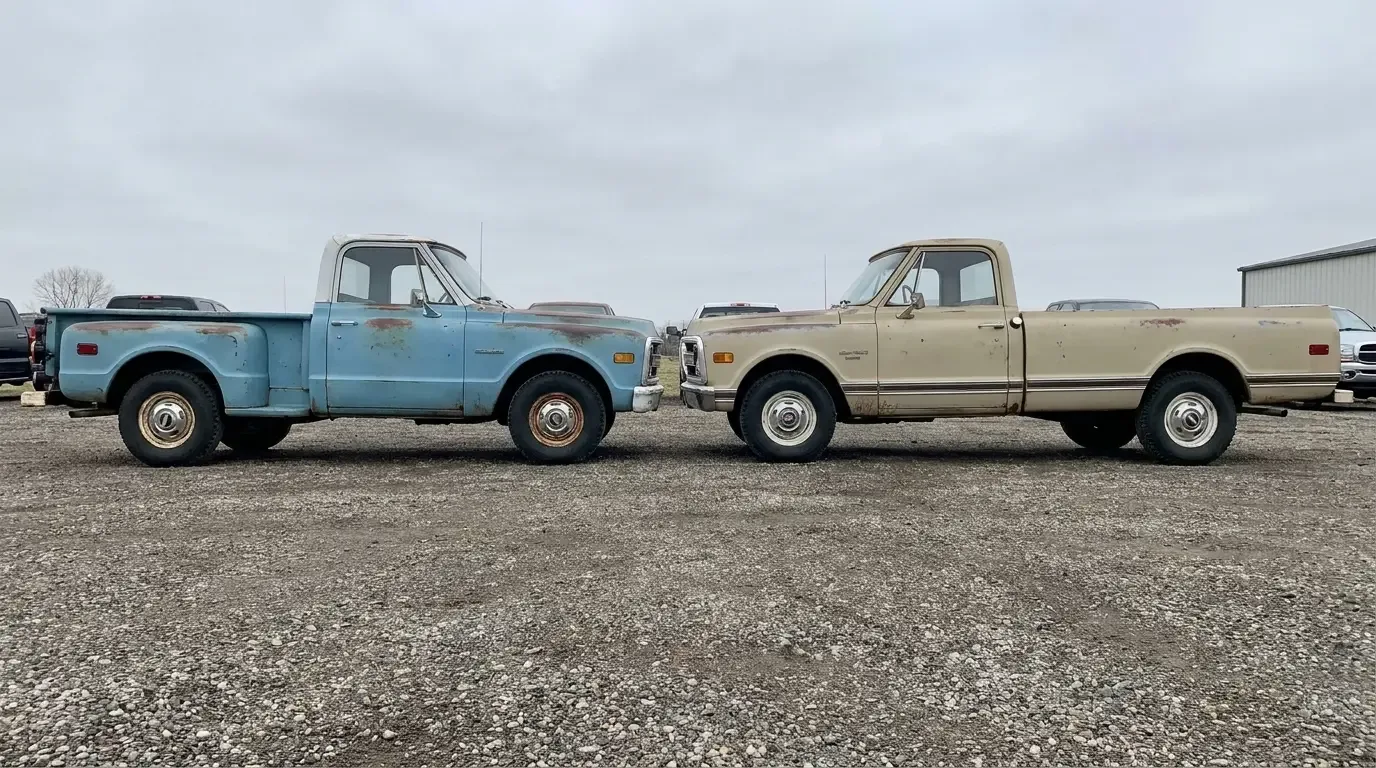
Being the last year of a body style does something to demand, and it's not always logical. A 1972 isn't mechanically better than a 1970 in any way that matters day to day. But it's the truck that got every fix Chevrolet made across six years of the same platform, and it's the one right before everything changed. Bed length matters here too. Buyers cross-shopping a 1972 short bed against a long bed of the same year run into a supply gap that's bigger than most people expect, and how bed length affects rarity is its own conversation worth reading before you commit to one over the other.
I've watched asking prices on clean 1972 Cheyenne trucks climb noticeably faster than the 1969 and 1970 equivalents over the past several years, though I wouldn't put a precise number on the spread since it moves with each auction cycle, and part of that is simple nostalgia. Guys who grew up around these trucks in the early seventies are the ones with money to spend now, and 1972 was the truck in the driveway or on the lot when a lot of them were paying attention for the first time.
"A 1972 doesn't drive different from a good 1970. What it has is the reputation of being the last one before everything changed, and buyers pay for that story whether they'll admit it or not."
Robert Halloran
What to check before you buy a 1972
Same rules apply here as on any Action Line truck this age. Frame rails, cab corners, and floor pans are where the real damage hides, and a fresh coat of undercoating on a truck this age should make you more suspicious, not less. Ask for build sheet documentation if the seller claims a rare option like the Cheyenne Super or a big-block. Paperwork on a truck this old is thin to begin with, so a seller who has it usually knows what they've got and prices accordingly.
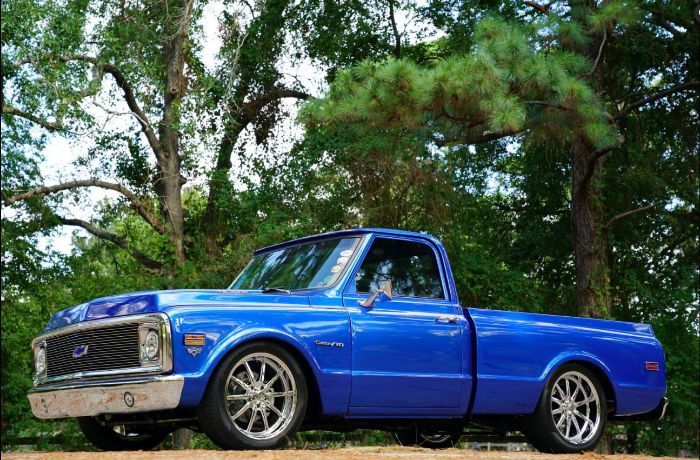
If you're actually in the market, there's a solid run of 1972 C10s for sale worth working through before you settle on one. Compare bed length, trim level, and drivetrain against what's realistically available, because 1972 isn't a huge production year and the good ones don't sit unsold for long.
Sources and notes
Related Reading
Have a
Chevrolet C10
for Sale?
Reach thousands of serious classic car collectors across the US.
Sell It Here →
Are You a Classic Car Dealer?
List your full inventory and connect with targeted classic car buyers.
Join as a Dealer →

About the author
Robert Halloran
Texas-based classic truck enthusiast with decades of experience buying, restoring, and writing about American pickups from the 1940s through the 1980s.
Related Listings - Chevrolet C10
More in History & Heritage
Comments
Be the first to comment on this article.