
I get asked this one a lot at swap meets: why does a short bed C10 sell for more than a long bed with the same engine, same year, same condition? The answer isn't complicated once you understand what these trucks were actually bought for back when they were new work trucks instead of driveway trophies.
History & Heritage
6 min read
Short Bed vs Long Bed: C10 Production Ratios Explained
Long bed C10s dominated factory production because they were built as work trucks, which is exactly why short beds carry a rarity premium in today's market.
Why long beds outnumbered short beds in the first place
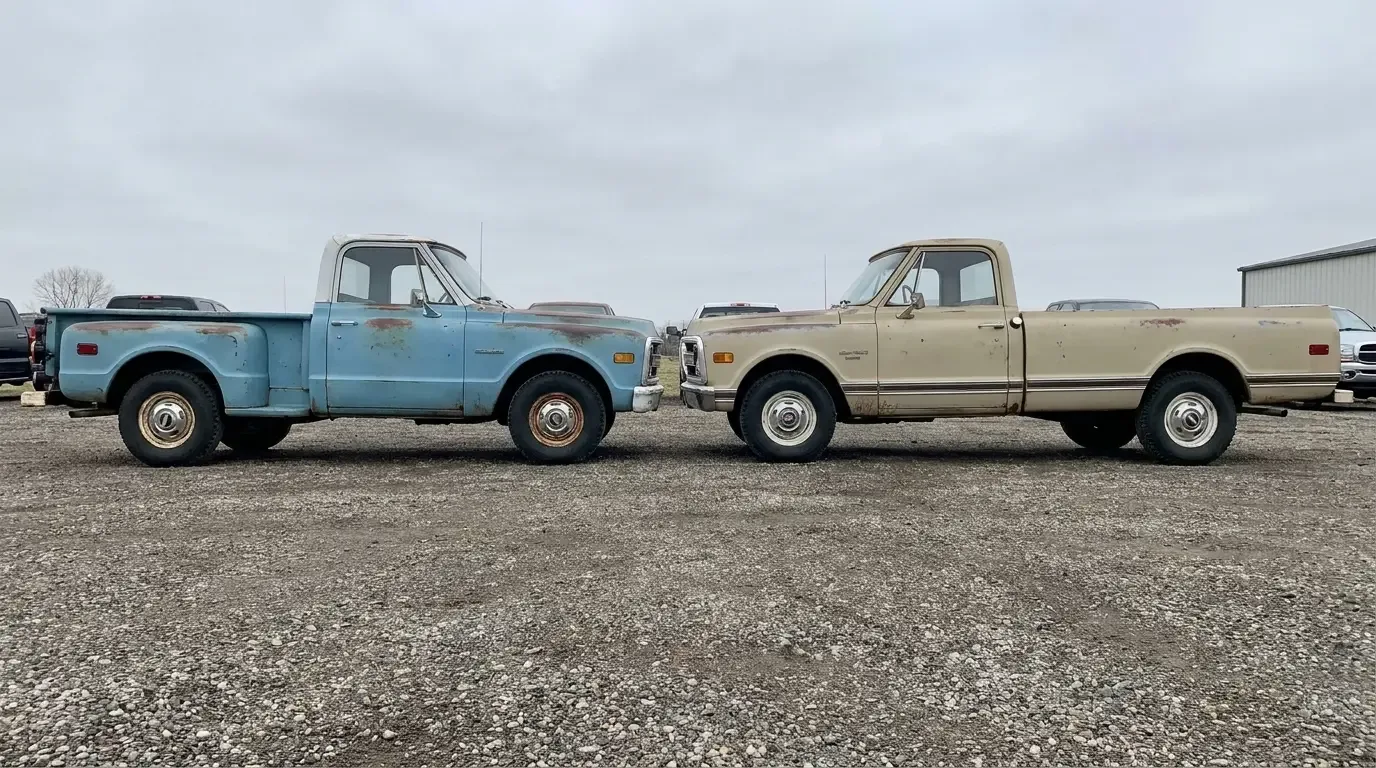
Most C10s left the factory as long bed work trucks because that's what a farmer, a contractor, or a delivery outfit actually needed. An eight-foot bed hauls more lumber, more feed, more whatever-the-job-required. Short beds existed the whole time, but they were the truck you bought if you wanted something a little more maneuverable, or if you were buying it as a second vehicle rather than the main work rig. Fleet buyers, who ordered in bulk and drove factory production numbers more than any single retail customer, leaned long bed almost every time.
That's the root of the rarity. It's not that short beds were some limited special package. It's that fewer people ordered them new, so there are just fewer of them left, especially in the earlier Action Line years before short beds got trendier with the custom truck crowd. Production splits by bed length for individual model years aren't something I'd quote you a hard number on, GM's own published breakdowns by bed length for this era aren't public in any source I trust, but every production tally and enthusiast archive I've checked agrees the ratio was lopsided toward long bed across the whole run.
Stepside versus Fleetside changes the math again
Bed length is only half of it. You've also got Fleetside, the smooth-sided bed that most people picture when they think "classic pickup," and Stepside, the narrower bed with exposed rear fenders that harkens back to the earliest pickup designs. Stepside production dropped off through the sixties and seventies as buyers shifted toward Fleetside's extra width and cleaner look, so a Stepside short bed is stacking two lower-production choices on top of each other. Find one of those in decent shape and you've found something genuinely uncommon, not just uncommon-sounding.
| Configuration | Relative rarity | Typical buyer then |
|---|---|---|
| Long bed Fleetside | Most common | Farm and fleet work |
| Long bed Stepside | Uncommon | Traditional-minded work buyer |
| Short bed Fleetside | Less common | Personal use, lighter duty |
| Short bed Stepside | Rarest | Niche buyer even when new |
Why the market flipped in favor of short beds
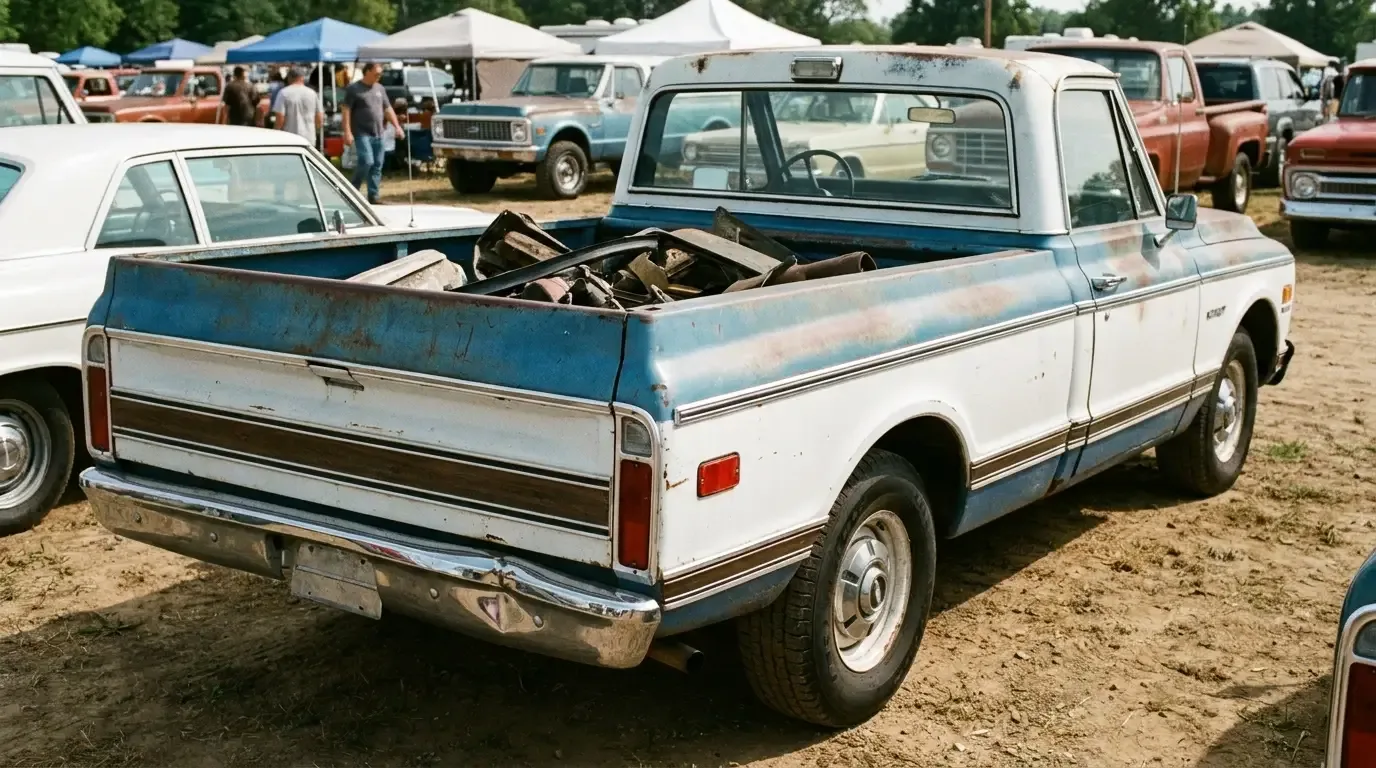
Here's the part that trips people up. These trucks were built as work equipment, so rarity back then had nothing to do with desirability. Nobody in 1969 was paying extra for a short bed because it looked better on a lift kit with a fresh set of wheels. That came later, once the truck stopped being a tool and started being a project. Short beds sit right for a lot of the custom and lowered builds that define this hobby now, the proportions read cleaner, and that combination of visual preference plus genuine lower supply is what pushed short bed prices up over long bed trucks in comparable condition.
I've had guys bring me long bed trucks wanting a bed swap just to chase that short bed look and the resale bump that comes with it. It's not a cheap job done right, and you're starting from a truck that was never built around those proportions, so the frame and bed mounting isn't a drop-in fix. If a short bed is what you want, buying one that left the factory that way saves you a lot of grief later.
Here's the fastest way to check without pulling out a tape measure at a swap meet: look at where the rear crossmember sits relative to the framerail kick-up ahead of the axle. A long bed frame has more real estate back there before the frame kicks up over the axle, and a swapped bed on a long bed chassis will usually show extra, unused mounting holes or a spacer plate where the bed got pulled forward to fake the shorter look. I had a customer bring me a '71 he swore was a factory short bed, and the extra holes drilled two inches forward of the factory pattern told the real story in about ten minutes.
What this means when you're actually shopping
Don't take a seller's word that a truck is "one of the rare ones" just because it's a short bed. Rarity within this hobby moves in layers: body style, bed length, cab configuration, and options all stack together, and a short bed alone doesn't make a truck special if it's otherwise a base six-cylinder with no other options worth mentioning. Some folks will point you to the VIN or the cowl/trim tag for a body-style code that's supposed to confirm bed length and cab configuration, but tags get swapped, repainted over, or go missing often enough that I still trust what's physically drilled into the frame over what's stamped on a tag I can't prove came off this truck originally. You want the whole picture before you pay a rarity premium. That same logic applies if you're weighing a Chevy against its closest factory cousinhow the GMC twin compared covers how badge-engineering muddies the rarity conversation even further, since a C15 with the same body can carry a completely different perceived value for reasons that have nothing to do with what's actually different underneath.
If you want the bigger picture on how these trucks evolved generation to generation, including where bed length options shifted, the C10 generation history lays out the full timeline. It's worth reading before you get too attached to one specific configuration, because what counted as standard changed more than people assume.
"Nobody ordered a short bed in 1969 to make it worth more in 2026. They ordered it because it fit in their garage. Everything after that is the market catching up to a truck that was never trying to be special."
Mike Sullivan
Bottom line on paying a premium for bed length
Short bed rarity is real, but it's relative, not absolute. A rough short bed with a blown engine and rusted floors is still a rough truck. Pay for bed length and body style as one factor among several, verify the bed is original to the frame before you get excited about matching numbers, and don't let a seller's "you'll never find another one" line do your negotiating for you. There's always another one. It might just take longer to find.
Sources and notes
- Chevrolet C/K second generation production and body-style overview
- Hagerty's definitive 1967-72 Chevrolet pickup buyer's guide
- Forum discussion on short vs. long bed values
- 67-72 Chevy production numbers reference
- 1967-1972 Chevrolet C/K second-gen specs and guide
- Chevrolet C10 models and specs buyer's guide
Related Reading
Have a
Chevrolet C10
for Sale?
Reach thousands of serious classic car collectors across the US.
Sell It Here →
Are You a Classic Car Dealer?
List your full inventory and connect with targeted classic car buyers.
Join as a Dealer →

About the author
Mike Sullivan
Detroit-area muscle car enthusiast and restoration specialist with three decades of hands-on experience working on American iron.
Related Listings - Chevrolet C10
More in History & Heritage

Comments
Be the first to comment on this article.