
A car show is a parking lot full of other people's property, a crowd walking between bumpers, and a few hundred engines starting at the same time when it ends. Most days nothing happens. Car show insurance and the right permits are for the day something does. This guide covers what a one-day policy usually covers, the limits cities and venues ask for, where organizers buy coverage, and the permits that tend to come up. The short version: the paperwork is local, the limits are negotiable only upward, and nobody will hand you a complete list.
Ownership & Lifestyle
7 min read
Car Show Insurance and Event Permits Explained
Car show insurance and permits: what event liability covers, the limits cities ask for, where organizers buy a policy, and which permits come up.
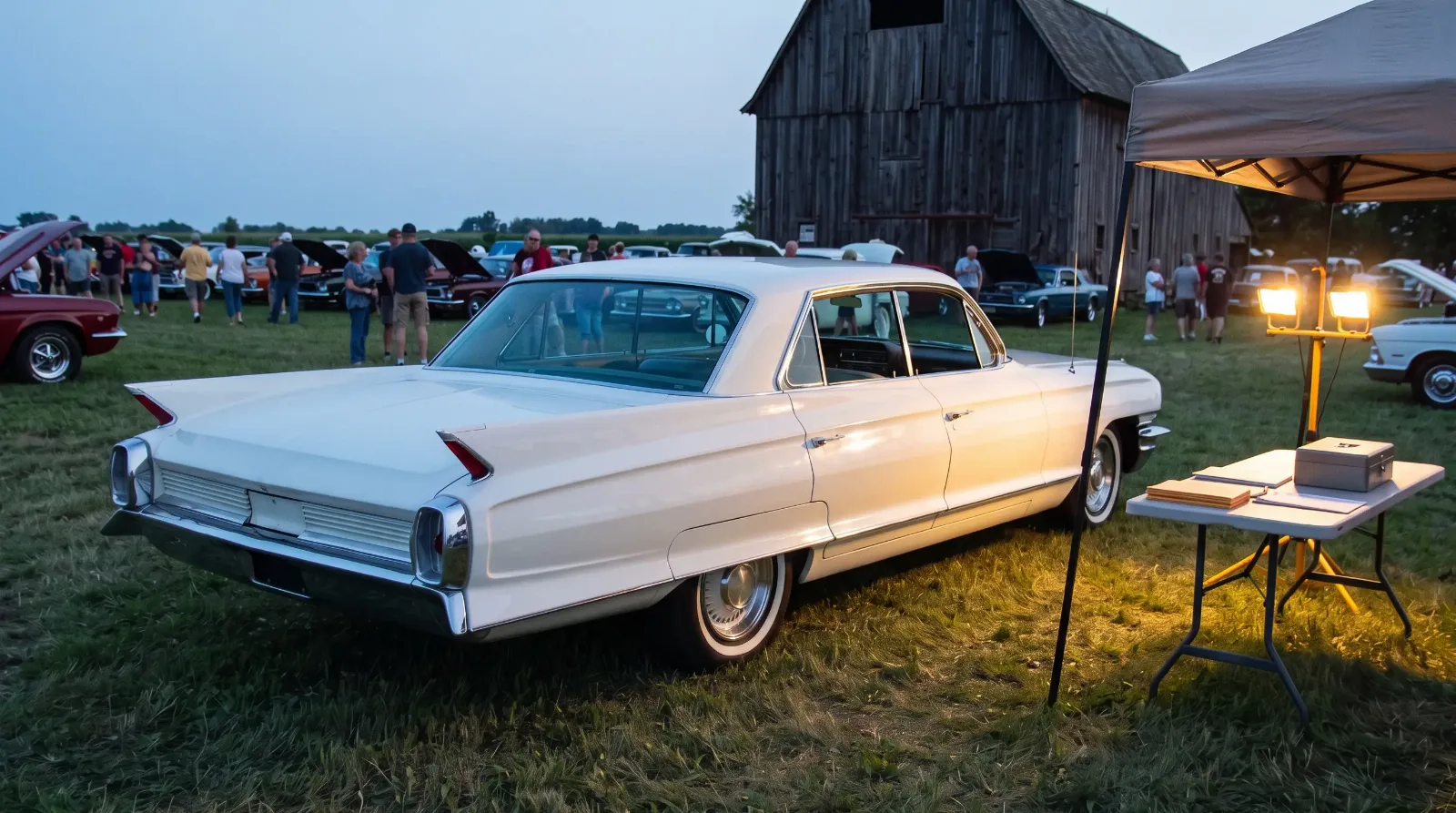
What car show insurance covers, and what it leaves out
The core product is general liability. It answers when a spectator trips over a jack stand, a vendor's canopy blows into a fender, or a visitor claims the event damaged their property. SECURA, which writes short-term event policies in 13 states, describes its cover as general liability for premises and operations plus personal and advertising injury, and says the policy extends to club members and volunteers who organize the event. It also lists food trucks, vendors and fundraisers as insurable pieces.
Now the caveat. General liability is about injury and damage to third parties. It is not, by itself, coverage for the show cars. The Model A Ford Club of America's group program makes the point plainly: members must keep their own auto liability and physical damage insurance. The same program discourages charging for rides in a car at club functions, because most personal auto policies exclude that use. A paid parade lap or a "ride in the hot rod" ticket can quietly move a claim out of everyone's coverage.
Alcohol is the other gap. The Model A club's liquor liability is limited and excludes clubs in the alcohol business and service to intoxicated people or minors. If a beer tent is part of the plan, ask about liquor liability as a separate line, not an afterthought.
How much coverage cities and venues ask for
The number you need is usually set by someone else: the city issuing the permit, or the venue owner. Two city requirements show the pattern.
| Source | General liability | Other lines | Paperwork |
|---|---|---|---|
| Seattle special event permit | $1,000,000 per occurrence, combined single limit | Liquor $2,000,000 per occurrence (non-profits may reduce to $1,000,000); auto $1,000,000 if vehicles are used beyond normal commuting | City named additional insured; documents filed at least 30 days before; no permit until Risk Management approves |
| Las Vegas events on public property | $1,000,000 per occurrence / $2,000,000 aggregate | Auto $1,000,000 combined single limit, only if vehicles are used at the event | ACORD 25 certificate naming the City and LVMPD as additional insureds, with 30-day cancellation notice, before permit approval |
| Hagerty collector car club program | Up to $2,000,000 per occurrence / $4,000,000 annual aggregate | Directors and officers liability as an add-on | Additional-insured certificate for a rented venue on request |
The pattern across those sources is $1 million per occurrence, often with a $2 million aggregate. It is a benchmark, not a national rule. Your town may ask for more, and a venue owner can ask for whatever its own insurer tells it to. The Las Vegas requirement is from a document dated 2022, so check the current version before you file.
The phrase to listen for is "additional insured." It means the city or landowner wants to be named on your policy so that a claim against them for your event is answered by your insurer. Ask your agent for that endorsement early. A certificate is not always instant, and a permit office will not move without one.
"An organizer's real exposure is not the cars on the field. It is the gap between what the policy covers and what the volunteers assume it covers. Read the exclusions before the flyer goes out, then read them again."
Marcus Feld
Where organizers buy coverage
There are three common routes, and none publishes a premium.
A one-day event policy. Hagerty sells event liability for car shows and Cars and Coffee gatherings with up to $2 million in coverage, written by Markel American Insurance Company. It is not available in every state.
A year-round club policy. Hagerty's collector car club program covers static events (shows, cruise-ins, picnics, meetings) under one policy for non-profit collector car clubs, with limits up to $2 million per occurrence and $4 million a year. "Up to" is the operative phrase: the limit you get is the one on your declarations page, and Hagerty states it makes the final decision on accepting the risk.
A national club's umbrella. Some marque clubs insure their chapters. The Model A club offers general liability and directors and officers cover to chapters in good standing in the US and Canada. The Antique Automobile Club of America runs an Affiliate Club Program that lets smaller organizations and single-marque clubs use its club insurance package, provided all their members belong to the national club.
One more caveat for benefit shows. A charity lending its name to your event may not cover you at all. The Wolf Conservation Center's third-party event policy, for example, says the charity provides no insurance or liability coverage for the organizer. Assume that is the norm until a charity tells you otherwise in writing.
The permits a show may need
SEMA's guidance for show producers listed the categories that tend to come up: street closure, selling, building and safety, health for food vendors, traffic control, fire, police, and charity solicitation. It also warned that no one will tell you which ones apply, and that a missing permit can close the show. Treat that list as a set of questions for your city office, not a checklist you can tick alone.
A few practical points sit under it. Get the landowner's permission in writing even on private property, and tell the local police about the date. If the show benefits a charity, many cities require a permit to solicit for one. Raffles and poker runs are their own risk: a 2014 Illinois law moved charity poker runs under the state's raffle licensing, with the license fee capped at $25, while a 2005 Texas Attorney General opinion found a cash-prize poker run to be illegal gambling. Check with your state gaming or lottery regulator before you sell a single ticket. The fundraising side of all this, including raffles and donor receipts, is covered in our fundraiser guide; read more here.
A risk checklist for the months before
- Three months out: call the city about permits and the required insurance limits; ask the venue what it needs on the certificate.
- Two months out: get quotes for an event or club policy; ask specifically about liquor liability, vendors and any rides.
- At least 30 days out: file certificates where the city sets that deadline, as Seattle does.
- At least 15 days out: decide on weather cancellation cover if your carrier offers it.
- Show week: carry copies of every permit and certificate at the registration table.
Once the paperwork is filed, the organizers can turn to the parts the crowd actually notices, such as the judging classes and trophies. Keep one person responsible for the paper file all the same.
A final, plain note. Insurance terms and permit rules vary by state, city and carrier, and the figures here are examples from specific sources, not a quote. Confirm every requirement with your city or county office and a licensed insurance agent. This is not legal advice.
Sources and notes
- City of Seattle Special Events Office: insurance requirements for special event permits
- City of Las Vegas: special event insurance information (PDF, 2022)
- Hagerty: event liability insurance for car shows and Cars and Coffee
- Hagerty: collector car club insurance program
- Model A Ford Club of America: chapter insurance program
- SEMA eNews (2010): key tips for producing a successful car show
Limits, fees and coverage terms as read on October 19, 2026. SECURA's description comes from its car show insurance page; the AACA Affiliate Club Program from Old Cars Weekly (May 2026); the third-party event policy from the Wolf Conservation Center; the Illinois poker run change from Thompson Coburn (July 2014); and the Texas poker run finding from Attorney General Opinion GA-0385 (December 27, 2005).
Related Reading
Have a
Classic Car
for Sale?
Reach thousands of serious classic car collectors across the US.
Sell It Here →
Are You a Classic Car Dealer?
List your full inventory and connect with targeted classic car buyers.
Join as a Dealer →
#car show planning
#event permits
#car show insurance
#event liability
#additional insured
#special event permit
#club insurance

About the author
Marcus Feld
Accredited collector-car appraiser who reads the market through hammer prices, condition tiers and risk.
More in Ownership & Lifestyle
Comments
Be the first to comment on this article.