
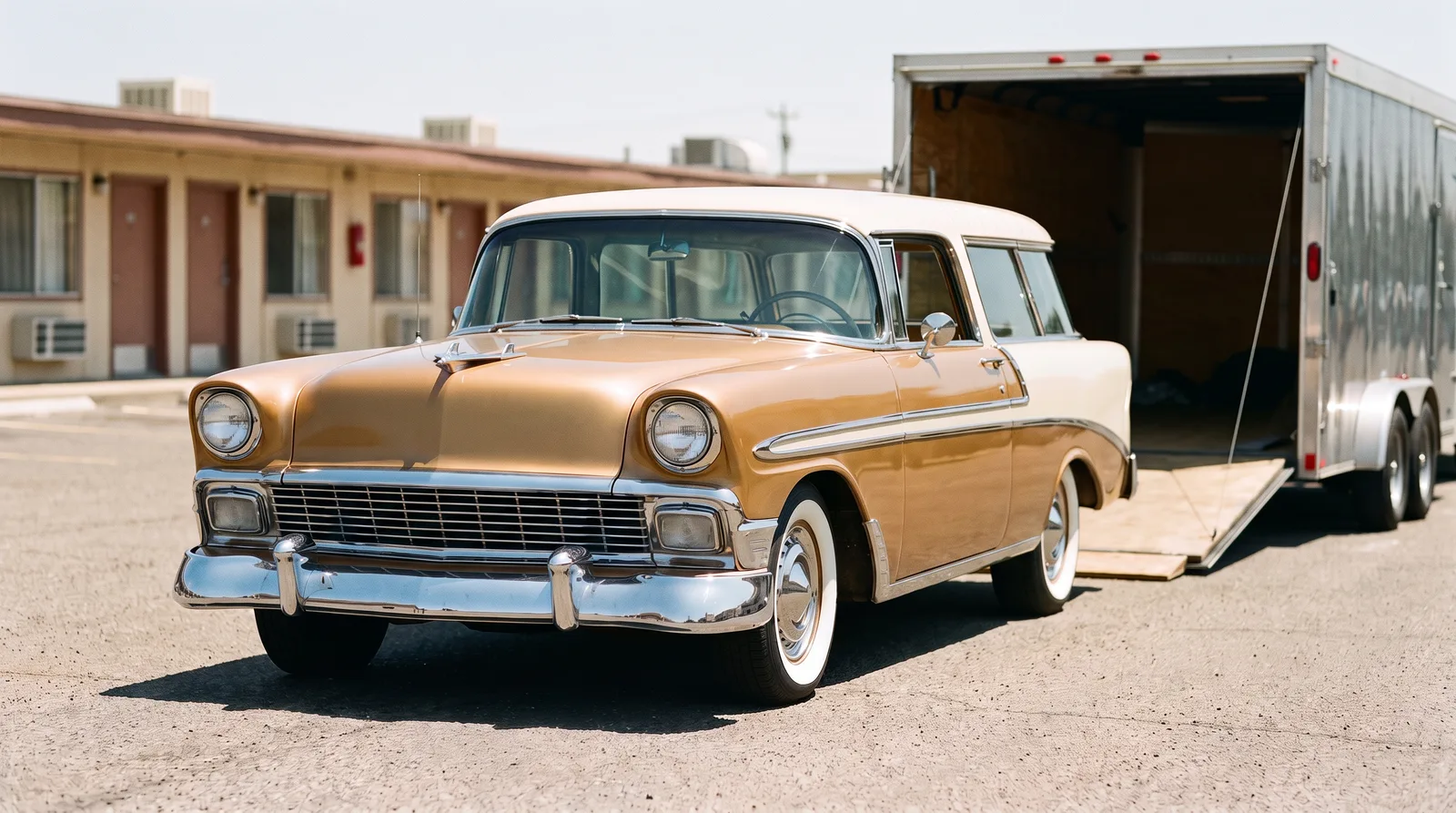
The man stood at the end of the dealer's lot with a coffee going cold in his hand, watching a 1956 Nomad roll up the ramp of a closed trailer an inch at a time. The driver walked beside it, one palm resting on the fender as if the car might spook. Two thousand miles away, a garage had been swept and emptied for it. Nothing about classic car transport is glamorous, but this is the part of the purchase where a car you have only seen in photographs becomes a car you will actually own, and it deserves the same care as the price negotiation.
Ownership & Lifestyle
7 min read
Classic Car Transport: What Shipping a Classic Across the Country Costs
Open or enclosed, broker or carrier: what shipping a classic from a dealer costs in 2026 and how to protect the car at pickup and delivery.
If you are still choosing the car, the broader guide to buying a classic from a dealer comes first. This one is for the buyer who has a deal and now needs the car moved across the country without surprises on the invoice or the paint.
Open trailer or enclosed
An open carrier is the long multi-level truck you pass on the interstate, usually hauling new cars or rental returns. Your car rides exposed to weather, road grit and whatever drips from the car above it. For a solid driver-quality classic, most owners decide that is acceptable, and plenty of fine cars make the trip that way every week.
Enclosed transport puts the car inside a box trailer, often with only a few other vehicles. It costs more, and for good reason: fewer cars per load, more careful drivers by reputation, and protection from stone chips and storms. Many enclosed carriers use a hydraulic liftgate rather than ramps, which matters for a low car, a long overhang or a car that does not run. If the paint is fresh, the car is valuable or it sits low enough to scrape a ramp, enclosed is the sensible choice. If it is a weekend cruiser with honest patina, open is usually fine.
What drives classic car transport prices
Distance is the biggest factor, but not in a straight line. Popular corridors between large cities get trucks every day and price competitively. A small town two hours off the interstate costs more, because the driver has to leave the route to reach it. Season moves prices too. On north-south routes, demand climbs in fall and again in spring as snowbirds move cars between the northern states and the Sun Belt, and trucks can book up around big auction weeks.
The car's condition counts. A non-runner needs a winch to load and unload, and many carriers charge extra for it. Declared value can matter, since some carriers price high-value cars higher to reflect their insurance exposure. Here is a rough guide to what buyers can expect in 2026.
| Item | Open carrier | Enclosed carrier |
|---|---|---|
| Coast to coast, by route and season | About $1,400 to $2,500 | About a third to a half more, roughly $1,850 to $3,750 by our arithmetic |
| Regional move, around 500 miles | Roughly $500 to $1,000 | Roughly $700 to $1,500 |
| Winch fee for a non-runner | Often $100 to $250 | Often $100 to $250 |
| Pickup window after booking | 1 to 5 business days | 1 to 5 business days, sometimes longer for a full load |
| Coast to coast transit time | Usually 7 to 10 days | Usually 7 to 10 days, sometimes longer on a multi-stop load |
Treat every number as a starting point. Get three quotes for the same pickup window, and be suspicious of the one far below the others. A low quote is often a broker posting your car at a price no carrier will accept, which turns into a phone call days later asking for more money.
Broker or carrier, and how to check either
Most online quotes come from brokers. A broker does not own trucks. It takes your order and posts it to a load board, where carriers bid on it. A good broker earns its fee by knowing which carriers handle classics well, and by finding a replacement truck when the first one falls through. A bad one sells you a price and then disappears.
Booking a carrier directly removes the middle layer, but enclosed carriers that handle classics are often booked weeks ahead, and their routes may not match yours. Many buyers end up with a broker for convenience and a carrier they have checked themselves.
Either way, ask for the USDOT number and, for a broker or for-hire carrier, the MC number. Look both up on the FMCSA's public SAFER company snapshot to confirm the legal name, address and operating authority status, then check the agency's Licensing and Insurance records for the insurance or broker bond on file. When the truck arrives, the name on the cab door should match the carrier you were told. If it doesn't, call your broker before the car moves.
"The driver who loads your car will spend more uninterrupted time with it than you have so far. It is worth five minutes to learn who he works for."
Nora Beckett
Insurance and the bill of lading
The carrier's cargo insurance covers the car, and only the car. Spare parts in the trunk, a box of manuals, a set of original hubcaps on the back seat are not covered, and many carriers will refuse to load a car packed with loose items. Ship those separately. Ask the carrier for a certificate of insurance showing the cargo limit, and make sure the limit is above the value of your car. Then call your own insurer. Ask whether your collector policy covers the car while a carrier has it, get the answer in writing, and make sure the policy is in force before the truck leaves.
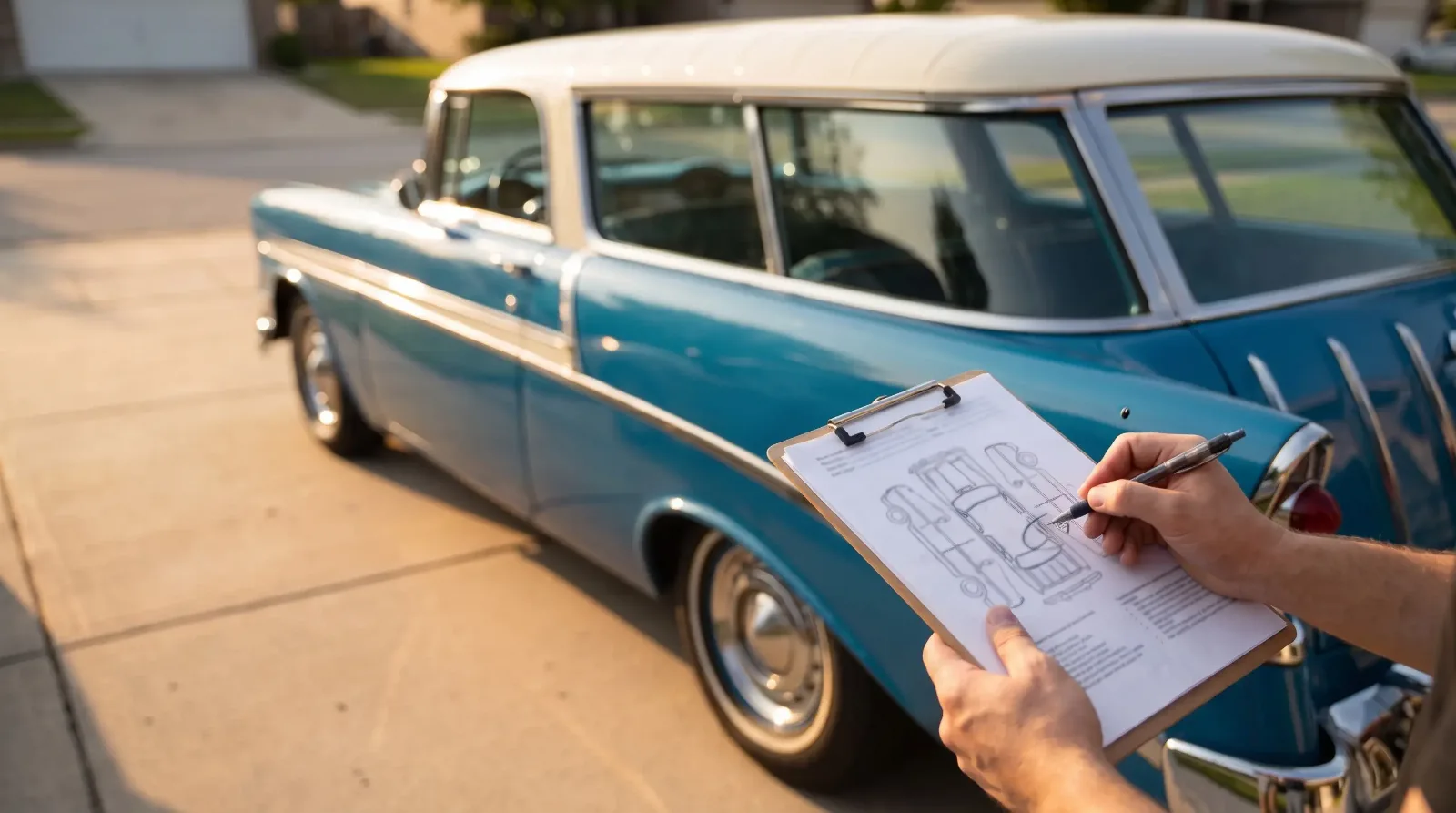
The bill of lading is the document that decides any claim. At pickup, the driver walks around the car and marks every existing chip, scratch and dent on a diagram. Ask the dealer, or your inspector if one is on site, to be there for that walk-around and to take time-stamped photos of every panel. At delivery, do the same walk-around before you sign. If you find new damage, write it on the bill of lading in the driver's presence. A signature on a clean delivery report is very hard to argue with later.
Timing the handoff with the dealer
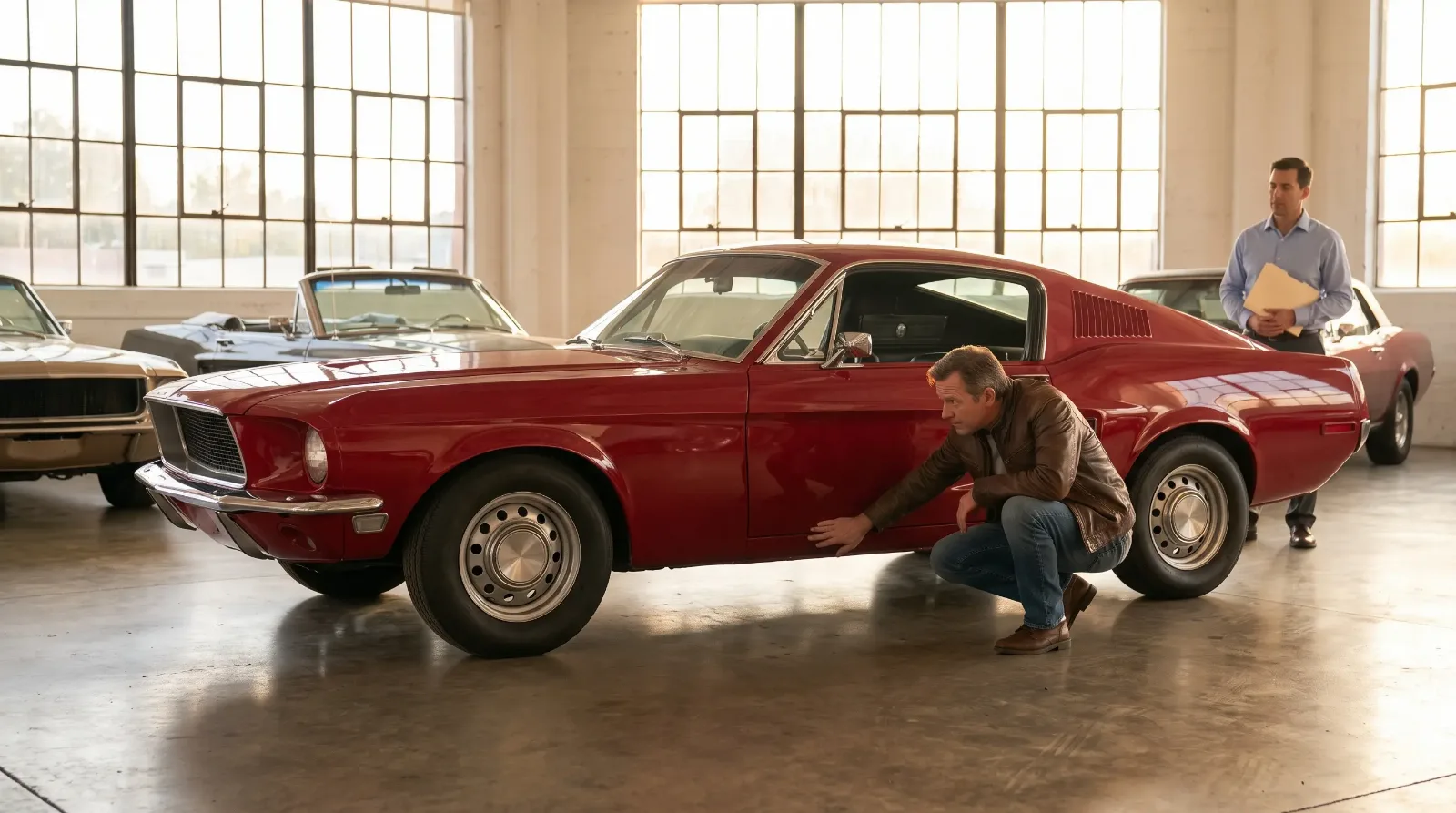
Ask the dealer early how they handle transport pickups: business hours, who will be on site, whether the car can wait inside if the truck runs late. Make sure payment has fully cleared and the title is either in your hands or on its way before the car leaves, and get written confirmation of the release from the dealer. Ask, too, how long the dealer will hold a sold car and whether storage is charged after that.
If you are choosing between several cars in different states, transport is a real cost to put in the comparison. A slightly more expensive car in your region can come out ahead of a cheaper one across the country, especially once you price an enclosed truck. Browsing classic cars for sale from dealers closer to home is worth an hour before you commit to a long haul.
On the other side of the deal, a seller who has shipped cars before will make the day smoother, and our separate piece on the seller's side of shipping explains what a good one does to prepare. Most of all, buy from a dealer you can trust to load the car you inspected. The truck only carries what it is given.
Sources and notes
Related Reading
#classic car dealers
#car shipping
#enclosed transport
#classic car transport
#bill of lading
#auto transport brokers

About the author
Nora Beckett
Automotive features writer and photographer who tells the human stories behind the cars, from show fields to cross-country road trips.
More in Ownership & Lifestyle
Comments
Be the first to comment on this article.