
Most classic car scams aimed at buyers rely on one simple fact: the buyer is far from the car and wants it badly. Remove the distance, or slow the wanting down, and most schemes fall apart. The FBI's Internet Crime Complaint Center reported in a 2018 public service announcement that it had received nearly 27,000 complaints about fraudulent online vehicle sales between May 2014 and December 2017, with adjusted losses of about $54 million. The Federal Trade Commission's advice to buyers is just as blunt: a seller who will not let you inspect the car, or who wants payment by wire transfer or gift cards, is a red flag. None of it is new. What changes is the packaging, and in 2026 the packaging is very good.
Ownership & Lifestyle
8 min read
Classic Car Scams: The Warning Signs Every Buyer Should Know
Fake listings, cloned dealer sites, fake escrow, VIN cloning and curbstoners: the warning signs and the checks that stop each one.
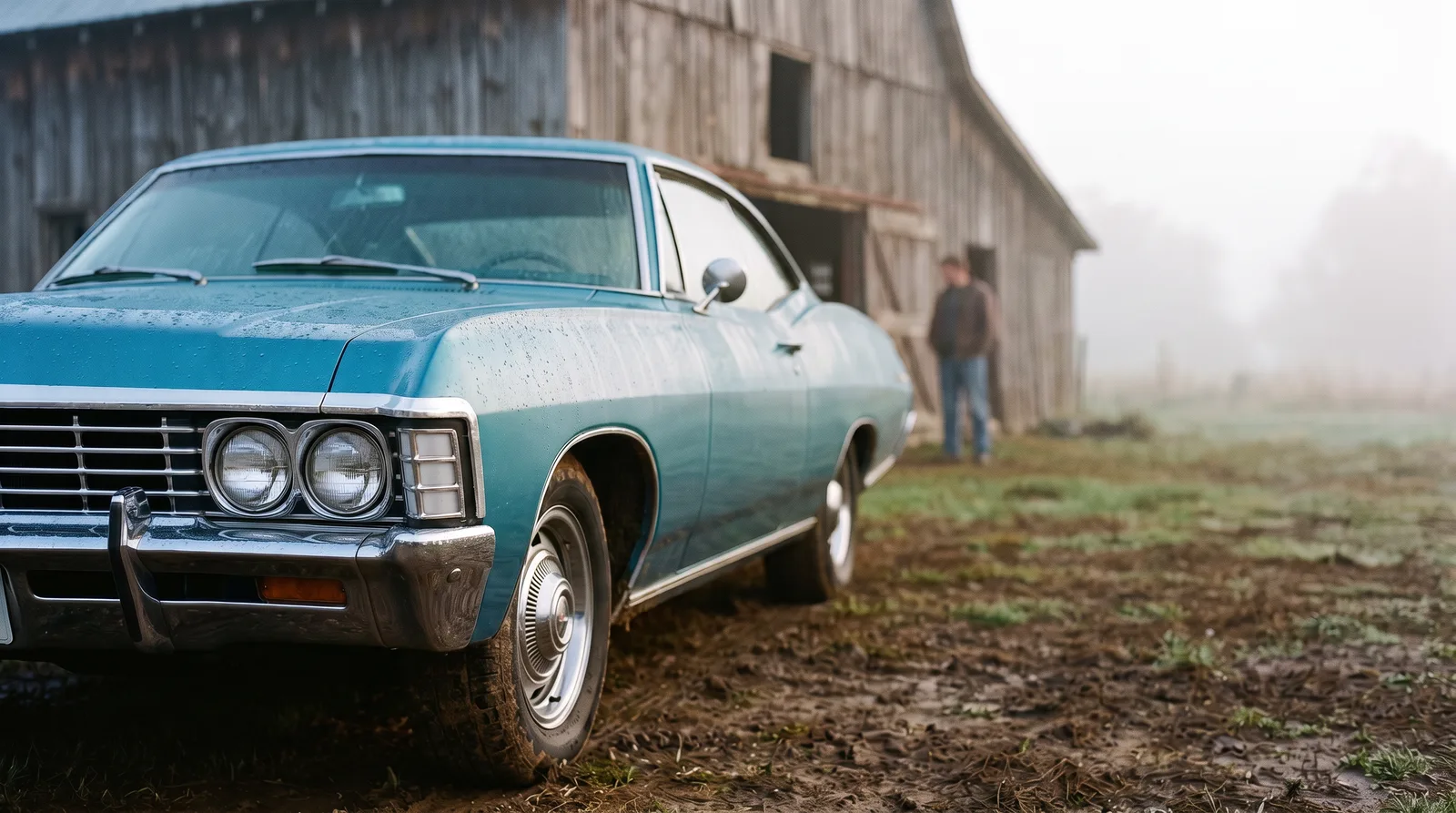
This piece looks only at the buyer's side: the listing that is not real, the company that is not real, the paperwork that hides a different car, and the honest-looking misdescription. If you are at the start of the process, start here and come back once you have a shortlist.
The listing that is too good to be true
The classic pattern is a desirable car at a price far under what comparable cars have sold for recently, often by a quarter or more (our estimate, not a published statistic). That gap is the hook. Real dealers know the market, because they buy at wholesale and have to resell. A dealer pricing a driver-quality 1967 Impala SS well under the going rate either knows something bad about the car or does not have the car.
The photos are usually stolen from a past auction, a dealer's sold archive or a club forum. A reverse image search often finds them in minutes, sometimes attached to a different VIN, a different city and a sale date three years ago. The story attached tends to explain away the low price and the distance at once: a divorce, a deployment, an estate that must close quickly, a seller who is "out of the country" and can only communicate by email or text.
Keep in mind that a fraudulent listing does not need a high conversion rate. If one buyer in a few hundred sends a deposit, the scheme pays. That is why these listings keep appearing on general marketplaces, where posting is cheap or free.
Fake dealers, fake escrow and fake shippers
The more sophisticated version clones a real business. The scammer copies a legitimate dealer's website, inventory and staff names onto a lookalike domain, sometimes changing a single letter. The phone number and email on the clone route to the scammer. Everything else checks out, because it belongs to the real dealer.
From there the money moves through a third party that also does not exist. The buyer is told the transaction will be protected by an escrow service, which turns out to be another lookalike site, and we have a separate guide on how to spot fake escrow sites before you send anything. A variation uses a fake transport company: the "seller" says the car is already loaded and waiting at a depot, and the buyer only needs to pay shipping and a refundable deposit to the carrier. Real carriers have federal registration numbers you can look up, which is one more reason to arrange shipping the car home yourself rather than accepting the seller's choice.
The plain deposit-and-vanish needs no fake infrastructure at all. A small "holding deposit" by wire, Zelle or a payment app, and then silence. The amounts are kept low enough that many victims never report it.
Paper scams: title washing, VIN cloning and curbstoning
Some buyers do receive a car. It is just not the car on the paperwork, or the paperwork has been cleaned.
Title washing moves a vehicle with a salvage, flood or junk brand through a state with looser rules, so the brand drops off and a clean title comes back. VIN cloning takes the identity of a legitimate car, usually an unremarkable one of the same model and color, and attaches it to a stolen or rebuilt vehicle. On classics, the variation that costs buyers the most is the upgraded identity: a base car wearing the VIN plate, trim tag or engine stamps of a rarer, more valuable version. That one does not always involve a crime in the moment of sale. It does involve a car worth a fraction of what was paid.
Curbstoners are unlicensed dealers who pose as private sellers. They buy cars, often with problems, and resell them without ever titling them in their own name, which hides the chain of ownership and avoids the obligations a licensed dealer has. The tell is a seller whose name is not on the title, who has "a few cars" from relatives, or whose phone number appears on several unrelated listings.
For a car built in the last few decades, a National Motor Vehicle Title Information System (NMVTIS) report from a provider approved by the Department of Justice shows title states, brand history, the latest recorded odometer reading and salvage or total-loss records. Each provider sets its own price, and it is modest; the District of Columbia DMV cited $8 to $12.99 per report in 2020. Coverage of older vehicles is thinner, so on a car built before 1981, when federal rules standardized the 17-character VIN, expect gaps, and lean harder on the physical stamps.
Misrepresentation that sits short of fraud
Not every bad deal is a crime. Some are simply descriptions written to sell. Two areas cause most of the trouble.
Mileage first. Vehicles of model year 2010 and older are exempt from federal odometer disclosure, so on essentially every classic the number on the dash is a claim, not a record. "Original miles" means nothing without supporting paper: service receipts with mileage, old registrations, inspection stickers, an owner chain that makes sense.
Then the word "restored." It can mean a documented frame-off job with receipts and photos, or a respray and a set of seat covers. Ask for the restoration file, the name of the shop and the photos taken during the work. A car described as restored with no file is a car described as restored by the person selling it.
"The fraudulent listings are easy to spot once you know the price gap. The expensive mistakes are the real cars with inflated descriptions, because nobody ever calls them a scam."
David Mercer
Checks that stop classic car scams
Each scheme above fails against a specific, inexpensive check. The table maps them.
| Scheme | Warning sign | The check |
|---|---|---|
| Fake listing | Price well below recent sales, urgent backstory, email only | Reverse image search the photos; ask for a new photo with today's newspaper or a written note |
| Cloned dealer | Slightly different domain, contact only through the website's number | Call the dealer at a number you found independently, through the state license lookup or a street-level business listing |
| Fake escrow or shipper | Seller chooses the escrow service or carrier | Choose them yourself; verify carriers through FMCSA registration |
| Deposit-and-vanish | Wire to a personal account, payment apps, gift cards | Pay only a licensed business, in writing, with refund terms |
| Title washing, VIN cloning | Recent out-of-state title, disturbed rivets on VIN plate | NMVTIS report; inspector photographs VIN, frame and engine stamps |
| Curbstoner | Seller not on the title, same phone on several listings | Name on the title must match the seller's ID or the dealer's license |
Beyond the table, confirm the dealer is registered with the state as a business and holds a current dealer license. Never wire money to a personal account. Remember the FTC's point that funds showing as available in your bank account does not mean a check is good, and fakes can take weeks to surface. And either see the car yourself or send an independent inspector; a scammer with no car cannot host one.
Sellers face their own set of schemes, mostly built around overpayment and fake buyers, and those are covered separately in our piece on scams aimed at classic car sellers. For a buyer, the summary is short. Slow down, pick your own third parties, and assume any price that surprises you has an explanation you have not been told yet.
Sources and notes
- FBI Internet Crime Complaint Center: Fraudulent online vehicle sales
- Federal Trade Commission: Put the brakes on phony online car sales
- U.S. Department of Justice NMVTIS: Approved NMVTIS data providers
- DC Department of Motor Vehicles: NMVTIS vehicle history reports
- Wikipedia: Vehicle identification number
Related Reading
#classic car dealers
#classic car scams
#fake escrow
#buyer fraud
#VIN cloning
#title washing
#curbstoning

About the author
David Mercer
Classic car market analyst with two decades of experience tracking collector car valuations, auction results, and investment trends.
More in Ownership & Lifestyle
Comments
Be the first to comment on this article.