
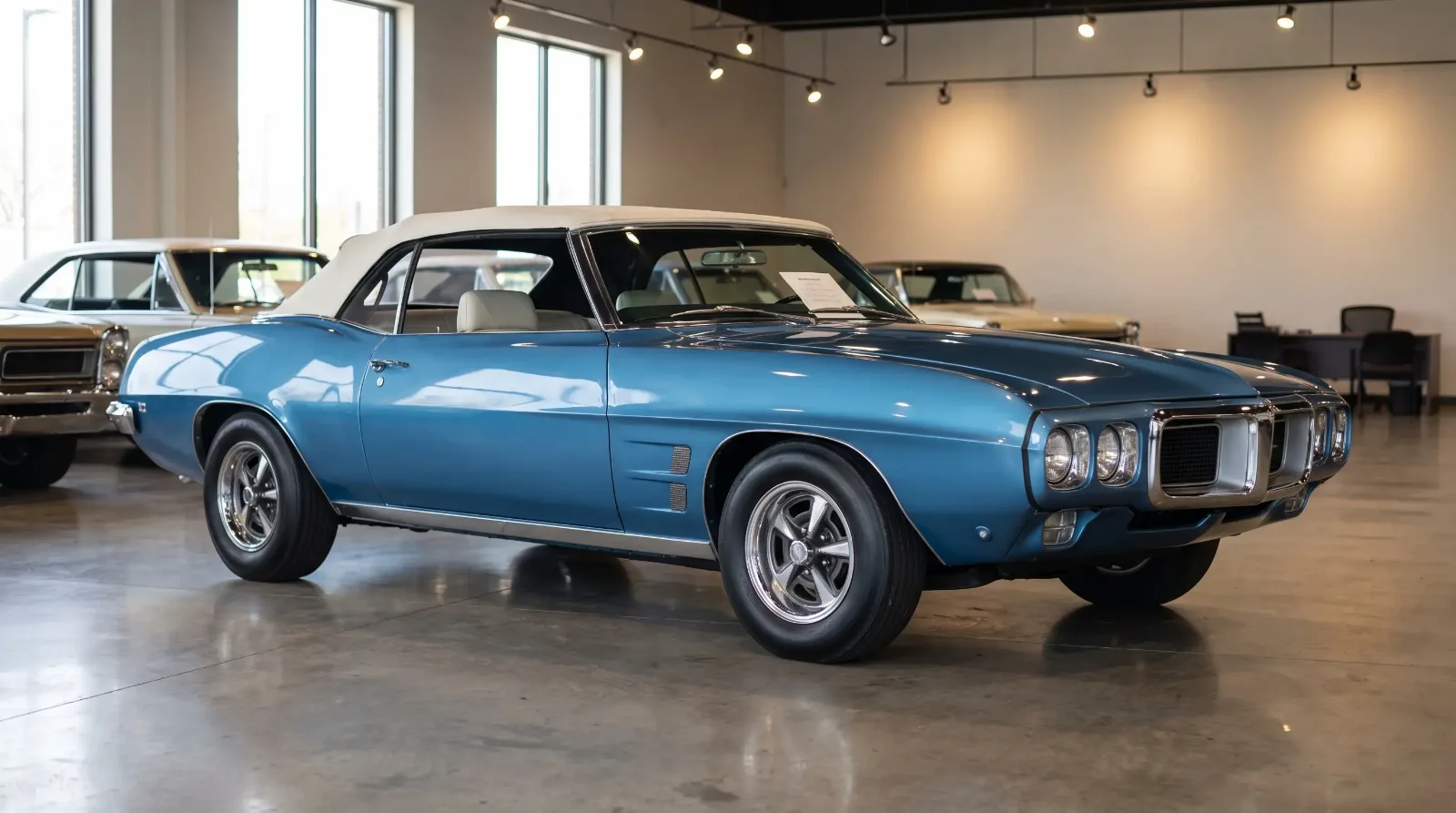
A 1969 Pontiac Firebird convertible on a dealer's floor, priced at a nice round number, with a card on the dash that says "firm." Nothing about a classic car price is firm until somebody signs. If you want to negotiate with a classic car dealer and come out ahead, you need three things before you make an offer: who actually owns the car, what similar cars really sold for and what is wrong with this one. Everything else is noise.
Ownership & Lifestyle
7 min read
How to Negotiate With a Classic Car Dealer
Stock or consigned, sold comps over asking prices, inspection findings turned into dollars and an out-the-door number: how buyers move price.
This piece is about the buyer's side of the table. Vetting the dealer, inspection logistics and shipping are all in the main buying guide. Here we stay on price, and on the handful of moves that actually change it.
Find out who sets the floor
First question, every time: does the dealer own this car, or is it consigned? The answer decides how the whole conversation goes.
If the dealer owns it, the dealer has a cost basis. They paid something for the car, maybe spent money on it, and every month it sits there it costs them storage, insurance and the interest on whatever money is tied up in it. A car that has been on the floor for four months is a car the dealer is tired of looking at. Ask how long it has been in inventory. Then check for yourself. Many listing sites show when a car was first posted, and an old screenshot or cached page will show earlier prices. A car that has already dropped once is telling you something.
If the car is consigned, the owner sets the minimum and the dealer works on commission, commonly around 5 to 15% of the sale or a flat fee. Your offer goes from you to the dealer to the owner and back. That is slower, and the dealer cannot sell below the owner's number without the owner's say. But it is not hopeless. Owners get impatient as the consignment term runs out, and agreements commonly run 60 to 90 days. Ask how long the car has been listed under the current agreement. A dealer may also give up part of its commission to close a deal that is close, though nobody will promise that up front.
Sold comps, not asking prices
An asking price is a wish. It tells you what somebody hopes to get, not what the market pays. The dealer down the road asking more for a similar car proves nothing. Neither does the one asking less. What you want are sold results: auction results with the buyer's premium included, closed online auction sales and any private sales you can actually confirm. Our piece on asking prices versus sold prices walks through where to find them and how to read them.
Match the comps to the car. Same body style, same engine, same transmission, similar options. A convertible is not a coupe. A big-block car is not a six-cylinder car. And match condition honestly, because this is where sellers stretch. The Hagerty condition scale runs from #1, a concours car, down to #4, a driver. Most dealer descriptions read like a #2. Most cars are not.
Pull three to five sold results from the last year or so, print them and bring them. Not to wave around, just to have. When the dealer says the car is priced right, you can say what similar cars actually brought, in which condition and when. That is a conversation about facts. Dealers respect it, mostly because they do the exact same homework when they buy.
Turn the inspection report into dollars
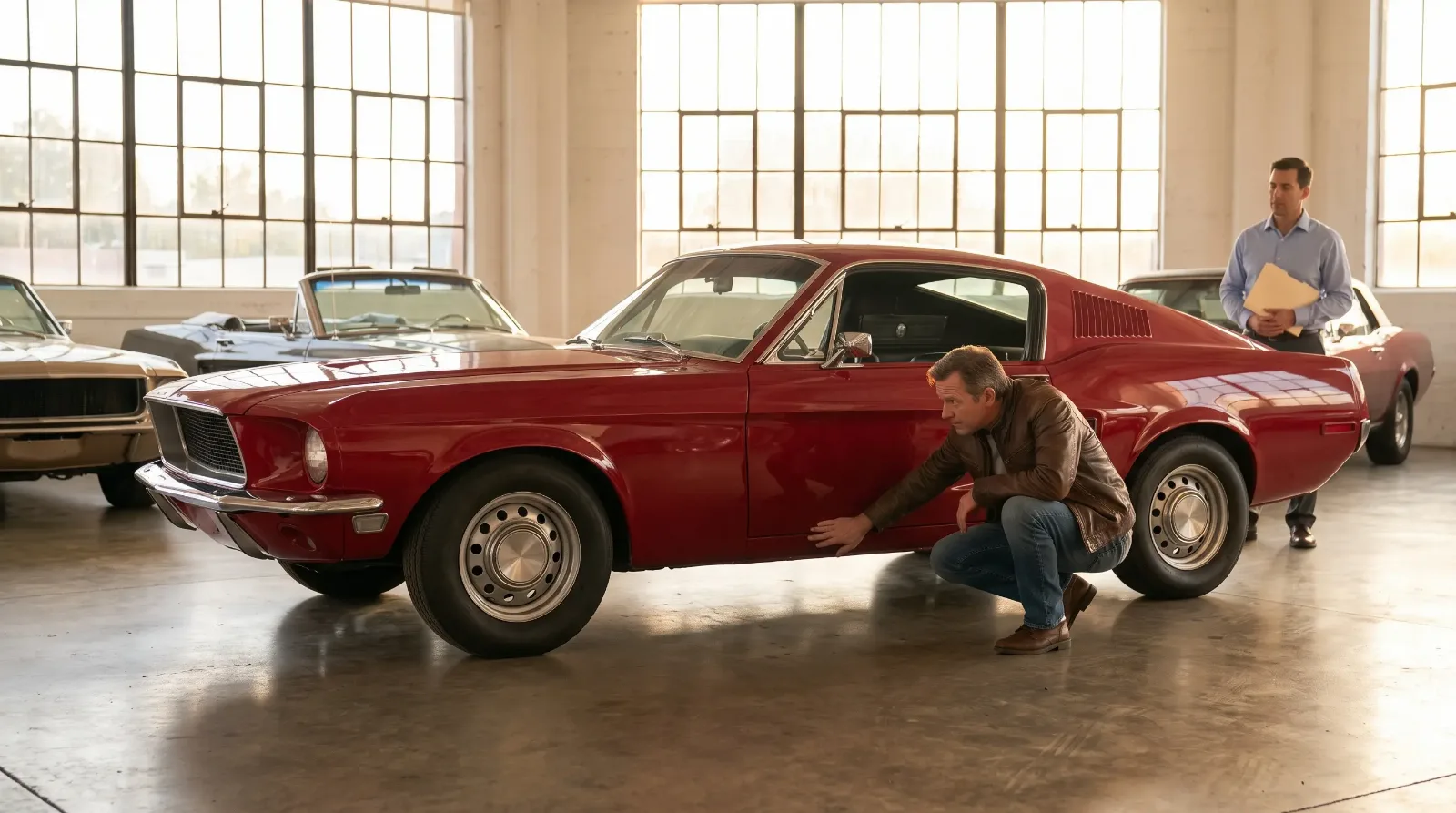
An inspection report full of findings is a negotiating document, but only if each finding has a number attached. "The brakes are tired" gets you nowhere. A written estimate from a shop that says the brake system needs a full refresh, with a total at the bottom, gets you somewhere. Before you go back to the dealer, take the report to a shop that knows the model and get the big items priced in writing.
| Inspection finding | Typical repair cost | How to use it |
|---|---|---|
| Tired convertible top, torn rear window | Roughly $1,000 to $3,000 installed, more if the frame needs work | Ask for the top to be replaced before delivery or deducted at your shop's quote |
| Full brake system refresh | Roughly $800 to $2,000 | Safety item; insist on it being done or credited |
| Rusted floor pans | Roughly $800 to $2,500 per side, welded in and sealed, more if the rails are rotten too | Structural; price it in or walk |
| Driver-quality respray needed | Commonly $5,000 to $12,000 | Only if the listing called the paint good |
| Low compression, smoke on startup | A rebuild commonly runs $5,000 to $10,000 | Big lever; get the leak-down numbers in writing |
| Engine not original to the car | Not a repair, a value hit | Reprice the car against non-original comps |
Two cautions. First, don't ask for the full repair cost on wear the price already reflects. A #3 car is supposed to have some wear, and if the dealer priced it as a #3, worn carpet is not a discount. Go after the things that contradict the listing. Second, think twice before letting the dealer fix things in-house before delivery. You don't control the quality and you can't see the work. A price reduction you spend at your own shop is usually the better deal.
Negotiate the out-the-door number
The sticker is not what you pay. Dealers add documentation fees, prep fees, sometimes storage or detailing charges, and a consignment house may add a buyer's fee on top of the owner's price. Then there is transport, sales tax and title and registration. A dealer who gives up $1,500 on the price and adds $1,200 in fees has given you $300.
So ask for an itemized, out-the-door figure before you negotiate anything, and negotiate that number. If the dealer is arranging the shipping, get the transport cost in the same document, delivered to your address. Tax is tax and you won't move it, but everything else on that sheet is a line you can question. Once you have one agreed number in writing, the next risk is moving the money, and we cover that in paying the dealer safely.
When to negotiate with a classic car dealer, and what not to do
Timing helps more than tactics. Convertibles and open cars sell slowest in late fall and winter in the northern states, and a dealer looking at five months of storage costs gets flexible. Cars that have been in inventory three months or more have usually stopped attracting new calls. The end of a dealer's year, or the weeks before a big auction when a dealer wants cash to buy, can open room as well. None of these guarantees anything. They just make your offer look better to the person reading it.
And be ready to walk. That is the only real leverage a buyer has. There is always another Firebird, even if it doesn't feel that way when you are standing next to this one.
"Every dealer has a number they'll take. Your job is to show up with paper that proves where that number ought to be: sold comps, a shop estimate and a fee sheet. Feelings don't move price. Paper does."
Mike Sullivan
Sources and notes
Related Reading
#pre-purchase inspection
#buying a classic car
#classic car dealers
#consignment
#sold comps
#negotiation

About the author
Mike Sullivan
Detroit-area muscle car enthusiast and restoration specialist with three decades of hands-on experience working on American iron.
More in Ownership & Lifestyle
Comments
Be the first to comment on this article.