
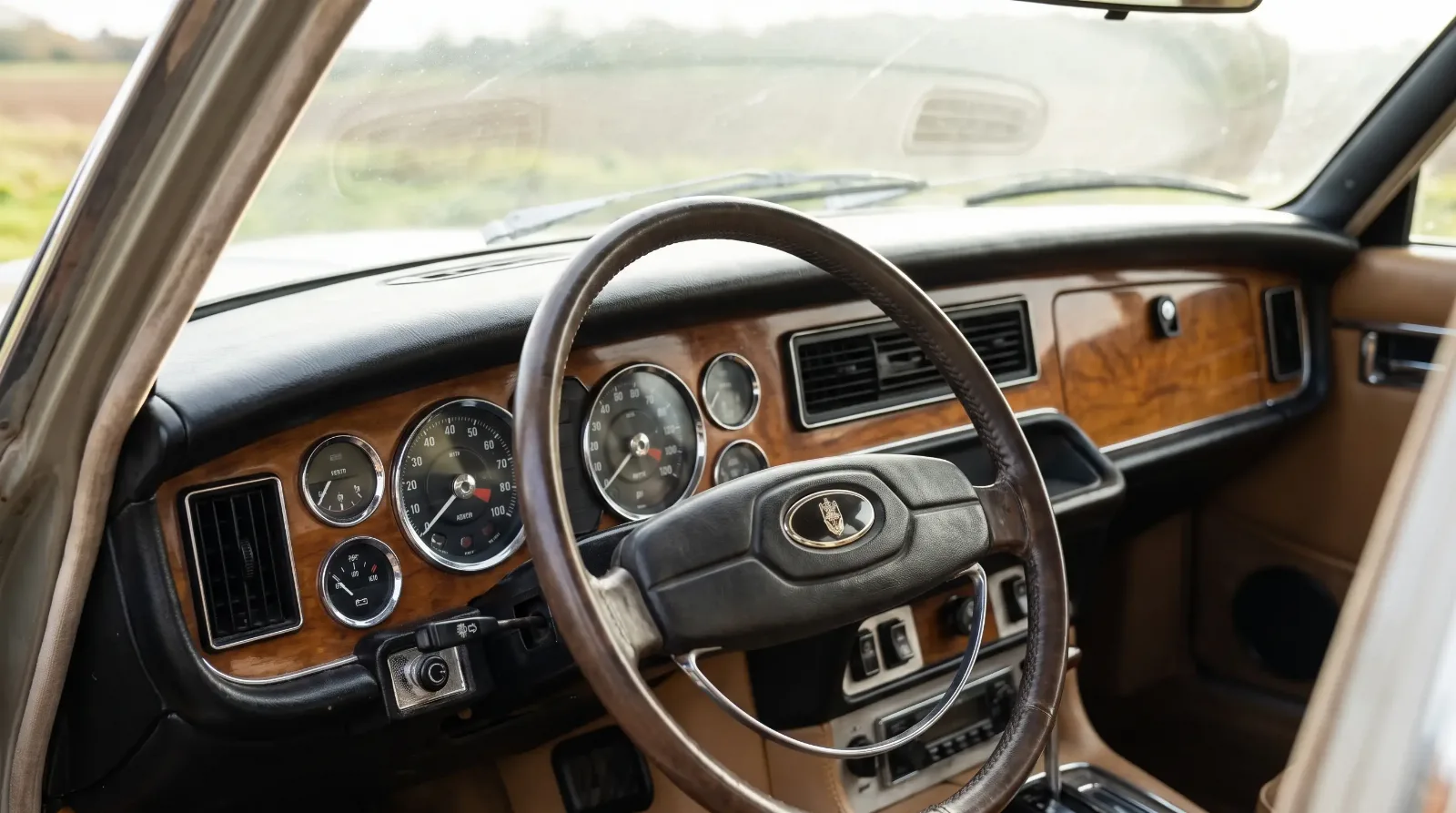
On most classics, the interior is a comfort item. On a classic luxury car, the interior is a large part of what you are actually paying for, and it is often the single most expensive area to put right. The cabin of a Rolls-Royce, a big Cadillac, a Mercedes-Benz, or a Jaguar was built from materials that cost real money then and cost even more to reproduce correctly now. That makes interior condition one of the sharpest tools you have for judging both a car's history and its true price, because wear inside tells you how the car lived.
Ownership & Lifestyle
6 min read
Evaluating Interior Condition in a Classic Luxury Car
How to read leather, wood, dash, and accessories in a classic luxury car interior, what a full retrim really costs, and how condition should move price.
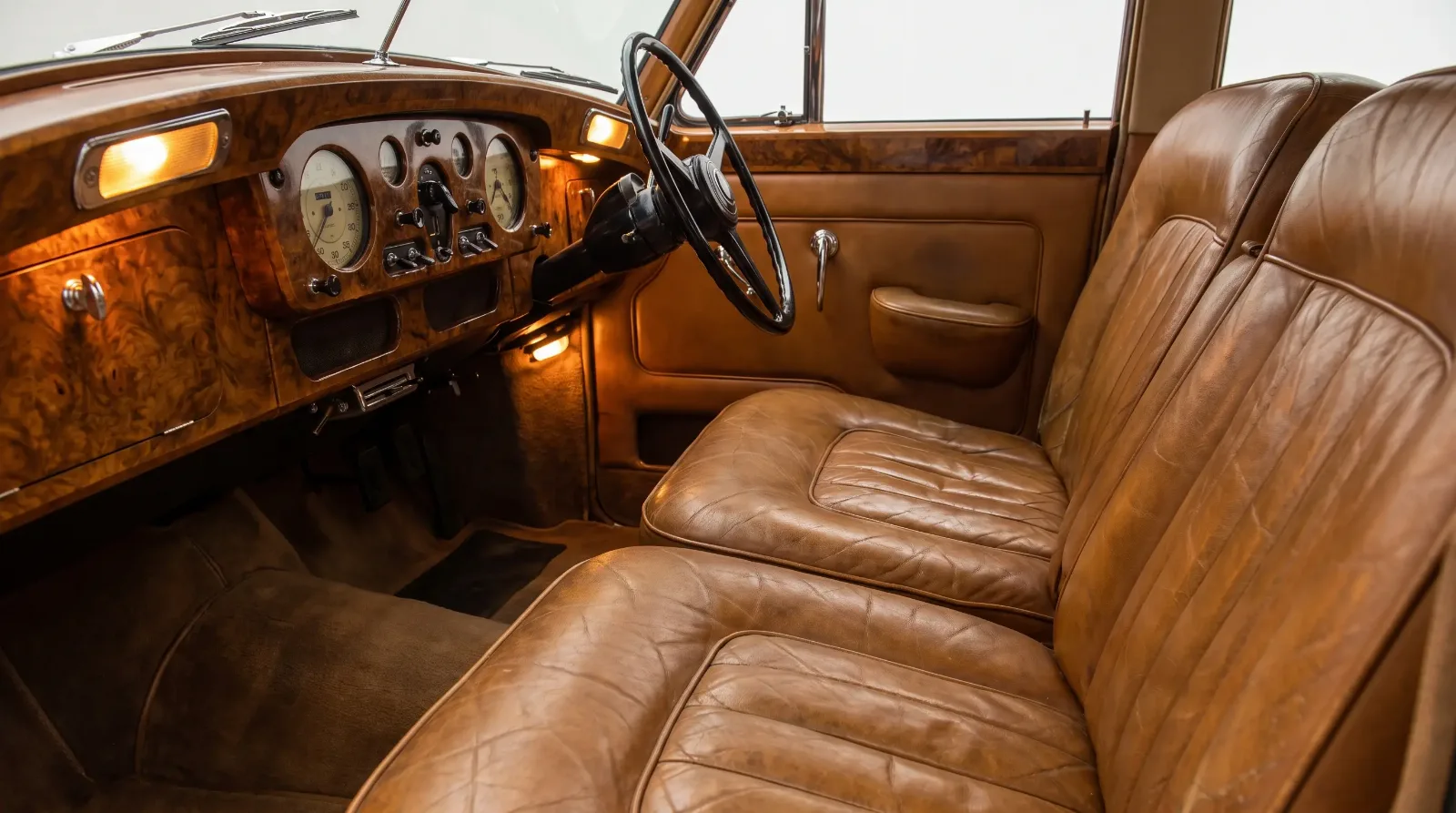
Buyers routinely underweight the cabin because a tired interior photographs as merely shabby rather than expensive. It is expensive. A correct leather retrim, wood veneer refinishing, and a proper headliner on a high-end car can add up to more than a respray. Our our buyer's guide to the segment covers the mechanical and structural checks. This piece is about reading the cabin.
Leather, and why it is not just wear
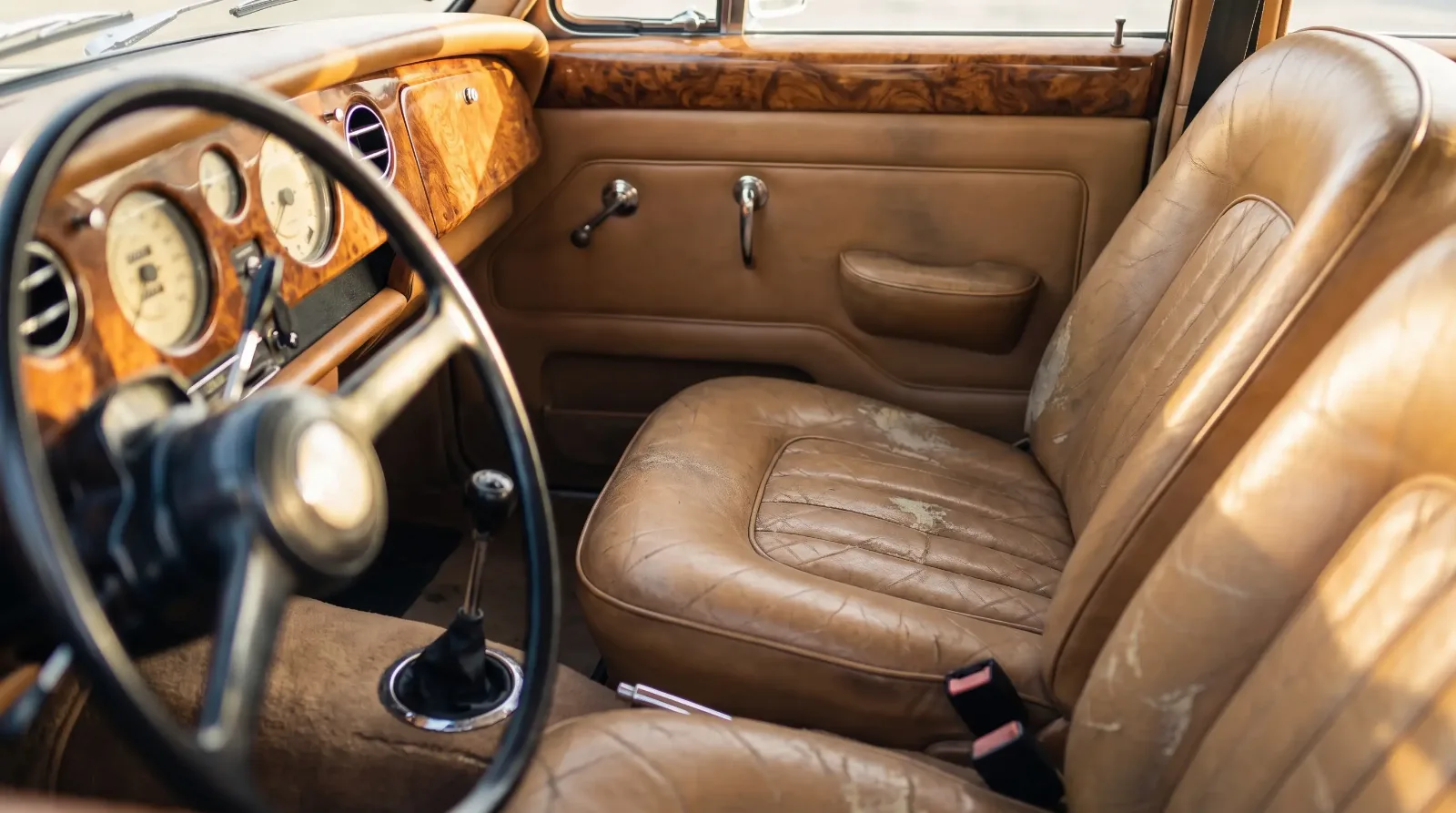
Start with the seats, because leather is where the money concentrates. Original leather ages in a way that is hard to fake and expensive to replace correctly. Look for the difference between honest patina and failure. Soft, evenly worn leather with a mellow finish is desirable and often original. Cracking that has split the grain, seams that have let go, and hard, dried surfaces are failure, and they mean re-covering, not cleaning. A full leather interior on a luxury car can run 6,000 to 15,000 dollars or more depending on the marque and the correctness required, so a dead interior is a number you negotiate against, not a detail.
Watch for the tell of a cheap prior redo. Vinyl passed off as leather, incorrect grain, wrong stitching pattern, or seats that no longer match the door panels all signal a car that was freshened to sell rather than restored to be right. On a concours-tracked car those errors also cost points, so a wrong interior hurts twice.
Wood, dash, and the details that date a car
Wood trim is the second money zone. Cracked lacquer, lifting veneer, and sun-bleached burl are common on cars that lived outdoors, and correct wood refinishing on a Rolls-Royce or Jaguar is specialist work priced accordingly. The dashboard itself is a frequent failure point, particularly on cars that baked in the sun, where the top pad cracks and warps. A correct replacement dash for some luxury models is scarce and pricey, and a cracked one is very visible every time you sit in the car.
Then work through the small things that reveal how the car was kept. Do the power windows, seats, and locks all work, since a luxury car has many more of these motors than a base classic and each one is a repair. Does the clock run. Does the climate system respond. Are the gauges correct and functional. None of these is fatal alone, but a pattern of dead accessories tells you the car was neglected in exactly the systems that make it a luxury car.
🔧 Inspection Priorities
- Leather condition and correctness. Distinguish patina from failed, cracked, split leather. A full correct retrim can run 6,000 to 15,000 dollars, so this is a major price lever.
- Dashboard and wood trim. Check for cracks, lifting veneer, and UV damage. Correct dash and wood restoration is specialist work and replacement parts can be scarce.
- Power accessories. Test every window, seat, lock, and the climate system. A luxury car has many motors and each dead one is a separate repair.
- Headliner and carpet. Sagging headliners and worn carpet are moderate costs individually but add up, and a stained carpet can hide a water leak worth finding.
"On a luxury car I read the interior like a logbook. Original leather with honest patina and every switch working tells me the car was cherished. A fresh but wrong interior over dead accessories tells me it was dressed up to sell. Those are two different prices."
David Mercer
What interior condition is worth in dollars
Put numbers to it before you talk price. An original, well-preserved interior is a genuine premium and part of why a documented, cherished car commands more. A tired but honest interior is a discount you can quantify against restoration cost. A car needing a full interior redo should be priced as though that money is already spent, because it will be if you want the car to be right. The table below frames the rough tiers, though the exact figures move with marque and correctness.
| Interior state | What it signals | Effect on price |
|---|---|---|
| Original, honest patina | Cherished, well-kept car | Premium, hard to replace |
| Correct prior restoration | Money already spent well | Neutral to slight premium |
| Tired but complete | Usable, honest driver | Discount vs restoration cost |
| Cheap or wrong redo | Dressed to sell | Discount, and a red flag |
| Needs full retrim | Major spend ahead | Price as if money is spent |
Turning the read into a decision
The cabin should shift your offer, not just your impression. Once you have graded the leather, the wood, the dash, and the accessories, you can compare the car honestly against others and against the cost of fixing what is wrong. Scanning the current classic luxury cars for sale makes the pattern obvious, since the cars with original, preserved interiors sit at the top of their condition band and the freshened-to-sell examples cluster lower. For the wider context on why these cabins were built the way they were, read the story of the classic luxury car.
A clean interior read gets you halfway. The other half happens once the engine is running and the car is moving, where a luxury car either delivers the effortless feel it was built for or tells you something is wrong. That is the subject of next: What a Smooth Test Drive Should Feel Like in a Classic Luxury Car.
Related Reading
Have a
Classic Car
for Sale?
Reach thousands of serious classic car collectors across the US.
Sell It Here →
Are You a Classic Car Dealer?
List your full inventory and connect with targeted classic car buyers.
Join as a Dealer →

About the author
David Mercer
Classic car market analyst with two decades of experience tracking collector car valuations, auction results, and investment trends.
More in Ownership & Lifestyle
Comments
Be the first to comment on this article.