
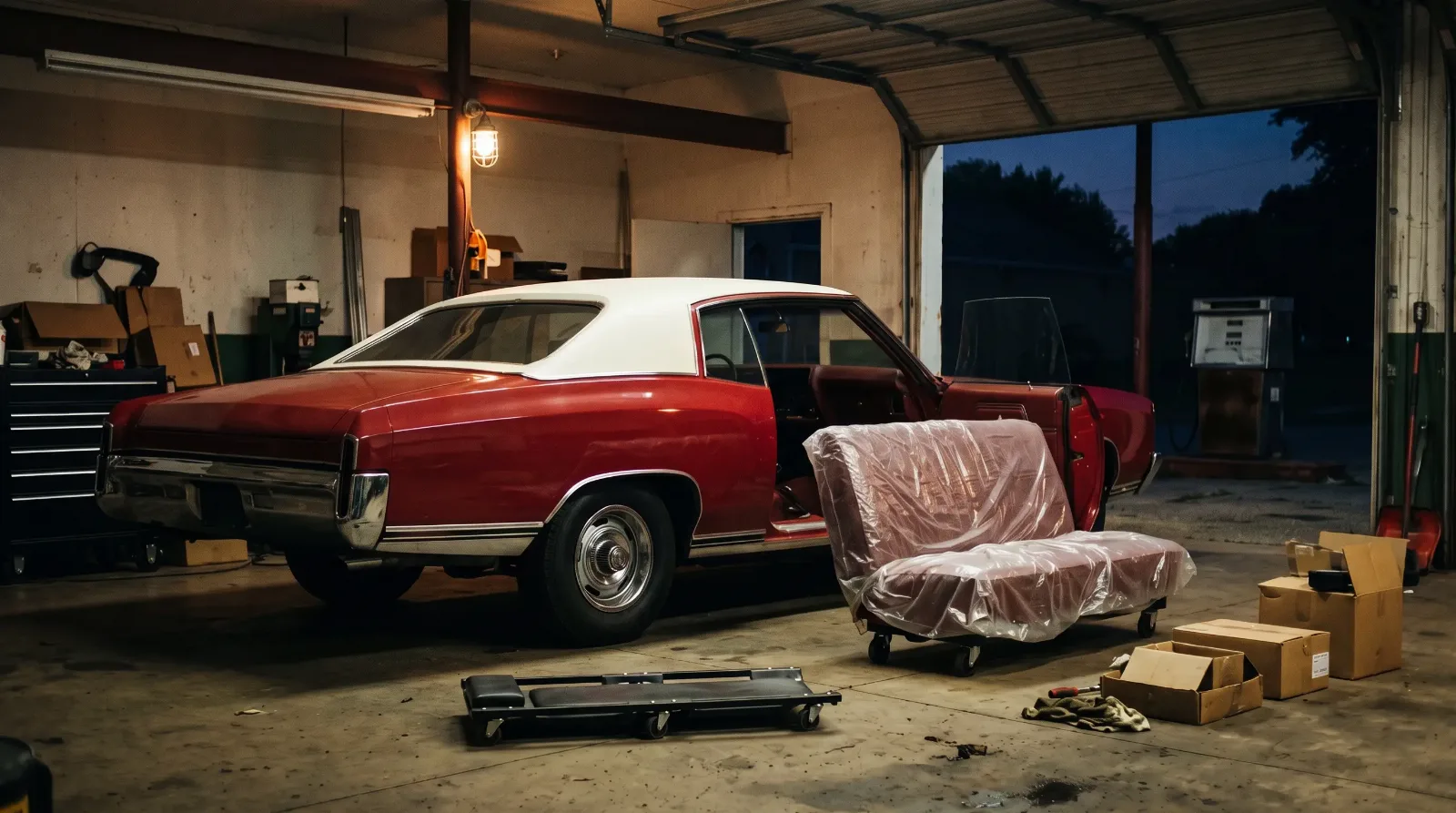
A restoration shop holds other people's cars for months, sometimes years, and it holds them in pieces. That is the exposure, and garagekeepers insurance is the policy written for it. The claim is simple: if a customer's car is damaged while it sits in your bays, you want a policy that answers for it. The caveat is that the word "garagekeepers" on a declarations page tells you very little until you know which coverage basis it uses, how the limit is built and what value it puts on a half-finished car.
Ownership & Lifestyle
8 min read
Garagekeepers Insurance for Restoration Shops
Legal liability, direct primary or direct excess: how garagekeepers insurance works for a restoration shop, how to size it and what it costs.
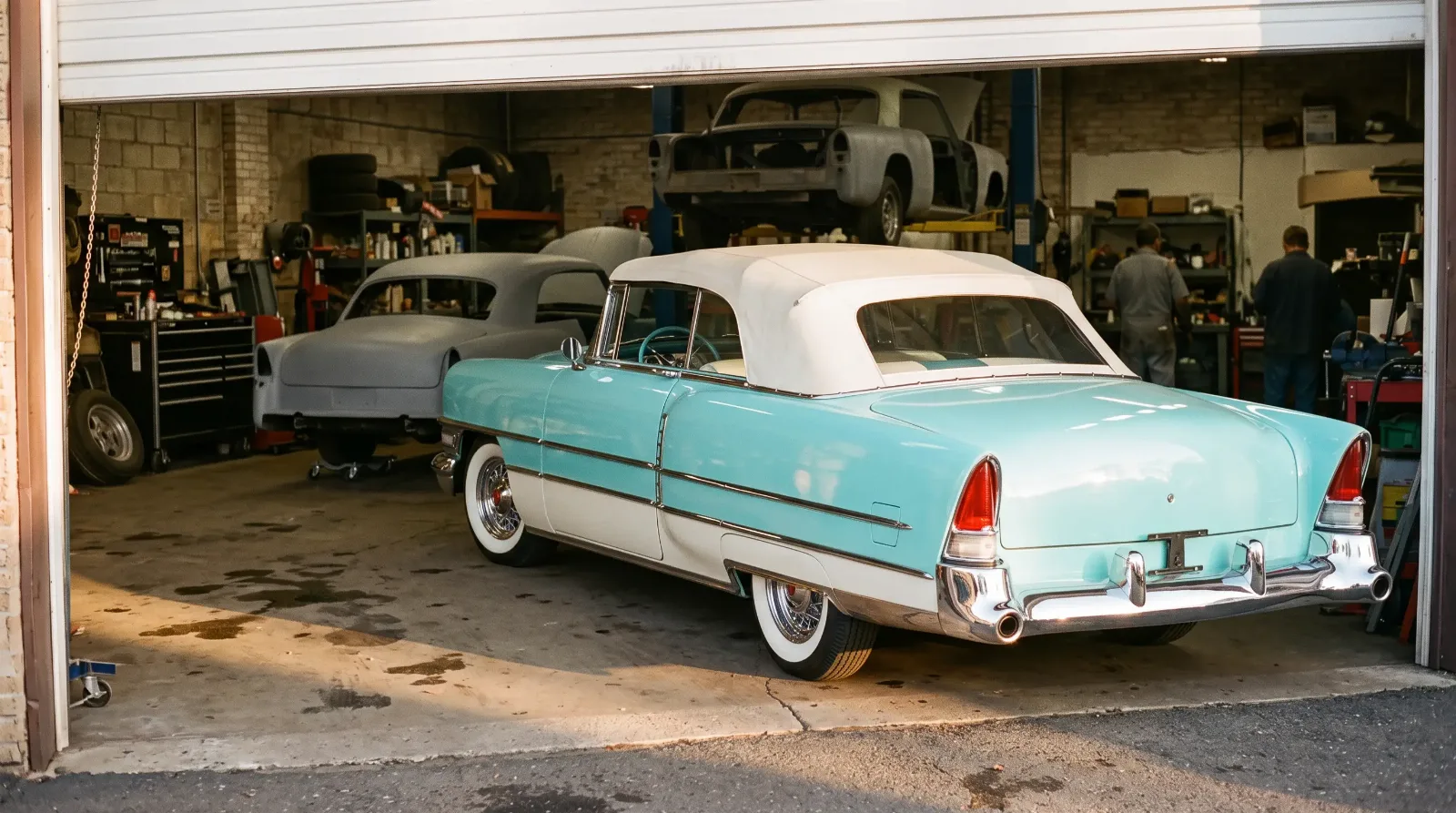
Running a classic car restoration business means carrying several policies at once. Insurers that write the trade describe a bundle: general liability, property, equipment or inland marine, and some form of on-premises cover for customer vehicles. Hagerty's restorer program lists general liability, building and business personal property, garage liability, workers comp, umbrella, cyber crime and pollutant cleanup among its options. This article is about one line in that bundle, the one that decides who pays when the car on the rotisserie is the one that burns.
What garagekeepers insurance covers that garage liability does not
Garage liability and garagekeepers sound like the same policy. They are not. Garage liability answers third-party claims, such as a customer who slips in the waiting room. It does not cover damage to customers' cars in your care, custody or control. That carve-out is the standard care, custody and control exclusion found in commercial general liability forms, and it is the gap garagekeepers is built to fill.
Put plainly: a shop with garage liability and nothing else may have no answer at all when a customer's car is crushed by a falling lift or damaged in a fire. The customer's own policy might respond, or might not, and the customer will remember which shop left them to find out.
Legal liability, direct primary and direct excess
Garagekeepers is sold on three coverage bases. The difference between them is the whole policy.
| Coverage basis | When it pays | Whose insurance goes first |
|---|---|---|
| Legal liability | Only when the shop is legally liable (negligent) for the damage | Shop's policy, but only after fault is established |
| Direct primary | Regardless of fault | Shop's policy, first dollar, without regard to the customer's own insurance |
| Direct excess | Regardless of fault | Customer's policy first; the shop's pays when that is exhausted, does not respond or does not exist |
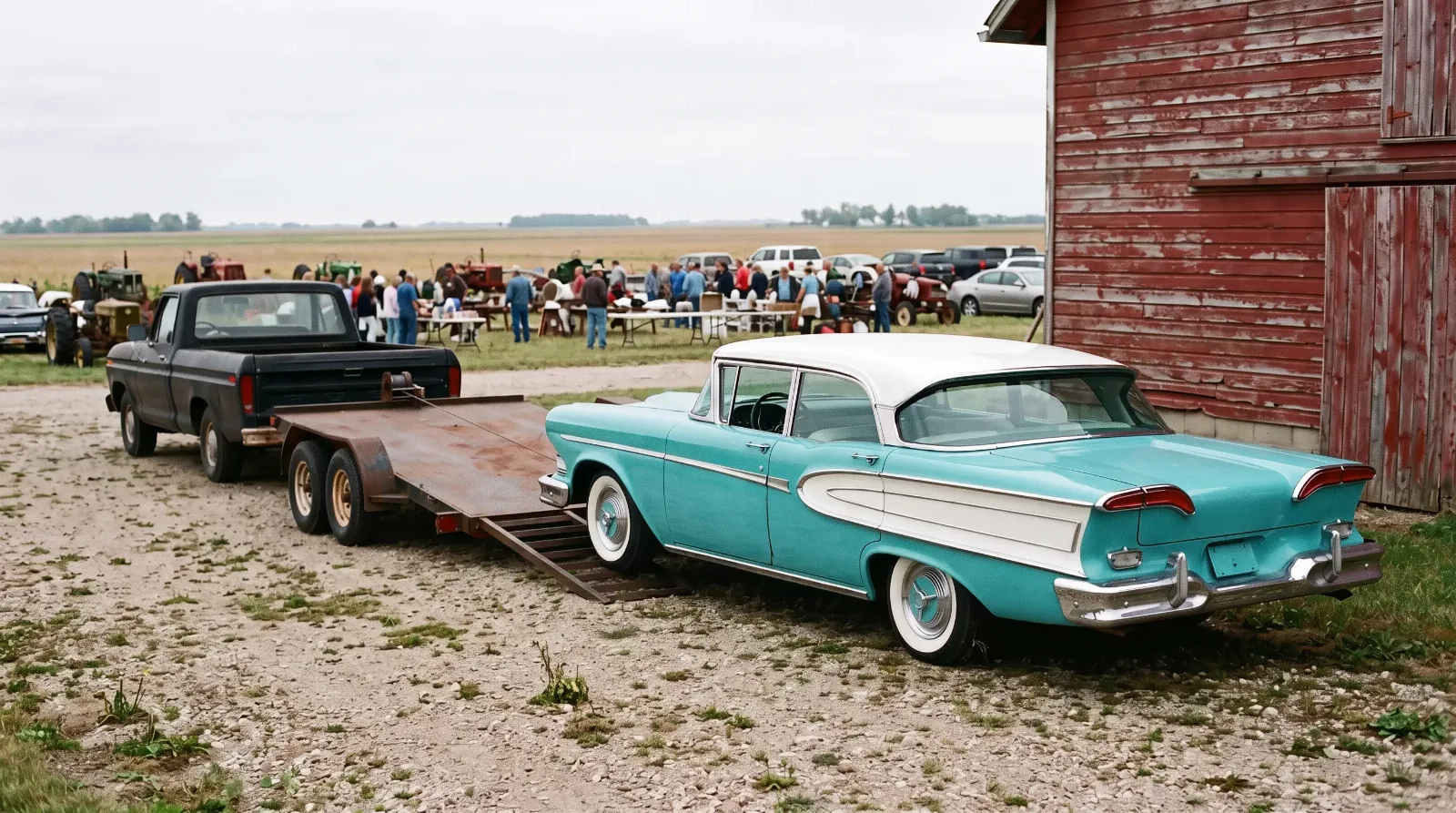
Legal liability is the trap. If a storm takes the roof off and nobody in the shop was careless, a legal liability form has nothing to pay for. Direct excess solves the fault problem but pushes the first claim onto the customer's insurer, which matters when the car under restoration is not insured at all. Many cars come in on a trailer, unregistered, with the owner's coverage long since lapsed. Direct primary pays regardless of cause and costs extra, which is exactly why some shops skip it.
Hagerty's restorer and builder policy includes direct primary on garagekeepers. Ask any carrier you talk to which basis its quote uses, and get the answer in writing.
Sizing garagekeepers insurance for cars worth more than the limit
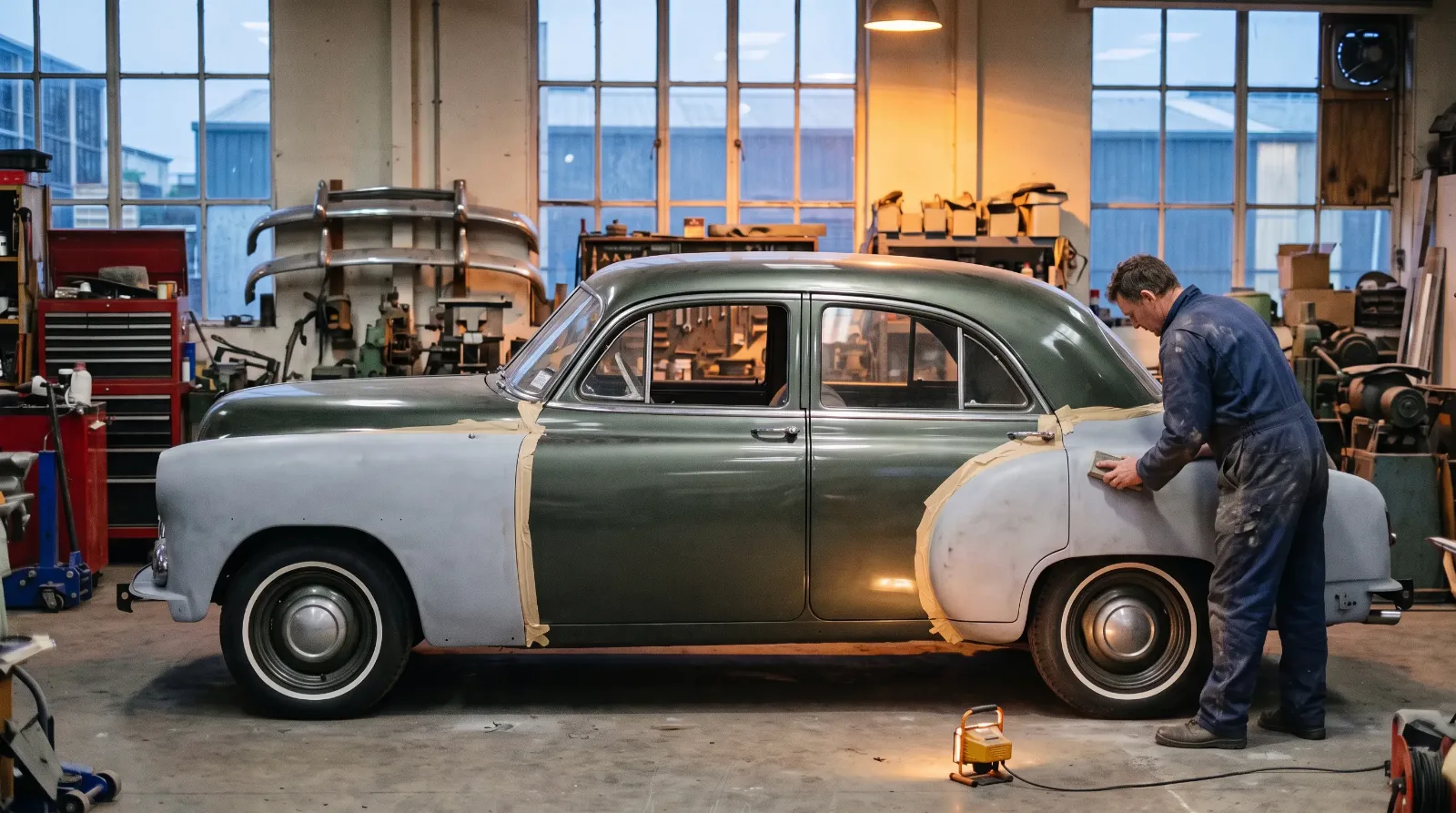
This is where a restoration shop parts company with a brake-and-tire shop. General auto-shop guides size per-vehicle limits for everyday cars, and broker blogs disagree with each other about what "standard" means. None of those figures is a restoration norm, and a shop that buys on them can find a single car worth more than its per-vehicle limit.
The two specialist programs we looked at handle value differently:
- Hagerty describes a "one-limit blanket policy," so individual cars need not be added as inventory changes, with "no vehicle-cap per limit." Cars are insured for "true market value at time of loss." It also lists show and exhibition coverage at "$250k" with higher limits available, plus business interruption, employee tool coverage and transit. The page names Markel Insurance Company, Markel American Insurance Company or Travelers as underwriters, says "some coverage not available in all states," and that "Hagerty determines final risk acceptance." It gives no premiums (page read 2026-10-19).
- Grundy's restoration shop program writes garagekeepers on an agreed-value basis with comprehensive and collision, including protection during the restoration process and for vehicles under construction. Its page gives no limits, deductibles or premiums (page read 2026-10-19).
Agreed value and market value at time of loss are different promises. Agreed value is settled before the loss. Market value is argued about after it. For a car that is worth one figure as a rolling shell and another as a finished concours car, that distinction is where the claim is won or lost. Read the valuation clause before the premium.
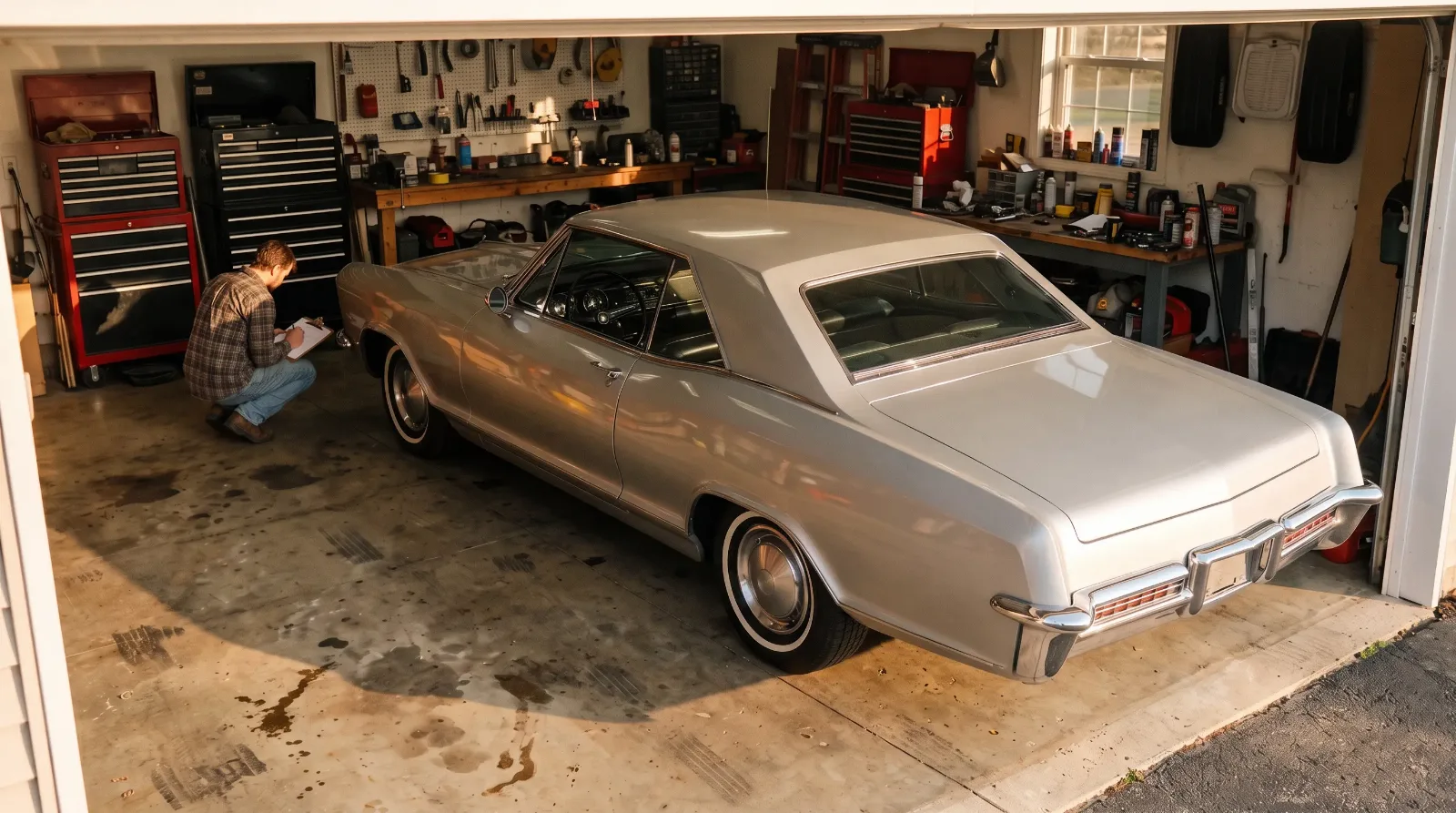
The other question is how value moves during the job. A car that arrives as a rough project can leave worth several times as much, and the policy should track that. A blanket limit with no per-car cap does part of the work. Your own records do the rest: photographs, invoices and hours logged, so that the value you claim after a loss has paper behind it.
What garagekeepers insurance costs, and why the numbers do not fit
Honest answer: there is no published restoration-shop premium. The figures that circulate are for ordinary repair shops and dealers. Taken together, LegalClarity (2026), ALKEME (2026) and a Car and Driver figure cited by others put garagekeepers at roughly $500 to $3,500 a year for an ordinary repair shop. LegalClarity's state estimates (dated 2026-07-06) run from $1,700 to $3,500 a year in New York and $2,500 to $3,500 in California, again for general auto service shops.
The low end of that range rests on a marketplace median built around liability limits, not garagekeepers limits, so it is not a like-for-like number. More to the point, those quotes assume a bay full of commuter cars. A restoration shop with a few high-value cars apart on stands is a different risk, and the only way to price it is to get quotes from carriers that write the trade. Rates and required limits vary by state and by carrier. Confirm the terms with your insurer or broker; this is not legal advice.
"The premium is the least interesting number on the quote. The coverage basis and the valuation clause decide whether you are insured or merely invoiced."
Marcus Feld
What customers ask, and what to have ready
Customers are told to ask. Shop owners who advise the public tell restoration customers to ask whether the shop is bonded or insured, because the shop keeps the car a long time and the owner should know who is responsible if something goes wrong. A shop that answers that question clearly, before the deposit, earns trust that no ad buys.
Customers also hear a second piece of advice: call their own agent first. If the shop is inadequately covered, the owner's personal auto policy might respond under its physical damage section, provided the car was kept insured. That is a reason to tell customers, in writing, to keep their own coverage in force during the build. It protects them and it gives a direct excess form something to sit on.
Sublet work raises the same question one step removed. When a car goes out for paint, trim or machine work through referral networks between shops, ask whose garagekeepers policy covers it while it sits at the other shop, and on what basis. Then tell the owner. A car is only as well insured as the weakest policy it passes through.
Garagekeepers insurance will not make a restoration shop profitable, and it will not make a bad build good. It decides whether one bad night ends the business. Buy it on the coverage basis and the valuation clause, size it to the most expensive car you will ever hold rather than the average one, and let the premium follow.
Sources and notes
- Hagerty: restorers and builders insurance program (read 2026-10-19, no premiums published)
- Grundy: car restorer program, agreed-value garagekeepers (read 2026-10-19)
- NTEA: legal liability, direct primary and direct excess explained (2022-10-03)
- Road Scholars: The shop burned down, now what? (Cam Ingram, 2024-11-05)
- LegalClarity: garagekeepers cost averages and state estimates, ordinary repair shops (2026-07-06)
- ALKEME: garage liability vs garagekeepers, 2026 cost table (2026-05-08)
Related Reading
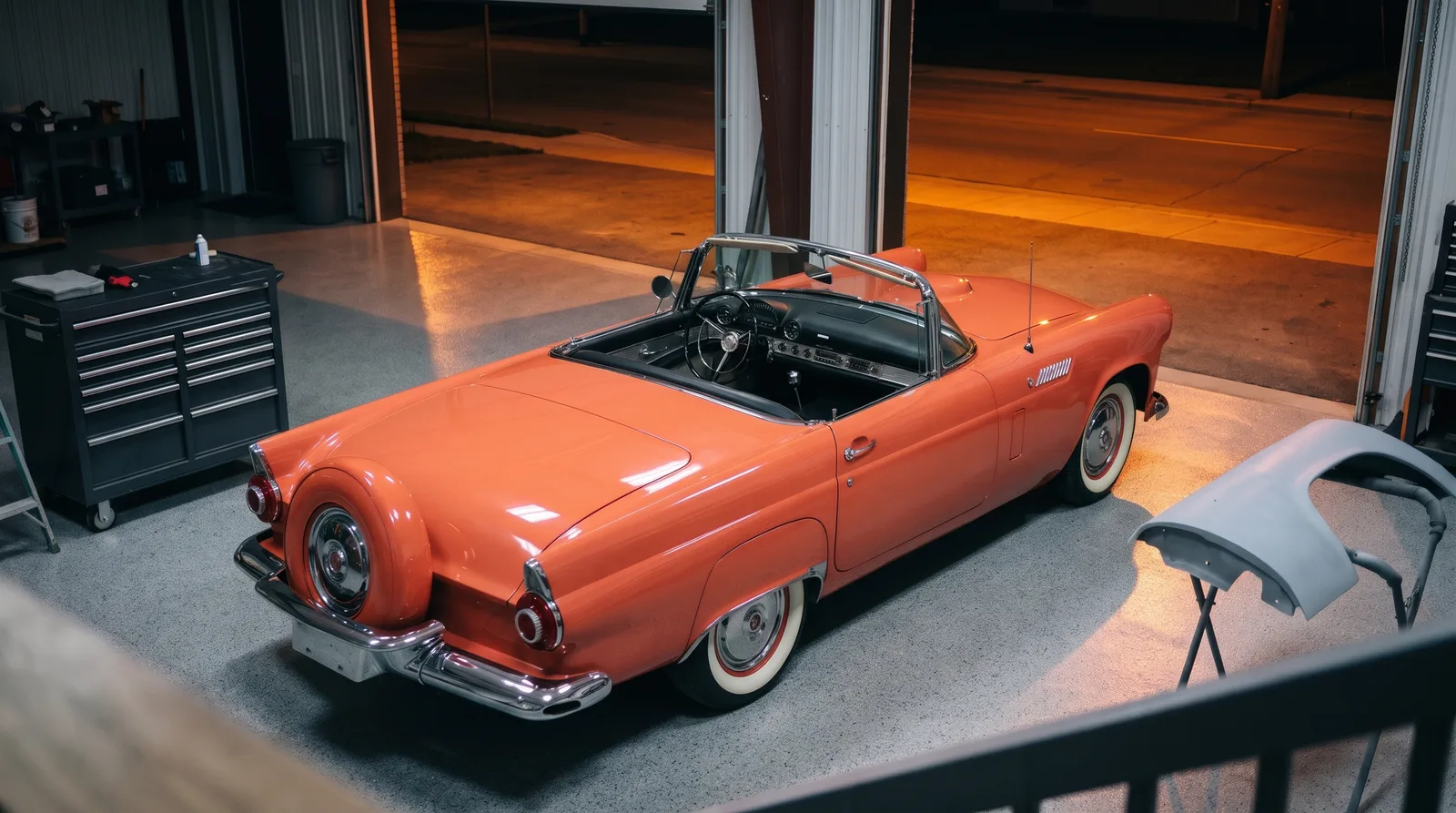
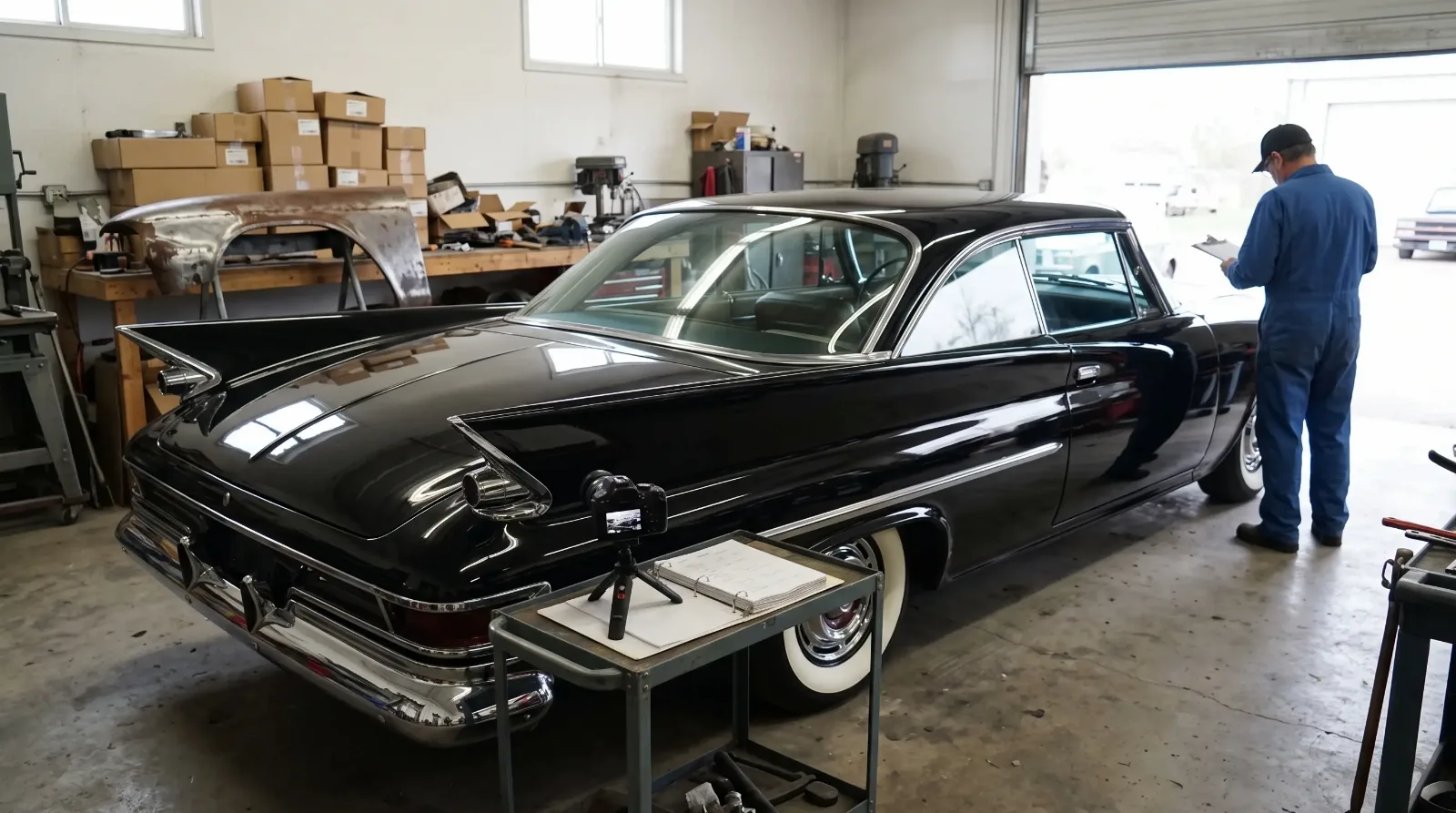
Have a
Classic Car
for Sale?
Reach thousands of serious classic car collectors across the US.
Sell It Here →
Selling a classic? Here's how: where to sell your classic car online
Are You a Classic Car Dealer?
List your full inventory and connect with targeted classic car buyers.
Join as a Dealer →
#agreed value
#restoration shop
#garagekeepers insurance
#shop insurance
#direct primary
#business insurance

About the author
Marcus Feld
Accredited collector-car appraiser who reads the market through hammer prices, condition tiers and risk.
More in Ownership & Lifestyle
Comments
Be the first to comment on this article.