
Most people who ask how to start a classic car restoration business already know how to restore a car. They can hang a door, gap a fender and lay down a base coat. What they have not done is run the business around that work: the permits, the paint rules, the insurance on cars they do not own, the deposits, and the slow months when three projects sit waiting on parts. The shop that fails usually fails there, not at the welding table.
Ownership & Lifestyle
11 min read
Running a Classic Car Restoration Business
Permits, the EPA paint rule, hourly pricing, deposits, garagekeepers insurance and referral income: the business side of a restoration shop.
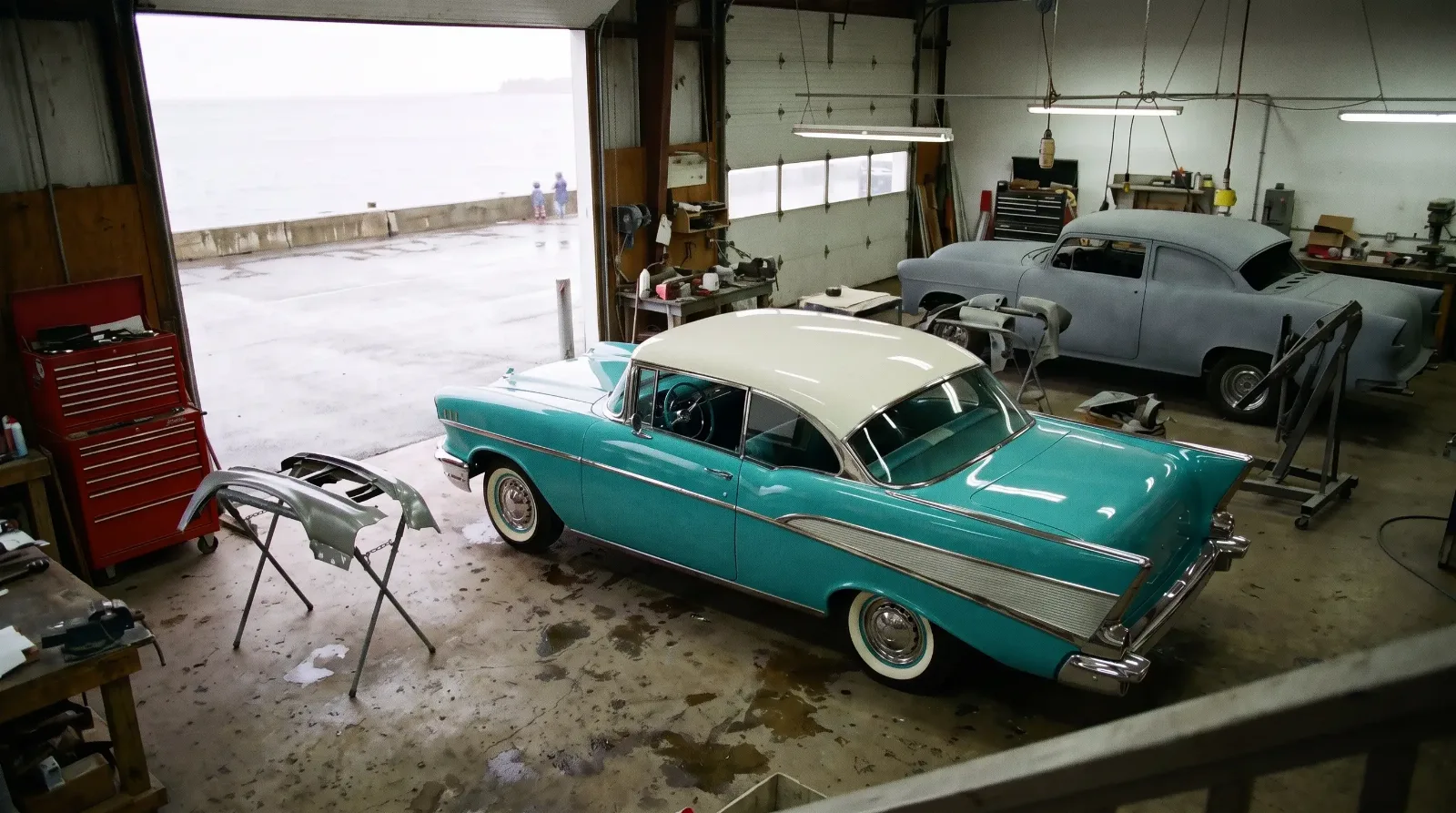
This guide takes the business side in the order you will meet it. It does not cover how to choose a restorer as a customer; it covers what it takes to be one, and how a shop can add a small side income from the moment a finished car goes up for sale. If you want the broader picture of commissions and referral programs across the hobby, see our overview of affiliate income in the car hobby.
How to start a classic car restoration business, step by step
Sequence matters here the same way it matters on a body-off job. Do the steps out of order and you redo work.
First, decide what the shop does. Full body-off restorations, paint and body only, mechanical and drivetrain, or upholstery and trim are different businesses with different equipment, different insurance exposure and different cash cycles. A paint shop carries federal air rules a mechanical shop may never touch.
Second, call the city or county before you sign a lease. One start-up checklist lists a general business license and an automotive repair facility permit, air-quality compliance for spray painting, a fire marshal inspection for flammable-liquid storage and the paint booth, a state sales tax permit if you sell parts, and possibly a dealer or transporter plate for road testing. That list comes from a generic guide (ZenBusiness, updated September 2026), not a statute, so treat it as the questions to ask the local office, not the answers.
Some states add their own layer. In California, auto repair shops must register with the Bureau of Automotive Repair and give a written estimate before starting repairs, and they cannot charge more than that estimate without the customer's permission. Rules like this vary by state, so confirm with your state's consumer or licensing agency before you quote your first job.
Third, price the equipment against the work you chose. One generic US estimate, updated September 2026, puts a garage lease deposit at $3,000 to $10,000, two- and four-post lifts at $6,000 to $15,000, MIG and TIG welders at $3,000 to $10,000, and a paint booth with ventilation at $15,000 to $40,000. The page prints no total, and its figures come with no method. Get your own quotes.
The paint booth and the EPA 6H rule
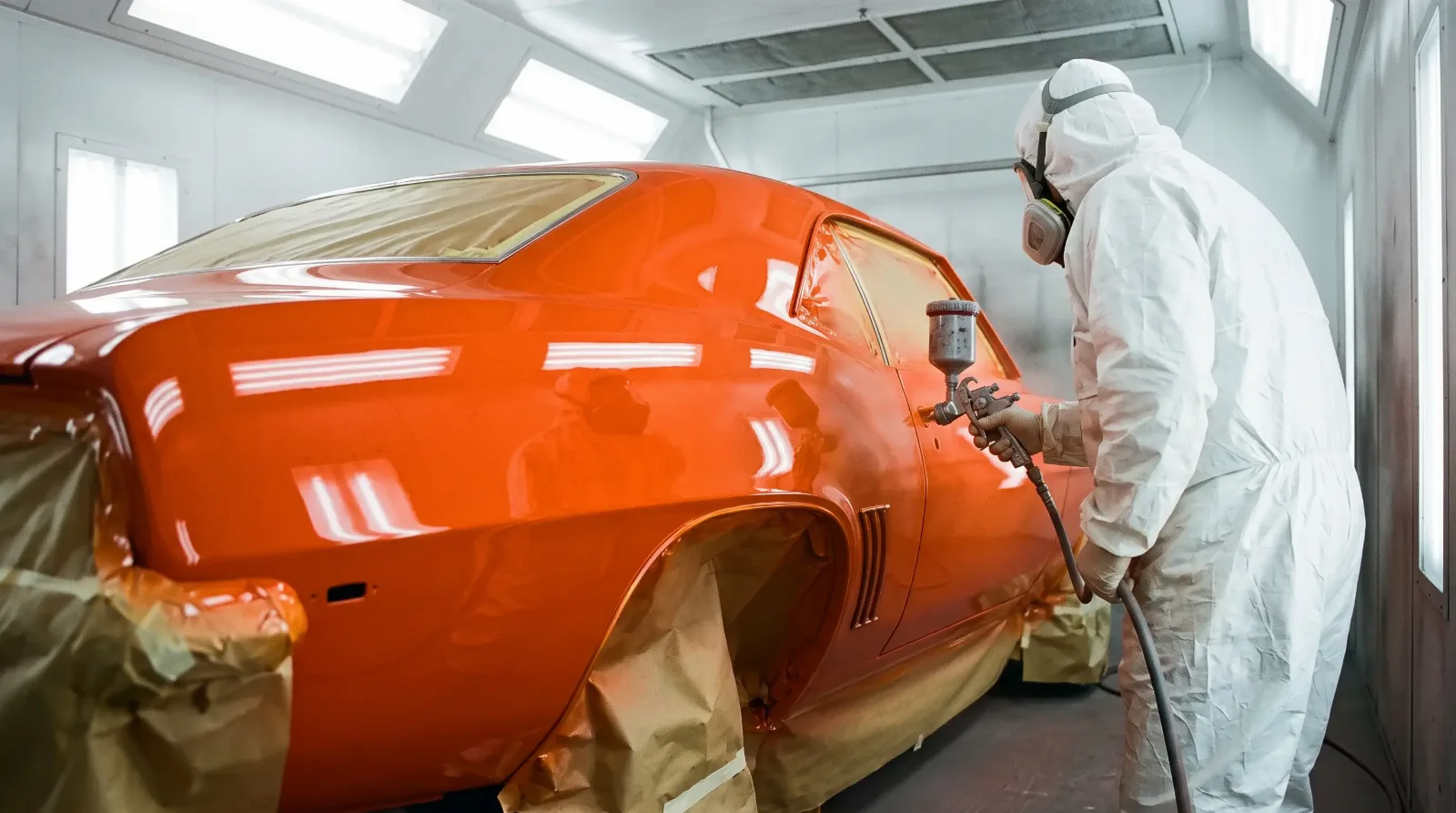
If your shop sprays paint on customer cars, plan the booth around federal rules before you plan it around your workflow. The EPA rule known as 6H (40 CFR Part 63 Subpart HHHHHH) covers area sources that spray-apply coatings to motor vehicles and mobile equipment, including mobile refinishers who travel to the customer. It was published in January 2008 and amended in November 2022.
Here is what the rule asks of a painting shop, in the order you would set it up:
Every painter is certified as trained in spray application and in spray equipment setup and maintenance; an uncertified person may not spray. Every spray booth, prep station and mobile enclosure has a filter shown to capture at least 98 percent of overspray, with water-wash booths exempt. Complete vehicles are sprayed in a fully enclosed booth under negative pressure. Guns are HVLP, electrostatic, airless or air-assisted airless, or an EPA-approved equivalent. Guns are cleaned without atomizing solvent through them.
On paperwork, North Carolina's environmental agency explains that a shop submits an initial notification to the EPA and the state, that new painters at new sources have 180 days after hire to finish training with a refresher at least every five years, and that records are kept at least five years: notification forms, filter efficiency, gun transfer efficiency and painter training certificates.
Where this goes wrong: some summaries mention a hobby exemption or a vehicle-count threshold. Do not build a business on that. A shop painting customer cars for pay should assume the rule applies and confirm with the state's small-business environmental assistance program. State air rules can add to the federal one.
Pricing the work: hourly rates, deposits and draws
Restoration is quoted by the hour for a mechanical reason. You cannot see the rust in a rocker or the filler in a quarter until the car is stripped, so nobody can honestly fix a price for the whole job up front. Shop owners who advise customers say most contracts allow extra charges when more work turns up, and they treat a promised fixed price for a full restoration as a warning sign.
What to charge is harder to pin down. No survey publishes a restoration-specific rate. Named sources, such as a ZenBusiness start-up guide updated in September 2026, put shop labor at about $75 to $150 an hour, with specialist and concours shops charging more. Use that as a starting point and set your own rate from your real costs: rent, insurance, equipment payments, consumables and the hours you cannot bill.
Cash flow runs on the deposit and the draw. Customer-side advice says a good-faith deposit of $2,000 to $3,000 is usually enough and warns owners off very large deposits such as $10,000. Later payments, or draws, follow hours and parts on an agreed schedule, monthly or quarterly, and some shops charge storage on payments more than 30 days late.
Your invoices are your defense. Show the work done, the parts bought, the hours and the progress, and keep a photo record of the build. Customers are told to ask for exactly that, and a shop that offers it before being asked wins the job more often than one that argues about it later.
Insurance: garagekeepers and the cars you do not own
A restoration shop holds other people's valuable cars for months. That is the single biggest risk in the business, and ordinary liability insurance does not cover it. Garage liability handles third-party claims, such as a customer hurt in the waiting room, but it excludes damage to customer cars in your care, custody or control. Garagekeepers coverage fills that gap.
The coverage comes on three bases, and the difference matters when a fire or a storm hits the shop.
| Garagekeepers basis | When it pays | Relative cost |
|---|---|---|
| Legal liability | Only when the shop is legally liable (negligent) for the damage | Cheapest form |
| Direct excess | Regardless of fault, but only after the customer's own insurance is exhausted, does not respond or does not exist | Not ranked in the sources we used |
| Direct primary | Regardless of fault, first dollar, without regard to the customer's own insurance | Most expensive form |
The trap is partial cover. Industry reporting says most restoration shops buy garagekeepers, some do not, and many of those that do buy only partial coverage. If a car is lost to an event that was not the shop's fault and the shop carries legal liability only, the owner may be left relying on their own policy.
Specialist programs exist for restorers. Hagerty describes a one-limit blanket policy with no vehicle cap per limit, direct primary garagekeepers included, and cars insured at true market value at the time of loss; it notes some coverage is not available in all states. Grundy describes agreed-value garagekeepers with comprehensive and collision, and auto liability that includes test drives and a dealer tag. Neither page publishes premiums. The only premium figures on hand are for ordinary repair shops: a July 2026 LegalClarity roundup cites a marketplace median of about $458 a year for garagekeepers and state estimates that run up to $3,500 a year, and none of them is a restoration quote. Coverage and price vary by carrier and state, so get quotes from a broker who writes restoration shops.
"Ask your insurer one question before you take in a customer's car: if lightning hits this building tonight, who pays for the car on the rotisserie? If the answer starts with 'it depends,' you are not covered the way you think you are."
Ray Delgado
Finding customers without a big ad budget
Restoration customers find shops through other owners, so the marketing is mostly showing up. Owners are told to ask around at car shows, and shops sponsor local shows to meet them. One Northern California restoration and collision shop sponsored a local cruise and car show for three years and found that many owners had not known it worked on classic and muscle cars at all.
Know what owners look for in a shop and build the business to answer it: proof you are insured, a photo record, clear invoices and finished cars they can see. The trade has its own networking too. ARMO, the restoration council of SEMA, is open to businesses serving the restoration hobby once they are SEMA members, and offers a membership directory, a reception at the SEMA Show and education sessions.
Reviews matter, and Google has rules on asking for them. You may encourage genuine reviews, but you may not pay or discount for a review, discourage negative ones, ask only happy customers, set staff quotas or press customers while they are at the shop. Reviews from employees and relatives get removed.
When the car is finished: valuation, sale and referral income
Many restorations end with a sale, sometimes years later, sometimes as soon as the paint cures. That moment is a service opportunity for the shop, and done properly it can also be a modest second income.
Start by pointing the owner to an independent appraisal. An appraiser who is not on your payroll gives the owner a number for insurance and for pricing the sale, and keeps you out of the awkward role of valuing your own work.
Be careful about doing more than advising. In Texas, arranging or offering to arrange a used-vehicle sale for a fee counts as acting as a dealer and needs a dealer license, with narrow exceptions. Other states set their own thresholds, so confirm with your state's motor vehicle agency before you take any fee for helping sell a customer's car.
A referral link is a cleaner route. Our partner program names restoration, body, upholstery and detailing shops that finish a car and learn it is about to be sold as an intended partner, and a link in a quote or a follow-up email is enough. It pays 25% of every listing package or upgrade the referred seller buys and 20% of a dealer's subscription payments for the first 12 months, with a 60-day cookie, commissions confirmed after 30 days, and a PayPal payout once your confirmed balance reaches $50. The listing side charges one price for a listing and takes no cut of the sale. For example, at the October 2026 prices on the partner page, a customer who buys the $179 Premium package earns the shop $44.75. Offering a referral when the customer decides to sell costs the customer nothing extra.
Two rules come with it. Tell the customer you earn a commission when you share the link, as the FTC requires, and do not refer yourself or your own business, because the program pays nothing on your own purchases. Commission income is taxable business income; US partners file a W-9 before the first payout, and an accountant should confirm how it fits your books.
Run the shop in the right order, insure the cars you hold, put every price and draw on paper, and treat the finished car's sale as one more part of the service. That is the business around the craft, and it is what keeps the lights on over the booth.
Sources and notes
- 40 CFR 63.11173: EPA 6H requirements for spray coating (Cornell LII)
- North Carolina DEQ: paint and autobody rule 6H
- ZenBusiness: starting a classic car restoration business (updated September 9, 2026)
- NTEA: are you protecting customer vehicles at your shop?
- LegalClarity: garage keepers insurance cost averages (July 6, 2026)
- Hagerty: insurance for restorers and builders
Note: costs, rates, premiums and partner program terms in this article were read on October 19, 2026, unless the text gives another date. Equipment and labor figures are generic estimates, not quotes; partner program figures come from our own affiliate program page on the same date. Nothing here is legal, tax or insurance advice.
Related Reading
Article
Automotive Affiliate Programs: How the Classic Car Crowd Gets Paid in 2026
Article
How Classic Car YouTubers and Writers Make Money
Article
How to Become a Classic Car Appraiser or Inspector
Article
Getting Restoration Customers Without Paid Ads
Article
When a Restoration Customer Wants to Sell
External
/affiliate-program
Have a
Classic Car
for Sale?
Reach thousands of serious classic car collectors across the US.
Sell It Here →
Are You a Classic Car Dealer?
List your full inventory and connect with targeted classic car buyers.
Join as a Dealer →
#restoration shop
#referral income
#small business
#garagekeepers insurance
#epa 6h
#auto body paint
#shop pricing

About the author
Ray Delgado
Metal fabricator and chassis builder who has spent 25 years turning flat sheet and mild steel into hot rods, gassers and restomod underpinnings.
More in Ownership & Lifestyle
Comments
Be the first to comment on this article.