
A truck with an empty trailer costs money every mile it moves. So the first real question for a new hauler is not the rig or the paperwork, it is where the next load comes from. Car shipping leads for classic work come from a short list of places, and they are not equal. Some cost a monthly fee and get you a price somebody else set. Some cost nothing and arrive with the customer already trusting you.
Ownership & Lifestyle
8 min read
Where Car Haulers Find Classic Car Shipping Leads
Load boards, marketplace shipping pages and the trade's own phone calls: where car shipping leads for classic haulers come from, and what each costs.
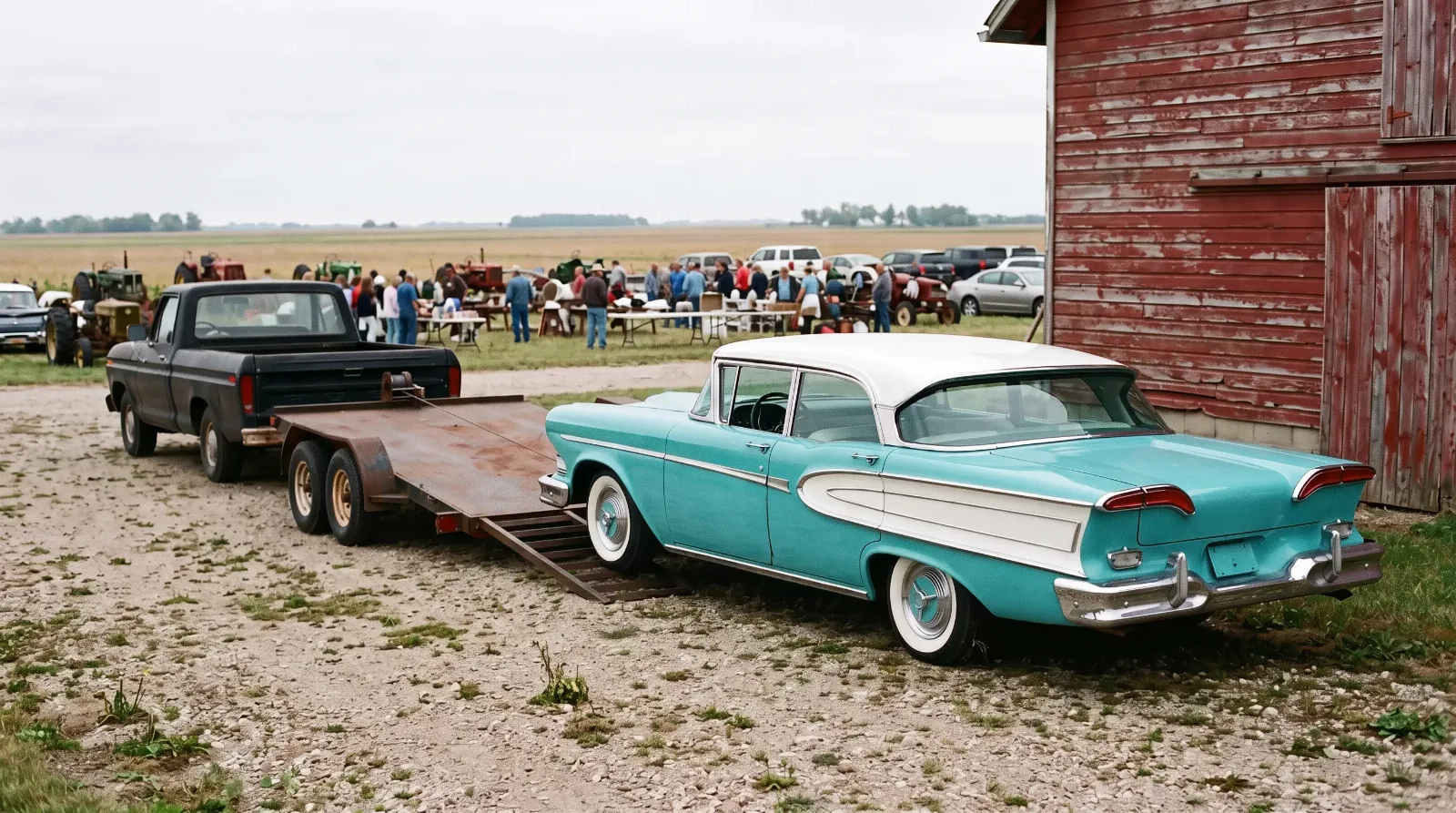
The filings, insurance and equipment are covered in our car transport business guide, and the rig itself in the piece on starting out with one truck. This one is only about the phone ringing.
Load boards: steady car shipping leads at someone else's price
A load board is a listing service where shippers and brokers post vehicles that need moving and carriers pick them up. Central Dispatch is the best-known one. A comparison site, with pricing checked in July 2026, lists its Core plan from $139.95 a month plus tax on both the carrier and shipper side, Premium from $214.95 a month for shippers, and Enterprise by quote. The company's own pricing page could not be opened, so treat those as reported numbers and check them when you sign up. Since February 2025, each vehicle a shipper posts counts toward its plan's tier limits, even inside a multi-vehicle listing.
The good part is volume. Central Dispatch's own homepage cites more than 20,000 carriers in its network over the last year and over 10 million vehicles posted a year. On a slow week, a board can fill the gaps in a route and keep the truck rolling home loaded instead of empty.
The hard part is the price. Most of what is posted comes through a broker, and the broker already quoted the customer. Your share is what is left after their cut. On a classic, that can mean the same money as an everyday sedan for twice the care: soft straps, a winch for a car that does not run, and a customer who calls every four hours. Boards are fine for filling a trailer. They are a poor way to build an enclosed classic business by themselves.
uShip and Montway also connect carriers with shippers. Their carrier sign-up terms and fees could not be read for this article, so they are named here and nothing more is claimed about them.
Marketplaces that point buyers to a carrier
The second channel is the listing and market-data sites where people buy classics. When a buyer wins a car three states away, the site is the first place they look for shipping.
Classic.com's shipping page, read in October 2026, names RunBuggy, InterCity Lines, Passport Transport and Reliable Carriers as featured partners, and also lists Horseless Carriage, Montway Auto Transport, Ship a Car Inc., Trans Global Auto Logistics and uShip. Its disclosure says it "may be compensated" through those links. It does not say how much, and we found no classic marketplace that publishes a transporter referral scheme with a rate. Getting on a list like that is a business development job, not a form you fill in.
Bring a Trailer built shipping into its own buy flow at launch in 2021, according to a Motoring Research report: bidders get a quote by zip code during the auction, and the cost can be added to the purchase price if they win. The report names no third-party transporter. For a small hauler, the lesson is plain: on the biggest auction sites, the shipping decision is made inside the checkout, and you are not in the room.
| Lead source | What it costs you | Who sets the price | Fit for classic work |
|---|---|---|---|
| Load board (Central Dispatch) | Monthly plan, from $139.95 reported (July 2026) | Usually a broker, before you see it | Fills routes; thin on care |
| Marketplace shipping page | Partnership terms not published | Marketplace or its partner | Good buyers, hard to get listed |
| Auction checkout shipping | No outside carrier named in the 2021 report | The auction site | Closed channel |
| Direct calls from the trade | Your time and your reputation | You | Best margin, slowest to build |
The people sellers already call
This is the channel that pays. Before a classic changes hands, the owner talks to a handful of people: a dealer, an inspector, an appraiser, a restoration shop, somebody in the club. Each of them gets asked the same question sooner or later: "Who do you use to move a car?"
Be the answer. Drop off a card with the shop owner who just finished a frame-off. Tell the local inspector you can have a car on the trailer in two days. Ask the dealer what routes he ships most. When a seller reads up on shipping a sold car out of state, the next thing he does is ask the person who sold him on the idea, and you want your number already in that person's phone.
"A load board gets you a car. A restorer who trusts you gets you his next twenty. I would rather spend a Saturday at his shop than a month of fees on a board."
Robert Halloran
Return the favor, too. Keep a short list of inspectors and shops you would send your own brother to, and hand it out. Referrals run both ways or they stop running.
One caution. Moving cars for dealers is not the same as getting paid to help sell them. In Texas, arranging or offering to arrange a used-vehicle sale for a fee counts as acting as a dealer and needs a dealer license, and a dealer-law attorney wrote in 2011 that most states have laws or regulations that prohibit or regulate these so-called bird-dog fees. If a dealer offers you a cut for steering buyers his way, read up on how a car dealer referral program works and check your state's rules first.
When you get more calls than trailer
A good relationship sends more work than one truck can carry. An enclosed trailer typically carries two to six vehicles, according to one transporter's guide, so a busy month fills it fast. The temptation is to pass the extra load to a friend with a truck and take a cut.
So you have two clean choices. Hand the job to a carrier you trust and take nothing but the goodwill, or get broker authority and do it properly. Taking an informal cut for a load you never touch is the choice that gets a small operator in trouble. Authority, bond and filing rules vary with how you set up the business, so confirm with FMCSA and your insurer before you start brokering.
Referral income on the side of the haul
A hauler sees the car at the exact moment it is being sold, and often hears about the next one. Our partner program lists "transport, inspection, appraisal" as one of its partner types, for the people sellers already call before a sale, and says a link in a quote or follow-up email is enough.
The terms as published in October 2026: 25% of any listing package or upgrade a referred customer buys, and 20% of a dealer's subscription payments for the first 12 months. The cookie lasts 60 days, each commission is confirmed after 30 days, and payout is by PayPal once the confirmed balance reaches $50. For example, a seller who buys the $99 Featured listing through your link earns you $24.75. That is arithmetic on the published table, not a promise of anything.
Whenever you share a referral link, say plainly that you earn a commission if the customer buys through it. The FTC requires the connection to be disclosed clearly and conspicuously, and a line in the quote right next to the link does the job.
Other networks pay on other terms, and the rundown of affiliate programs for car people lays them out with sources. For a hauler, the order of business stays the same. Fill the trailer and deliver the car clean. Then add referral income on top of the haul for the customers who mention they have another car to sell.
Sources and notes
- Central Dispatch plans and pricing, third-party comparison (pricing verified July 2026)
- Central Dispatch homepage: network figures, read October 2026
- Classic.com shipping partners page, read October 2026
- Motoring Research: Bring a Trailer adds shipping (2021)
- 49 CFR 387.307: property broker surety bond or trust fund
- Auto Dealer Today: Be careful around the bird dogs (2011)
Load board prices are as reported by a comparison site because Central Dispatch's own pricing page could not be opened. The Texas dealer rule is 43 Tex. Admin. Code 215.85. Partner program terms are from the Classic Cars Arena partner page as of October 2026.
Related Reading

Have a
Classic Car
for Sale?
Reach thousands of serious classic car collectors across the US.
Sell It Here →
Selling a classic? Here's how: sell my classic car
Are You a Classic Car Dealer?
List your full inventory and connect with targeted classic car buyers.
Join as a Dealer →
#classic car transport
#referral income
#partner program
#car hauling business
#car shipping leads
#load boards
#broker authority

About the author
Robert Halloran
Texas-based classic truck enthusiast with decades of experience buying, restoring, and writing about American pickups from the 1940s through the 1980s.
More in Ownership & Lifestyle

Comments
Be the first to comment on this article.