
Most people asking how to become a car inspector already have the hard part. They've spent years under old cars. What they don't have is the paperwork, the kit and a way to get paid for an opinion instead of a repair. That's the job. You look, you drive, you write it down, and somebody else decides whether to spend their money. If you want the wider picture, appraisal work included, start with the appraiser and inspector path. This piece is narrower. It covers what it takes to start doing pre-purchase inspections on old cars, one client at a time.
Ownership & Lifestyle
8 min read
How to Become a Pre-Purchase Car Inspector
Skills, credentials, kit and paperwork for doing paid pre-purchase inspections on classic cars, and how to find the first clients.
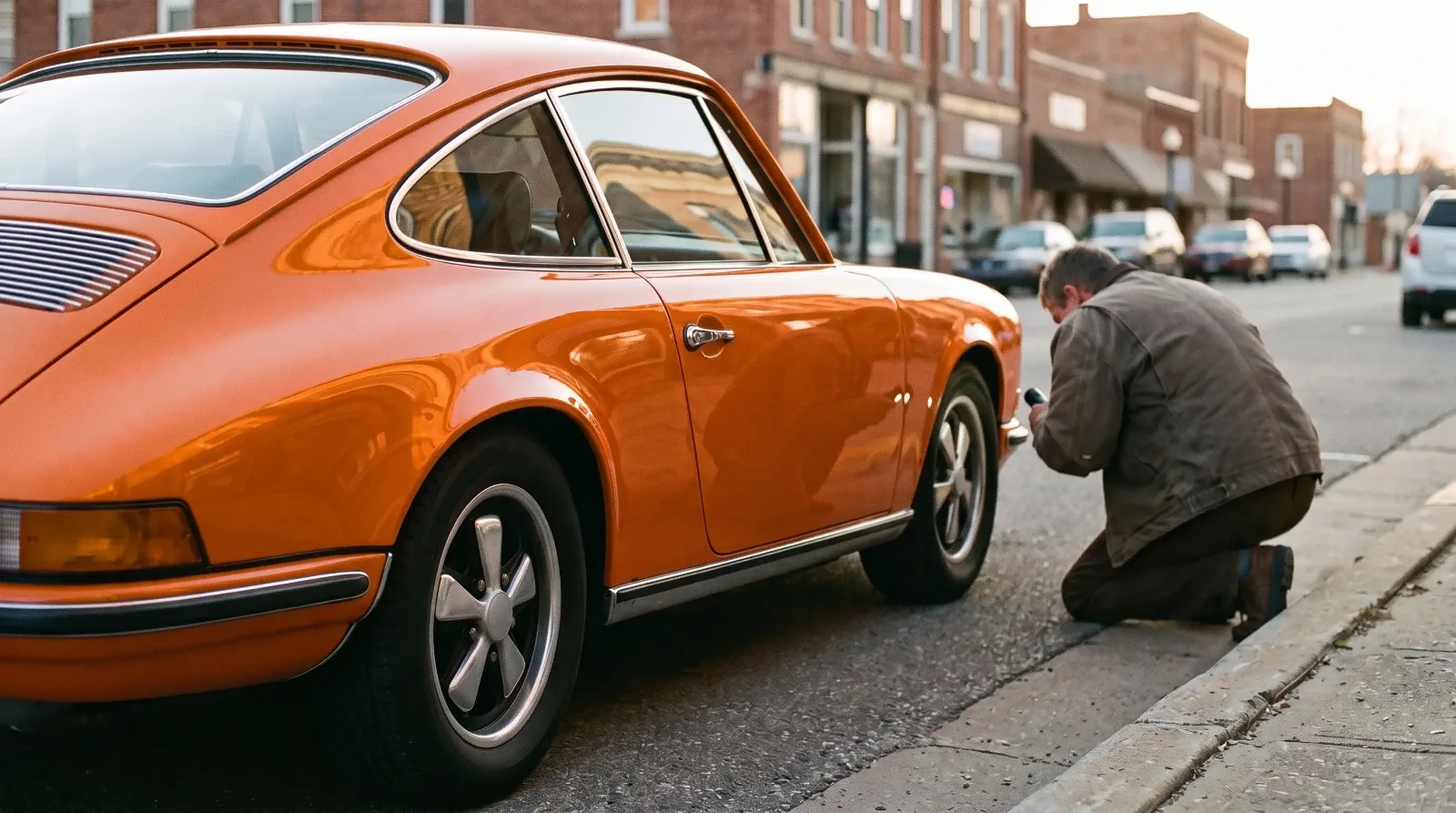
What a pre-purchase inspector actually sells
You sell a neutral opinion. Not a repair. Not a valuation, though plenty of people end up doing both. The buyer is usually somewhere else, sometimes a thousand miles away, looking at forty flattering photos and a seller who swears the floors are solid. You are their eyes and their nose.
The collector-car insurers say the same thing in plainer words. American Collectors Insurance tells buyers to use a neutral, licensed mechanic and to be careful about conflicts when the inspection comes from the dealership selling the car. It also says a pre-purchase inspection usually costs a few hundred dollars. That number matters for you. Nobody pays a few hundred dollars for a guess.
So the first rule is about whose side you're on. The person paying you is the buyer. You don't quote the repairs you find. You don't sell the parts. If you run a shop and the car comes back to you for work, you've got a conflict, and the next client will hear about it.
How to become a car inspector: skills first, certificates second
Here's the blunt version. We could not find a national certification built specifically for classic car pre-purchase inspectors. There isn't a single card that makes you one. What exists is the general technician credential most clients recognize, and a handful of memberships that firms print on their price pages.
That general credential is ASE. It is not a legal requirement for this work. It is a market expectation, which is a different thing. ASE certifications are valid for five years, and you recertify once five years or more have passed. The work-experience rule for the repair technician tests is one, two or three years depending on the test, and formal training can stand in for part of it. ASE's 2026 fee page lists $34 registration per order and $62 per test.
Look at how working firms describe themselves and you'll see the pattern. One Kentucky-area firm lists ASCAA membership, a "Hagerty Approved" appraiser and ASE-certified mechanics on staff. Another national outfit says only that its inspectors are "tested & certified," with no certification named. Clients read the letters. They hire on the report.
If you plan to add valuation work later, the appraisal certifications are a separate track with their own bodies and rules. Don't confuse the two on your business card. An inspection says what's wrong with the car. An appraisal says what it's worth. Different liability, different paperwork.
The skills that matter on old cars are not the ones a dealership tech uses every day. You need to read a carburetor and an ignition system that has no computer to ask. You need to find rust in floor pans, rockers and trunk pans, and tell a fresh repair from an honest original panel. You need to judge panel gaps, read a paint gauge and smell a car properly. A scan tool tells you nothing about a car built before the computers showed up.
"The certificate gets you the phone call. The first report you write decides whether you get the second one. Write it for a guy who will never see the car."
Mike Sullivan
The kit, and what it costs to open the doors
You don't need a building. You need a reliable vehicle, good light, a way to get under a car without a lift, and tools that make your findings provable. Most of the ranges below come from one generic start-up guide for pre-purchase inspection businesses, last updated in July 2026. It's a lead-generation page with estimates, not a survey, so treat each range as a starting point to check. The ASE line is from ASE's own fee page.
| Item | What it does for you | Cost estimate |
|---|---|---|
| Hand tools | Basic checks, access panels, wheel removal | $400 to $1,200 |
| Paint thickness gauge | Finds filler and respray under shiny paint | $100 to $500 |
| OBD-II scanner | Later cars only; useless on a carbureted car | $500 to $3,000 |
| Inspection software | Report template, photos, delivery | $300 to $800 a year |
| LLC filing | Separates the business from your house | $100 to $500 |
| First-year business insurance | Liability while you work on someone else's car | $600 to $2,500 |
| ASE exams | The credential clients recognize | $62 per test plus $34 registration (ASE, 2026) |
Spend on the gauge and the light before the scanner. Most of what goes wrong on a sixty-year-old car is metal, wiring and somebody's weekend repair, and you find those with your eyes, a magnet's worth of suspicion and a paint reading.
Paperwork next. The same guide says most inspectors need a city or county business license, and that some states may require a license from the DMV or a Bureau of Automotive Repair as well. California shows why that matters: its Bureau of Automotive Repair requires a registration to diagnose, service or repair vehicles for compensation, with a $200 application fee and a $200 annual renewal as of October 2026. Whether your inspection counts as diagnosing is a question to put to the bureau before you take money for one. It names errors and omissions cover, general liability and commercial auto (if you drive a vehicle for the work) as the policies to price. Licensing and insurance rules vary by state and by carrier, so confirm what applies to you with your city, county, state agency and insurer before the first paid job. This is not legal advice.
Finding the first clients
There are two ways in. You can work as a contractor for a national inspection network, or you can hang your own shingle. Plenty of people do the first to get reps and the second once they have a reputation.
The networks sell classic inspections at a fixed price. Lemon Squad, for example, listed a classic inspection at $329.99 in October 2026 for cars from 2006 or older, with 40 or more photos and a road test only when the car is street legal and the weather is safe. What those networks pay the inspector who does the work is another matter. We could not confirm it: the contractor posting pages were closed or blocked when we checked.
On your own, you set the price and you find the work. Two independent price pages, both read in October 2026, give you a feel for it. One northern California appraiser lists a pre-purchase inspection at $399 base plus a mileage charge, with a written road-test and condition report and 30 to 50 photos. A Kentucky-area firm lists inspections from $349. Neither is a rule. Both tell you that a written report with real photos is what the money buys.
Where do the calls come from? Out-of-state buyers, first. Then the people around a sale: appraisers who don't road-test, transporters who see the car before anyone else, club members who know who's selling what. Give each of them a short sample report and a phone number. One good report forwarded by a happy buyer does more than any ad.
A referral line for the cars you pass
Every inspection ends one of two ways. The buyer walks, or the car changes hands. Either way, you've just met a seller and a buyer at the exact moment money moves, and that's why our partner program names "transport, inspection, appraisal" as one of its partner types: the people sellers already call before a sale.
The terms are simple. As of October 2026, our partner program pays 25% of listing packages and 20% of dealer subscriptions for the first 12 months. The cookie lasts 60 days, commissions are confirmed after 30 days, and payout runs by PayPal once your balance reaches $50. For example, a Featured listing at $99 pays the referring partner $24.75. You can't refer yourself or your own business, and refunds or chargebacks remove the commission. None of that is a forecast of what you'll make.
Two habits keep it clean. First, the link never goes near the verdict. Put it in the follow-up email, after the report is delivered, so nobody can say your opinion was bought. Second, when you share a referral link you have to say you earn a commission from it; the FTC requires the disclosure and the program does too. A plain sentence next to the link is enough.
That's the job in full. Learn the old cars, get the credential clients expect, buy the gauge before the gadgets, check the license rules where you live, and write every report as if the buyer will never see the car. Most of them won't.
Sources and notes
- American Collectors Insurance: pre-purchase inspections for collector cars
- ASE: 2026 test dates and fees
- ASE: work experience requirements and recertification
- ZenBusiness: starting a pre-purchase inspection business (updated July 2026)
- Lemon Squad: classic and vintage car inspection (read October 2026)
- California Bureau of Automotive Repair: apply for a registration or license
Fees, prices and partner program terms are as published in October 2026. Inspection prices are individual firms' own price pages, not industry averages. Start-up costs are one guide's estimates.
Related Reading
Have a
Classic Car
for Sale?
Reach thousands of serious classic car collectors across the US.
Sell It Here →
Are You a Classic Car Dealer?
List your full inventory and connect with targeted classic car buyers.
Join as a Dealer →
#classic car buying
#pre-purchase inspection
#small business
#car inspector
#partner program
#ASE certification

About the author
Mike Sullivan
Detroit-area muscle car enthusiast and restoration specialist with three decades of hands-on experience working on American iron.
More in Ownership & Lifestyle
Comments
Be the first to comment on this article.