
Most people who ask how to become a classic car appraiser expect to hear about a license, an exam and a state board. The records say otherwise. There is no government license for valuing a collector car in the United States, and there is no credential written for classic cars alone. What exists is a set of private designations, one national standard, a few IRS tests and a market that pays for a well-documented opinion. This guide walks through each piece in the order you will meet it, and covers the inspector's side of the job too, since many people end up doing both.
Ownership & Lifestyle
12 min read
How to Become a Classic Car Appraiser or Inspector
No license exists for valuing a collector car. Here is what the credentials, USPAP, IRS rules and real fee pages say about doing it for pay.
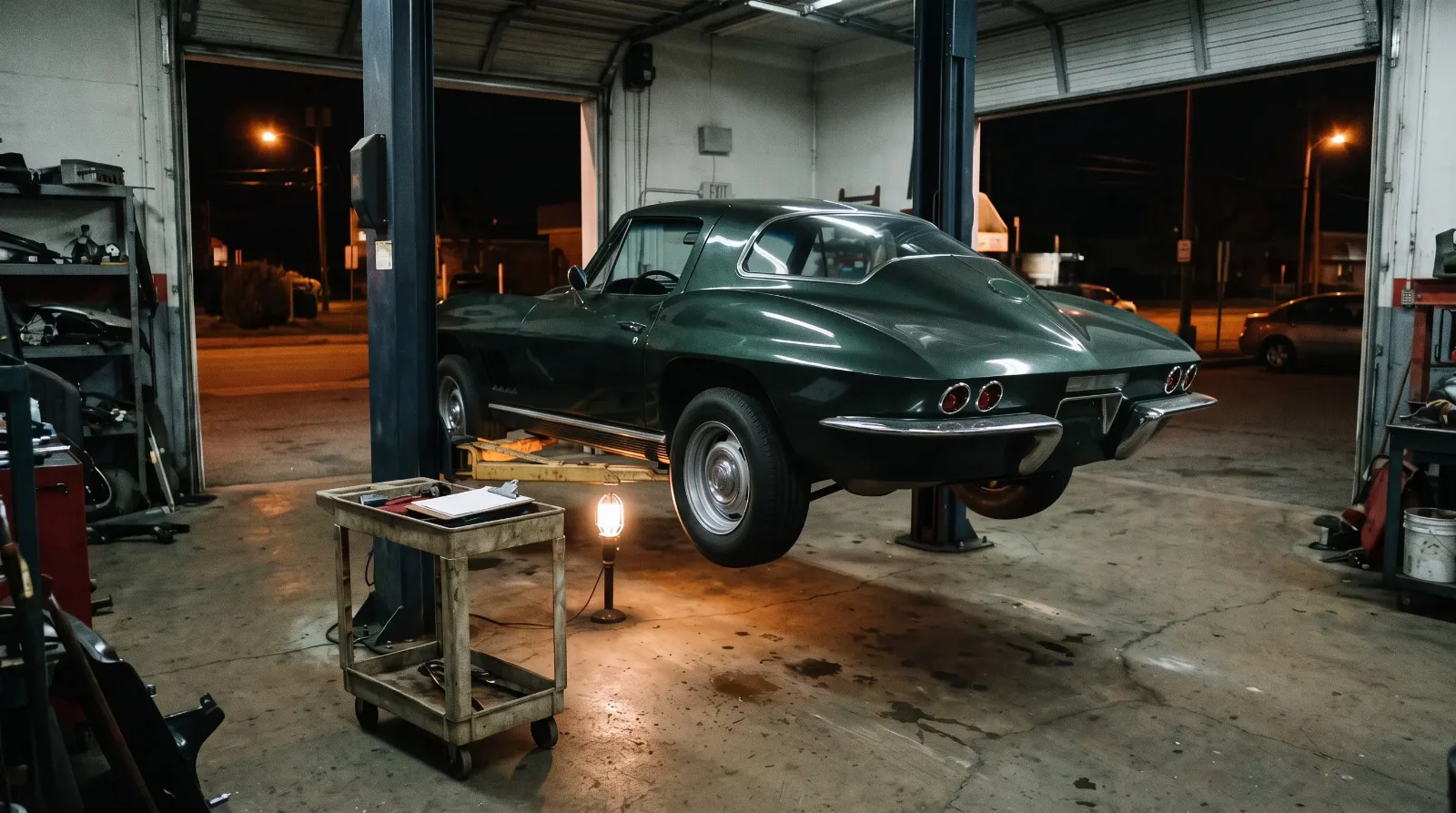
If you are new to the ways the people around this hobby earn money, start here and come back. This piece stays on one narrow question: what it takes, on paper and in practice, to value and inspect other people's cars for a fee.
Three jobs that share one word
The word "appraiser" covers three different occupations. The first is the insurance damage appraiser who writes up a repair estimate after a collision. The Bureau of Labor Statistics counts these workers separately (median pay $78,240 in May 2025, 13,500 jobs), and some states license them: Rhode Island requires a license and a written exam for motor vehicle damage appraising. That rule covers cars repaired under insurance policies. It does not mention valuing a collector car.
The second is the valuation appraiser, the subject of most of this article. A client hires you to state what a specific car is worth, for a sale, an estate, a donation, a dispute or a loan. The third is the pre-purchase inspector, paid by a buyer to look at a car before money moves. The skills overlap, but the paperwork and the liability differ, so decide early which one you are selling.
How to become a classic car appraiser: what the credentials really are
Start with the plainest fact on the record. The Appraisal Foundation states that there is no law requiring personal property appraisers to obtain a credential or designation to practice. A collector car is personal property. The Foundation does not issue credentials itself; it sets recommended criteria, and partner organizations issue the designations: the American Society of Appraisers (ASA), the International Society of Appraisers (ISA) and the Appraisers Association of America (AAA).
Those recommended minimums are worth reading closely, because they tell you what a serious designation will ask of you:
- Education: 120 classroom hours of appraisal-specific qualifying education, plus 30 semester credit hours from an accredited college or an associate's degree or higher in any field.
- Experience: at least 700 hours of USPAP-compliant personal property appraisal experience, plus specialization experience of 1,800 hours of market-related personal property appraisal, or 4,500 hours of broader market-related work, or a blend.
- Documentation: the experience must be documented, and education cannot substitute for it.
These are recommended criteria for credentialing bodies, not legal requirements. Still, they are the yardstick the established societies measure against.
ASA publishes its own personal property path. You become a Candidate by passing ASA's online ethics exam plus a 15-hour USPAP course and exam. Accredited Member requires two years of full-time personal property appraisal experience plus the education and testing requirements; Accredited Senior Appraiser requires five years. The page lists no vehicle specialty and no course fees.
The automotive side has its own association. The International Automotive Appraisers Association (IAAA) says its appraiser members must be licensed and recognized by insurers, lenders or courts, and licensed by a state, country or province. It runs a separate apprentice track that asks for proof of professional automotive work history. New members complete the IAAA's course on its Uniform Standards for Automotive Appraisal Procedure (USAAP) and ongoing training. It publishes no fee, dues, exam or experience minimum, and its certifications end when membership ends.
One correction on wording, made gently. You will see appraisers advertise themselves as "USPAP certified." One practitioner's guide puts it flatly: there is no such thing. USPAP is a standard you comply with, so the accurate phrase is "USPAP compliant." "Certified" belongs to designations from bodies such as ASA, ISA and AAA, and it applies to individuals, not firms. Owners who are shopping for help increasingly know this; the questions they ask are covered in how owners find a certified appraiser, and it is worth reading from the client's side before you print business cards.
USPAP and the IRS rules that shape the report
USPAP, the Uniform Standards of Professional Appraisal Practice, is maintained by the Appraisal Standards Board and updated as needed. The current edition is 2024. The Appraisal Foundation's USPAP page lists personal property appraisal alongside real estate, business valuation and mass appraisal. The page does not say who must comply. In practice, the client who needs USPAP most often is the IRS.
When a donor claims a deduction for property worth more than $5,000, the IRS wants a qualified appraisal by a qualified appraiser, filed on Form 8283 Section B. The Form 8283 instructions (revised December 2025) define that person: someone who holds a recognized appraiser designation, or who has met minimum education requirements and has two or more years of experience valuing that type of property; who regularly prepares appraisals for pay; and who declares those qualifications in the report. Publication 561 adds the timing rule: the appraisal is signed and dated no earlier than 60 days before the contribution, and it must follow the substance and principles of USPAP.
Two more IRS rules affect how you run the business, not just the report:
- Your fee cannot be based on a percentage of the appraised value, and no part of the arrangement can be tied to the amount allowed as a deduction. This is one reason appraisals are priced per assignment.
- Donated vehicles carry their own rule. For a car claimed at more than $500, the deduction is generally limited to the gross proceeds when the charity sells it, and the donor attaches the charity's written acknowledgment, provided within 30 days of the sale or contribution. A private-party price-guide value can measure fair market value.
Tax rules change and apply differently to each donor. Confirm the current form instructions and the client's situation with their accountant before you accept a donation assignment; nothing here is tax advice.
Insurance work is a smaller market than beginners assume: Hagerty's FAQ says it typically does not require appraisals. Pitch yours on estates, disputes, donations and lending, where the paper decides something.
"The number on the last page is the least interesting thing in a good appraisal. What holds up later is the trail: which comparable sales you used, which ones you threw out, and why. Write it for the person who reads it in five years with a lawyer beside them."
Tom Ramirez
Becoming a pre-purchase inspector

The inspector's path is shorter on paper and longer in the shop. No national certification exists specifically for classic car pre-purchase inspectors. The common technician credential is ASE, and it is not a legal requirement for this work. ASE certifications are valid for five years, and the work-experience requirement for its Repair Technician tests is one, two or three years depending on the test, with formal training able to replace part of it. One Kentucky-area firm lists ASE-certified mechanics on staff among its credentials.
What clients pay for is coverage and proof. One provider's line-item list is a fair template for a classic inspection:
- Engine and drivetrain, suspension and brakes
- Undercarriage, including frame and sub-frames, and underbody, including floor pans, trunk pan and rocker panels
- Evidence of rust and collision damage, fit and finish of body panels
- Trim, lenses, emblems and glass
- Seats, door panels, console, dash and headliner
- Operation of switches, controls, levers and lights
- A review of the documentation, a list of defects and a fair market value
The larger outfits go further: one advertises a 365-point evaluation with more than 100 photos, walkaround and test-drive video, a VIN and title check, and a plain buy, walk or renegotiate recommendation. Your first reports will not match that. Build a fixed checklist, photograph every item in the same order, and keep the raw files. Consistency is what lets a client compare your report on one car with your report on the next.
Local business rules still apply. Whether an inspector who does no repairs needs a business or repair-facility license varies by state and city, and there is no single state-by-state answer. Call your county clerk and your state's business office before your first paid job.
What clients pay, and how to set your fees
Published price pages from working firms give a usable range as of October 2026. These are individual businesses' own numbers, not industry averages.
| Service | Published price | Whose page |
|---|---|---|
| Online or desk appraisal | $149 | Kentucky-area firm, same-day, USPAP compliant |
| Market analysis by mail or email | From $175 | Northern California appraiser, 8+ page report |
| On-site classic appraisal | $295 and up; from $299; $350 to $550 | Two northern California firms and the Kentucky-area firm |
| Modified or custom vehicle | $450 to $650 | Northern California firm |
| Specialty and rare vehicle | $500 to $750 | Northern California firm |
| Pre-purchase inspection | From $349; $399 plus mileage | Kentucky-area firm; northern California appraiser |
| Full inspection with transport and appraisal | $1,500 | Nevada Classics |
| Expert witness | Per day, or "contact for rates" | Both northern California firms |
The pattern is consistent. A defined valuation is a flat fee that rises with scope, while expert testimony and travel are billed by time. The northern California firm with nine priced services prices its IRS donation appraisal in the same $350 to $550 band as its standard classic appraisal, clear of the percentage-of-value problem.
Risk deserves its own line in the budget. Appraiser errors and omissions insurance covers claims of negligence or a valuation mistake, according to The Hartford, and is priced on experience, claims history and deductible. One broker notes it is written on a claims-made basis, so a lapse can leave past reports uncovered. Published rate cards are for real estate appraisers, so get a quote for your own work. An inspector who road-tests a client's car should also ask an agent about cover for the vehicle in their care. Coverage rules vary by state and by carrier; confirm the details with a licensed insurance agent.
Referral income from the people already on the phone
An appraiser or inspector sits at the exact moment a car changes hands. The owner calls you before a sale; the buyer calls you before they commit. That is why our partner program names transport, inspection and appraisal as a partner type, with a plain line: these are the people sellers already call before a sale, and a link in a quote or follow-up email is enough.
The terms, as published in October 2026: 25% of every listing package and upgrade a referred customer buys, and 20% of a dealer's subscription payments for the dealer's first 12 months. The percentage comes from what the customer actually paid after discounts. The attribution cookie lasts 60 days, each commission is confirmed 30 days after the sale, and a payout can be requested once the confirmed balance reaches $50, paid by PayPal after review. US partners file a W-9 before the first payout.
For example, at the October 2026 prices, a seller who buys a Featured package at $99 earns the referring appraiser $24.75; a Premium package at $179 earns $44.75. That is the arithmetic on the published table, nothing more. It is not a forecast of what any appraiser will make.
No commission is paid on privately negotiated dealer offers, the Ad-Free subscription, payments under $5, your own purchases or existing customers, and a refund or chargeback removes it. Paid ads, coupon sites and spam are not allowed.
If the owner plans to sell after the appraisal, a partner link in your inspection report email is where it belongs, next to a plain sentence saying you earn a commission if they buy a listing through it. The FTC expects that disclosure to be clear and close to the link; wording like "I get commissions for purchases made through links in this post" is the example it gives, and "affiliate link" alone is not enough.
Keep the referral separate from the valuation. If you are appraising a car for a client who might list it, your number cannot depend on whether they click. Say so in your engagement letter, the same way you would disclose any other interest.
Many buyers who hire an inspector also need the car moved, and an inspector who knows a reliable carrier is more useful than one who does not. That side of the trade has its own rules, covered in the piece on the transporter who moves the car. Between the inspection, the appraisal and the truck, one car's paperwork can pass through three small businesses in a week. Make yours the part that still reads clearly years later.
Sources and notes
- The Appraisal Foundation: personal property appraisal and recommended credential criteria (read October 2026)
- American Society of Appraisers: becoming a personal property appraiser
- IRS: Instructions for Form 8283 (rev. December 2025), qualified appraiser rules
- IRS Publication 561: determining the value of donated property
- FTC: Endorsement Guides, what people are asking (affiliate link disclosures)
- Hagerty: insurance FAQ on appraisals (read October 2026)
Fees and program terms are as published in October 2026. Appraisal and inspection prices are individual firms' own price pages, not industry averages.
Related Reading
Article
Automotive Affiliate Programs: How the Classic Car Crowd Gets Paid in 2026
Article
Running a Classic Car Restoration Business

Article
How to Start a Car Transport Business for Classic Cars
Article
How to Become a Pre-Purchase Car Inspector
Article
Car Appraisal Certifications and Associations for Classic Car Work
External
/affiliate-program
Have a
Classic Car
for Sale?
Reach thousands of serious classic car collectors across the US.
Sell It Here →
Are You a Classic Car Dealer?
List your full inventory and connect with targeted classic car buyers.
Join as a Dealer →
#pre-purchase inspection
#classic car appraiser
#USPAP
#car inspector
#appraisal fees
#IRS qualified appraiser
#partner program

About the author
Tom Ramirez
Corvette researcher and historian based in Bowling Green, Kentucky. Two decades documenting Corvette production history from original factory records.
More in Ownership & Lifestyle
Comments
Be the first to comment on this article.