
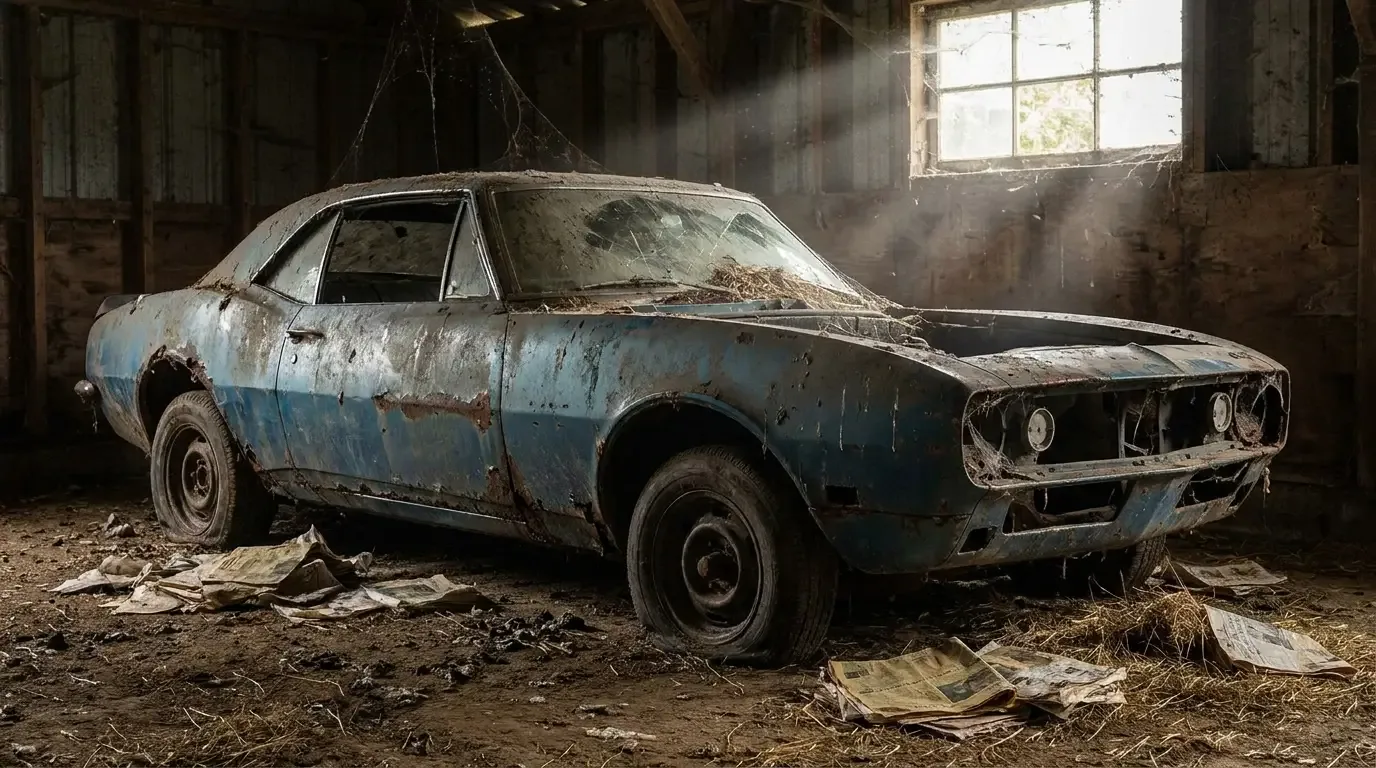
The first one I ever saw sat under a collapsed hay loft in Pennsylvania, and the farmer who owned it did not think it was worth anything. It was a 1966 coupe, roof caved slightly from a fallen beam, tires flat and cracked to the cord, a family of mice long since departed. He had driven it home from the dealer, parked it when the clutch went, and never got around to the clutch. Thirty-one years passed. Dust turned the paint the color of the barn itself. That car, more than any auction lot or magazine cover, taught me what the phrase actually means and why people lose their minds over it.
Car Features
10 min read
What Is a Barn Find and Why They Matter
A barn find is a car rediscovered after long storage. What actually counts, why the term captured imaginations, and the myth versus the reality.
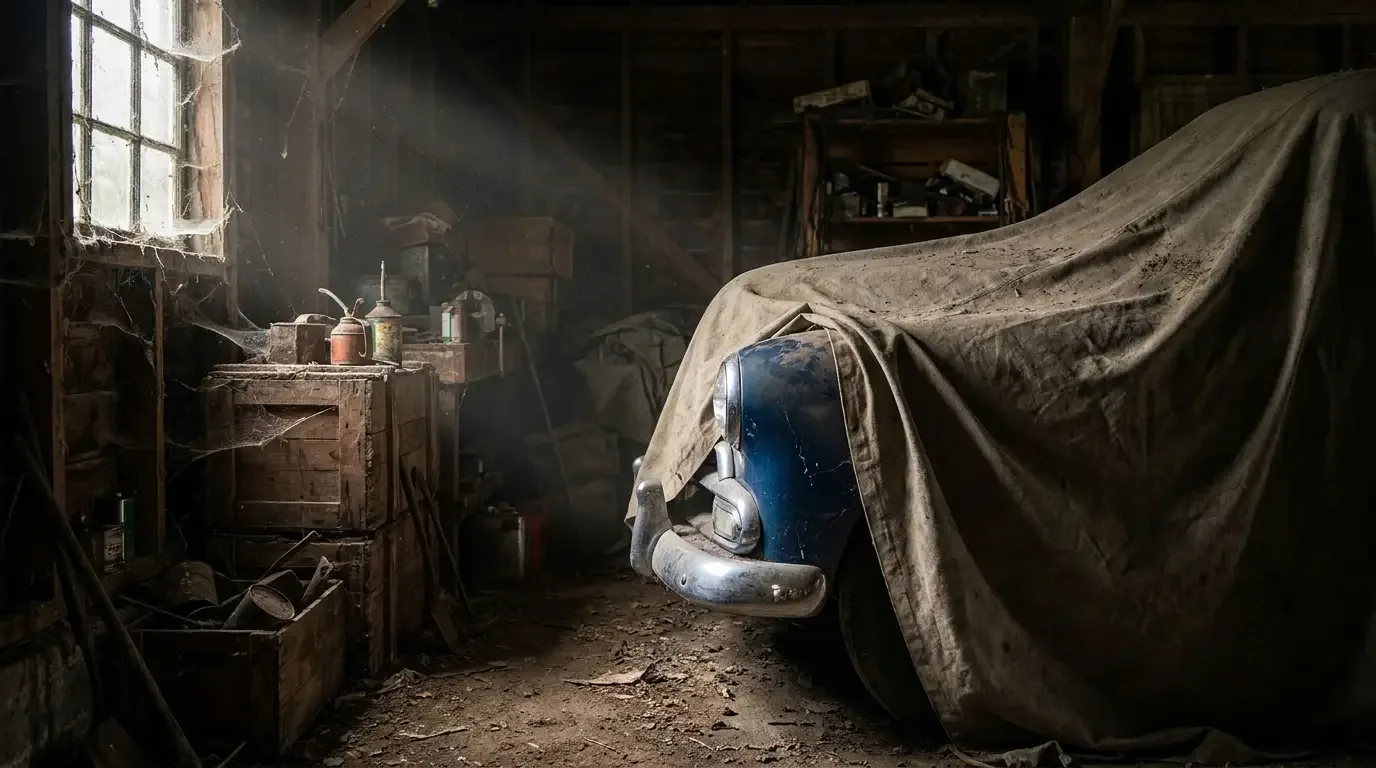
A barn find is a vehicle rediscovered after long storage, pulled out of a barn, a field, a garage, a lean-to, or wherever it was left when someone stopped driving it. The term is literal and loose at the same time. The car does not have to come out of an actual barn. What matters is the arc: it was used, then set aside, then forgotten, then found. That last word carries all the weight. Nobody gets excited about a car that was advertised, listed, and sold in the normal way. The romance lives entirely in the rediscovery.
What actually counts as a barn find
People argue about the definition constantly, and the arguments are worth having because the market has learned to blur the edges. A true barn find has three things going for it. It was genuinely stored, not just parked last winter. It was genuinely forgotten or set aside, not squirreled away as a known investment. And it comes out largely as it went in, untouched rather than tidied up for sale.
The length of the sleep matters. A car off the road for two years is a used car with a dead battery. A car off the road for twenty is something else. Time is the ingredient that makes the story, because time is what strips away the owners who knew what they had. A vehicle changes hands, gets inherited, gets buried behind newer junk, and the knowledge of what it is dies with the person who parked it. When it surfaces, it surfaces as a mystery, and mysteries sell.
I draw a hard line between a barn find and a project car, and the line is honesty. A project car has been picked over. Someone pulled the good carburetor, sold the seats, started a restoration and quit. A barn find, in the pure sense, is complete and undisturbed, which is exactly why the good ones are rare and the fakes are everywhere. If you want the full arc of how the term grew from a hobbyist's lucky day into a marketing category, I trace it in the barn find story, which sits above this piece in the silo.
Why the term captured imaginations
The barn find works as a story because it is a story everyone already knows. It is buried treasure. It is the lottery ticket in the coat pocket. It is the idea that something extraordinary has been sitting in plain sight, ignored by people too busy to notice, waiting for the one person who looks twice. That fantasy is older than the automobile, and the car just gave it a garage to live in.
There is a second reason, quieter than the treasure fantasy but stronger over time. A barn find is honest in a way a restored car can never be. When you look at a restored car you are looking at the restorer's opinion of what the factory did. When you look at an unrestored survivor, you are looking at the factory itself, preserved by neglect. The overspray in the wheel wells, the grease-pencil marks on the firewall, the original build sheet stuffed under the seat springs. None of that survives a quality restoration. All of it survives a bad memory and a dry roof.
Collectors figured this out about twenty years ago and it changed the whole hobby. The car you cannot fake is the car nobody touched. That realization pulled barn finds out of the swap-meet bargain bin and put them under the auction lights, sometimes at prices that make no rational sense until you accept that people are buying evidence, not transportation.
"The rust does not bother me. I can deal with rust. What I am buying is the stuff that cannot come back once it is gone: the factory chalk marks, the untouched interior, the honest miles. Restore all that away and you have a nice car. Leave it and you have a witness."
Patrick Walsh
Preservation-class cars and why they matter
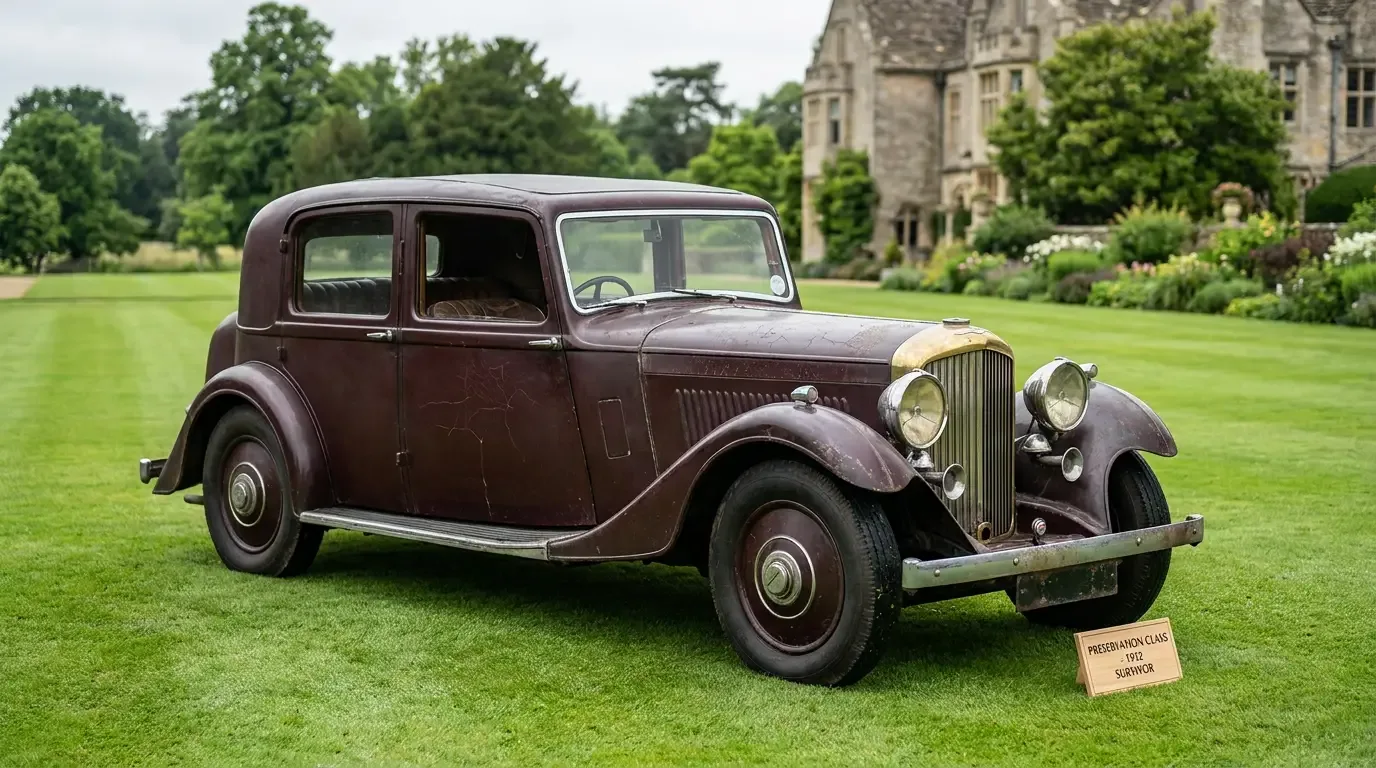
Out of the barn-find world grew a whole category of collecting that did not exist in a formal way a generation ago: the preservation class. The best shows in the country now judge original, unrestored cars in their own group, against each other, on how well they have survived rather than how perfectly they have been redone. Pebble Beach added a preservation class in 2001, and the ripple went everywhere.
The logic is simple once you sit with it. A car can only be original once. You can restore a car five times over the next century, and each restoration erases the one before it. But the untouched paint, the first interior, the numbers-matching drivetrain that never left the car, those exist in a single finite quantity that shrinks every year as survivors get restored, wrecked, or parted out. The preservation movement is a bet that untouched originality will keep getting rarer, and rarity is the only thing the collector market reliably rewards.
Not every barn find qualifies as a preservation-class car. Most do not. The distinction is condition and completeness against a specific standard.
| Category | State it comes out in | What collectors value | Typical fate |
|---|---|---|---|
| Preservation-class survivor | Complete, original, running or easily revived | Untouched factory finishes, documentation, originality | Conserved, shown, driven sparingly |
| Honest barn find | Complete but rough, dormant | Story, matching numbers, revival potential | Sympathetic recommissioning |
| Restoration candidate | Rough, incomplete, heavily corroded | Rare model, correct chassis, parts donor value | Full restoration or resto-mod |
| Parts car | Too far gone to save whole | Salvageable components, VIN, trim | Stripped for a better example |
Knowing which column a car falls into is the entire game, and it is the part beginners get wrong. Romance pushes people to see a preservation-class treasure when they are actually looking at a parts car with a good story. Working out which one you have in front of you is a discipline of its own, and I hand that off to the specialists in our barn find inspection guide rather than guess at it here.
The myth versus the reality
Now the part that gets me disinvited from cars-and-coffee. Most barn finds are not treasure. They are rough, ordinary cars that were rough and ordinary when they were parked, and time made them worse. For every Ferrari under a French tarp there are ten thousand tired sedans with seized engines and mouse-eaten wiring, worth less running than the seller believes they are worth asleep.
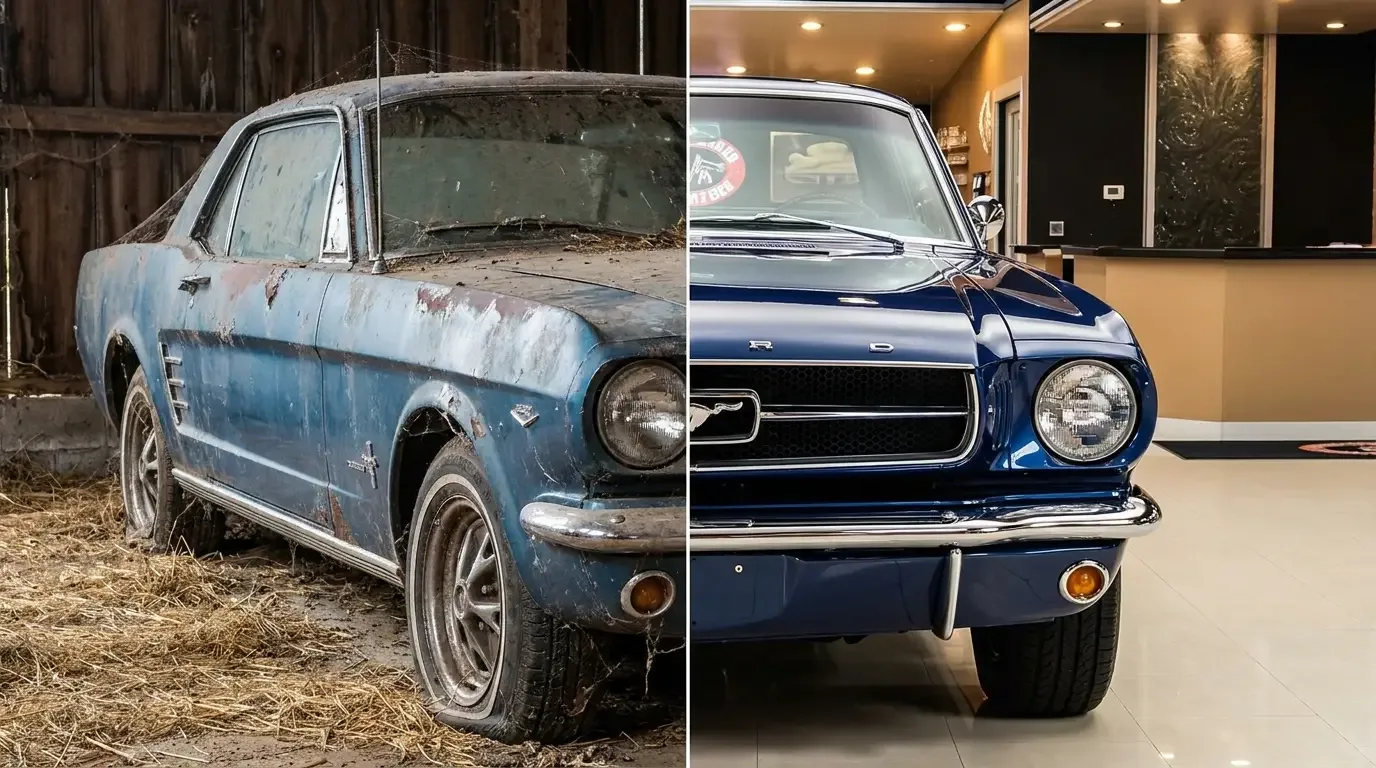
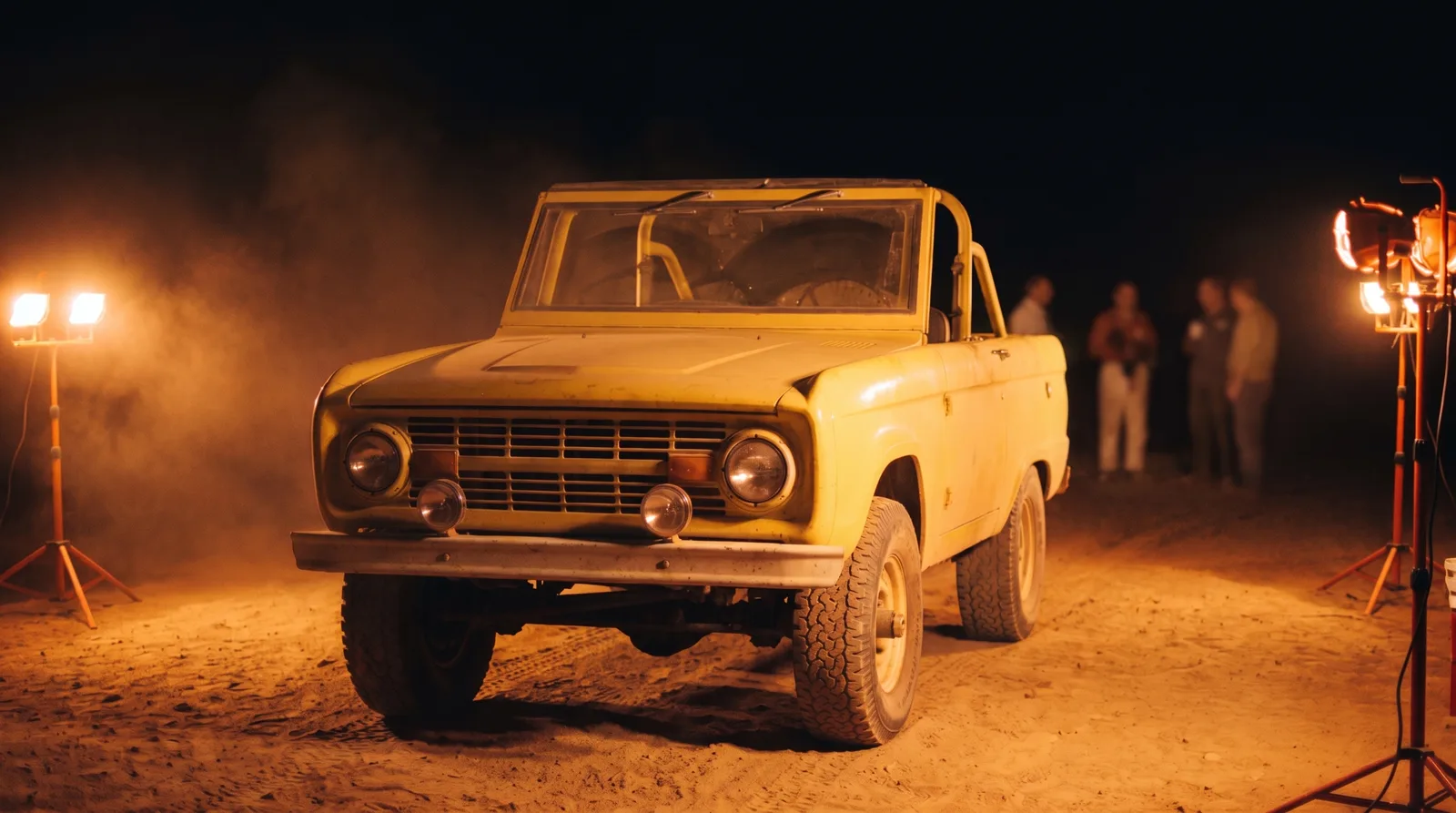
The word itself has become a sales tool, which is the thing to watch for. Push a running-and-driving car into a shed, throw a tarp and a handful of dust over it, photograph it in golden light, and call it a barn find, and you have added a premium for a story that is not true. The genuine articles still exist. They are just outnumbered now by the staged ones, because the term sells and everybody knows it.
None of this means the real ones are gone. It means you have to be a skeptic to find them. The best barn finds today usually come from the same place they always did: an estate, a family clearing out a relative's property, a mechanic's back lot that a widow needs emptied. Follow the situation, not the tarp. Cars that emerge from a genuine life event rather than a marketing session are the ones with the honest stories still attached.
How to think like a buyer
If the romance has hooked you, and it hooks nearly everyone eventually, the way to survive it is to separate the story from the metal in your own head before you separate it from your wallet. The story is why you drove three hours to look. The metal is what you actually pay for.
Ask three questions of any barn find before you fall for it. How long was it really stored, and can anyone prove it? How complete is it, honestly, with nothing quietly removed before you arrived? And what does it cost to bring it back to where you want it, added to what you pay to own it? The third number is the one that ends most romances, because a cheap dormant car plus an expensive revival is rarely cheaper than a good running example bought outright.
When you are ready to see what real dormant cars look like on the open market instead of in a fantasy, browse the current classic barn finds for sale and read every listing with the skeptic's checklist running in the back of your mind. The good ones are out there. They just do not announce themselves, and they never did.
Why they matter
Strip away the auction records and the marketing and a barn find matters for one plain reason. It is a piece of the past that skipped the middleman. It did not get updated, modernized, restored to somebody's taste, or improved. It waited. And when it comes out, it tells you exactly what a car of its era was, down to the dirt in the door jambs, without a single opinion added by anyone who came after.
That farmer in Pennsylvania sold his coupe for a fair price to someone who understood what he was looking at. It got recommissioned gently, kept its original paint, and now it goes to preservation shows where people lean in close and study the honest wear like it is a document, which is exactly what it is. That is why they matter. Not the treasure fantasy, though the fantasy is fun. They matter because they are true, and true is the one thing you cannot restore back into a car once it is gone.
Sources and notes
- Period automotive press and enthusiast magazine coverage of survivor and unrestored car collecting.
- Auction house catalogs and public sale records for barn-find and preservation-class lots.
- Concours and car-show class definitions for preservation and survivor judging.
- Collector and restorer interviews on originality, recommissioning, and provenance.
- Estate and salvage disposal practices as described by dealers and appraisers.
Related Reading
Have a
Classic Car
for Sale?
Reach thousands of serious classic car collectors across the US.
Sell It Here →
Are You a Classic Car Dealer?
List your full inventory and connect with targeted classic car buyers.
Join as a Dealer →
#barn find
#survivor cars
#preservation class
#classic car collecting
#unrestored cars
#car provenance

About the author
Patrick Walsh
Automotive journalist covering classic car shows, events, and the enthusiast community across North America.
Comments
Be the first to comment on this article.