
People use "street rod" and "restomod" like they mean the same thing. They do not. Both take an old car and stuff modern hardware underneath it. Both give you a reliable, comfortable classic you can drive to dinner without a toolbox in the trunk. But the two labels come from different eras, different crowds, and different ideas about what an old car is supposed to be. Confuse them at a show and someone will correct you fast.
Ownership & Lifestyle
7 min read
Street Rod vs Restomod
Street rods and restomods share a build sheet but split on era and intent. Here is the real line between them, and where it blurs.
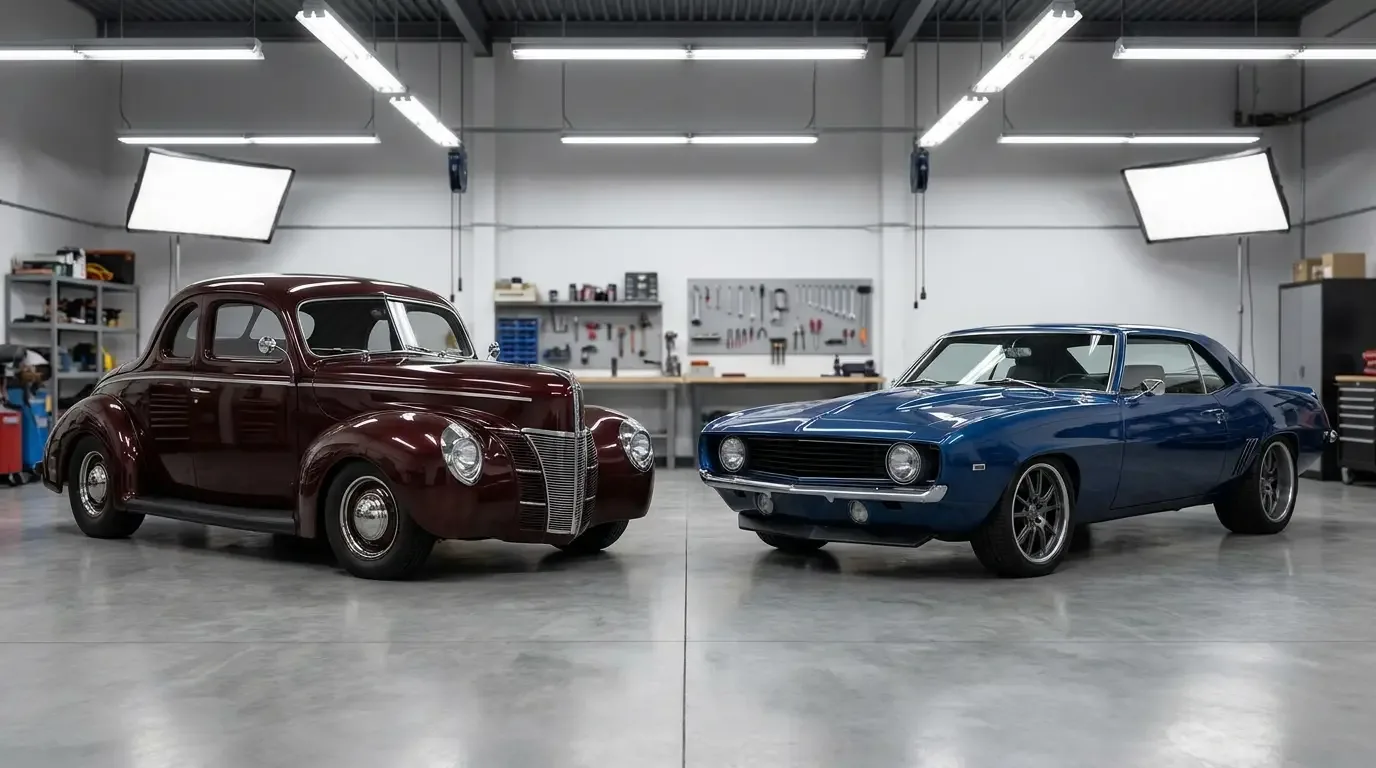
Here is the short version. A street rod is a pre-1949 American car brought up to modern driving standards. A restomod can be any car from any decade given the same treatment. The tech overlaps almost completely. The spirit does not. This is where the labels blur, and why the argument keeps going.
What actually separates the two
The cleanest way to tell them apart is the calendar. The street rod world drew its line at 1948. A 1932 Ford, a 1940 Ford coupe, a 1936 Chevy: those are street rod material once you drop in a crate motor and independent front suspension. Move to a 1957 Bel Air, a 1969 Camaro, or a 1965 Mustang built the same way, and you are in restomod territory. Same wrenches, same catalog parts, different word.
The reason comes down to how these two hobbies grew. Street rodding organized itself in the early 1970s around older cars that were, even then, prewar antiques. The 1948-and-earlier cutoff separated the movement from newer machines and gave it an identity. Restomod is a newer term, and it never carried an era rule. It describes a philosophy, restore plus modify, applied to whatever car the builder loves. If you want the fuller background on how the older movement came together, it is worth reading the street rod story before you pick a side.
So the divide is not about the technology. It is about which car sits on the lift.
Where the tech overlaps
Pop the hood on a well-sorted street rod and a well-sorted restomod and you will see the same shopping list. That is the part that fools people.
- Engine. A modern crate V8, often a GM LS or a Ford Coyote, in place of the flathead or six the car left the factory with.
- Front suspension. Independent front geometry, frequently a Mustang II style setup or a modern aftermarket clip, replacing a solid front axle or worn kingpins.
- Brakes. Four-wheel discs, or at minimum front discs, in place of drums.
- Transmission. An automatic overdrive or a modern five or six speed manual, so the car cruises at highway speed without screaming.
- Comfort. Air conditioning, a real heater, power steering, and often power windows.
Read that list without the years attached and you cannot tell which car it belongs to. That is the honest reason the labels blur. A 1946 Ford and a 1967 Nova can get the exact same drivetrain, the exact same suspension, the exact same climate control. The build sheets are twins.
Where the spirit splits
Technology is where they agree. Everything else is where they part ways.
A street rod carries the fingerprints of the traditional rodding world it came from. Chopped tops, fenderless or fat-fendered bodies, wild paint, exposed exhaust, an attitude that goes back to dry lakes and drag strips. Even a mild, all-steel street rod is styled. It is meant to look like a modified car, not a factory one. The look is part of the point.
A restomod usually goes the other way. The goal for a lot of restomod builders is a car that looks close to stock from ten feet away and only reveals the modern hardware when you drive it or crawl underneath. Subtle wheels, correct-ish paint, a clean interior that hints at the original. The surprise is the point: it looks like a survivor and drives like a new car.
"I tell people the difference is the flex. A street rod wants you to know it's been messed with. A restomod wants you to think it wasn't. Same crate motor, opposite personality."
Jim Vasquez
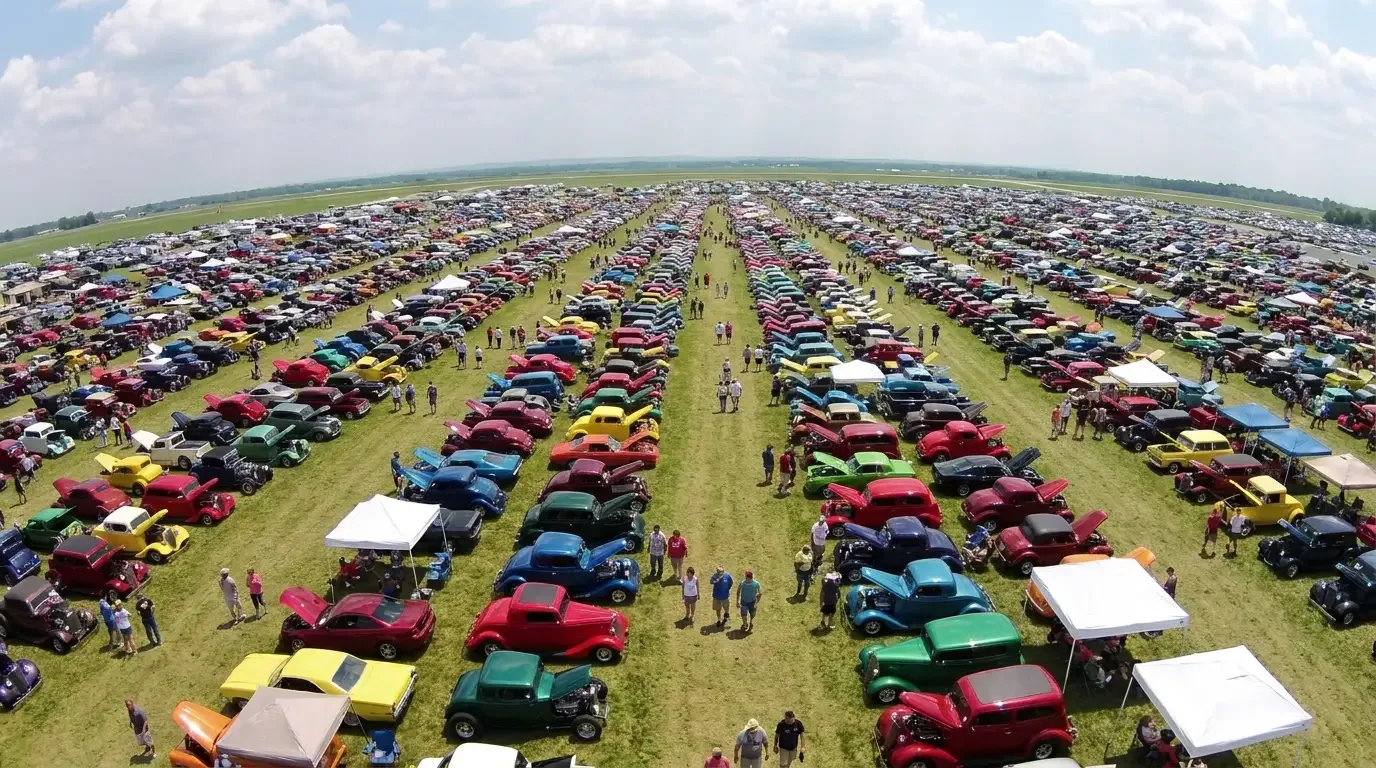
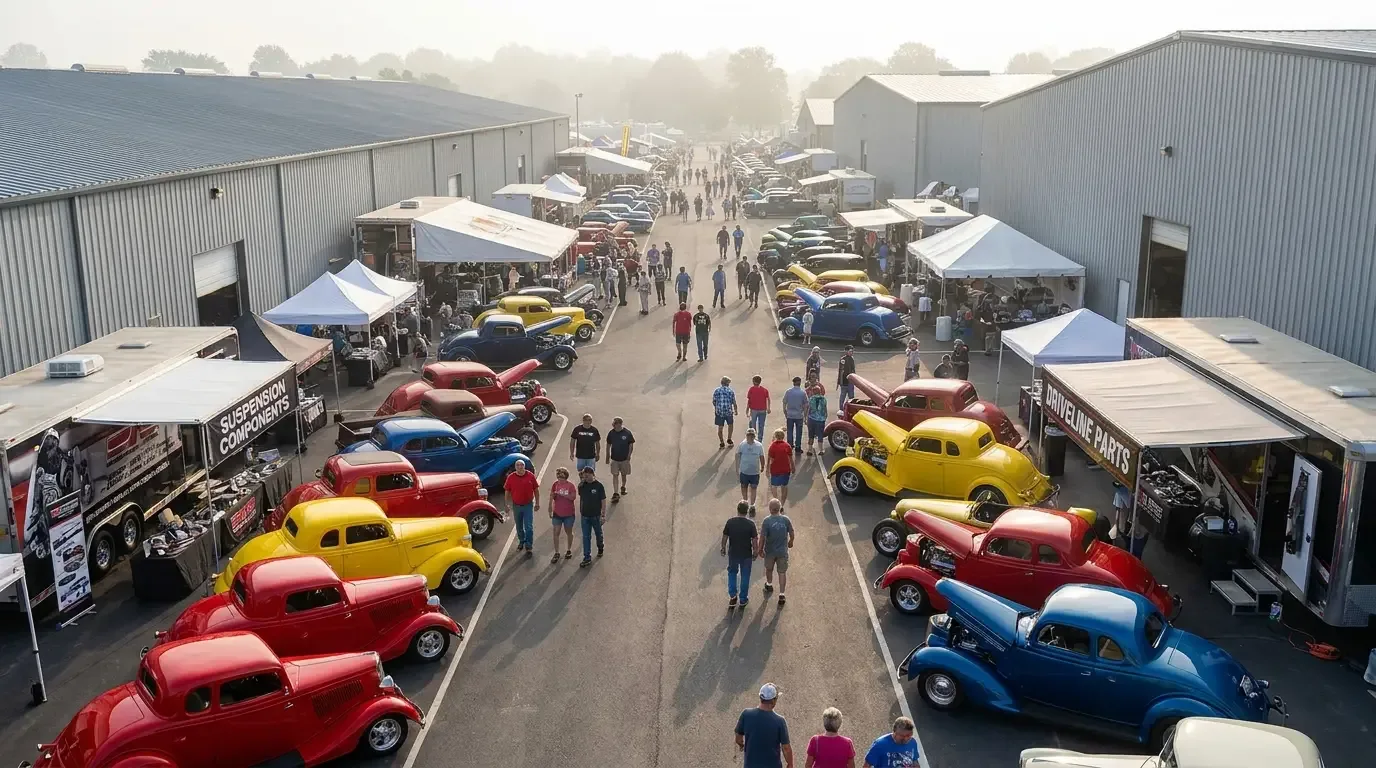
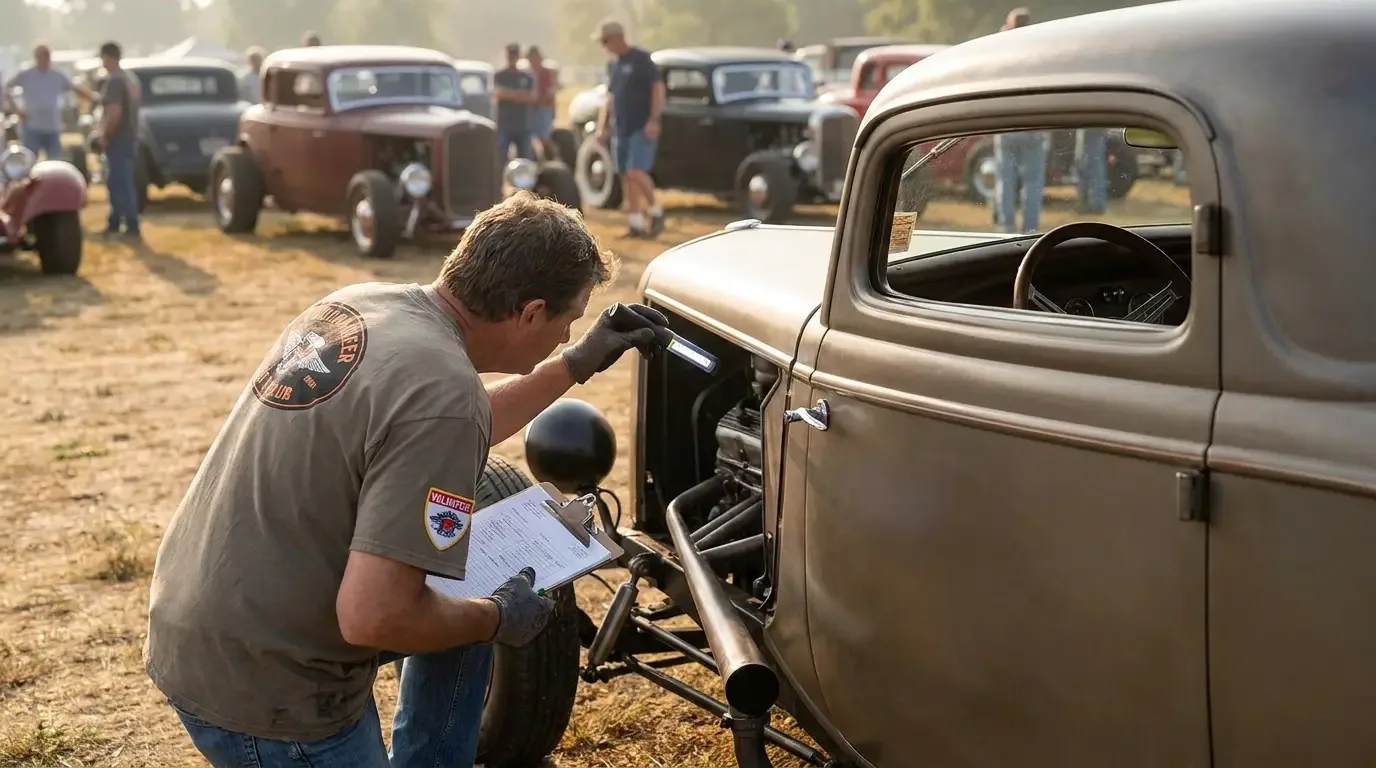
That difference in intent shows up at events, too. Street rods gather at their own runs and nationals, a culture with its own habits around safety and inspection that grew up alongside the cars themselves. If you want to see where that scene lives, look at how street rod nationals operate and what The Street Rod Nationals actually look like on the ground. Restomods, by contrast, show up everywhere: pro-touring events, autocross days, general car shows, and auction stages. They never built a single-lane culture because they were never a single kind of car.
Reading a build sheet side by side
When you strip away the styling, the two categories line up almost feature for feature. The table below is the quick reference I use when someone asks me which is which.
| Trait | Street Rod | Restomod |
|---|---|---|
| Eligible era | Pre-1949 body only | Any era, any decade |
| Movement age | Organized in the early 1970s | Newer term, no fixed origin date |
| Crate engine | Common (LS, small-block, Coyote) | Common (LS, Coyote, modern V8) |
| Independent front end | Yes, often Mustang II style | Yes, often full aftermarket clip |
| Disc brakes | Standard on a proper build | Standard on a proper build |
| Styling intent | Looks modified on purpose | Often looks near-stock |
| Show culture | Dedicated rod runs and nationals | Pro-touring, autocross, general shows |
Notice how much of that middle section is identical. The mechanical rows barely change. It is the top and bottom rows, the era and the intent, that actually sort a car into one bucket or the other.
When the labels genuinely blur
Even with the rules laid out, real cars slip between them. A 1948 Ford is the last legal street rod year, and a 1949 built identically is technically a restomod, one model year apart. Nobody's eye can spot the difference; only the title year decides it. That single-year hairline is where the whole argument lives.
It gets murkier with the fat-fendered cars of the late 1940s. Build a 1947 coupe with a subtle, near-stock look and a modern drivetrain, and you have a street rod by the calendar but a restomod by attitude. The car does not care what you call it. The crowd does.
The muscle-era side of this same argument plays out with its own labels. If you want to see how the newer cars split hairs between period-correct builds and modern ones, it helps to understand how hot rods and restomods differ, because the logic runs parallel to the prewar debate. And if all this comparing has you wanting one of the real prewar cars, browse the current classic street rods for sale and you will see the calendar rule in action: almost everything listed wears a 1948-or-earlier body.
Sources and notes
- National and regional street rod club standards and eligibility rules, for the pre-1949 body cutoff.
- Period and current enthusiast press covering the origins of organized street rodding and the emergence of the restomod term.
- Engine and chassis component references for crate-motor and independent front suspension retrofits.
- Builder interviews and show-field observation for styling intent and event culture.
Related Reading
Have a
Classic Car
for Sale?
Reach thousands of serious classic car collectors across the US.
Sell It Here →
Are You a Classic Car Dealer?
List your full inventory and connect with targeted classic car buyers.
Join as a Dealer →

About the author
Jim Vasquez
Southern California hot rod and custom car builder with roots in the traditional kustom kulture scene.
More in Ownership & Lifestyle

Comments
Be the first to comment on this article.