
People use "street rod" and "hot rod" like they mean the same thing, and around a fairgrounds show field nobody's going to correct you. But the two words describe two different philosophies, and once you've built a few cars you stop hearing them as synonyms. A hot rod is a period-correct answer to a period-correct question: how do I make an old car go fast and look mean with the parts and attitude of the era that made it. A street rod is a modern answer to a modern question: how do I take that same old body and make it something I can drive four hundred miles in July with the AC on and my wife not filing for divorce at the second gas stop.
Car Features
10 min read
Street Rod vs Hot Rod: The Real Difference
Both start from a pre-1949 body, but a hot rod chases period feel and a street rod chases modern comfort. Here is the real split, and where they overlap.
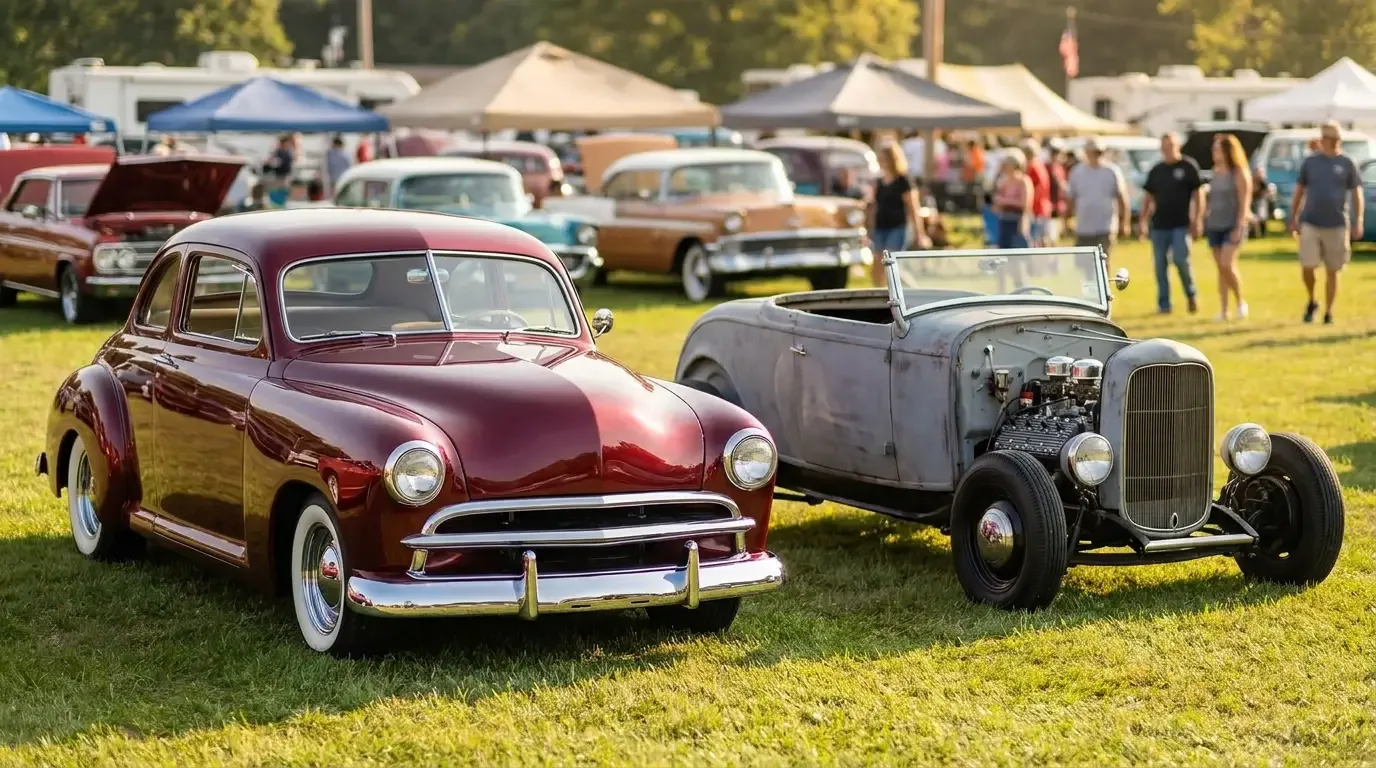
The dividing line most people point to is a year, and there is a real one, which I'll get to. But the year is the club's line, not the whole story. The deeper split is what you want the car to do when the show is over and you actually have to drive it home.
The year that draws the line: pre-1949 versus everything after
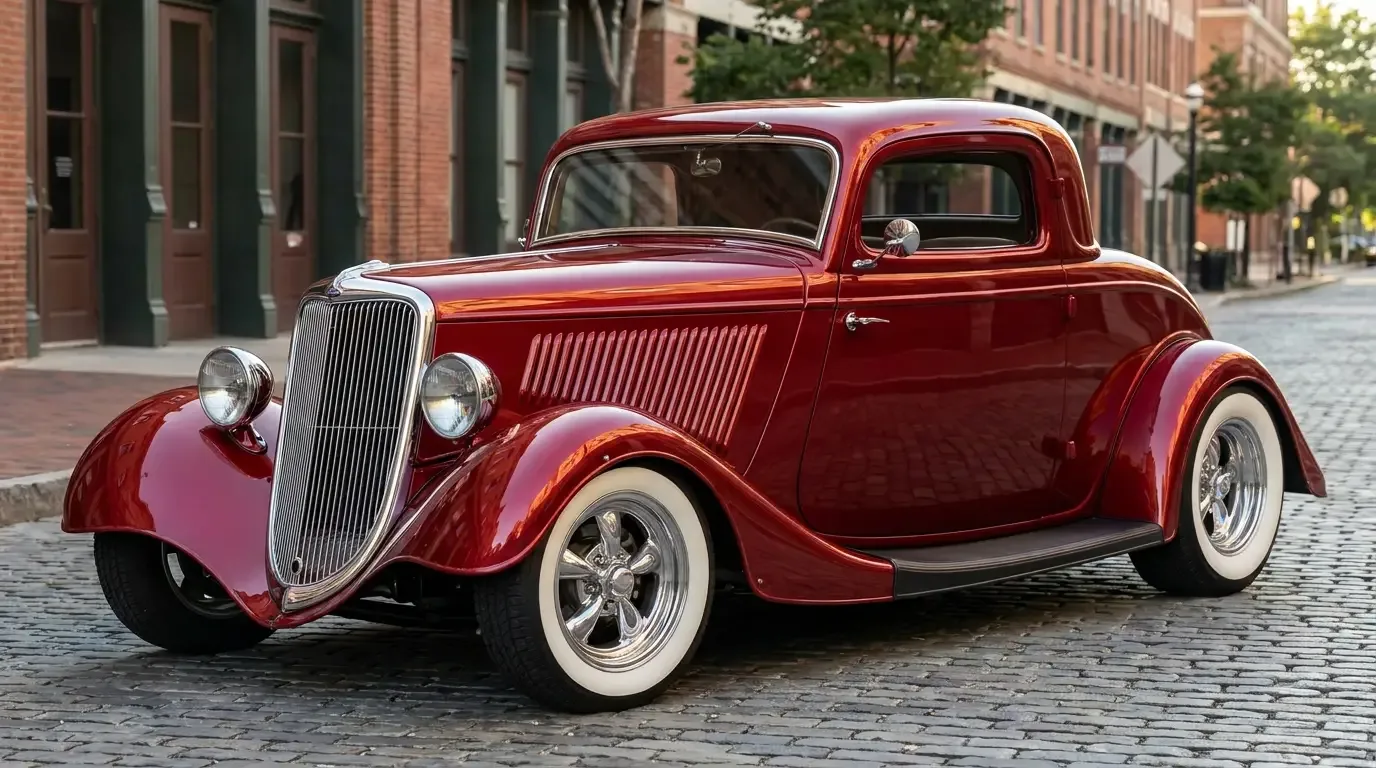
The National Street Rod Association drew the boundary at 1948. A street rod, by that definition, is an American car with a body from 1948 or earlier that has been modernized for reliable street use. Model A Ford, '32 roadster, '34 coupe, '40 Ford, early Chevys, the fat-fendered stuff from '46 to '48, all of it qualifies. The moment you cross into 1949 and later, you're technically outside street rod territory, and a modernized car from that side of the line lands in the restomod or pro-touring world instead.
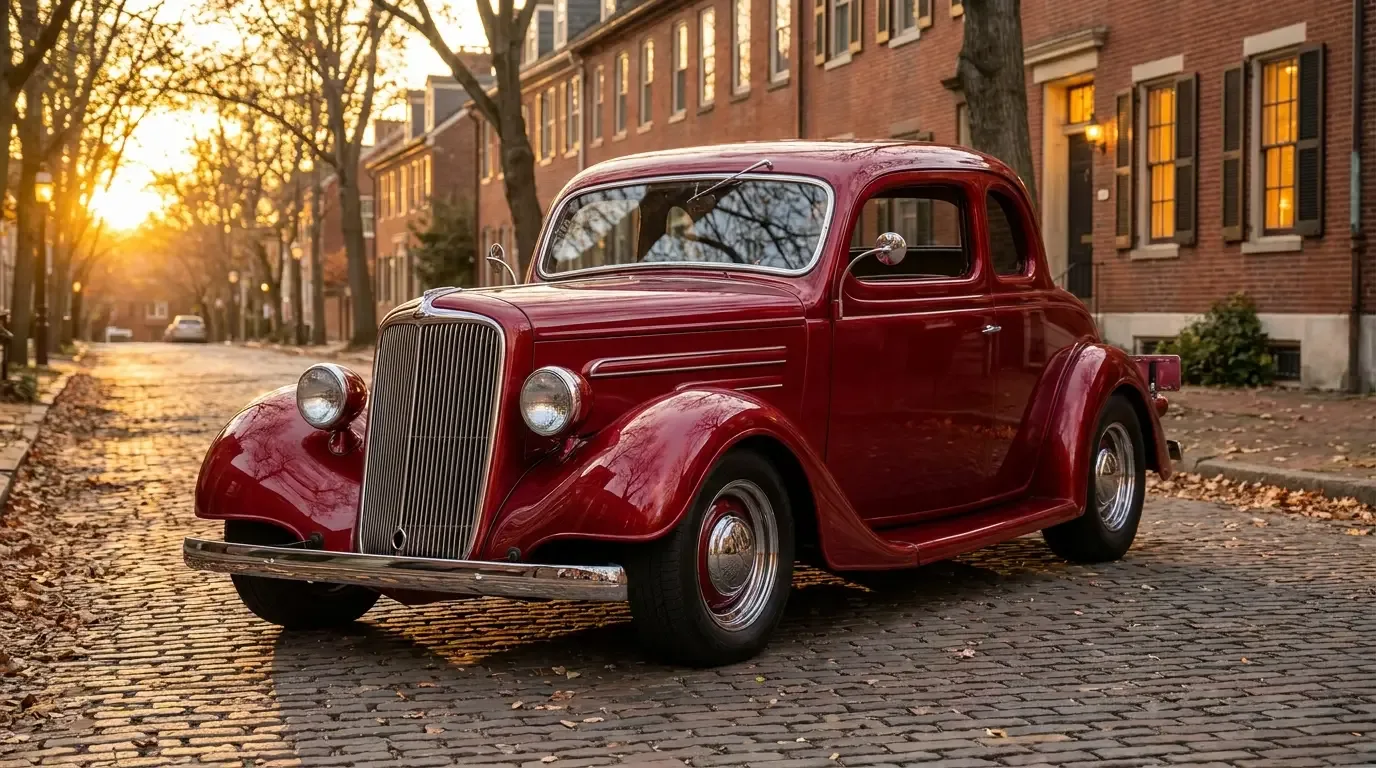
That 1948 cutoff wasn't picked at random. Postwar American car design changed hard around 1949. Fenders got absorbed into the body, frames and suspension got more integrated, and the whole aesthetic shifted from the separate-fender look to the slab-side modern shape. The pre-1949 cars share a visual language: standalone fenders, upright grilles, running boards on a lot of them. That's the shape people picture when they hear "street rod."
| Attribute | Traditional Hot Rod | Street Rod |
|---|---|---|
| Body era | Pre-1949 (usually pre-war Ford) | Pre-1949 (NSRA line: 1948 and earlier) |
| Guiding rule | Period-correct, of its era | Modern comfort and reliability |
| Engine | Flathead or period V8, carbureted | Crate engine, often fuel-injected |
| Suspension | Solid axle, often as-built geometry | Independent front, modern geometry |
| Brakes | Drums common, period-appropriate | Four-wheel discs, power assist |
| Creature comforts | Minimal or none by choice | AC, overdrive, sound deadening, good seats |
| Long-drive intent | Around town, shows, cruises | Cross-country touring |
So both start from the same pre-1949 body. That overlap is the source of all the confusion, and it's real. The split isn't the metal, it's the mindset.
Period-correct versus modern-comfort: the philosophy split
A traditional hot rod is built to be of its time. That means a flathead or an early overhead V8, carburetors you can tune with a screwdriver and an ear, a solid front axle, drum brakes, bench seat, maybe no heater. The builder is chasing the feel and the look that a kid in 1950 or a shop in 1960 would have chased. Chopped top, raked stance, dropped axle, no radio because who needs one. The car is a statement about an era, and part of the point is that it makes you work a little to drive it. That's not a flaw to a hot rodder. That's the flavor.
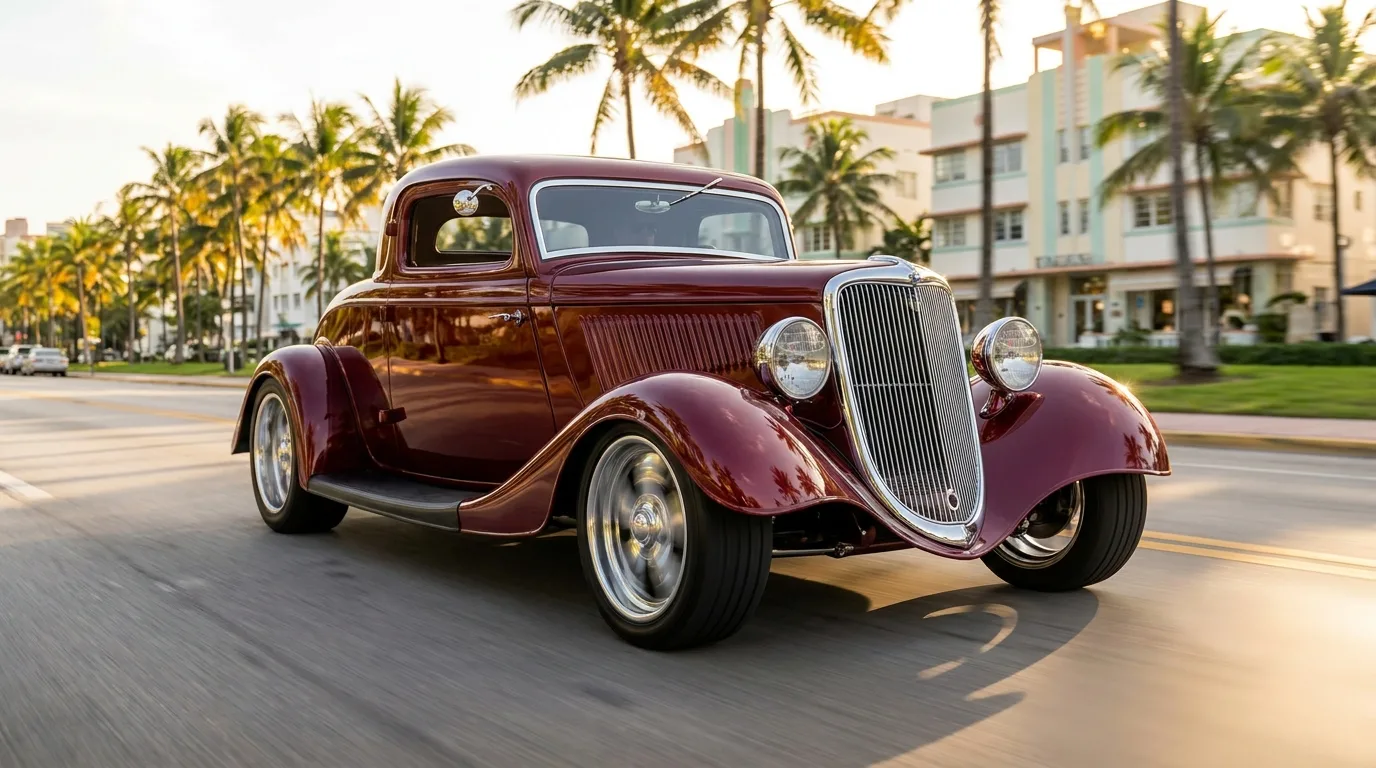
A street rod takes the same body and asks a completely different question. It says: I love how this thing looks, but I want to drive it like a modern car. So in goes a crate small-block or a modern crate mill with fuel injection that fires on the first turn of the key in any weather. Independent front suspension so it doesn't wander and tramline. Four-wheel disc brakes so a Camry stopping in front of you isn't a crisis. Overdrive transmission so it isn't screaming at 3,000 rpm on the interstate. Air conditioning, real seats, sound deadening, power steering. The car keeps the pre-1949 shape and loses the pre-1949 driving experience, on purpose.
Neither is wrong. They're answers to different questions. I've built both, and I'll tell you the honest truth: the street rod is the one that gets driven. The full history of how that comfort-first idea took over is worth reading in the street rod story, because it explains why a whole club culture organized itself around driving these things instead of just parking them.
"A hot rod dares you to drive it. A street rod invites you to. Same old body, two totally different conversations with the road, and I've had both conversations enough to know which one I want on a hundred-degree afternoon."
Jim Vasquez
Under the hood and under the floor: where the money actually goes
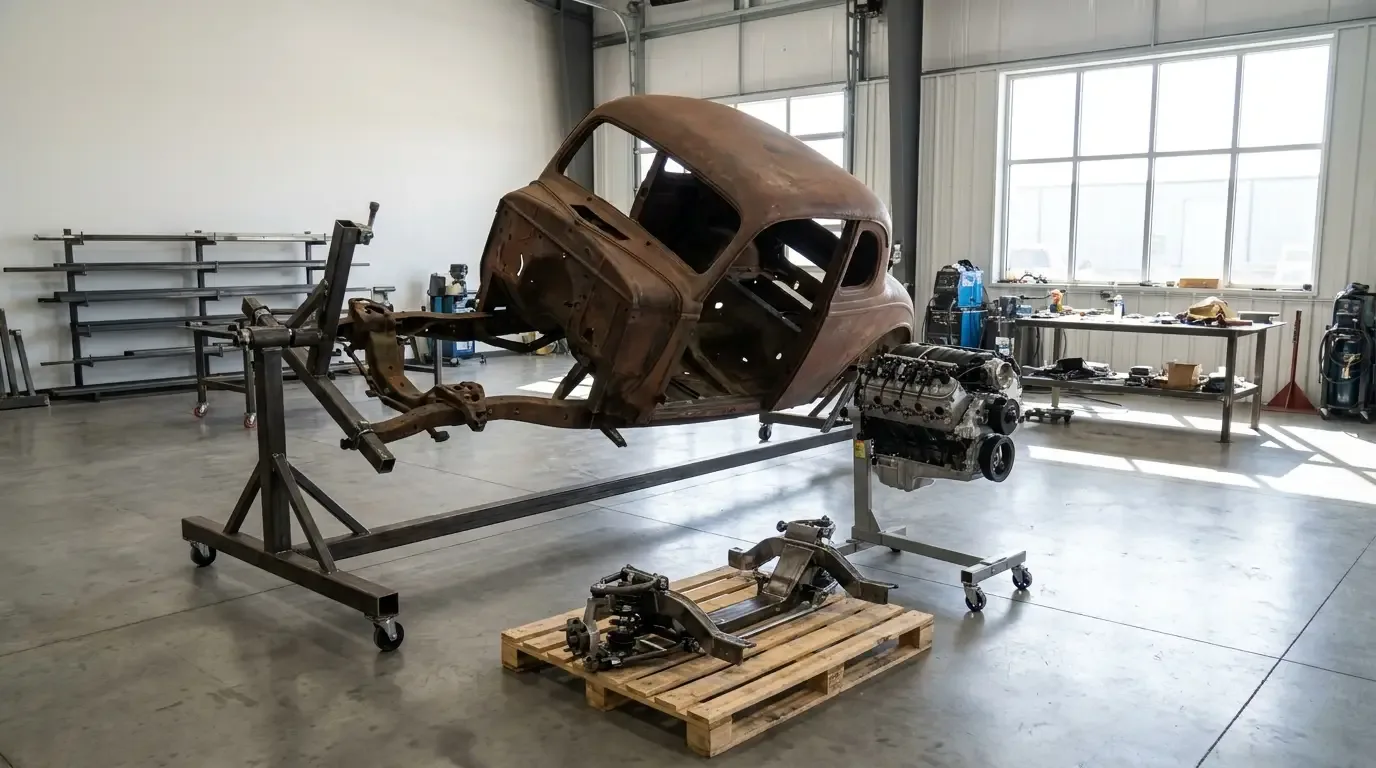
The philosophy shows up in the parts, and the parts are where you spend. A period hot rod build can honestly be cheaper in some ways because you're keeping things simple, but the good period parts, real vintage speed equipment, correct flatheads, are collector items now and command collector prices. A street rod build spends its money on modern engineering: the crate engine, the independent front clip, the disc conversion, the AC system, the electric fans and the wiring to run all of it.
- Engine. Hot rod leans period V8 with carbs. Street rod leans crate motor with EFI, chosen for reliability and torque you can live with, not maximum drama.
- Front suspension. Hot rod often keeps a solid axle for the look and the honesty of it. Street rod almost always goes independent front, either a Mustang II-style setup or a purpose-built crossmember.
- Brakes. Hot rod may run drums to stay period. Street rod runs power four-wheel discs, no argument.
- Transmission. Hot rod might run a period three-speed or an early automatic. Street rod wants overdrive, whether that's a modern automatic with a lockup converter or a five-speed.
- Comfort systems. This is the big street rod line item and the one hot rods skip. AC, heat, sound deadening, tilt column, good seats, a stereo you can hear at 70.
If you want to see how far the comfort side can be pushed, and how to plan a car specifically around long-distance driving, a proper touring-focused street rod build is a project of its own, with the interior and the HVAC treated as seriously as the engine.
Where the two genuinely overlap
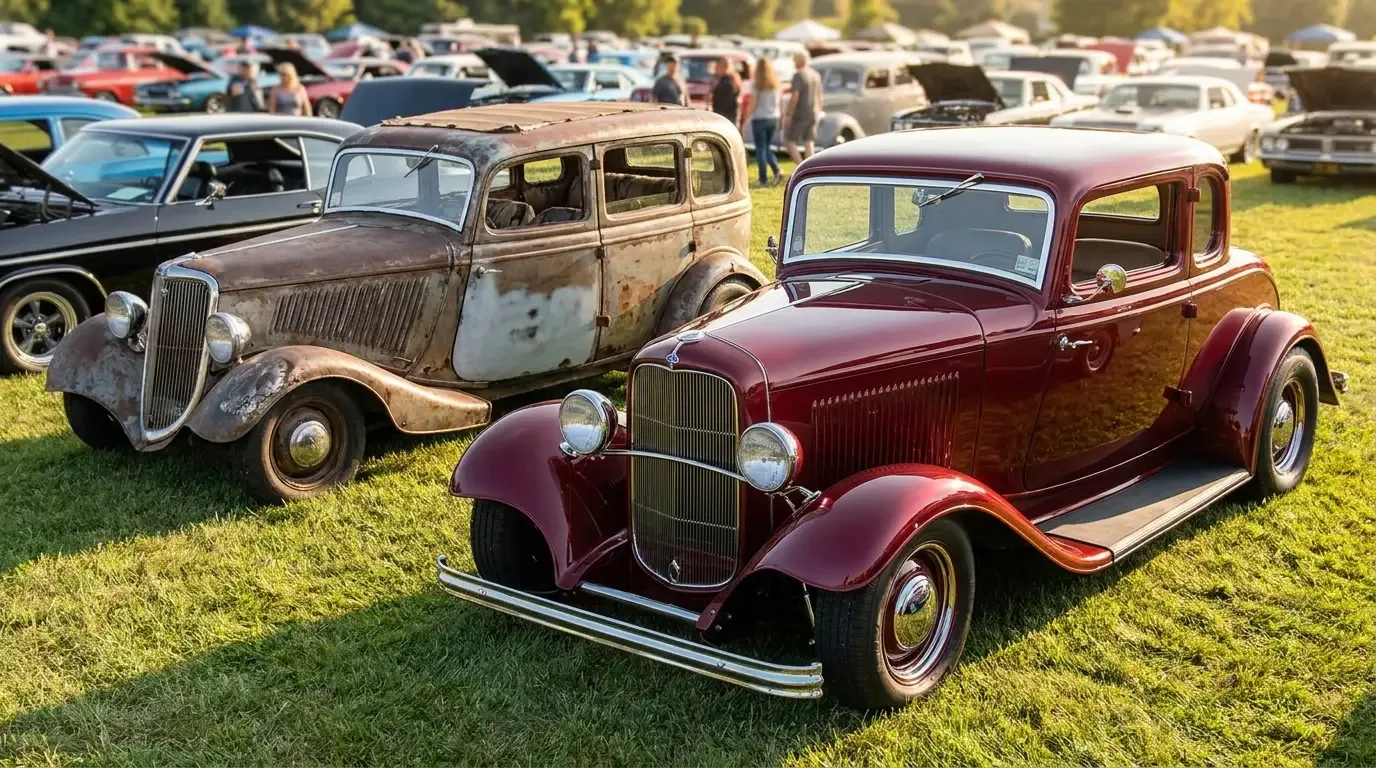
Here's where it gets muddy, and where the argument at the show field actually happens. A lot of real cars sit in the middle. A guy builds a '32 roadster with a small-block Chevy, discs up front, but keeps a solid axle, a carbureted engine, and no AC because he likes the traditional look. Is that a hot rod or a street rod? Honestly it's both, or it's a hot rod with a couple of concessions, and nobody sane is going to throw him off the field over it.
The overlap exists because the categories describe intent, and intent lives on a slider, not in a box. Plenty of cars are 70 percent one thing and 30 percent the other. The pure period hot rod and the fully modernized touring street rod are the two ends. Most cars land somewhere between. And then there's the rat rod off to the side, which is a whole third thing: raw, unfinished, often deliberately rough, more attitude than polish. If you want the three laid out side by side so the boundaries actually make sense, we broke down hot rod, street rod and rat rod compared in detail, because once you add the rat rod into the mix the whole picture snaps into focus.
Which one should you build?
Ask yourself one question: after the car is done, how do you actually want to use it? If the answer is local cruises, shows, and you genuinely love the process of driving an old car the old way, feathering a carb and planning your stops around drum brakes, build a hot rod. Chase the period feel. It's a purer experience and there's nothing like it.
If the answer is "I want to point it at another state and go," build a street rod. Put the money into the drivetrain, the suspension, the brakes, and the comfort systems, and you'll have a pre-1949 car you can drive like it was made this decade. That's the whole promise of the category, and it's the reason street rods rack up real mileage while a lot of trailered show cars never see rain.
One more piece of practical advice: you don't have to build to find out which one you want. Go look at finished cars, sit in them, drive them if an owner will let you. Browsing the classic street rods for sale is an education by itself, because you'll see how different builders answered the comfort-versus-period question in metal, and you'll figure out fast which side of the line your own car belongs on.
Sources and notes
- National Street Rod Association eligibility rules and the 1948-and-earlier body definition.
- Period hot rod press and Southern California dry lakes racing history for the origins of hot rodding.
- Crate engine and aftermarket suspension manufacturer references for typical street rod drivetrain and chassis choices.
- Builder interviews and shop experience for cost and philosophy comparisons between period and modernized builds.
- Club and registry records for how street rod culture organized around driven, touring-capable cars.
Related Reading
Have a
Classic Car
for Sale?
Reach thousands of serious classic car collectors across the US.
Sell It Here →
Are You a Classic Car Dealer?
List your full inventory and connect with targeted classic car buyers.
Join as a Dealer →

About the author
Jim Vasquez
Southern California hot rod and custom car builder with roots in the traditional kustom kulture scene.




Comments
Be the first to comment on this article.