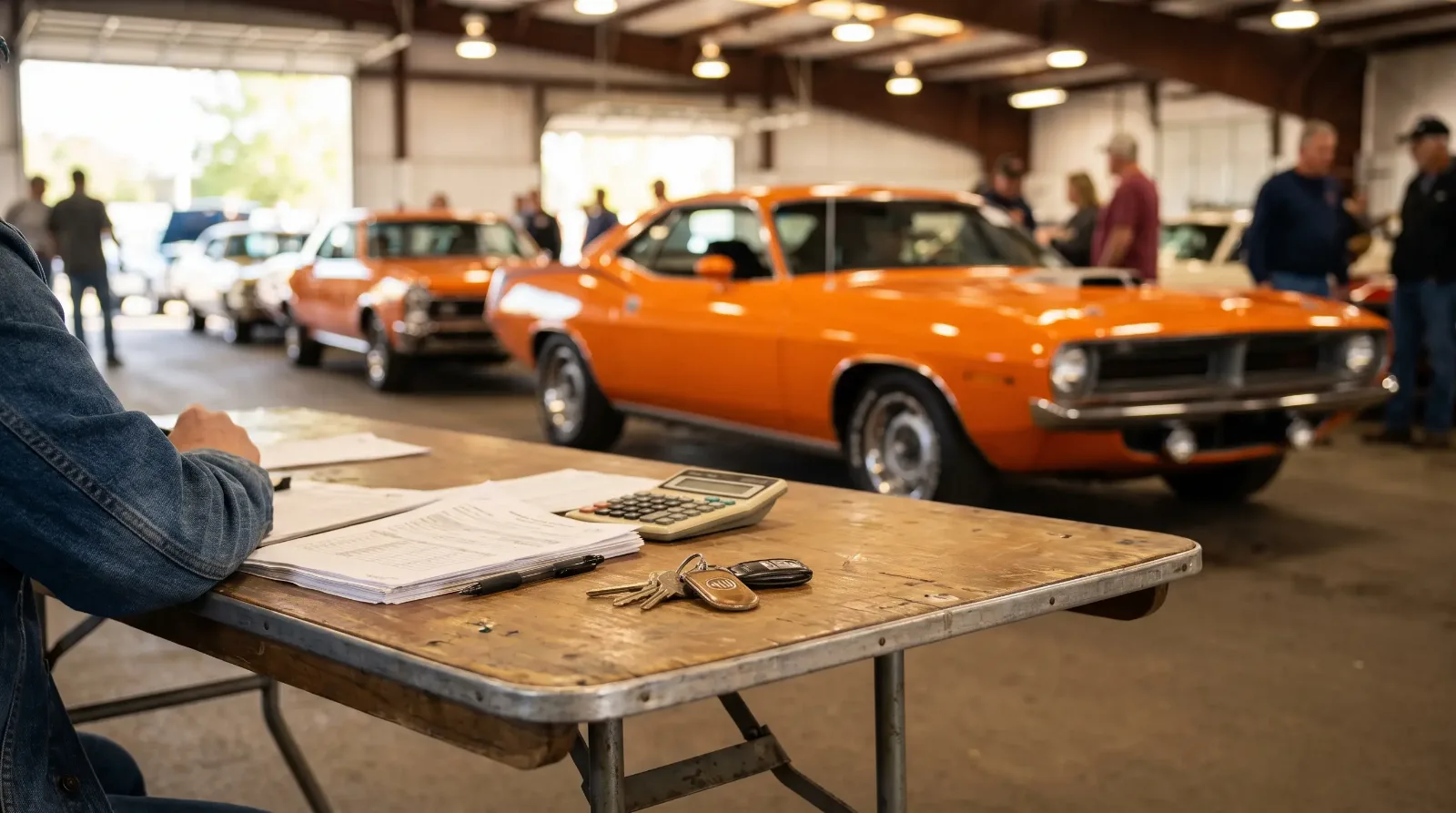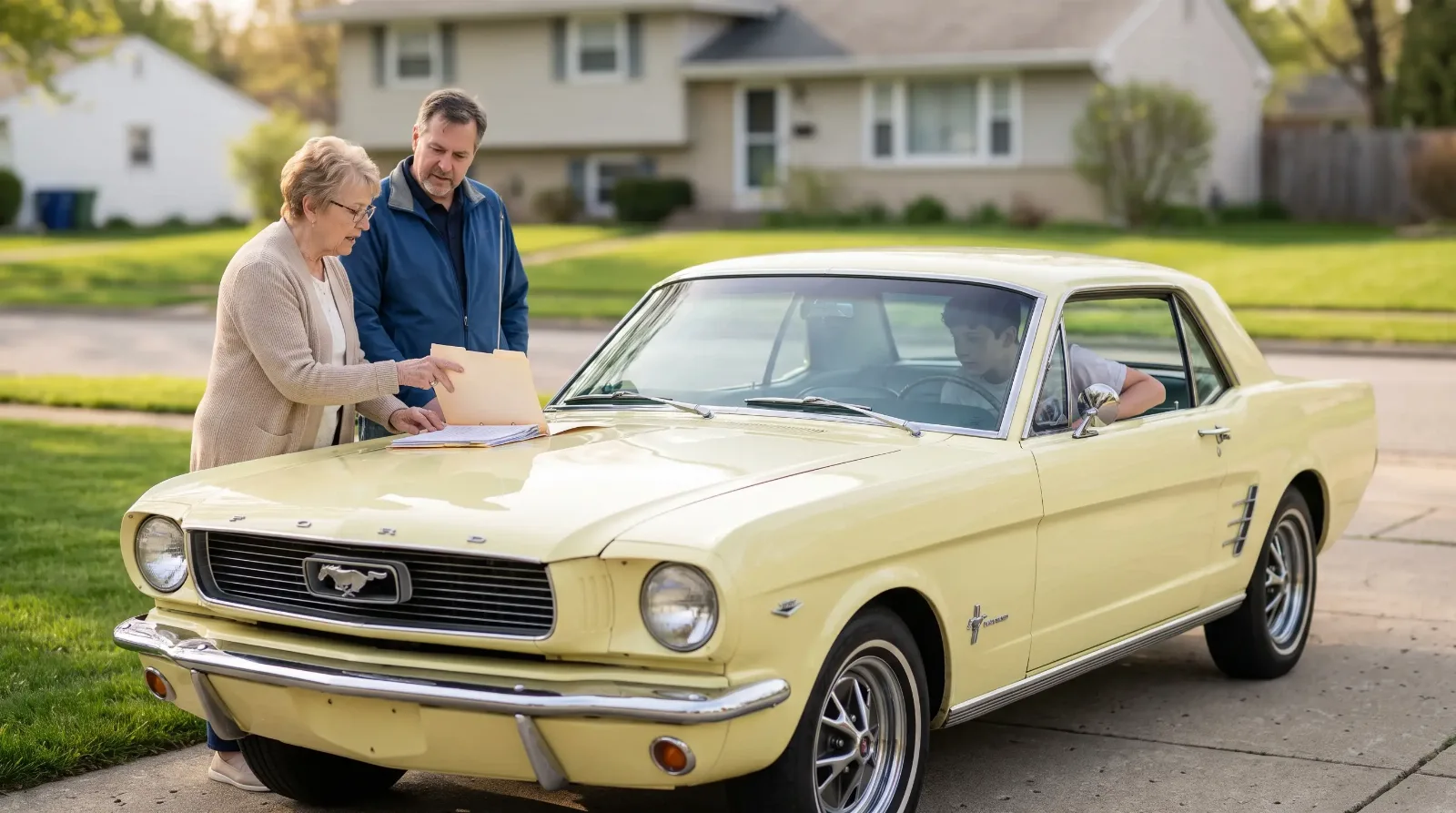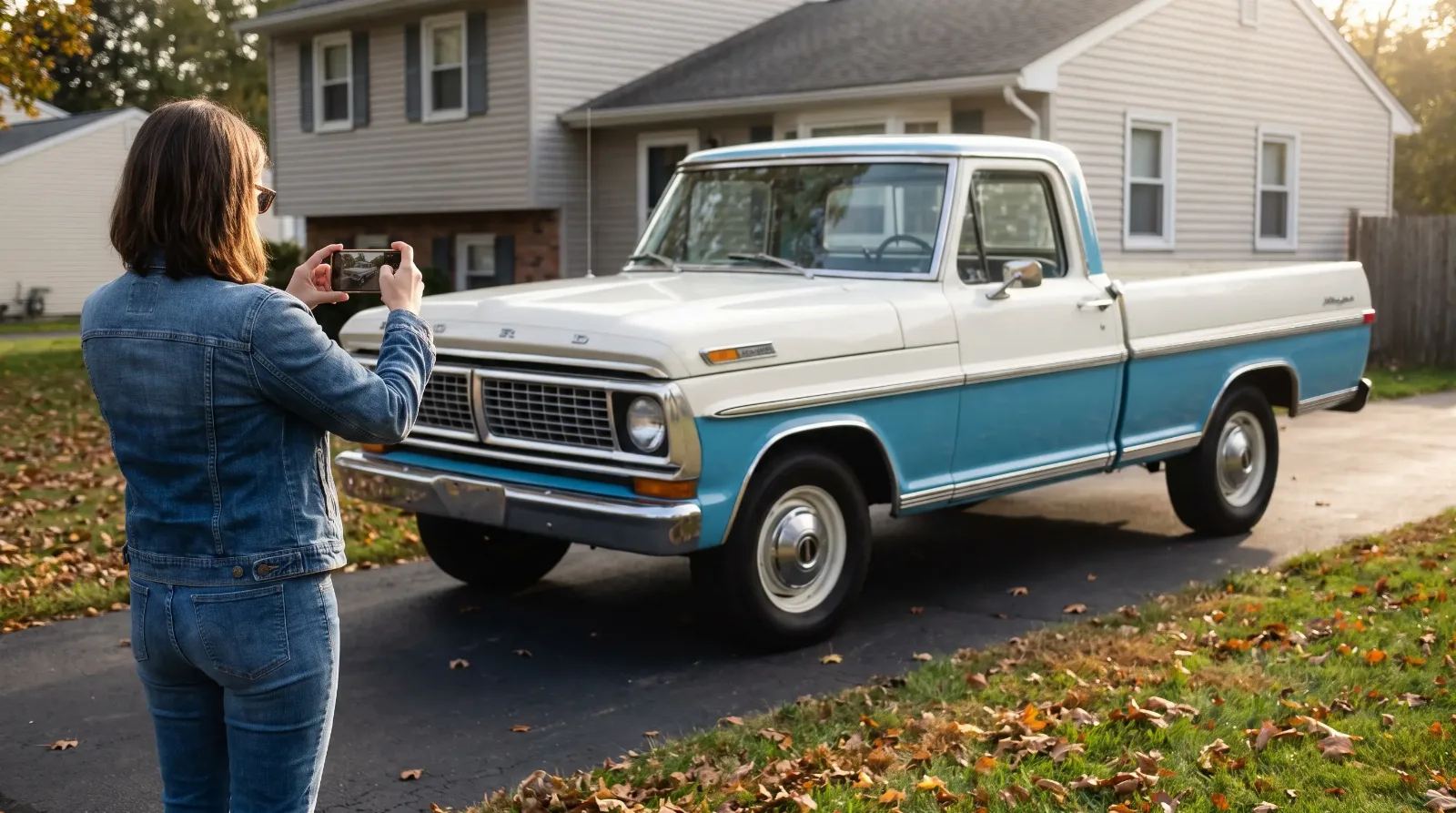
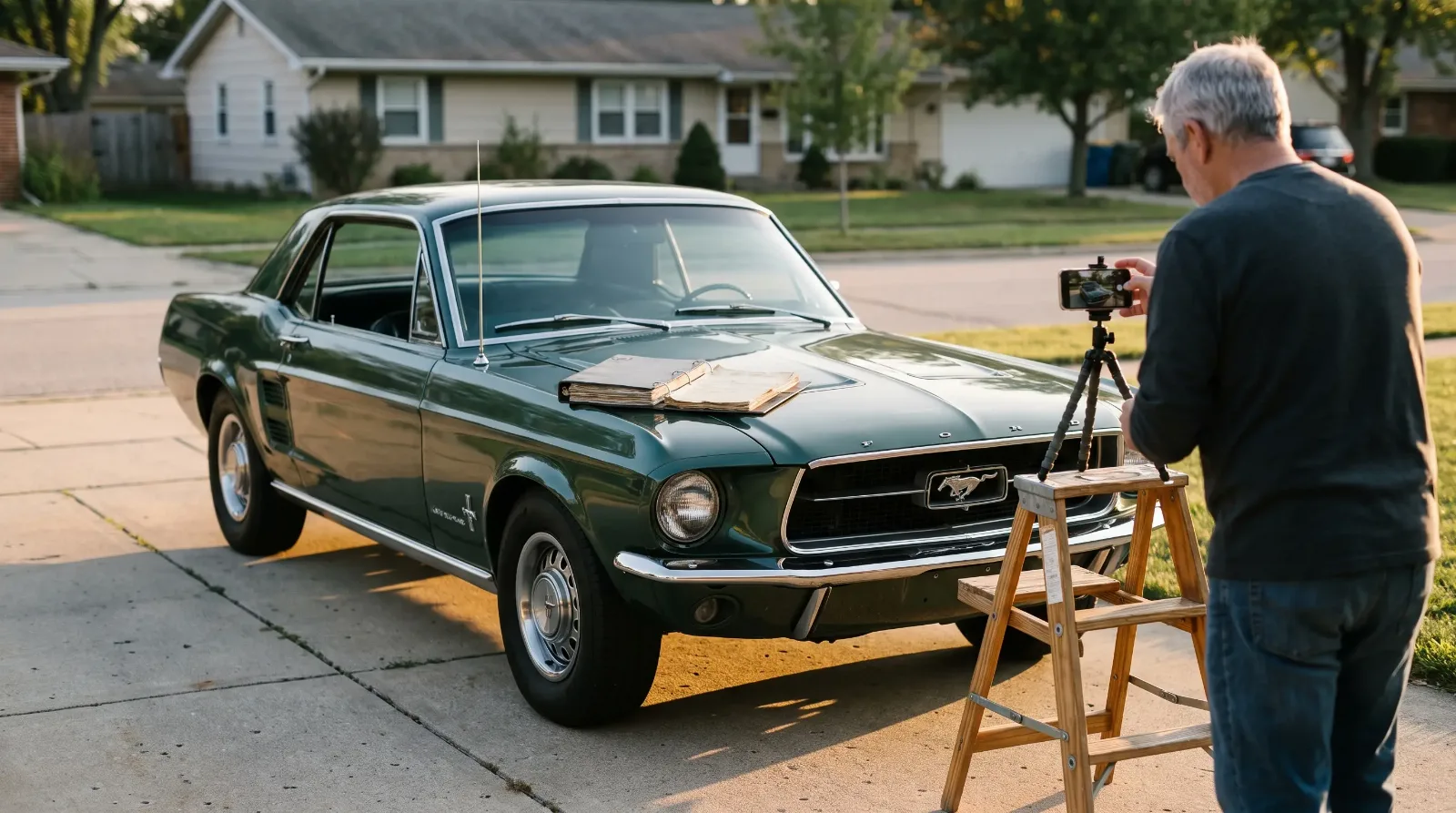
Two fellows in our club sold 1968 Ford Mustang coupes the same spring. Same color family, same 289, near enough the same miles. One put his on an online classic car auction and had a buyer in seven days. The other ran an ad on a listing site and took six weeks to find his. At the next meeting, the whole room wanted to know which one had done it right.
Both had, as it turned out. The auction car came with a Marti Report, a binder of receipts going back to the second owner and a photo of the original window sticker. Bidders could price it from the screen, and they did. The other car was an honest driver with an older repaint and no paperwork to speak of. Its buyer drove three hours, took it around the block twice, crawled under it with a flashlight and paid close to the asking price. The paperwork had picked the venue for each of them before either owner sat down to choose.
That pattern is what this article is about. We have covered the best way to sell classic car question in general elsewhere: private sale, auction or consignment. Here the choice is narrower. You have decided to sell online, and you are weighing a timed auction against an open-ended listing.
How the two formats really differ
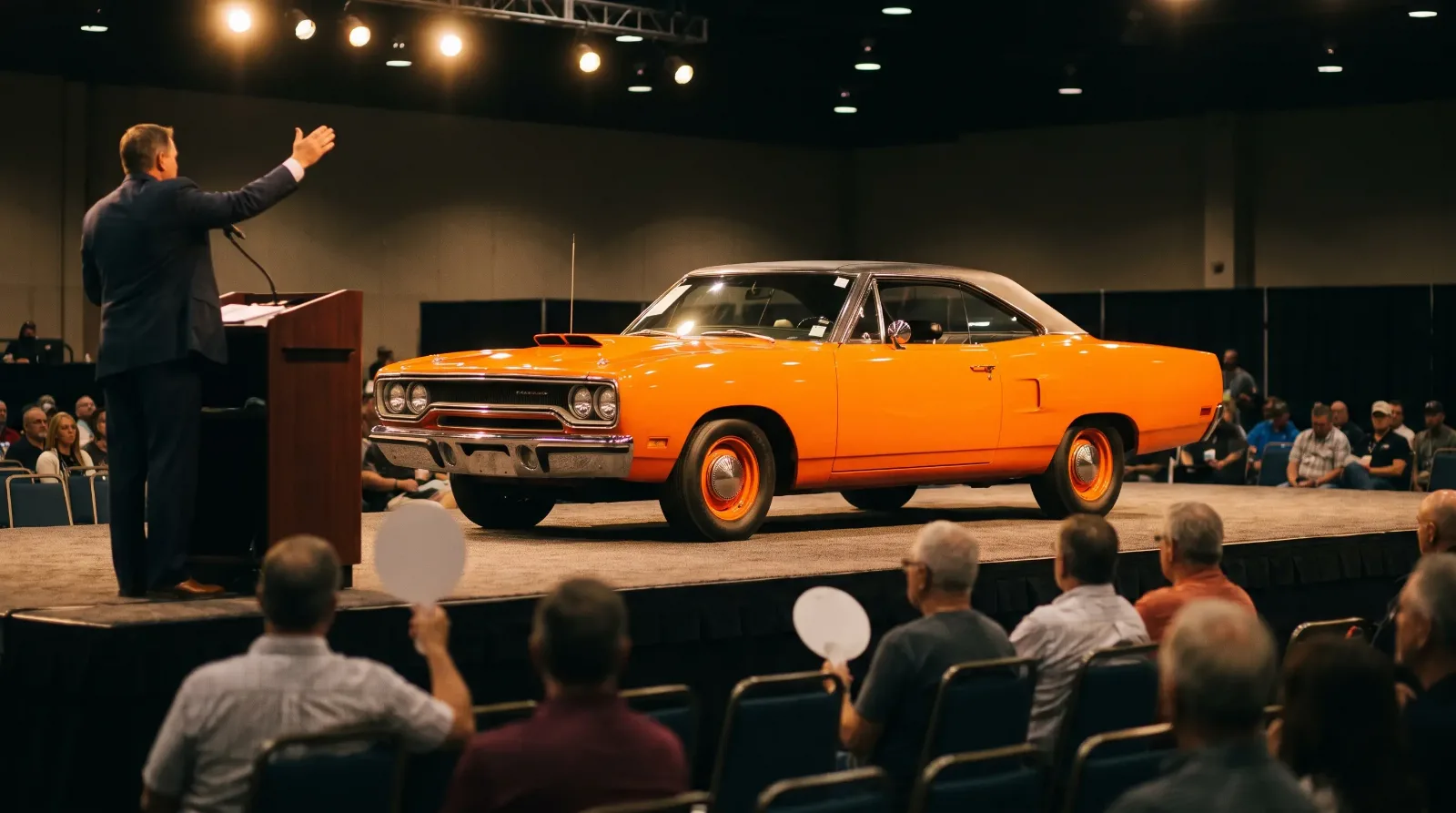
An online auction runs on a clock. The listing goes live, bidding runs for a set number of days, and when time runs out the car sells to the high bidder, provided any reserve is met. The bidders set the price. Your job is to give them enough information to bid with confidence, and then to stand behind every word in public while they ask questions.
A listing site runs on patience. You set an asking price, the ad stays up, and buyers contact you one at a time. Nobody bids against anybody. The price gets settled in a phone call or across the hood of the car, and you can turn down any offer you don't like. There is no deadline, which is a comfort when the car is priced right and a slow leak when it isn't.
Those two mechanics attract two different buyers. Online auction bidders are mostly comparing your car against the last dozen that sold, and they are doing it from a screen, often from across the country. Listing-site buyers are more often looking for one car to drive, close enough to come see it. Neither crowd is better. They want different evidence.
What each one costs you
Online auctions usually charge the seller little or nothing. A flat listing fee somewhere between $0 and about $300 is typical. The platform earns its money from a buyer's premium, usually 4% to 7% of the final bid with a minimum and a cap. You never write that check, but bidders know it is coming, and a buyer prepared to spend $40,000 all-in stops bidding a little short of that.
Listing sites charge a flat fee and take nothing from the sale. On ClassicCarsArena it is a one-time $49, $99 or $179 depending on the package, the ad runs until the car sells, the buyer pays you directly, and the Featured and Premium tiers go out in newsletter sends to more than 15,000 subscribers who signed up for new listings. ClassicCars.com charges private sellers $149.99, $209.99 or $349.99, also running until sold, and says its newsletter reaches about 180,000 subscribers, a much bigger list than ours. Hemmings, publishing since 1954, charges a flat fee per listing. eBay Motors sits in between: a single insertion fee of $34 on a vehicle up to $15,000 or $79 above, no final value fee, and a choice between an auction of up to 10 days and a fixed-price listing for 30.
| Factor | Online classic car auction | Listing site |
|---|---|---|
| Seller's cost | Listing fee from $0 to about $300 | Flat fee, no share of the sale |
| Buyer's cost on top | Premium usually 4% to 7%, with minimum and cap | None |
| Time on market | Fixed, commonly one to two weeks | Open-ended, until sold or the ad ends |
| Who sets the price | Bidders, in public | You, then negotiation |
| Seller's workload | Heavy for one week: photos, video, live comment thread | Spread out: calls, emails, showings |
| Test drive before sale | Uncommon; buyers rely on photos, video and inspections | Common |
| What becomes public | The result or the high bid | Usually nothing beyond the asking price |
Cars that do better at an online auction
The cars that shine online have one thing in common: a stranger can price them without touching them. That usually means a popular model with plenty of recent sales to compare against, documentation that answers the obvious questions before anyone asks, and a condition that photographs honestly. A numbers-matching muscle car with its build sheet. A low-mile original with service records from new. A known restoration with receipts and photos of the work in progress.
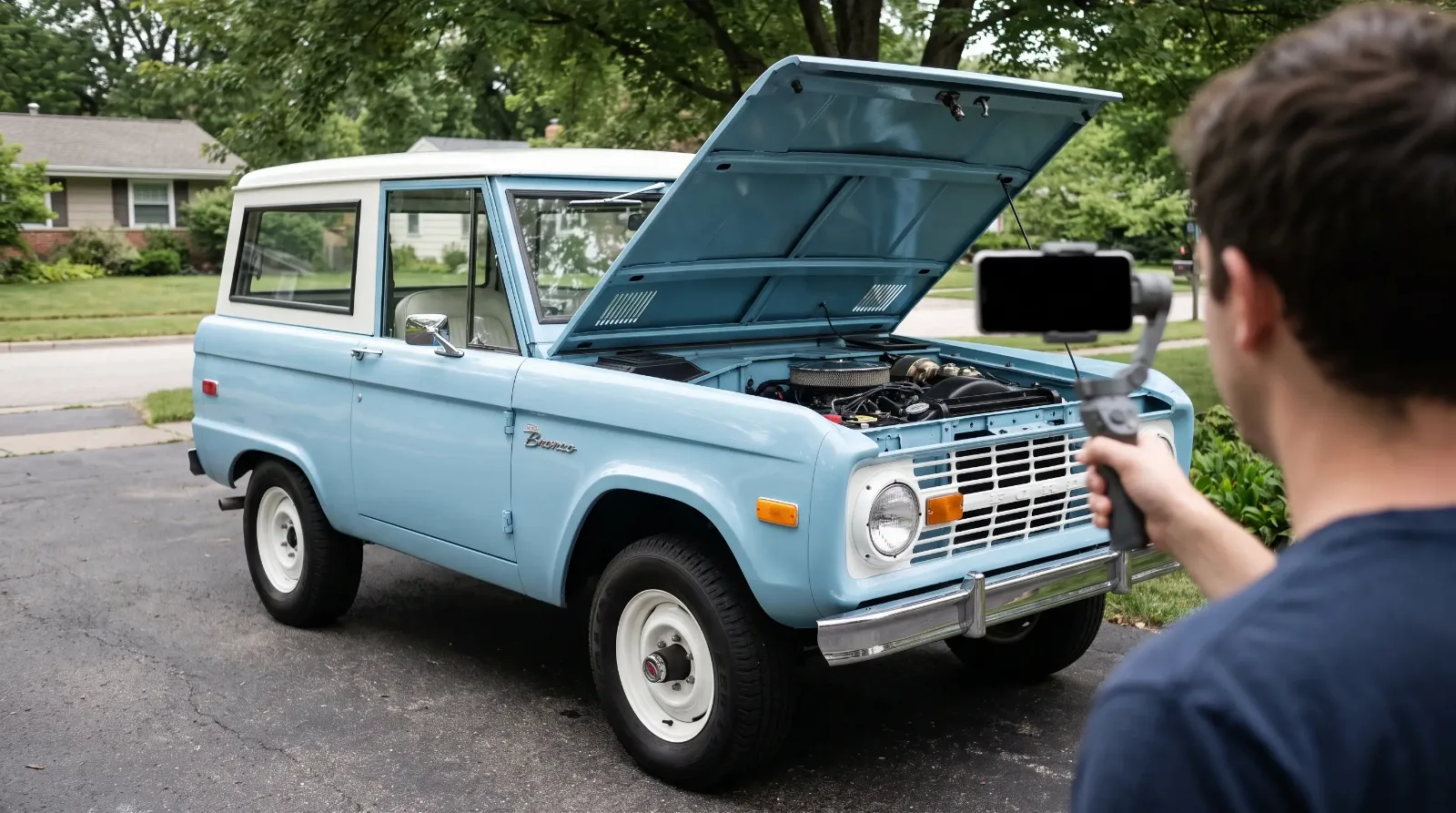
It also takes a certain kind of seller. For the week the auction runs, you are on duty. Commenters will ask about the date codes on the glass, the replaced quarter panel, the slight drip from the rear main seal. Answer fast, answer straight, and post the photo or the document when you can. A seller who gets defensive in the comments costs himself more than any fee. Many curated online auctions also screen submissions and turn down cars they don't expect to draw bids, so a project or an oddball may not get a spot at all.
If your car fits that profile but you would rather hand the presentation to an auction company and a live room, the economics change again. Our sell car at auction guide walks through the fees, reserves and prep at the live houses.
Cars that do better on a listing site
Most of the hobby is driver-grade, and most driver-grade cars sell better when the buyer can see them in person. A solid car with an older repaint, a strong engine and a few stories doesn't price well from photos, because photos can't show how it drives or how straight the floors are. In a timed auction it gets lined up against better-documented examples and marked down for what it lacks. On a listing, the right buyer comes out, drives it, and buys the car in front of him rather than the paperwork he wished it had.
The same goes for cars with few comparable sales: a restomod with a long build list, a regional favorite, a truck with a story only the locals know. With no clear market, an auction can land anywhere. A listing lets you hold your price until somebody who understands the car shows up. Everything that applies to any private sale classic car transaction applies here too: you screen the buyers, confirm with your own bank that the funds have cleared, and sign the title over correctly.
Picking your format
Lay your paperwork on the kitchen table before you decide. If the folder is thick, the model is popular and you can give a week to the comment thread, a timed auction will probably find the high bidder faster than you could on your own. If the folder is thin, the car is better in person than in pictures, or there is no clear comp for it, a listing will usually net you more, because you are not asking strangers to bid on what they cannot verify.
"Folks will argue for an hour about which site is better, and then somebody asks what's in the glovebox. Turns out the glovebox had already decided where that car was going to sell."
— Wayne Coburn
Neither format rescues a car that is priced wrong. An auction tells you the market value in a week, whether you like the answer or not. A listing tells you more slowly, in the form of a phone that doesn't ring. If the listing route fits your car, you can sell a classic car with no commission on ClassicCarsArena for a flat one-time fee, with the ad running until the car is sold.
Sources and notes
- eBay Motors fees: $34 / $79 insertion fee from April 15, 2026, no final value fee, auctions up to 10 days
- ClassicCars.com, private seller packages: $149.99, $209.99, $349.99, listed until sold, Downshift newsletter
- CLASSIC.com, auction fees and prices: buyer’s premiums at online auctions with minimums and caps
- Marti Auto Works: Ford production records licensed for the 1967 to 2020 model years
- Cornell LII, UCC § 2-328, sale by auction: how reserves work in law