
Every seller who has put a good car online knows the feeling of the first message. Somebody saw it, somebody wants it, and for a minute you let yourself believe the hard part is over. The car shipping scam lives inside that minute. The message is friendly, the buyer agrees to your price without a single question, and then comes the line that gives the whole thing away: "Don't worry about delivery, my shipper will pick it up."
Market & Values
8 min read
The "My Shipper Will Pick It Up" Scam
How the car shipping scam works on classic car sellers, how a real long-distance buyer behaves, and the terms that shut it down.
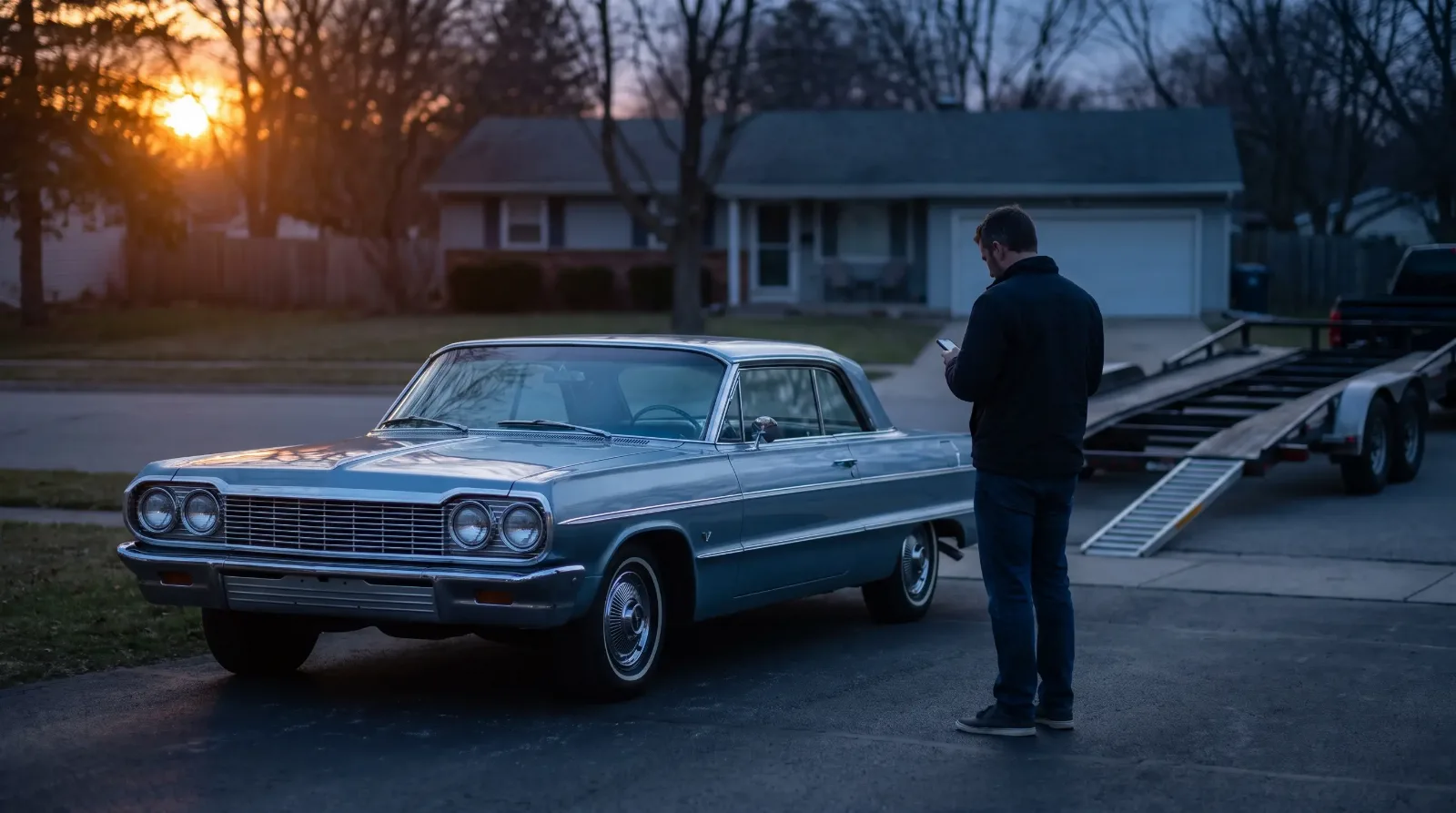
It sounds like a convenience. It is a script, and an old one. This piece takes the shipper scam apart, piece by piece, so you can recognize it in the first two messages and spend your energy on the buyers who are real.
How the shipper scam is built
Picture how it usually goes. You list a 1964 Impala, clean, honest photos, a fair price. Within the hour a buyer writes from "out of state" or "working offshore." They want the car, they cannot come see it, and they have a transport company they always use. They ask for your full name, address and phone number "for the paperwork." No questions about the frame, the floors, the engine or the paint.
From there the script branches, but every branch ends with money leaving your account or the car leaving your driveway.
- The overpayment branch. A cashier's check arrives for more than your price. The buyer asks you to wire the extra to the shipper, who "needs a deposit before pickup." The check is fake. The shipper is the scammer, or a partner. You lose whatever you wired.
- The fake confirmation branch. You get an email that looks like it came from a payment service or an escrow company, saying the funds are held and will be released "once the shipper provides a tracking number." Nothing is held. The email was built to get the car on a truck.
- The real truck branch. Less common, and the worst. A transporter does show up, sometimes a legitimate one hired with stolen money, sometimes not. You hand over the car and the signed title because the "payment" looked complete. By the time the money vanishes, the car is three states away.
- The seller-pays branch. The buyer asks you to book their shipper and pay the fee yourself, "and I'll add it to the price." There is no buyer. The shipping company is the whole scam.
Notice what all four have in common. The scammer never needs to touch the car in person, never needs to be inspected, and always controls who moves the car and when. That is the tell. A transport company is a normal part of a long-distance sale. A buyer who uses the transport company to avoid being seen is not.
What a real long-distance sale looks like
We should be fair to the honest out-of-state buyer, because there are plenty of them. A real one behaves in a way the script cannot copy, because a real buyer is spending real money and is nervous about it.
A real buyer asks questions you have to go out to the garage to answer. They want photos of the floor pans, the VIN tag, the engine stampings, the trunk under the mat. Many hire an independent inspector to look at the car before they commit. They pay by a method you can confirm with your own bank, and they understand when you say the car does not move until the money is final. They book and pay the carrier themselves, and the carrier contacts you to set a pickup window, usually a few business days wide, because that is how car hauling works.
| Signal | Real buyer | Shipper scam |
|---|---|---|
| Questions about the car | Specific, sometimes picky | None, or generic ("is it still available?") |
| Inspection | Often sends an inspector or asks for a video call | Never; always "too far" or "too busy" |
| Payment | Wire you confirm with your bank, or escrow you choose | Check for more than the price, or a payment "confirmation" email |
| Who pays the shipper | The buyer, directly to the carrier | You, from the overpayment or "up front" |
| Timing | Willing to wait for funds to clear | Truck is "already booked" for tomorrow |
| Carrier identity | Has a USDOT or MC number you can look up | Vague name, free email address, no registration |
Shutting it down in two messages
You do not need to argue with a scammer. You need to set terms that a real buyer accepts without blinking and a scammer cannot meet. Put them in writing in your first reply and let the conversation sort itself out.
First, the money. Tell the buyer the car and title stay with you until payment has cleared and is final in your own account, confirmed by you with your own bank. Federal rules generally require a bank to make cashier's check funds available by the next business day, but a counterfeit can take weeks to come back, and when it does, the bank takes the money back from you. "Available" is not "good." A wire you have confirmed by calling your bank, or an escrow service you picked and logged into yourself, are the payment routes that hold up.
Second, the amount. You will accept exactly the sale price, nothing over. You will not refund, forward or wire any part of any payment to anyone. Any request to do so ends the conversation. That one rule kills the overpayment branch completely.
Third, the shipper. The buyer hires and pays the carrier directly. You will release the car to that carrier only after funds are final, and only when the driver shows paperwork that matches the company the buyer named and a USDOT or MC number you checked yourself. You do not pay any carrier anything.
Most scammers disappear right there. The rest push back with urgency. The truck leaves tomorrow, the buyer is boarding a flight, the escrow file closes at five. A real deal survives a two-day wait. A script does not.
"A car you love deserves a buyer who wants to see it. If somebody will send money for it sight unseen but won't spend ten minutes asking about the floors, that's not a collector. That's somebody counting on you to be in a hurry."
Hector Morales
The paperwork side of handing a car to a carrier
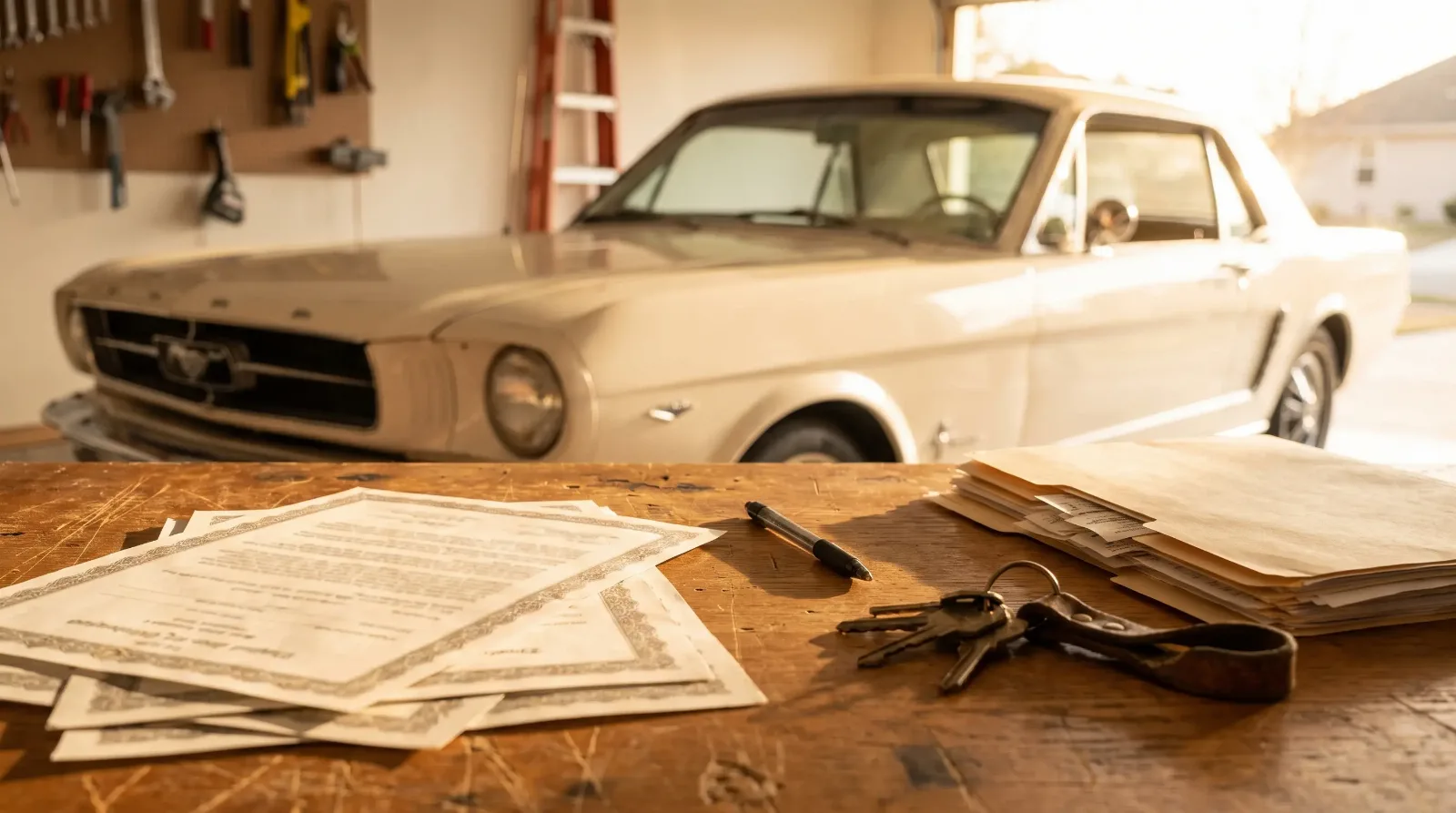
When the sale is real and the funds are final, the handoff to a transporter still deserves care, because the title is the most valuable piece of paper you own on the day of sale. Sign it correctly, in the right boxes, with the buyer's full name, and keep a photo of both sides. Notary requirements, open titles and the bill of sale are all covered in our guide on classic car title paperwork, and it is worth a read before you sign anything.
Decide in advance whether the title rides with the car or goes to the buyer separately. Many sellers prefer to send it by tracked overnight mail directly to the buyer once the car is delivered, so the truck carries the car and not the ownership document. Either works, as long as the money is final first.
At pickup, walk around the car with the driver and complete the bill of lading together, noting every chip and scratch. Take your own photos with the driver and truck in frame. Remove personal items; carrier cargo insurance covers the car itself, not what is inside it. Take your plates off unless your state says otherwise, and file your release of liability that evening.
If you think you have already been caught
Stop sending money the moment something feels off, even if you have already sent some. Call your bank directly, using the number on your card, and tell them you believe a deposited check is fraudulent or that a wire went to a scammer. Wires are hard to recall, but the first hours matter. Do not release the car or the title while you sort it out, whatever the buyer says.
Then report it. The FBI's Internet Crime Complaint Center at ic3.gov and the FTC at ReportFraud.ftc.gov both take these cases, and if a fake check came by mail, the U.S. Postal Inspection Service takes reports too. A report helps your bank and, sometimes, the next seller. Save every email, text and envelope.
The shipper scam is one piece of a bigger set of habits that keep a private seller safe, from screening the first call to the day the title changes hands. If you want the full routine, the details are here. The short version: the right buyer is worth waiting for, and the right buyer will wait for you too.
Sources and notes
Related Reading

Have a
Classic Car
for Sale?
Reach thousands of serious classic car collectors across the US.
Sell It Here →
Selling a classic? Here's how: where to sell your classic car online
Are You a Classic Car Dealer?
List your full inventory and connect with targeted classic car buyers.
Join as a Dealer →
#private sale
#sell classic car
#car selling scams
#overpayment scam
#seller safety
#car shipping scam
#vehicle transport

About the author
Hector Morales
East LA lowrider builder and lifelong member of the car-club scene, writing lowrider culture, hydraulics and custom paint from the inside.
More in Market & Values

Comments
Be the first to comment on this article.