
Anyone who has tried to sell project car builds that stalled halfway knows the problem. You see three years of work. The buyer sees a body in primer, a frame on stands, forty boxes of parts and a question he can't answer yet: what did this guy get wrong? Your sale depends on answering that question for him, in order, before he asks it.
Market & Values
8 min read
Selling an Unfinished Project Car
How to sell a half-finished classic: inventory the parts, document the work, decide what to finish and reach the builder who'll pay for it.
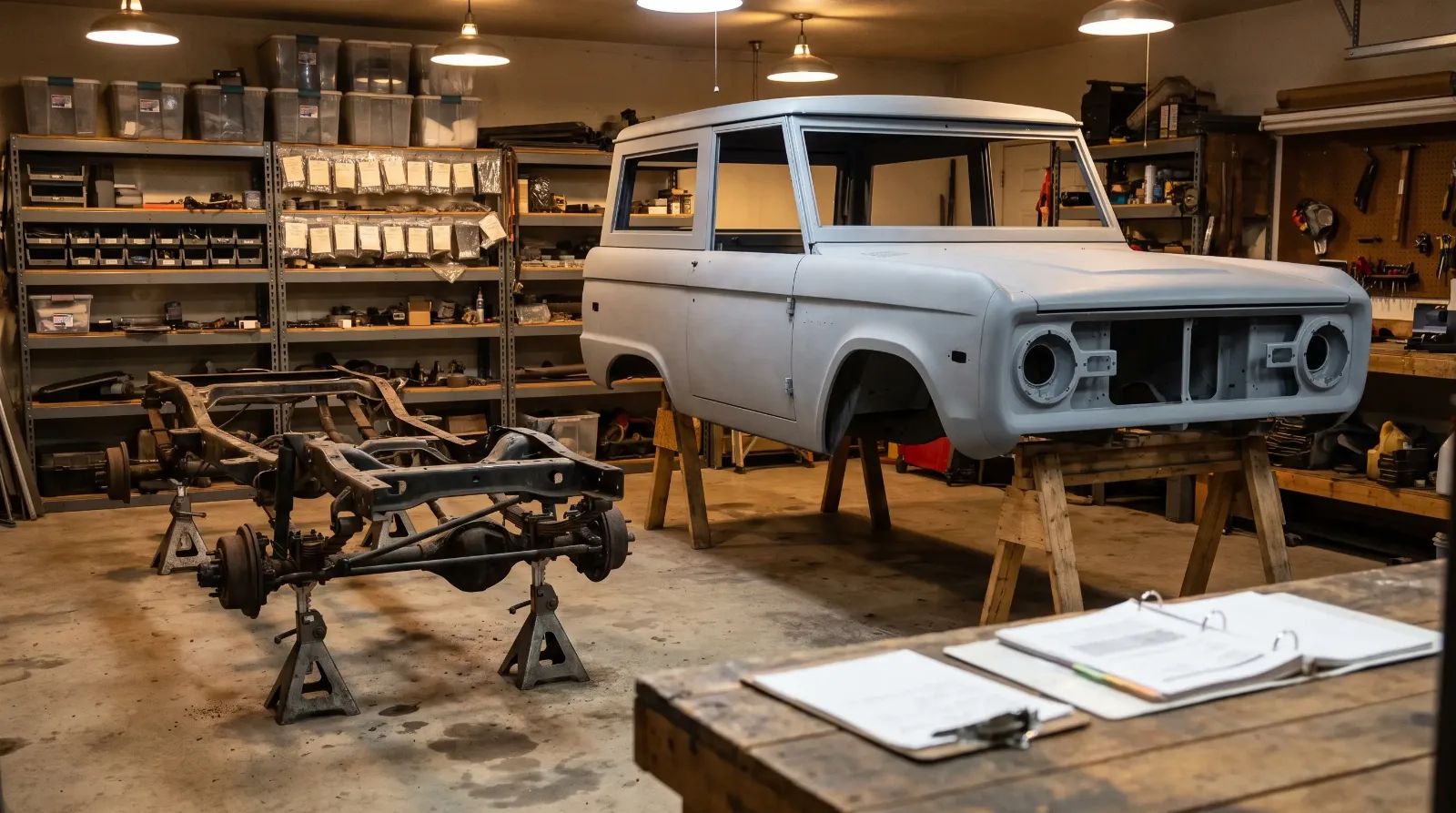
The general steps, title, pricing from real sales, getting paid safely, live in our how to sell classic car guide. This piece covers the part that guide doesn't: a car that sits somewhere between started and finished, and a buyer who has to judge your work before he can judge the car.
Inventory everything before you set a price
Start with the parts, not the car. Every bin, every shelf, the rafters, the second garage, the box in your brother-in-law's basement. Pull it all into one place. Then build a list, one line per part or assembly, with three columns: what it is, what condition it's in (new in box, used and good, needs work), and where it is right now.
Do the hardware the same way. Bag it by assembly, tag the bag, and write on the tag where it came off. "Driver door hinge bolts" is useful. A coffee can of mixed bolts is not. The next builder will spend days sorting what you could have labeled in an afternoon, and he'll price those days into his offer.
Then write the other list, the one people skip: what's missing. Missing trim, a missing glovebox door, the rear bumper you sold at a swap meet. A buyer's first question on any project is "is it all there?" A written answer, including the gaps, tells him you know your car. Discovering a missing part after the deal tells him you either didn't know or didn't say. Either one costs you.
Photograph each bin open, with the list beside it.
What finished work is worth to the next builder
Here's the part that stings. The receipts don't set the price. A buyer pays for the car plus the work he can trust, and he pays for that work at a discount, because he's taking over your decisions along with your parts.
The work that holds value is the work he can verify and won't have to redo. Structural work done right, with photos to prove it, is at the top. Cosmetic work done halfway is near the bottom, and some of it counts against you. Think about it in the order the car was built.
| Stage of work | What the next builder sees | Effect on price |
|---|---|---|
| Rust repair welded, metal in epoxy primer, photos of bare metal | A foundation he can trust | Adds value, more so with in-progress photos |
| Frame boxed or repaired, suspension assembled, measurements recorded | Heavy work finished and checked | Adds value if his own measurements agree |
| Engine rebuilt on a stand, machine-shop paperwork in hand | A rebuild he doesn't have to pay for | Adds value; without paper, he treats it as an unknown |
| New parts bought, still in boxes | Inventory | Worth something, usually less than you paid |
| Body filler over metal nobody photographed | Possible rust he can't see | Often counts against the car |
| Wiring half pulled, harness cut in places | Hours of tracing | Counts against; most buyers plan a new harness |
Notice the pattern. Finished stages add. Half-finished stages subtract, because the buyer has to undo them before he can redo them. If you have a week left in you, spend it finishing a stage, not starting a new one. Seam-seal the floors you welded. A finished stage photographs as finished. A started one photographs as a problem.
Document it so someone else can finish it
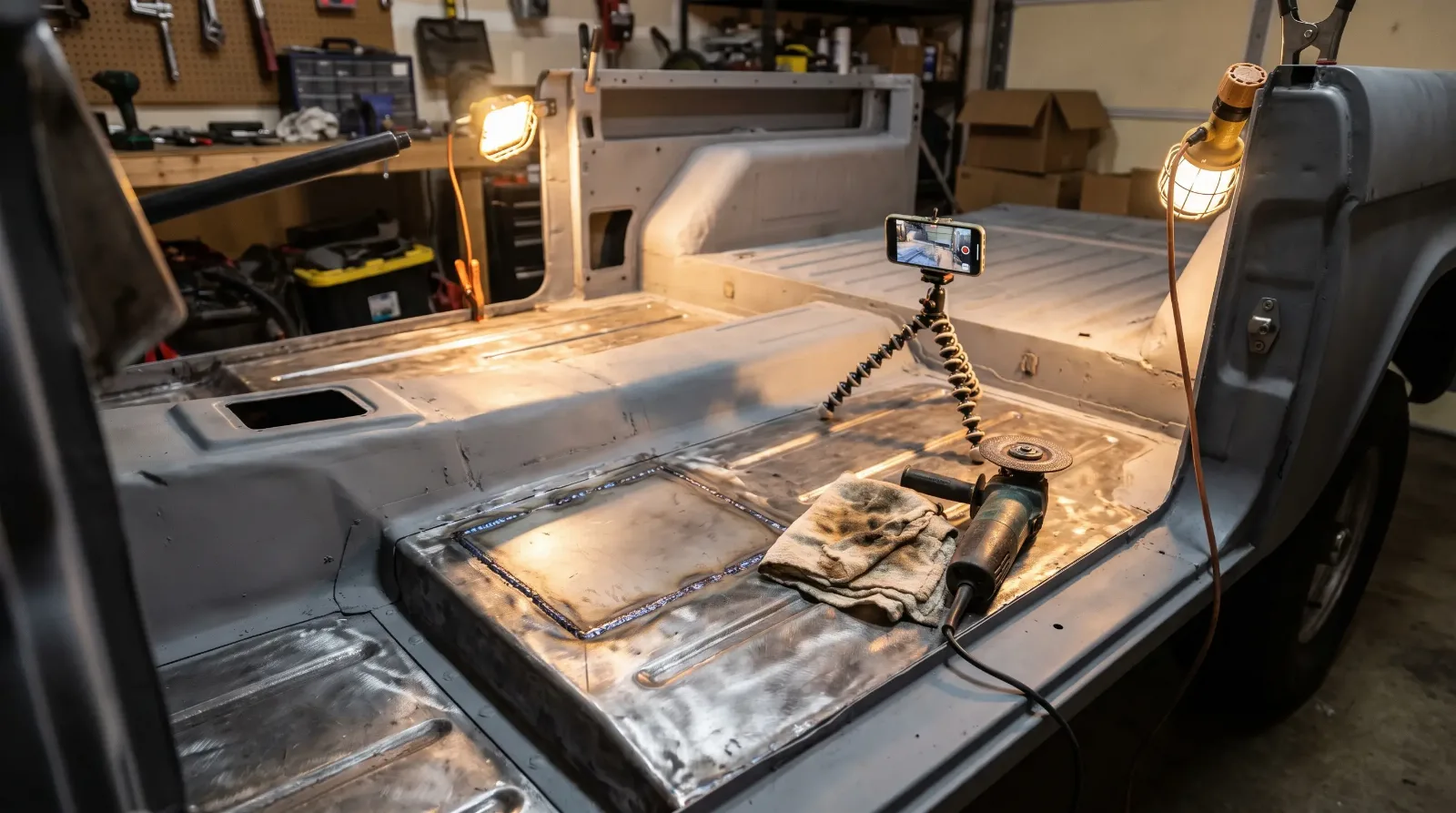
A buyer of an unfinished car is buying your process. He wants to know how you did the work, not only that you did it. Give him the record a good shop would keep.
Start with photos, dated, in order. The most valuable ones are the ugly ones: bare metal before primer, the rust you cut out, the patch tacked in before it was finish-welded. Those pictures prove there's nothing hiding under the primer. Without them, the next builder assumes the worst and prices it that way.
Next, measurements. If you did frame or chassis work, write down what you checked and the numbers you got. Diagonal measurements, wheelbase on both sides, ride height you set, pinion angle if you set it. If the body came off, note how it was supported and whether the doors were braced. A builder who can check your numbers against his own tape will trust the rest of your work faster.
Then the paper. Machine-shop invoices with bore, clearances and parts used. Receipts for the big components. Paint codes and the brand of primer, because the next guy needs to know what he's painting over. Notes on the wiring if you started it: which harness, what you changed, what's labeled. Put all of it in one binder, in the order the car was built.
"Nobody pays for work they can't see. Shoot the metal before you prime it, or the next guy has to assume the worst is under there."
Ray Delgado
One warning. If a weld is bad, or a panel went on wrong, say it. Don't grind it pretty and hope. A competent buyer will find it, and when he does, he stops believing everything else in the binder.
Roll it back together or sell it in pieces?
A rolling chassis is much easier to sell than a kit. Body on frame, wheels on, steering hooked up, so it rolls and steers. It's easier to show, easier to load and easier to ship, and a buyer can picture the car instead of picturing the work. If yours is apart, bolt together what you can without making a mess of it. Mock up the fenders and doors loosely if you have to. Don't force anything, and don't use wrong hardware just to make it look whole.
Parting it out is the other road. Sometimes the pieces bring more in total than the whole car would. It also takes far longer, you sell the easy parts first, and you end up with a body shell and a title nobody wants. Most owners do better selling it whole and letting the price reflect what's left to do.
Reaching the right buyer and getting it moved
Your buyer is a builder, not a driver. He's patient, he knows what he's looking at, and he may be several states away because he's been looking for your exact body style for years. That shapes where to sell your classic car like this one. Local marketplaces bring trailer owners who can show up Saturday. A national listing with plenty of photos brings the specialist who'll pay more for the right car.
The car still has to leave your shop. A rolling chassis goes on an open trailer or a car carrier without much fuss. A body on a rotisserie and a frame on stands is a different job, sometimes a forklift job, and some carriers won't take it at all. Settle in the listing who arranges transport and how loose parts travel. Shipping an unfinished car to a buyer across the country has its own steps for title, payment and pickup, and you can read more on that before you agree to anything.
Some projects were never headed back to stock. If yours already has a modern drivetrain, a swapped chassis or upgraded brakes going in, the buyer pool and the comps are different again, so see this next before you set a price.
When the inventory is done, the binder is in order and the photos show the metal, post your car with all of it. The listing fee here is flat and paid once, with no commission. The Featured listing at $99 takes up to 50 photos plus a video, and Premium at $179 has no photo limit, which matters when half the car is in labeled bins. The ad stays up until it sells.
Sources and notes
- Hagerty: what does a car's condition really look like (most collector cars are #3)
- For A-Bodies Only forum: epoxy primer over bare metal, then filler (restorer practice)
- Ship A Car: shipping a classic that isn't running (winch vs forklift loading)
- 18 U.S. Code 511: altering or removing motor vehicle identification numbers
- FTC: how to spot, avoid and report fake check scams
Related Reading
Have a
Classic Car
for Sale?
Reach thousands of serious classic car collectors across the US.
Sell It Here →
Selling a classic? Here's how: compare the places to sell classic cars
Are You a Classic Car Dealer?
List your full inventory and connect with targeted classic car buyers.
Join as a Dealer →
#restoration documentation
#project car value
#sell classic car
#sell project car
#unfinished project car
#rolling chassis

About the author
Ray Delgado
Metal fabricator and chassis builder who has spent 25 years turning flat sheet and mild steel into hot rods, gassers and restomod underpinnings.
More in Market & Values

Comments
Be the first to comment on this article.