
Owners ask how long it takes to sell a classic car as if there were a single number on file somewhere. There isn't. Nobody publishes a reliable average, and I would be suspicious of anyone who quoted one. What does exist is a set of fixed points: how long a listing runs, how long an auction lasts, how long a consignment agreement holds the car, how long paperwork takes to clear. Put those together with the condition of your car and the honesty of your asking price, and you can estimate your own timeline with reasonable confidence.
Market & Values
9 min read
How Long Does It Take to Sell a Classic Car?
How long it takes to sell a classic car, method by method: listing terms, auction calendars, consignment periods and the paperwork that sets the pace.

That is the goal here. Not a promise, but a schedule built from the parts that are known, with the guesswork labeled as guesswork. Choosing the method itself is a separate decision, and there is more on this in the main guide. This page is about the calendar.
Three things set the clock before you list
The first is price relative to completed sales. A car asking what comparable cars actually sold for gets calls in the first week. A car asking what sellers hope for gets watchers and silence. It is the largest variable, and the one owners judge worst, because the number they remember is rarely the number the records support.
The second is documentation. A buyer who can see the title, the receipts, any build records and a clear ownership history has fewer questions, and fewer questions means fewer weeks. A buyer who has to take your word for the engine's history either discounts the car or waits for a different one.
The third is the depth of the market for your particular car. A common, well-understood model has many shoppers and many comparables, so price discovery is quick. A rare variant with few recorded sales may be worth more, but it can take longer to find the one buyer who knows what it is. Season plays a smaller part. In my reading of the market, open cars move more slowly in northern winters, but a correctly priced car sells in January too.
Timelines by selling method
The table puts the known fixed points next to our estimates. Where a figure is a published term, it is stated as such. Everything else is an estimate for a fairly priced, driver-grade car with a clean title, and your result can fall outside it in either direction.
| Method | Before it goes live (estimate) | Time on the market | Handshake or hammer to cash (estimate) | Realistic total (estimate) |
|---|---|---|---|---|
| Local classifieds (Craigslist $5 ad, Facebook Marketplace free) | About 1 week | Days to 3 months; no fixed end | Same day to a few days | 2 weeks to 4 months |
| National listing site (Classic Cars Arena, ClassicCars.com, Hemmings classifieds) | 1 to 2 weeks for photos and write-up | Listings on Classic Cars Arena and ClassicCars.com run until sold; most fairly priced cars draw serious interest within weeks | 3 days to 2 weeks, including a wire and buyer's shipping | 1 to 5 months |
| eBay Motors | About 1 week | Auction up to 10 days or fixed price for 30 days per listing; relists are common because vehicle bids are non-binding | 1 to 2 weeks | 3 weeks to 3 months |
| Online auction | About 1 to 3 weeks to be reviewed and scheduled | Usually 7 days of bidding; some sites run longer | 1 to 3 weeks | 3 to 8 weeks |
| Live auction | Weeks to months; major houses take consignments well ahead of each event | One day on the block | Commonly up to about 3 weeks after the buyer's funds clear; title problems delay it | 2 to 4 months; longer if the car goes unsold and waits for the next event |
| Consignment dealer | 1 to 2 weeks for intake and prep | Agreements commonly run 60 to 90 days | Days to 3 weeks after the buyer pays, depending on the contract and state rules | 2 to 4 months |
| Dealer cash offer | A few days | None | Same day to a week | Under 2 weeks |
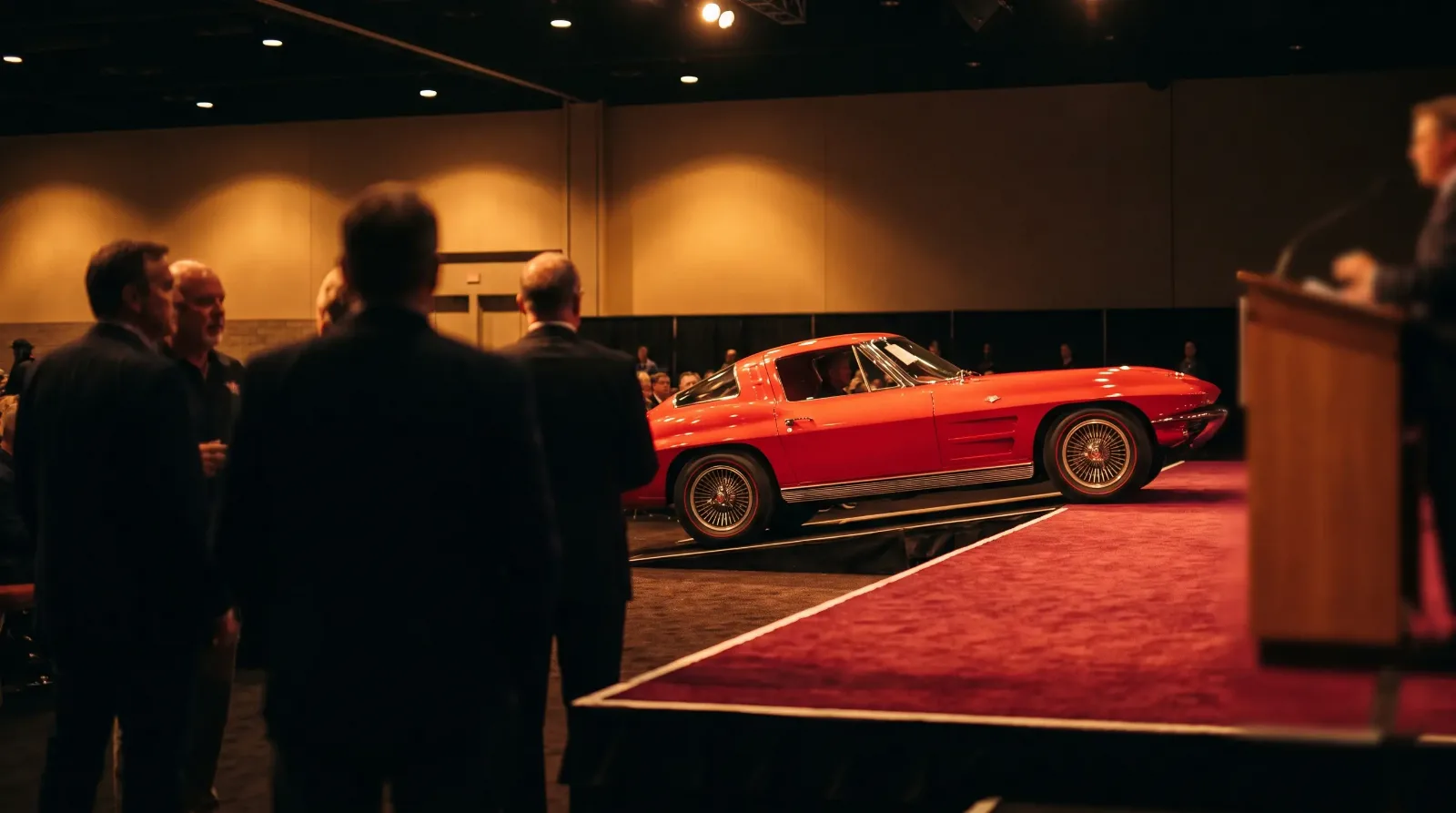
One common misconception deserves a correction. People think of auctions as the fast route. The hammer is fast. The calendar around it is not. A live auction runs on an event schedule, so the car may wait weeks for a consignment slot, then the event, then the payout, and if bidding stops short of your reserve, the whole cycle starts again at the next sale. Published terms give a sense of the payout wait: RM Sotheby's consignor conditions aim to pay within 21 business days of receiving the buyer's cleared funds, and Barrett-Jackson has stated it pays consignors no later than 21 banking days from the sale. Other houses, Mecum included, set the timing in each consignment contract, so ask for it in writing. Entry fees, reserves and the preparation a live event demands all bear on that schedule, and you can read more on that before you commit to a date.
The dealer cash offer is the true fast route, and it is fast for a reason. By our own estimate, not a sourced statistic, a dealer offer usually comes in about 20% to 30% below a private sale, which covers reconditioning, the dealer's holding cost and margin. You are paying for the time you did not spend.
What stretches the clock once you are listed
Overpricing is the first cause, and it is self-reinforcing. Every week a listing stays up, shoppers who saw it on day one notice it is still there and assume something is wrong with the car. The price cut that eventually follows tends to land where the car should have started.
Slow responses are the second. Inquiries go cold quickly, and a buyer who waits two days for an answer is often looking at another car by the time it arrives.
Thin or missing records are the third. If a buyer asks for the title history or a receipt for the engine work and you have to go looking, that is a week. If the document does not exist, the buyer may ask for an inspection, and that is another week.
Paperwork is the part you can finish before day one
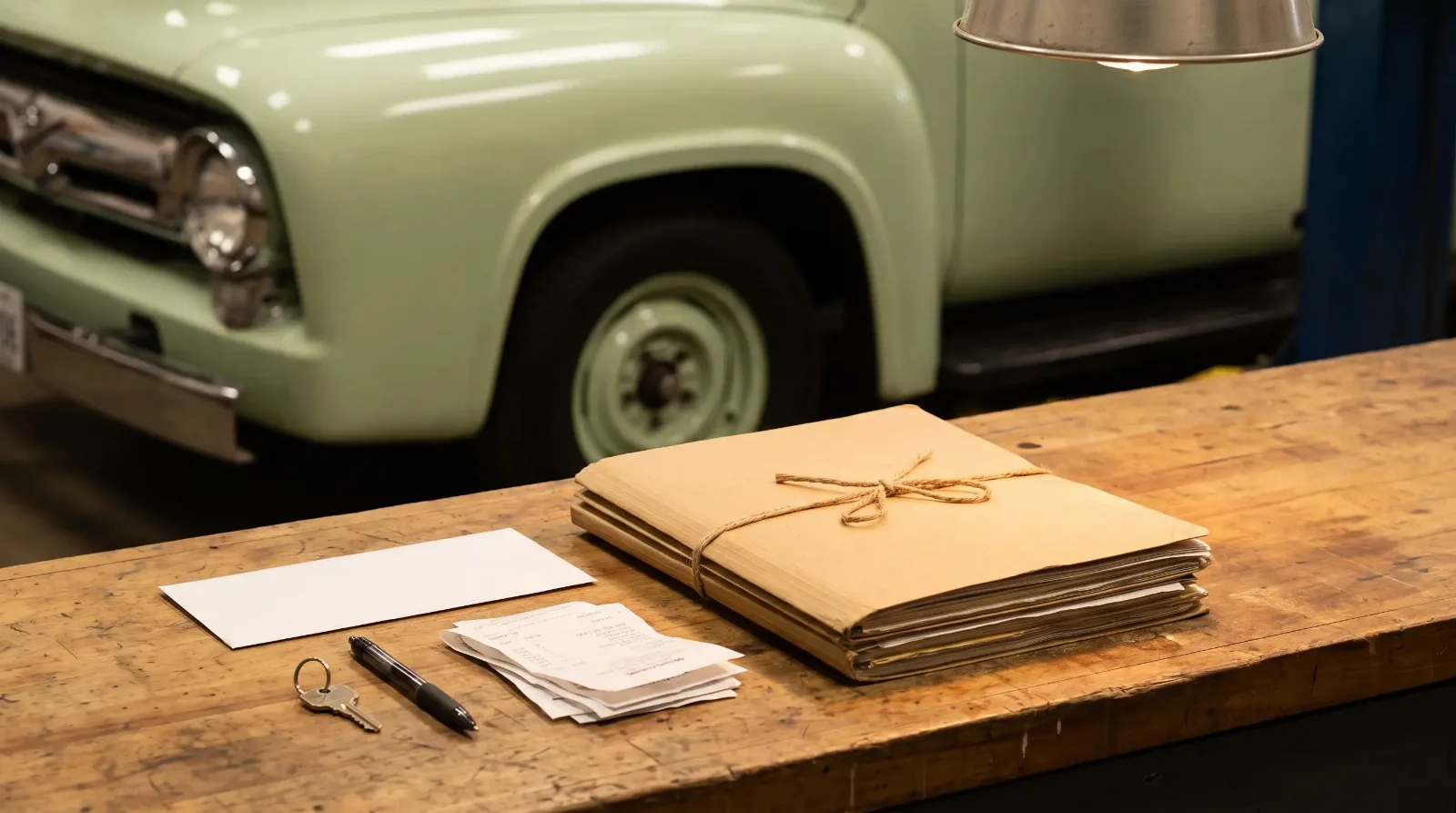
The title is the document most likely to stall a sale that is otherwise done. Rules for older cars vary by state, and some of them surprise owners. New York does not issue titles for model year 1972 and older vehicles, and Georgia does not require a title for 1962 and older, so a sale may move on a registration and a bill of sale, which a buyer in another state may need time to sort out with their own DMV. Pennsylvania and Ohio require the seller's signature on the title to be notarized. If the title is lost, a replacement or a bonded title can take weeks. In Texas, for example, a bonded title requires a bond of 1.5 times the vehicle's value and carries a bonded brand for three years. Other states handle it differently. A replacement title by mail commonly takes a few weeks, and a bonded title adds a state review and a bond purchase before it is issued, so start early.
Some of the federal paperwork has eased. Vehicles of model year 2010 and older are exempt from federal odometer disclosure, so most classics do not need it, although your state's title or bill of sale form may still ask for the mileage. Fill it in anyway. A recorded number answers a question before it is asked.
When to adjust, and by how much
Here is the review schedule I would keep. It is a rule of thumb drawn from how listings behave, not a measured result, so treat the numbers as starting points. If two weeks pass with no inquiries at all, the problem is visibility or presentation: check the photos, the headline and the first paragraph. If 30 days pass with inquiries but nobody comes to look, the price is probably high, often by 5% to 10%, and a single clear cut works better than several small ones. If 60 days pass with visits but no offers, the car is not matching its description, and you should find out what buyers are seeing that you are not.
"A car sells on the schedule its paperwork allows. The price decides whether people call. The records decide how quickly they stop asking questions and send the money."
Tom Ramirez
A fairly priced, well-documented driver on a national listing site will usually sell within a few months. A rare car may take longer and earn more for the wait. A car with an optimistic price and a thin folder can sit for a year. Most of that difference is decided before the listing goes live.
Sources and notes
- RM Sotheby's: consignor's conditions of business, payment of proceeds
- SEMA News: selling a car at auction, including Barrett-Jackson's consignor payment guarantee
- PistonHeads: auction seller FAQ, seven-day auction format
- BuyTheCar: seller FAQ, review and scheduling timeline
- Surety Bonds Direct: the Texas bonded title process
Timelines marked as estimates are our own reading of how each method works, not measured averages. Auction house terms change; confirm them in your own consignment contract.
Related Reading

Have a
Classic Car
for Sale?
Reach thousands of serious classic car collectors across the US.
Sell It Here →
Selling a classic? Here's how: sell my classic car
Are You a Classic Car Dealer?
List your full inventory and connect with targeted classic car buyers.
Join as a Dealer →
#classic car auction
#consignment
#sell a classic car
#pricing a classic car
#classic car title
#time to sell

About the author
Tom Ramirez
Corvette researcher and historian based in Bowling Green, Kentucky. Two decades documenting Corvette production history from original factory records.

Comments
Be the first to comment on this article.