
Most sellers lose money in a negotiation before the buyer says a word. They walk in without a floor, without comparable sales, and without any idea which part of the offer actually matters. Then a confident buyer names a number, and the seller starts reacting instead of negotiating. If you want to negotiate selling classic car deals well, the work happens before the phone rings.
Market & Values
8 min read
How to Negotiate When Selling a Classic Car
How to negotiate selling a classic car: set your floor, build sold comps, read the whole offer, counter with data and close before it cools.
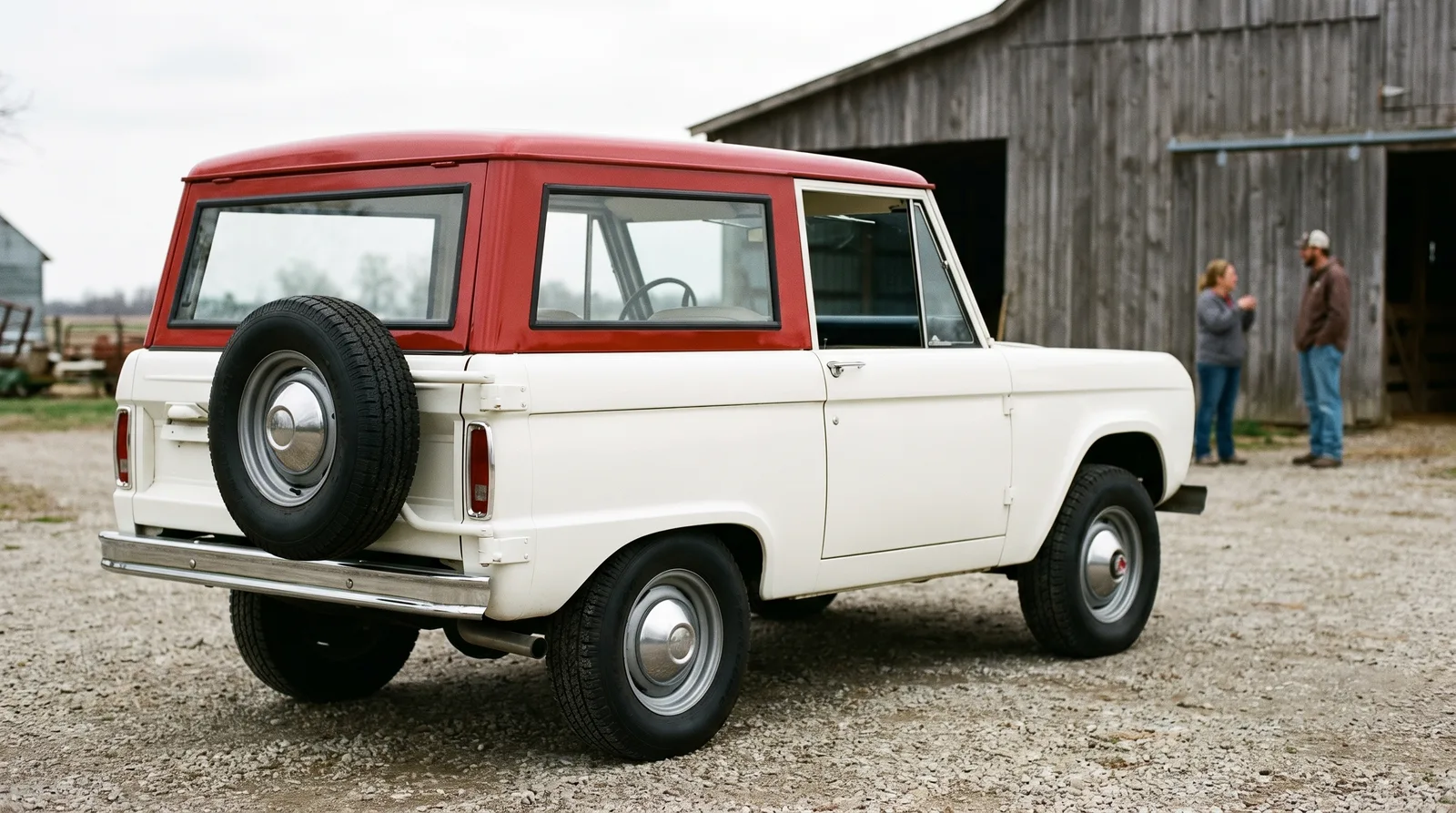
This piece goes deep on one stage only: the back-and-forth between your asking price and a signed bill of sale. Prep, paperwork and listing are covered step by step in the step-by-step guide to selling a classic car. Here the question is narrower. A buyer wants your car and wants it for less. How do you get to a number you can live with, on terms that protect you?
Set your numbers before the first call
You need three figures written down before the listing goes live. The asking price, the target price you would be pleased to accept, and the floor you will not go under. Most private sellers only have the first one, which means every offer becomes an emotional decision made in real time.
The spread between asking and target is your negotiating room. On a private sale of a driver-quality car, a few percent of headroom is a reasonable starting point; that is my working rule of thumb, not a market statistic. Too little and the buyer has nothing to win, so he walks away feeling he got no deal. Too much and the asking price reads as uninformed, and the serious buyers never call.
The floor should come from your alternatives, not your feelings. If a dealer would hand you a check today, that number is your baseline. By our own estimate, a dealer cash offer typically lands about 20 to 30 percent below a realistic private sale price, because the dealer has to recondition the car, carry it on the lot and still make a margin. Your floor sits somewhere between that dealer number and your target. Knowing it in advance is what lets you say no calmly.
Build a comps file the buyer can't argue with
A negotiation is an argument about value, and the side with better evidence usually wins it. Pull completed sales, not asking prices, for the same model in the same condition tier. Auction hammer prices, confirmed private sales and the condition-based guides all count. Asking prices on cars that sat for six months count for nothing.
Be honest about the tier. On the Hagerty scale, a #1 is a concours car and a #4 is a driver, with #5 for projects and #6 for parts cars. Hagerty says the vast majority of collector cars are #3. If you price your car as a #2 and the buyer brings #3 comps, you have already lost the argument, and you have lost some credibility with it. Pick the tier a skeptical appraiser would pick.
Then think about who is on the other end. A buyer who has been shopping for months has seen every listing in the country, so he knows where classic cars actually sell and what they sell for there. Your comps should match the venue. A no-reserve auction result and a patient private sale are different markets, and a sharp buyer will pick whichever one favors him. Have both in your file and know which one applies.
| Buyer move | What it usually means | How to respond |
|---|---|---|
| "What's your lowest price?" on the first call | Shopping price, not the car | Restate the asking price and invite an inspection first |
| Offer well under asking with no reason given | Testing your floor | Ask what the number is based on; counter only once you hear it |
| Offer tied to a specific flaw | Real buyer pricing a real issue | Ask for the repair estimate; discount the actual cost, not a guess |
| Offer citing a lower sold comp | Did the homework | Compare condition tier and venue; concede only if the comp truly matches |
| Fast offer with odd payment or shipping terms | Likely a scam | Decline and end the conversation |
Read the offer, not just the number
An offer has more parts than the price. When the buyer pays, how he pays, when he takes the car and what condition he expects it in all carry value. A cash-equivalent offer that closes this week can be worth more to you than a higher number that depends on the buyer selling his own car first. Weigh the whole package.
Contingencies are where money quietly leaves. "Subject to inspection" is fair and you should welcome it. "Subject to financing" or "subject to my wife seeing it" is an open option the buyer holds for free while you turn away other interest. If you accept a contingent offer, put a date on it. Forty-eight or seventy-two hours to clear the condition is reasonable, and after that the car goes back on the market.
A deposit turns a verbal offer into a commitment. On a car that will take a week or two to close, ask for a modest deposit once you agree on price, with the terms in writing: whether it is refundable, under what conditions, and when the balance is due. Buyers who are serious rarely object. Buyers who refuse a written deposit are telling you how serious they are.
Counter with data, concede with conditions
When an offer comes in under your target, do not answer immediately and do not split the difference by reflex. Splitting the difference rewards whoever opened lowest. Instead, counter once with a specific number and a reason attached to it. "I can do X, based on these two sold cars in the same condition" is a counter. "How about meeting in the middle?" is an invitation to keep going down.
Make each concession smaller than the last one. If your first move is meaningful and your second is half that size, you are signaling that you are near your floor without having to say so. Buyers read the pattern. A seller who gives up the same amount every round looks like he has plenty left to give.
When a buyer raises a flaw, price the flaw rather than the fear of it. Ask what the repair costs. Often he doesn't know, and an honest estimate from a shop is much smaller than the discount he had in mind. If the flaw is real and you already disclosed it in the listing, remind him that it is in the asking price. A disclosed defect was priced in on day one. That is the payoff of an honest listing.
Trade, don't give. If you come down on price, ask for something back: a faster close, cleared funds before the car moves, the buyer arranging and paying for transport. Every concession should buy you something, even if it is only certainty.
"The number that matters is the one in your account after the car leaves. I've watched sellers win an extra few hundred dollars on price and give away three weeks of exposure on payment terms. That's a bad trade, and it shows up in the results every season."
David Mercer
Close the deal before it cools
Once you agree on a number, write it down the same day. A short email or text summary is enough at this stage: price, payment method, deposit, pickup date and the "as is" condition. Both sides confirm it. Memories drift fast, and a buyer who sleeps on a verbal deal sometimes wakes up with a new list of concerns.
Keep the other interested buyers warm until the money is in. You don't need to tell anyone the car is sold until it is. A polite "I have an offer pending, I'll let you know if it falls through" keeps your backup options alive without misleading anyone.
Finally, remember that the negotiation isn't over until payment clears. A buyer who pushed hard on price will sometimes push again on payment, asking to pay by a method that is convenient for him and risky for you. Hold the line there too. Decide in advance which payment methods you accept, and read up on the safest way to get paid selling car before you agree on terms, not after. A great price on a payment that bounces is not a sale. It is a loss with extra steps.
Negotiation in this hobby isn't a contest of nerve. It's preparation. Know your three numbers, bring sold comps, read the whole offer, concede in shrinking steps and get it in writing. Do that, and most buyers will meet you closer to your target than you expected.
Sources and notes
- Hagerty: What does a car's condition really look like? (condition #1 to #4; most collector cars are #3)
- eBay: Non-binding bid policy (eBay Motors vehicle bids are non-binding)
- FTC: How to spot, avoid and report fake check scams
- Federal Reserve: Regulation CC compliance guide (funds availability is a timing rule, not proof a check is good)
- Escrow.com fee calculator (what escrow costs if you use it on a long-distance sale)
The 20 to 30 percent gap between a dealer cash offer and a private sale is our own estimate, not a published statistic.
Related Reading
#private sale
#sell classic car
#selling tips
#classic car pricing
#negotiate classic car price
#classic car comps

About the author
David Mercer
Classic car market analyst with two decades of experience tracking collector car valuations, auction results, and investment trends.
More in Market & Values


Comments
Be the first to comment on this article.