
Walk any show field on a Saturday morning and you will see it. A folded index card under a wiper blade, a sheet of printer paper taped inside a quarter window, a phone number written in white grease pencil across the windshield. We were selling cars to each other this way long before anybody had a website, and we still do. The buyer is standing right there. He can smell the interior, hear it idle, look at the floor pans and talk to the person who kept the car alive. No listing does that.
Market & Values
8 min read
Selling at Car Shows and Swap Meets
How to sell a classic at a car show or swap meet car corral: the rules, the sign, the binder, the crowd, and getting paid safely.
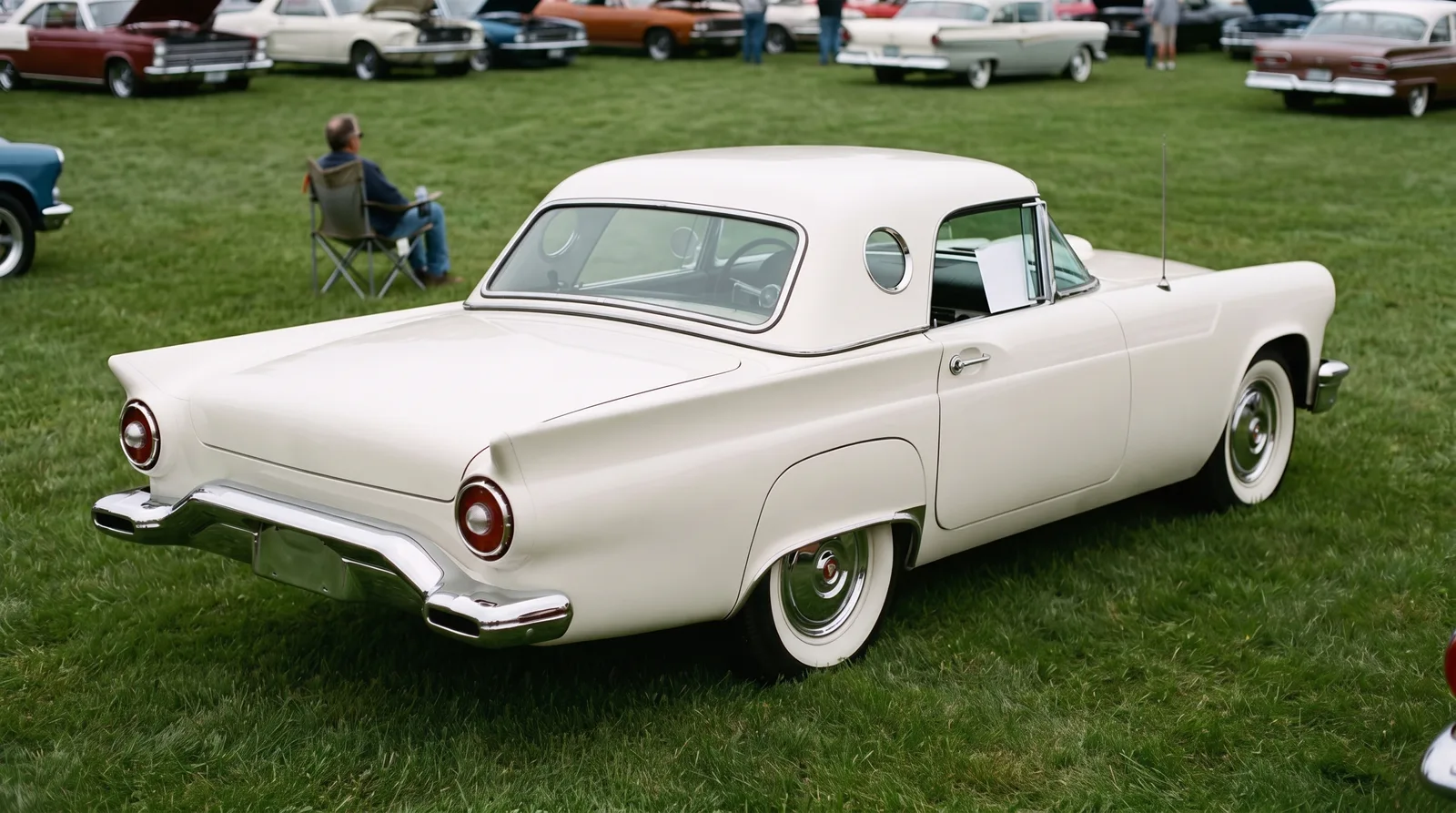
But a show field has its own rules, and a swap meet has different ones. If you want to sell a car at a car show without getting asked to pull the sign, without spending your whole Sunday on people who were never going to buy, and without driving home holding a check you can't trust, you need a plan before you load up. This piece stays on that one channel. If you are still deciding between a private sale, auction or consignment, settle that first, because selling at a show is really a private sale with a crowd around it.
Show field or swap meet corral: know which one you're at
These are two different animals, and people mix them up all the time. A car show is about the cars being looked at. The organizers want a clean field and judges moving down the rows. Plenty of judged shows and club concours don't allow for-sale signs on show cars at all, and some will move you out of a class if they spot one. Cruise nights and cars-and-coffee mornings are looser, but the lot usually belongs to a business that let the club in as a favor, and it may not want car deals on its property.
A swap meet is about trading. The big ones run a car corral, a separate area where the whole point is cars with prices on them. You pay for a space, you park, you sit in a lawn chair next to your car, and the people who walk in are people who came to buy. That changes the conversation. At a show, a stranger who stops and stares is admiring. In a corral, a stranger who stops and stares is shopping.
So read the event before you go. If the flyer doesn't say, call the organizer and ask one plain question: can I put a for-sale sign on my car, and where?
What it costs and what's allowed
The money side is small next to most other ways of selling. Here is how the common venues usually shake out, but every event sets its own rules.
| Venue | For-sale sign | Typical cost to you | Who walks past |
|---|---|---|---|
| Judged show or concours | Often not allowed on the show field | Entry or registration fee | Enthusiasts and judges, few buyers ready that day |
| Club show | Depends on club rules | Registration fee, sometimes membership | Owners who know the model inside and out |
| Cruise night, cars and coffee | Usually tolerated, ask first | Free or a small donation | Locals, browsers, the occasional serious buyer |
| Swap meet car corral | Yes, that's the purpose | Corral space, roughly $50 to $150 per event (Hershey's 2026 corral was listed at $125 a spot), plus admission | People who came with money and a trailer |
The larger corrals usually sell spaces ahead of time, first come, first served, and each one writes its own rules. Typical ones: no selling parts from a corral space, the car and your chairs stay inside the marked space, and no overnight camping. Some meets also limit the corral to cars over a certain age. Read the registration form before you pay, and bring the title in a folder either way, because the first serious buyer is going to ask to see it.
Timing matters too. Spring shows pull in buyers who have been waiting all winter, and the big fall swap meets pull in people trying to buy one more project before the snow. Whether one season actually pays better than the other is its own question, and the details are here.
Getting the car and the sign ready
At a show, your car gets compared to the one parked next to it, all day long, in daylight. So wash it the morning of, wipe the tires, clean the glass inside and out, and empty the trunk of everything except what belongs there. If the car has a known issue, a small oil seep or a gauge that reads wrong, don't hide it under a rag. Somebody will find it.
The sign does more selling than you think. Keep it big enough to read from ten feet and short enough to read in five seconds:
- Year, make, model and engine, written the way the hobby says it
- Asking price, and "OBO" only if you really mean it
- Two or three facts that matter: mileage, documentation, recent major work
- A phone number in large print, plus a stack of cards or slips with the same details for people who don't want to stop and talk
Then put a binder on the passenger seat or on a little stand next to the car. Receipts, photos of the restoration in progress, the window sticker or build sheet if you have one, a recent inspection report. The guy who only stops at cars with a binder is the one with the checkbook.
Working the crowd without giving the car away
Here is the part nobody warns you about: at a show, you are going to talk to a hundred people to find one buyer. Most of them want to tell you about the car their uncle had. Let them, that's part of what we come for. But learn the difference between a story and an inquiry.
Serious buyers ask boring questions. How long have you owned it. Has the frame been off. Does it have a clean title in your name. Can I hear it start cold. When those questions come, give straight answers and offer to start it, but stay with the car. Never hand keys to a stranger at a show, and no test drives off the property. If someone wants to drive it, take their number and set a time to meet at your place or a shop on a weekday.
"A buyer at a show isn't only buying the car. He's buying the person standing next to it. So stand next to it, tell him the truth, and let the car do the rest."
Hector Morales
Price talk on the field goes better when you've decided your floor before you leave the house. Somebody will make you an offer at four in the afternoon, when you're tired and sunburned and thinking about the drive home. That's when people sell too cheap. Write your number on the back of one of your cards and keep it in your pocket.
Closing the deal safely, and what to do if it doesn't sell
The handshake happens on the field. The money should not. A buyer who is serious will understand that a car changes hands at a bank on a business day, not in a parking lot at dusk. A cashier's check handed over on a Saturday can't be confirmed until Monday.
If a buyer wants to hold the car, take a modest deposit and write a short receipt that both of you sign: the car, the agreed price, the deposit amount, the date the balance is due, and what happens to the deposit if the buyer walks. Then finish at the buyer's bank or yours. If the buyer brings a cashier's check, call the issuing bank yourself, using a number you looked up, not one printed on the check. The FTC warns that money showing up in your account doesn't mean a check is good, and a fake can take weeks to come back. Don't accept PayPal or Venmo for the car either, because their purchase protection excludes motor vehicles, and Zelle offers no purchase protection at all. Sign the title only when the funds are truly yours.
Plenty of good cars go home unsold, and that's fine. The show did its work if you came back with a notebook full of names. Call the serious ones within a day or two and send them your photos from the field. If nobody bites, those same photos and that same binder become a listing. Here that's a flat one-time fee starting at $49, no commission, and the listing stays up until the car sells.
Sources and notes
- Old Cars Weekly: AACA Eastern Fall Meet in Hershey and its car corral
- Merrick Auto Museum: history of the Hershey Fall Meet, first held in 1955
- 2026 Hershey Eastern Fall Meet listing with car corral fee
- RM Auctions Auburn car corral registration form and rules
- FTC: how to spot, avoid and report fake check scams
Related Reading
Have a
Classic Car
for Sale?
Reach thousands of serious classic car collectors across the US.
Sell It Here →
Are You a Classic Car Dealer?
List your full inventory and connect with targeted classic car buyers.
Join as a Dealer →
#Car Shows
#private sale
#swap meets
#sell a classic car
#classic car buyers
#car corral
#for sale sign

About the author
Hector Morales
East LA lowrider builder and lifelong member of the car-club scene, writing lowrider culture, hydraulics and custom paint from the inside.
Comments (1)
S
Shannon Riley
15 hours ago
Question for y'all who've done the Hershey corral: is that $125 per day or for the whole meet? Thinking about taking Dad's '77 L48 up next October.