
Your first restoration should not be a rare car. I'll say that plainly because it saves people a lot of grief. The instinct is to chase the dream car, the numbers-matching big-block, the rare option code. Then reality shows up in the form of parts you can't find, panels nobody reproduces, and a bill that dwarfs what the finished car is worth. A good first project is a car that teaches you the craft without punishing every mistake, and there are specific muscle cars that fit that description better than others.
Restoration & Tech
6 min read
Best Muscle Cars for a First Restoration
The best muscle cars for a first restoration have cheap parts, big communities, and forgiving mechanicals. Here's where a beginner should start.
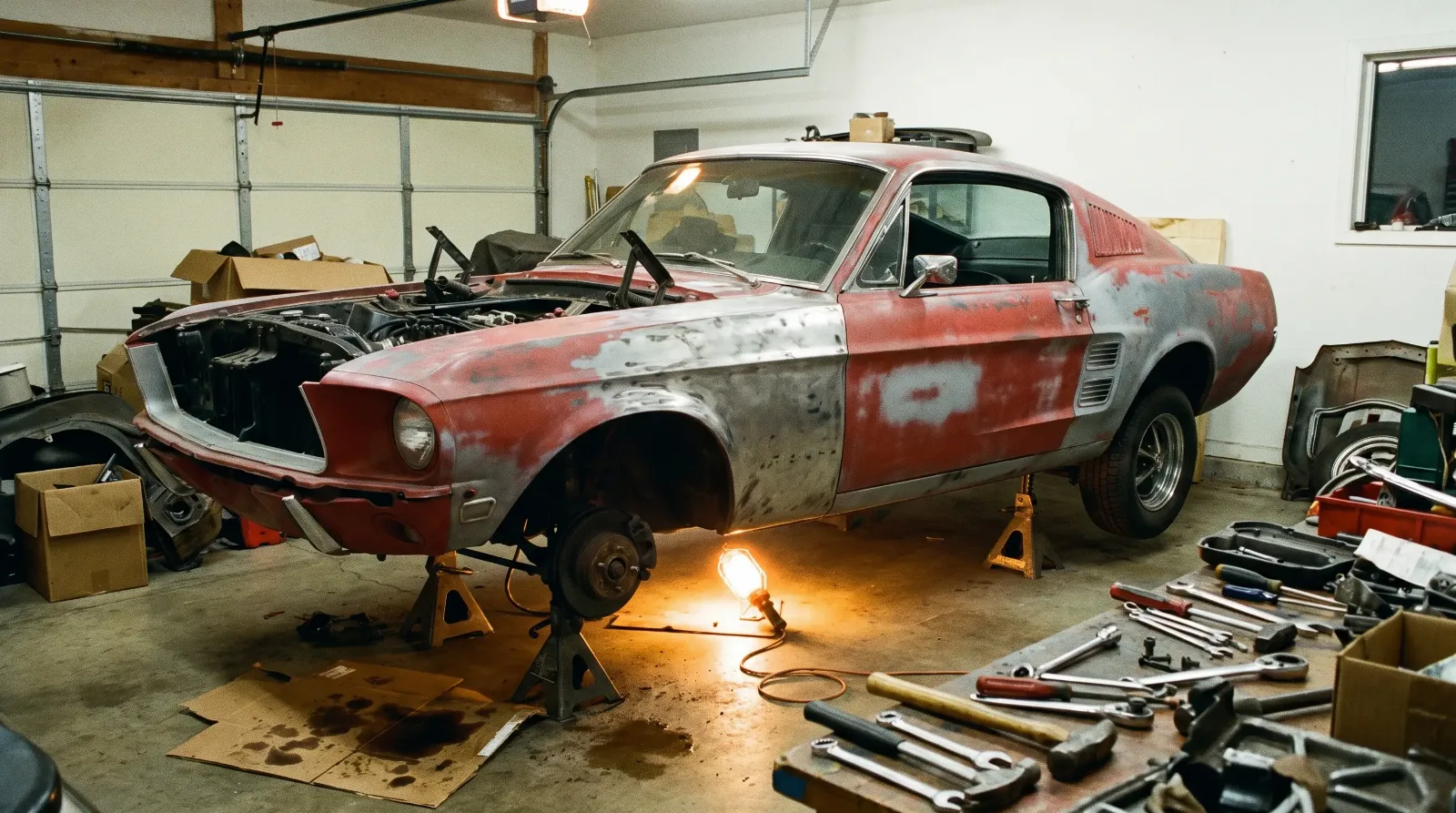
What makes a car forgiving for a beginner comes down to a few things. Parts availability, a big owner community, straightforward mechanicals, and a market where a solid driver is worth enough to make the effort make sense. Here's where I'd point a first-timer, and why.
What makes a car beginner-friendly
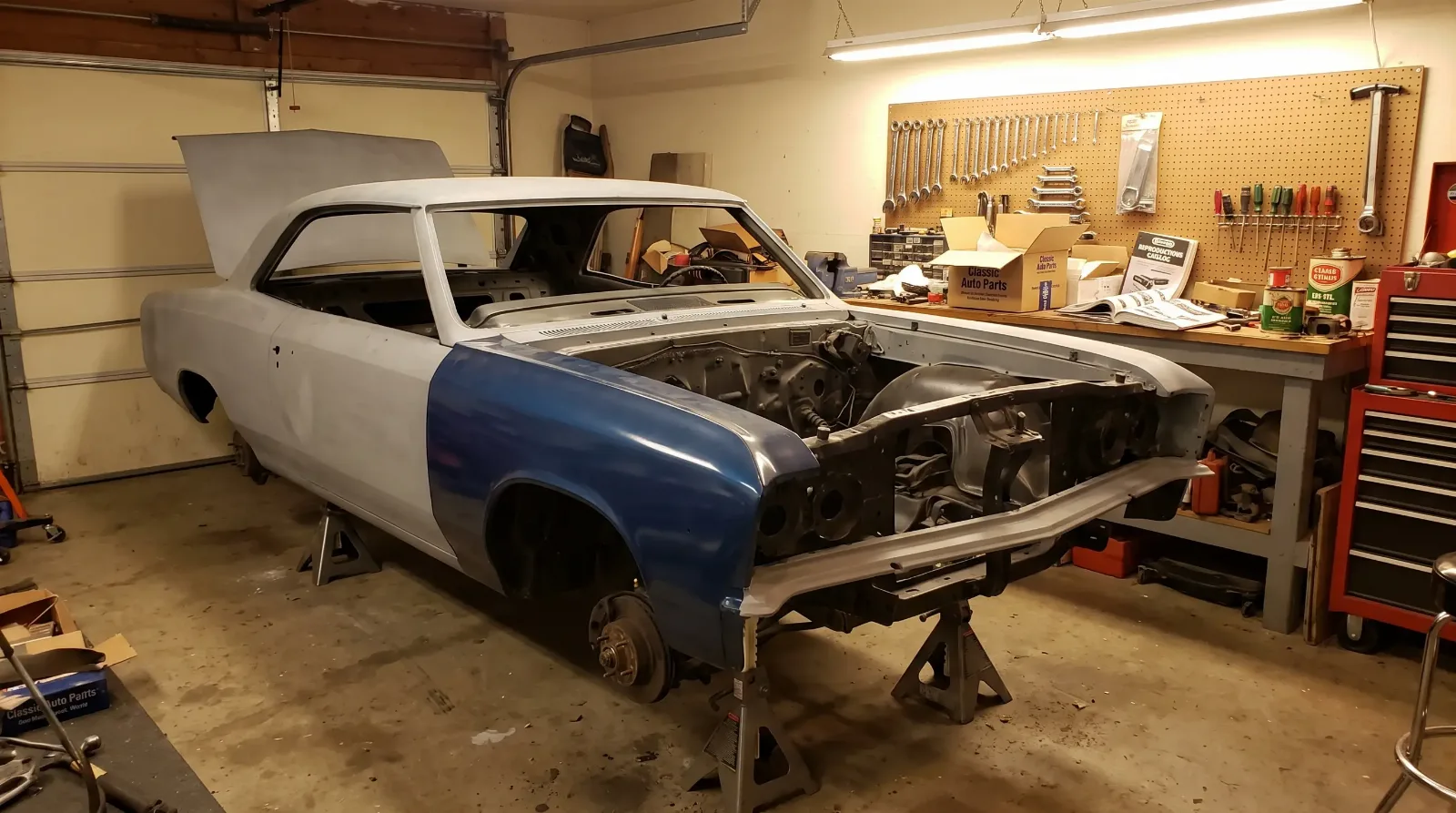
Before we get to specific cars, understand the traits you're looking for. The single most important one is reproduction parts support. On a popular platform you can order sheet metal, weatherstrip, interior, trim, and mechanical parts from a catalog and have them show up at your door. On an oddball, you're hunting swap meets for two years to find one bracket. That difference decides whether the project gets finished.
The second is community. A car with a big, active owner base means forums full of people who've solved the exact problem you're staring at, plus specialists who know the model cold. The third is simplicity. Points ignition, a carburetor, body-on-frame or straightforward unibody construction. These are cars you can actually work on in a home garage with hand tools, which is the whole point of a first project.
| Platform | Parts support | Rough driver-project cost | Why it's forgiving |
|---|---|---|---|
| 1967-1969 Camaro / Firebird | Excellent | $15,000 to $35,000 | Everything is reproduced, huge community |
| 1964-1973 Mustang | Excellent | $12,000 to $30,000 | Best parts support of any muscle car |
| 1968-1972 Chevelle / A-body | Very good | $18,000 to $40,000 | Strong repro, strong resale |
| 1970-1974 Challenger / Cuda | Good, pricier | $25,000 to $60,000+ | Good repro but higher entry cost |
Those cost ranges are broad and assume a solid, rust-manageable starting car taken to driver-quality. A basket case or a concours ambition blows right past them. Treat the numbers as a starting point, not a quote.
Where to start: the safe bets
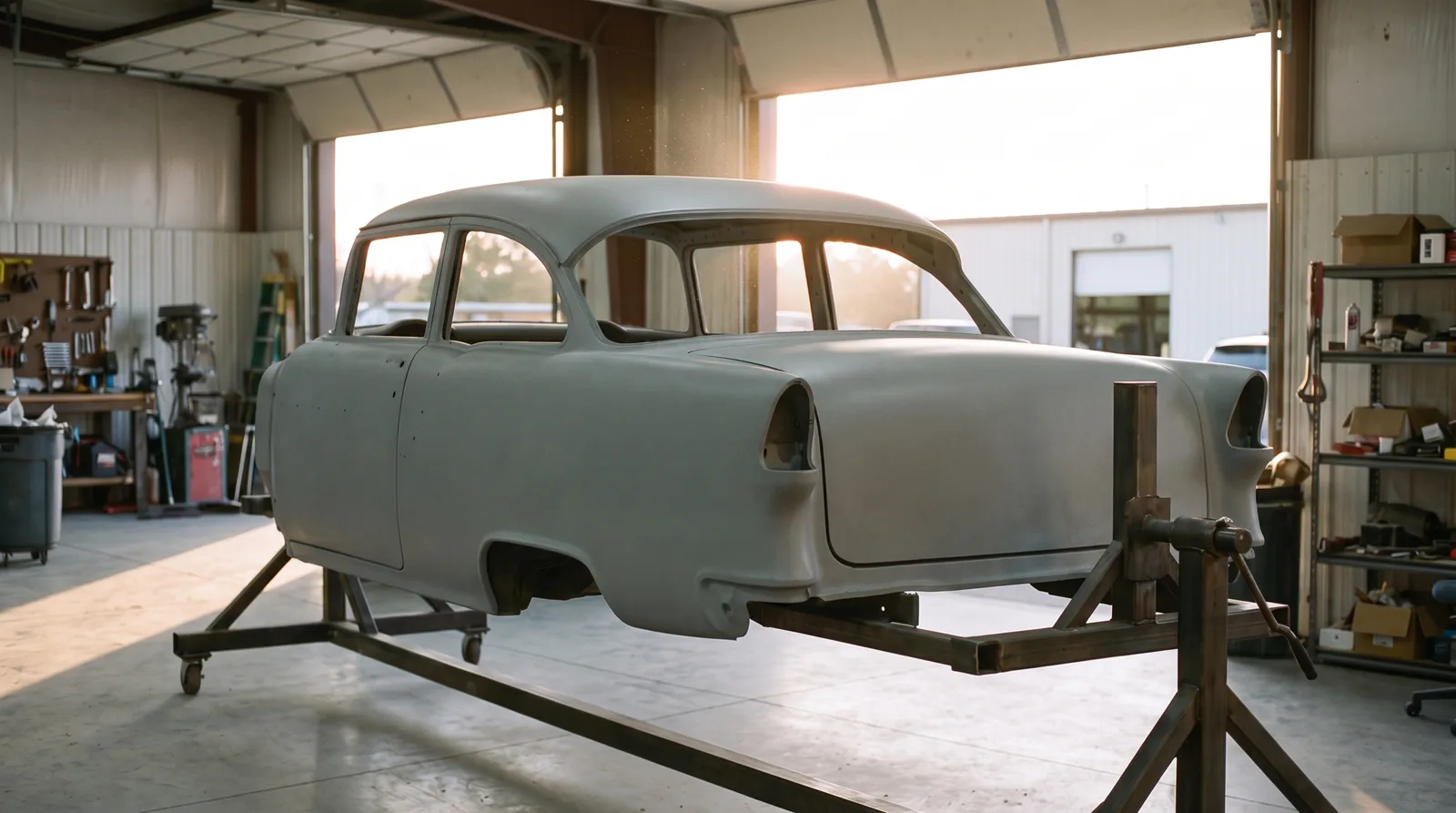
If I had to hand a beginner one car, it'd be an early Mustang or a first-generation Camaro. The Mustang has arguably the deepest parts catalog of anything on wheels. You can build an entire car from reproduction parts, the community is enormous, and a running project can be had without a fortune. The mechanicals are simple, the body construction is manageable, and mistakes are cheap to fix because the parts are cheap and available.
The first-gen Camaro and its Firebird cousin are right there too. Every panel, every piece of trim, every interior component is reproduced. Resale on a nicely done driver is strong enough to justify the work. The GM A-body cars, the Chevelle and its siblings, are a close third, with good parts support and a market that rewards a clean example. Any of these lets you learn on a car where the whole world has already solved the problems you'll hit.
Cars to avoid the first time
Steer clear of the rare stuff on your first go. Real Hemi cars, documented COPO Camaros, Boss 429 Mustangs, low-production option combinations. The parts are scarce and expensive, the correctness standard is brutal, and the cost of a mistake on a six-figure car is a nightmare. Learn on something you can afford to get wrong.
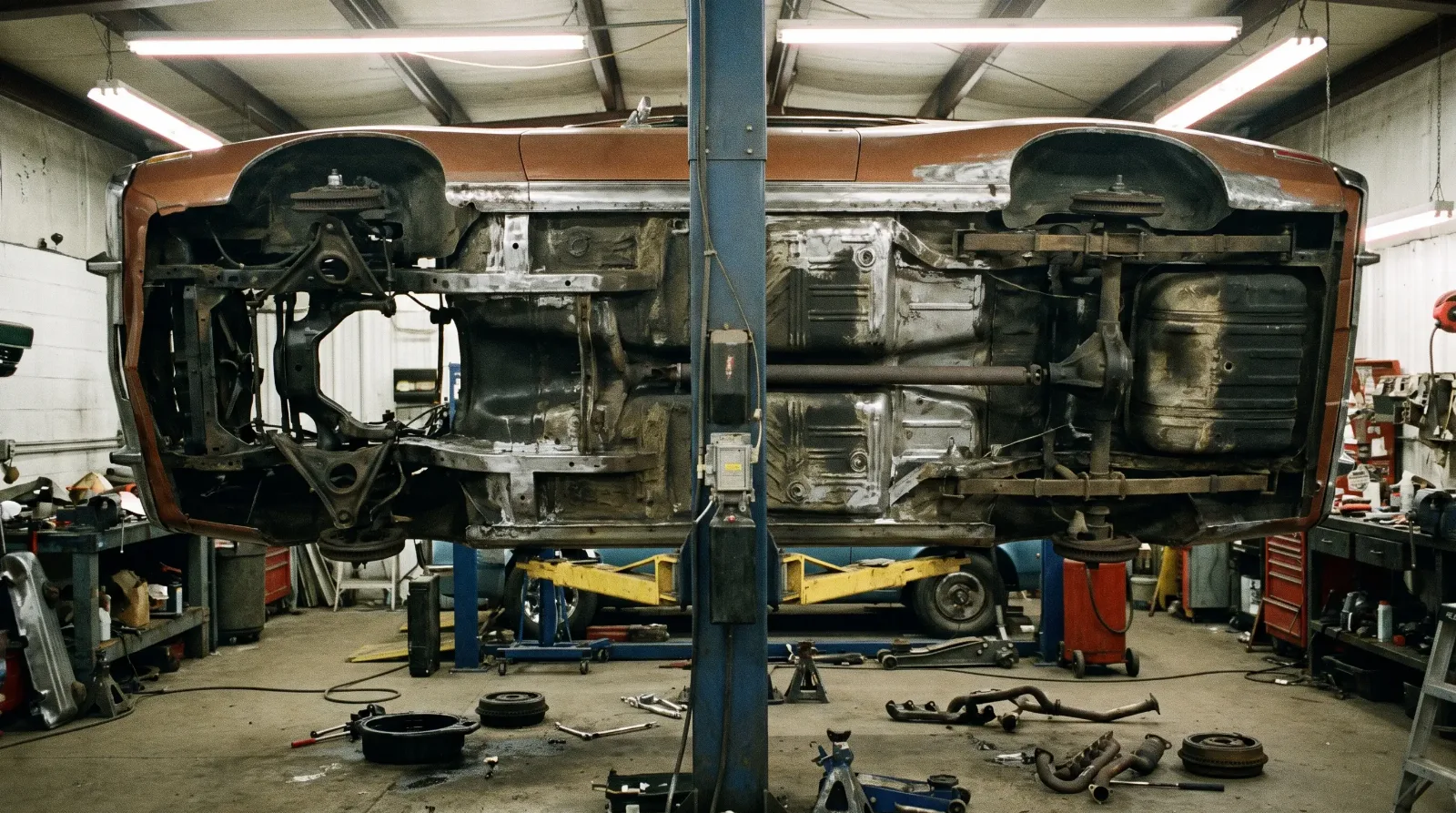
Also be cautious with any car that's too far gone, regardless of how cheap it looks. A rust-riddled shell that needs floors, rockers, quarters, and frame repair is not a bargain. It's a metalworking education you're not ready for, and the finished car will still be worth less than a solid starting example would have cost you to restore. On a first project, condition beats price every time. If you're shopping, take your time and check out muscle cars up for grabs until you find one that's solid rather than just cheap.
🔧 Inspection Priorities
- Frame and floor rot. Structural rust is the most expensive thing to fix and the hardest for a beginner. A solid structure is worth paying up for.
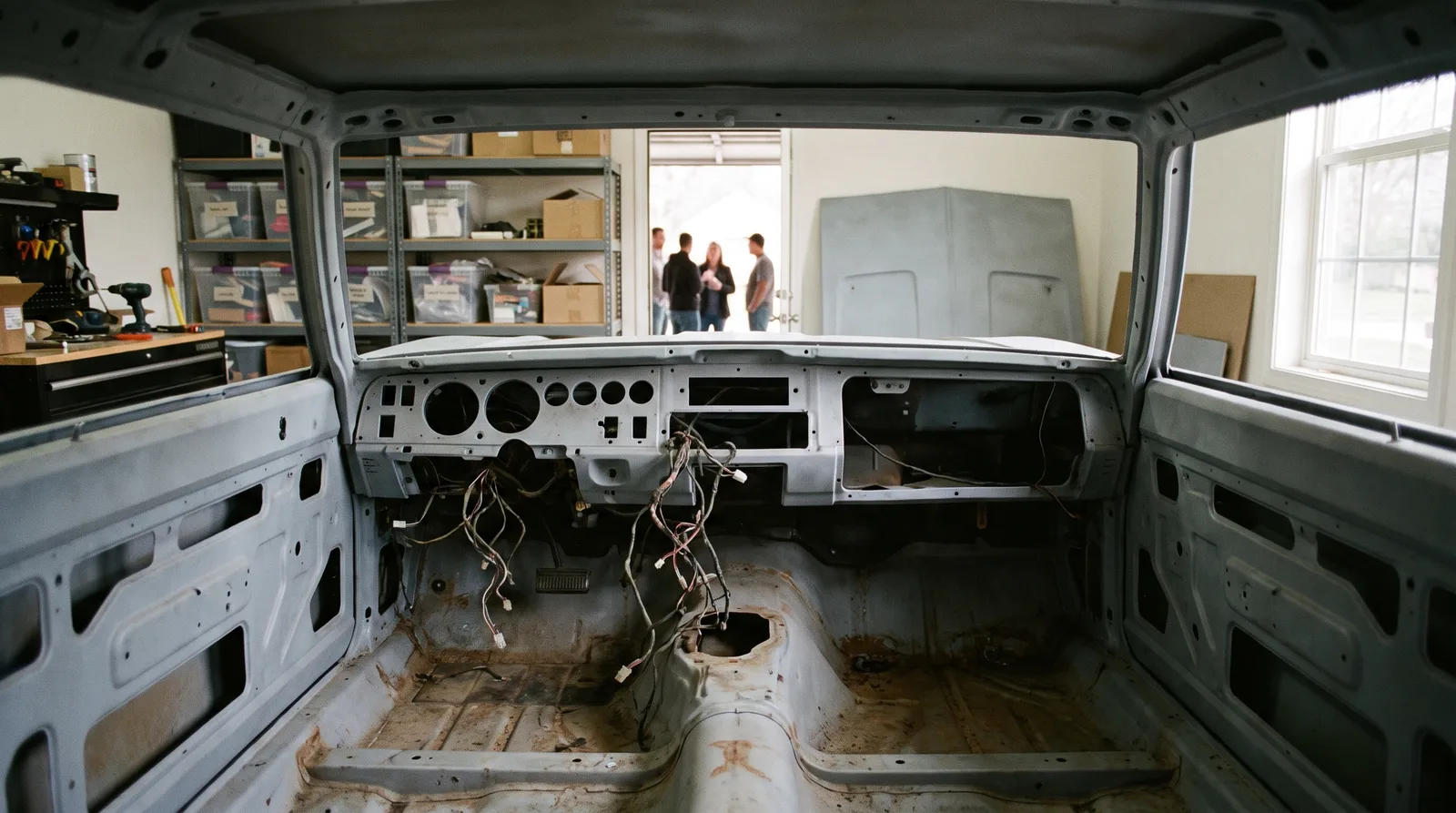
- Completeness. A car that's all there, even if worn, beats a cheaper one missing trim, glass, and interior pieces you'll spend years chasing.
- Matching or correct drivetrain. Not essential on a driver, but a running, correct engine saves you a major expense and headache.
- Previous bad repairs. Bondo over rust and hack bodywork cost more to undo than starting fresh. Probe with a magnet.
Setting yourself up to finish
The best first-restoration car in the world won't help if you set the project up to fail. Buy the most complete, most solid car your budget allows, even if it means a less exciting model or a plainer engine. A finished driver is worth infinitely more than an ambitious project that stalls in a thousand boxes. Most first restorations that die do so because the owner bit off more car than they could chew.
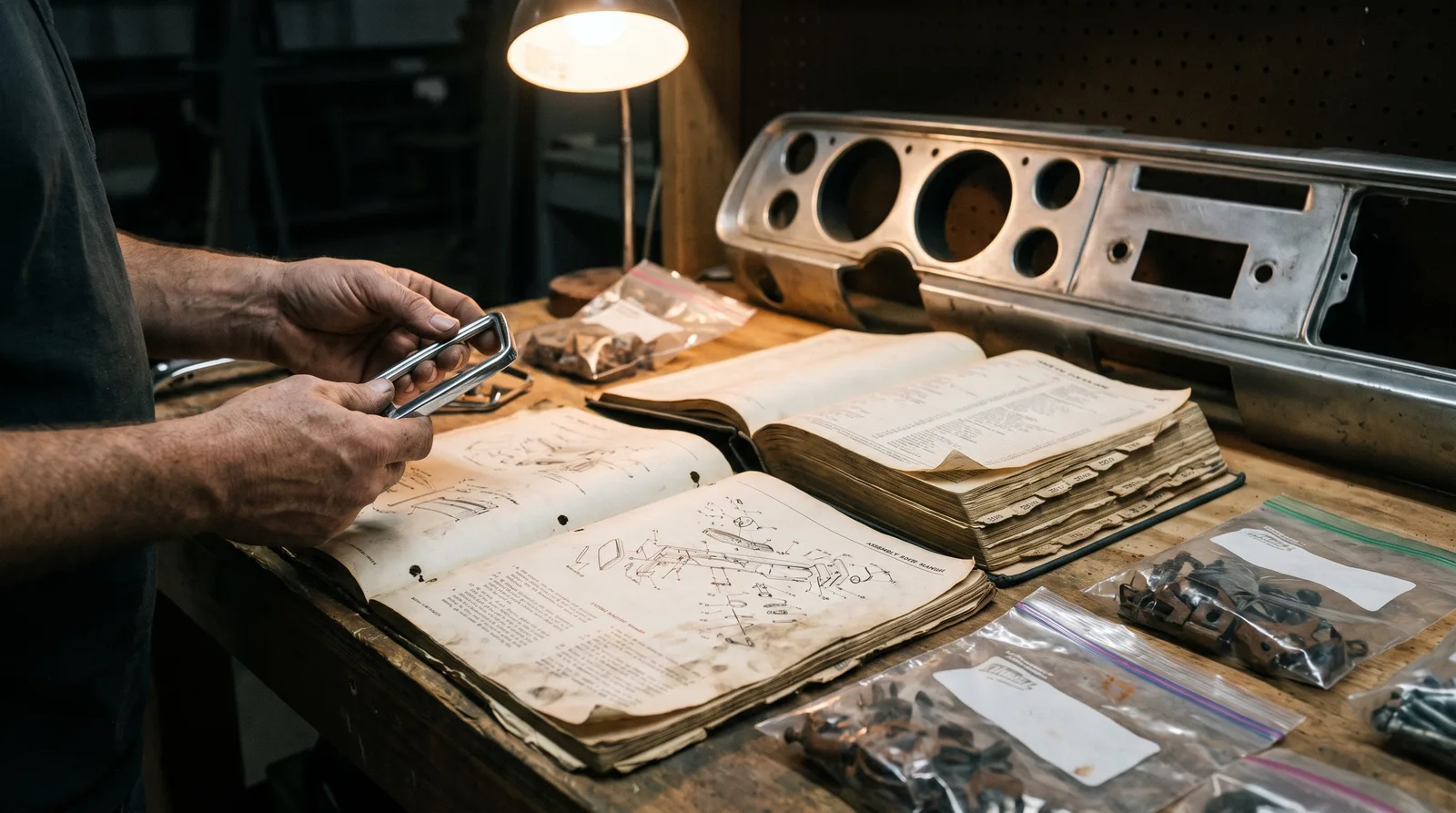
Go in knowing the pitfalls before you start, because the mistakes on a first project are predictable and mostly avoidable. Underestimating cost, disassembling faster than you can reassemble, losing track of parts. You can read the full story on those specifically, and it's worth doing before you turn a single bolt. The car choice is just the first decision in a longer process, and there's more on muscle car restoration covering budget, parts, and the work itself.
"Everybody wants their first car to be the rare one. Do yourself a favor and make it the common one. Learn to weld a floor pan on a car where the pan costs a hundred bucks, not on a Hemi car where every mistake has four zeros behind it. The dream car can wait until you know what you're doing."
Mike Sullivan
Pick a well-supported platform, buy the solid example, and give yourself room to learn on a car that forgives. Do that and your first restoration teaches you the skills for the second one, which is where you go get the car you actually dreamed about. Start with the rare car and there's a good chance there never is a second project at all.
Related Reading
Have a
Classic Car
for Sale?
Reach thousands of serious classic car collectors across the US.
Sell It Here →
Are You a Classic Car Dealer?
List your full inventory and connect with targeted classic car buyers.
Join as a Dealer →

About the author
Mike Sullivan
Detroit-area muscle car enthusiast and restoration specialist with three decades of hands-on experience working on American iron.
More in Restoration & Tech
Comments
Be the first to comment on this article.