
People ask me for the best paint like they are asking for the best tire. The honest answer is that it depends on the car, the owner, and what you want to see in the driveway ten years from now. Still, I can narrow it down, and I will tell you which way I lean when somebody puts a check in my hand.
Restoration & Tech
7 min read
Best Paint for a Classic Car Restoration
Which paint is best for a classic car restoration? A practical look at urethane, enamel and lacquer, costs, and how to choose for your car.
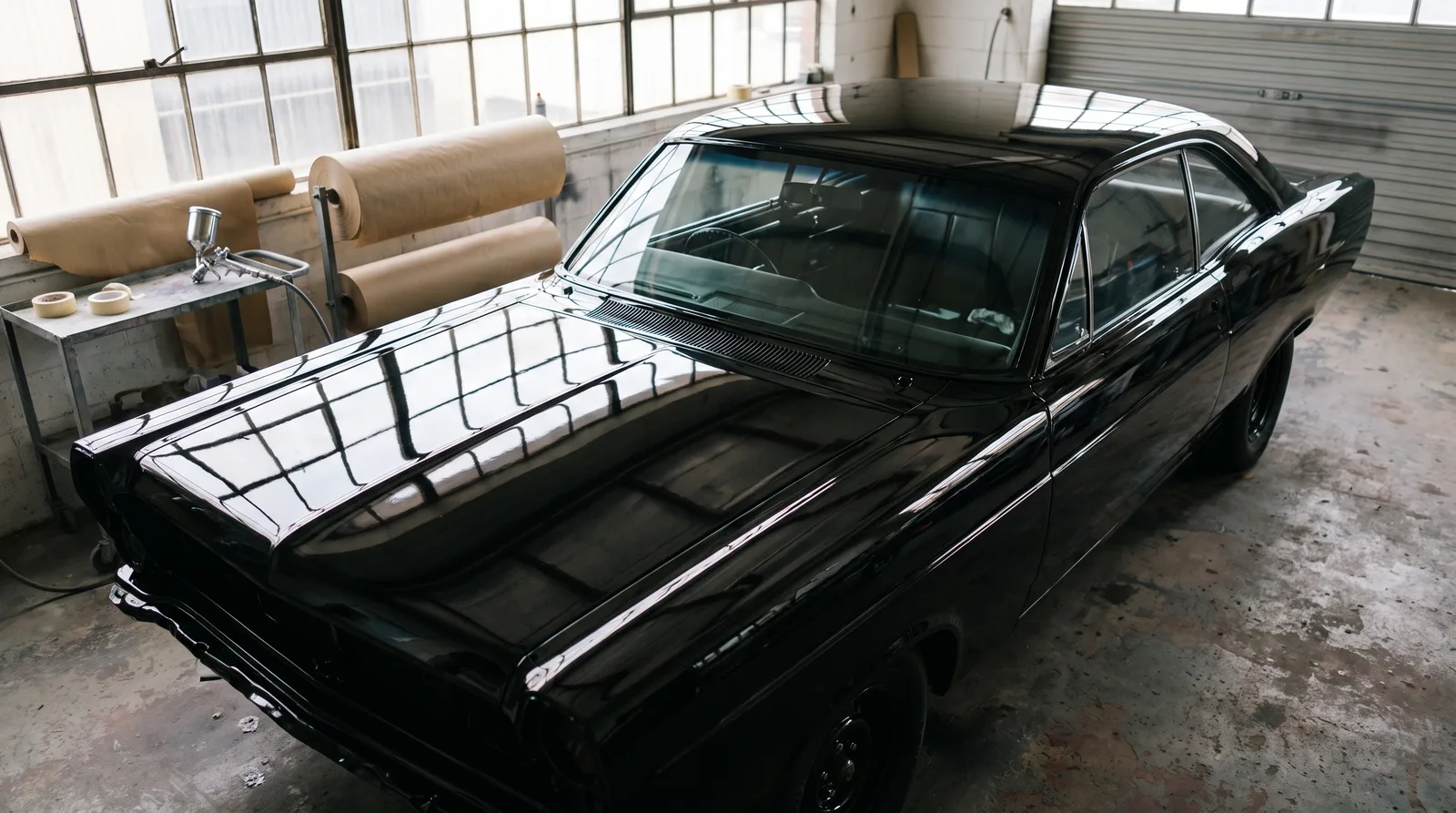
Paint is one line in a long job. For the full scope, including prep, see classic car paint and bodywork.
What "best" should mean for a classic
Before you shop, decide what you are measuring. For most owners, the best paint is the one that gives you the right look for the car, holds its shine under real driving, resists chips and fuel, and can be repaired when something goes wrong. A concours owner adds a fifth test: does it match the original finish?
Cost matters too, but be careful about saving on paint. The material is often a small share of the bill, while labor makes up the rest. Skimping on the can rarely saves much and can cost a lot later.
The main choices
| Paint system | Best for | Main trade-off |
|---|---|---|
| Urethane basecoat/clearcoat | Drivers, metallics, pearls, candy | Most steps and materials, but the best gloss retention and easiest to polish and repair |
| Single-stage urethane | Solid colors, period look, budget | Fewer steps and usually lower material cost, but less depth on metallics and pearls |
| Acrylic enamel with hardener | Simple solid color, lower cost | Simple and affordable, but a period-style finish that is less durable than urethane |
| Acrylic lacquer | Original-style finish where local rules still allow it | True lacquer is largely obsolete, hard to find, and restricted by emissions rules in many areas |
Material prices swing by brand, color, and quantity. Reds, yellows, and pearls typically cost more than white or black, and a base and clear system uses more material than a single stage. Buying from a paint supplier who matches your color, rather than from a generic mix, also affects the bill.
Our pick for most classic restorations
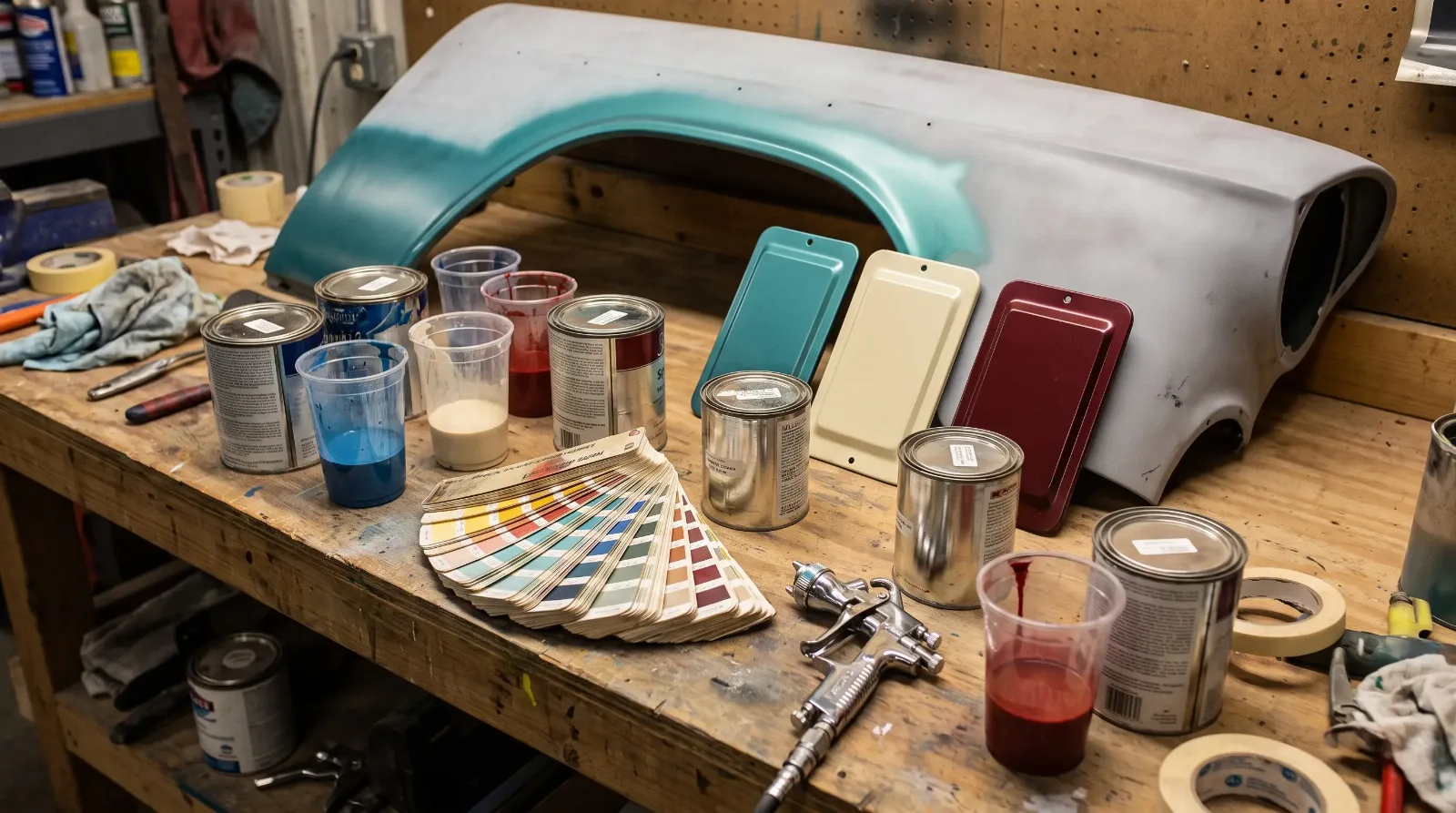
For most cars that will be driven, a quality urethane system is the best all-around paint. A urethane basecoat with a urethane clear gives you durability, UV protection, and a finish that polishes and repairs well. For a solid color car with a period look, a single-stage urethane gets you close to original gloss for less money and effort.
Choose a reputable automotive paint line, not a hardware store product, and stay inside one manufacturer's system for primer, base, clear, reducer, and hardener. Mixing products from different lines is a common reason for lifting, cracking, and dull spots. A good paint distributor can tell you which line the local shops trust.
When another choice makes sense
- Judged original restoration. An enamel or lacquer-style finish that matches the factory look can matter if your club judges paint type, though true lacquer has largely been phased out. Ask the club and your painter before you decide.
- Custom work. Candy, flake, and pearl colors want a basecoat with a clear.
- Tight budget. A good enamel with hardener, applied over solid prep, beats an expensive paint over bad bodywork.
- Daily driver. A durable urethane clear, and you can stop worrying.
"I have never seen a paint job fail because somebody bought too good a primer. I have seen plenty fail because the metal under it was not ready."
Hector Morales
What a quality job really costs
Most of the money in a restoration repaint goes to labor. Shop pricing in 2026 generally runs in tiers: a driver respray with minimal prep is about $2,000 to $7,500, a quality driver job about $10,000 to $20,000, a full bare-metal repaint about $20,000 to $40,000, and show or concours work about $40,000 to $80,000 and up. Custom candy or flake finishes start around $25,000 and often cost far more. Material is only part of it, so a premium paint adds a modest amount to a bill that is already mostly hours, often several hundred hours of prep and paint on a quality job.
When you collect quotes, ask what is included. Does the price cover disassembly of trim and glass, jambs and underside, color sanding and buffing, and a written warranty? Two quotes that look far apart are often selling different amounts of work. Ask each shop to show you finished cars under good light, and check the edges, the door gaps, and the corners where sloppy work shows first.
Finish quality and long-term care
Even the best paint needs care to stay that way. Let a fresh finish cure for the time the maker specifies before you wax it, which is commonly several weeks to a few months, so follow your shop's paint system. Wash by hand with a gentle soap, dry with clean microfiber, and keep the car out of the harshest sun when you can. Wax or a ceramic coating adds a protective layer on top of a clear finish, and garage storage with a breathable cover helps more than anything you can buy in a bottle.
Chips will happen on a driver. Touch them up early with matched paint so moisture does not creep under the film, and keep a small bottle of your color. A quality system and routine upkeep will take you through years of use before the finish needs more than a polish.
One more habit worth keeping: buy all the material for the job in one batch, from one lot of each product. Color can shift slightly between batches, and a short run of paint is a miserable thing to discover halfway through a door. Add a little extra for repairs, since a leftover pint is cheap insurance against a future scratch.
Before you order paint
Three steps come first. Confirm the original color, decide who will spray it, and ask the painter what product line they prefer. Many shops will not warranty paint you bring in, so the best paint is often the one your painter knows how to lay down well.
The first step is to find the paint code, since the code tells your supplier exactly which formula to mix. Without it, you are guessing from a faded chip.
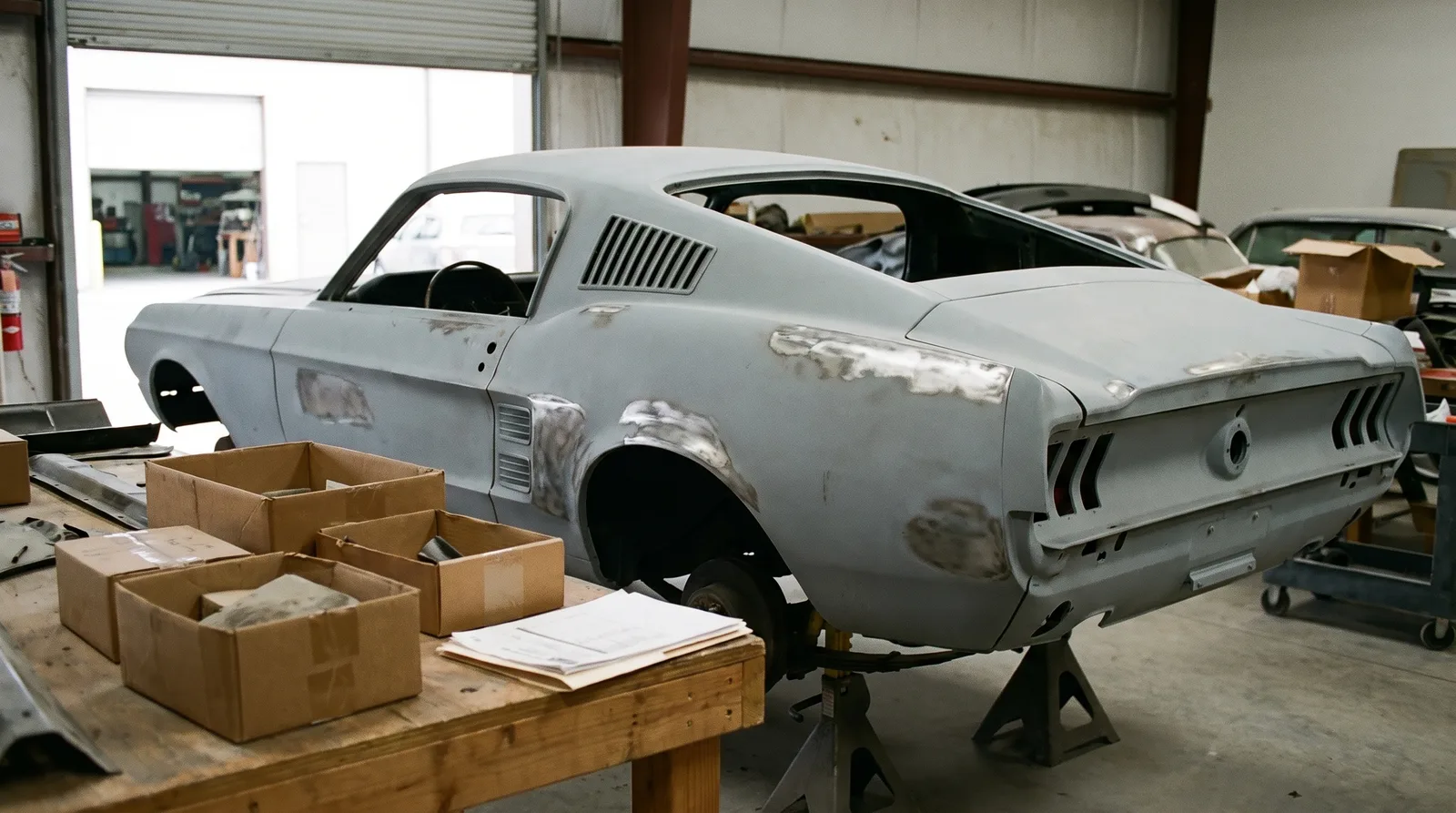
Finally, remember that prep decides the result. A great paint on a flat, rust-free, properly primed body looks outstanding, and a premium paint on a wavy body looks cheap. Put your budget in the order the car needs it: metal, filler, primer, block sanding, then color. When those are done right, nearly any good automotive system will serve you well.
Sources and notes
- The Coating Store: advantages of basecoat/clearcoat, gloss retention, effect colors, and the slightly higher material cost versus single stage
- Wikipedia: Automotive paint, lacquer emissions and the move to enamels and basecoat/clearcoat systems
- Wikipedia: Lacquer, DuPont Duco nitrocellulose lacquer on 1923 Oakland and its later replacement by polyurethane coatings
- Wikipedia: Clearcoat, the clear layer's role in UV and abrasion resistance
- Sherwin-Williams Automotive Finishes, refinish paint systems sold with matching undercoats and clear coats
Related Reading

About the author
Hector Morales
East LA lowrider builder and lifelong member of the car-club scene, writing lowrider culture, hydraulics and custom paint from the inside.
More in Restoration & Tech
Comments
Be the first to comment on this article.