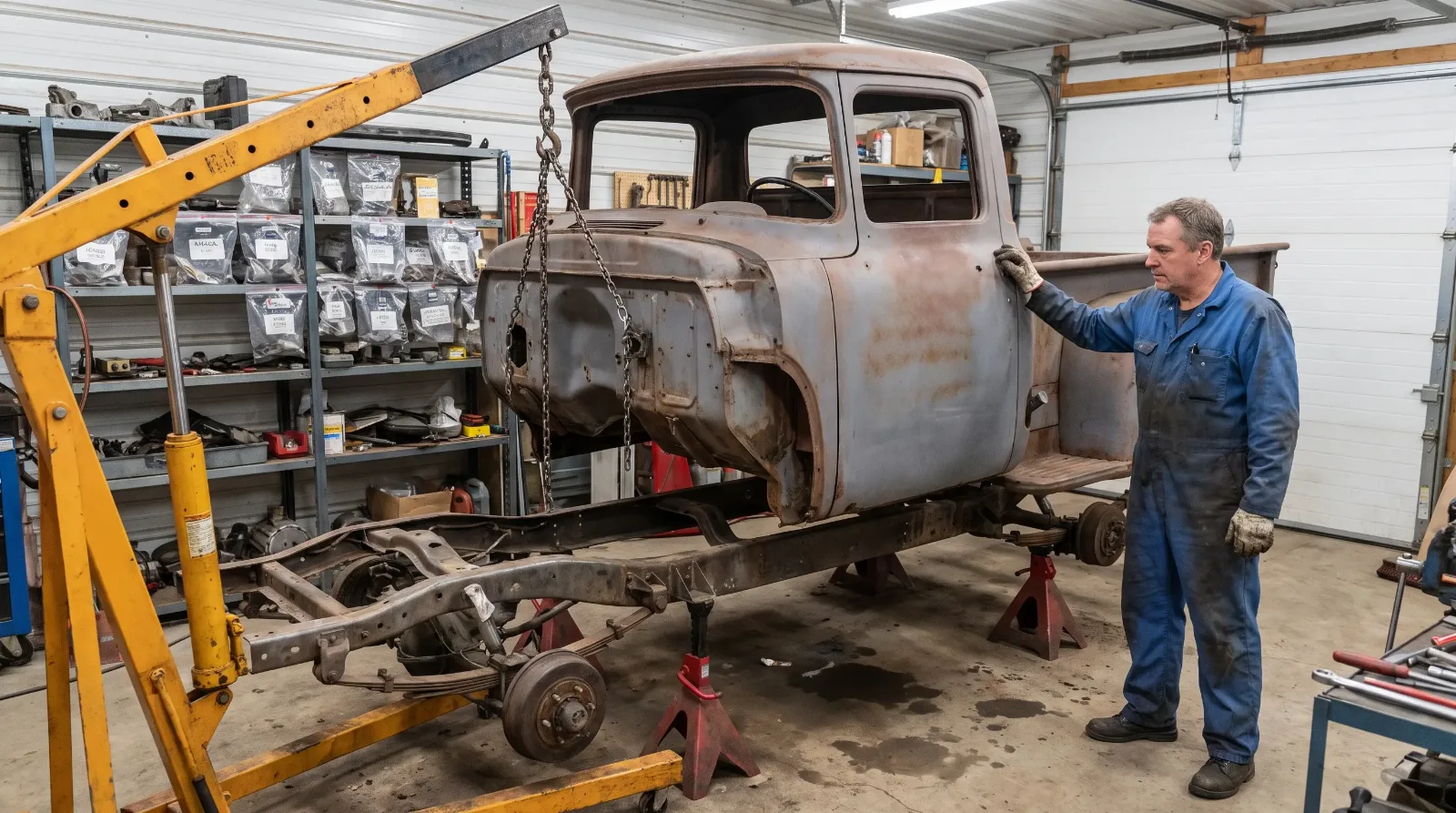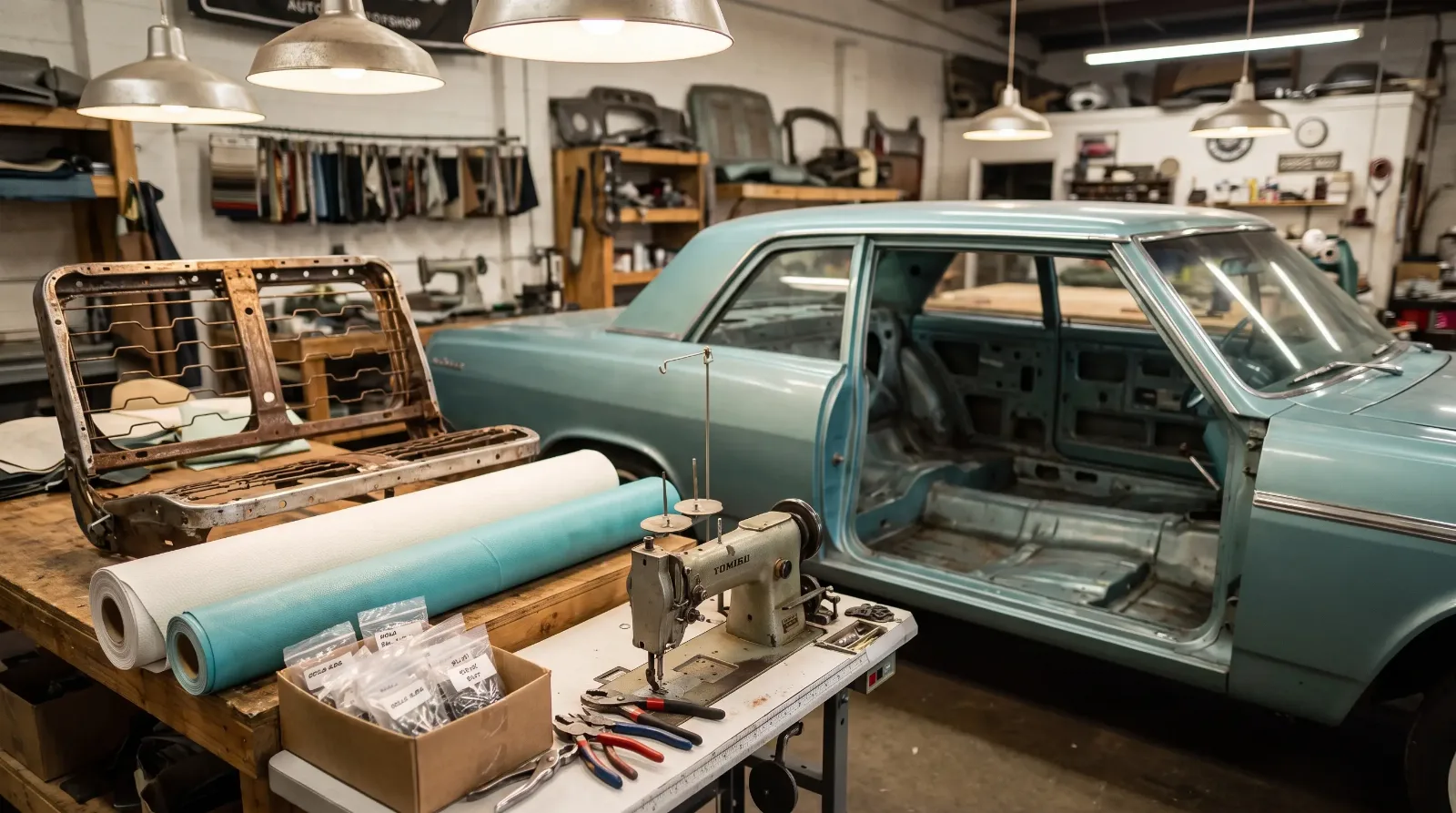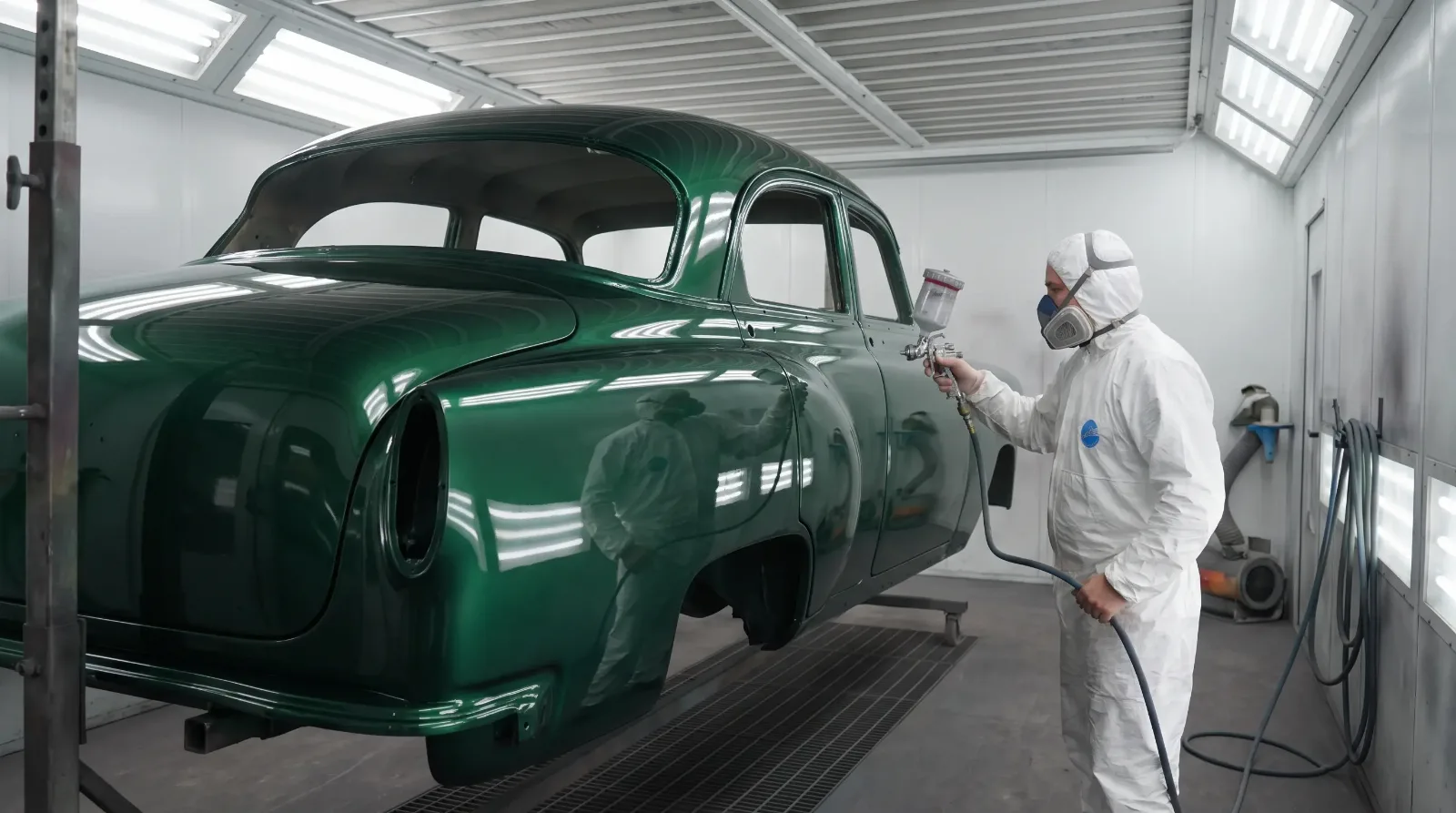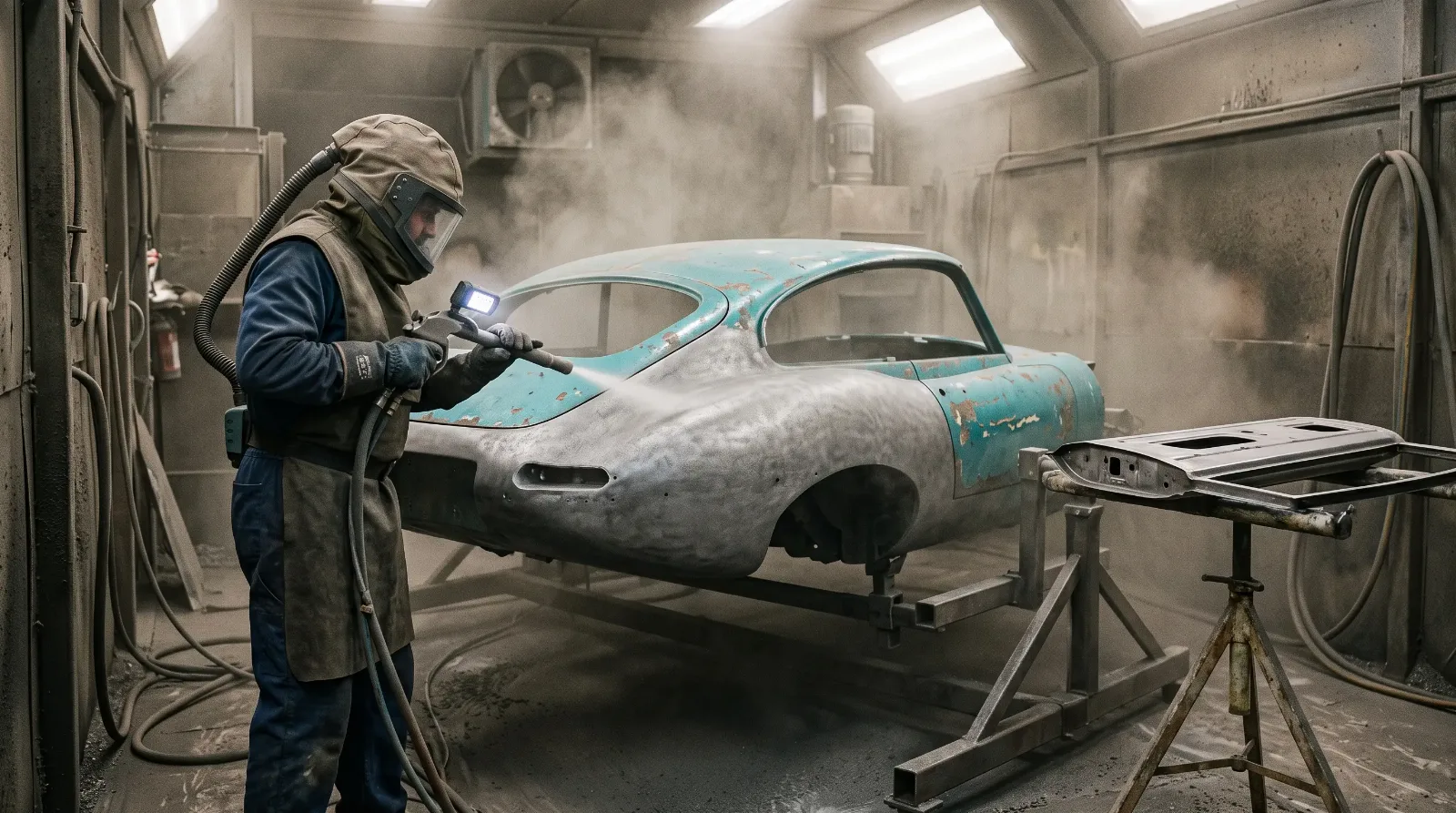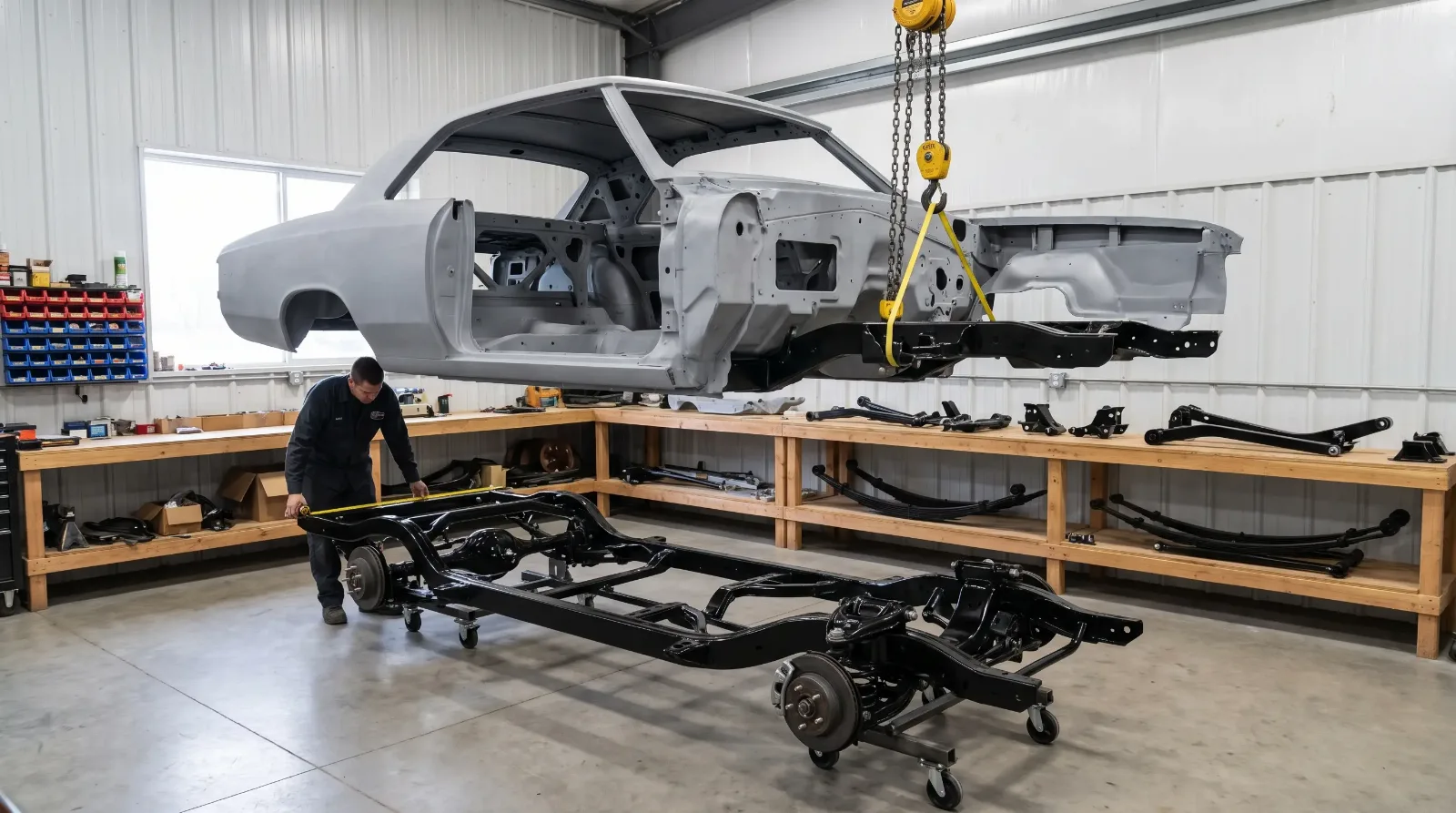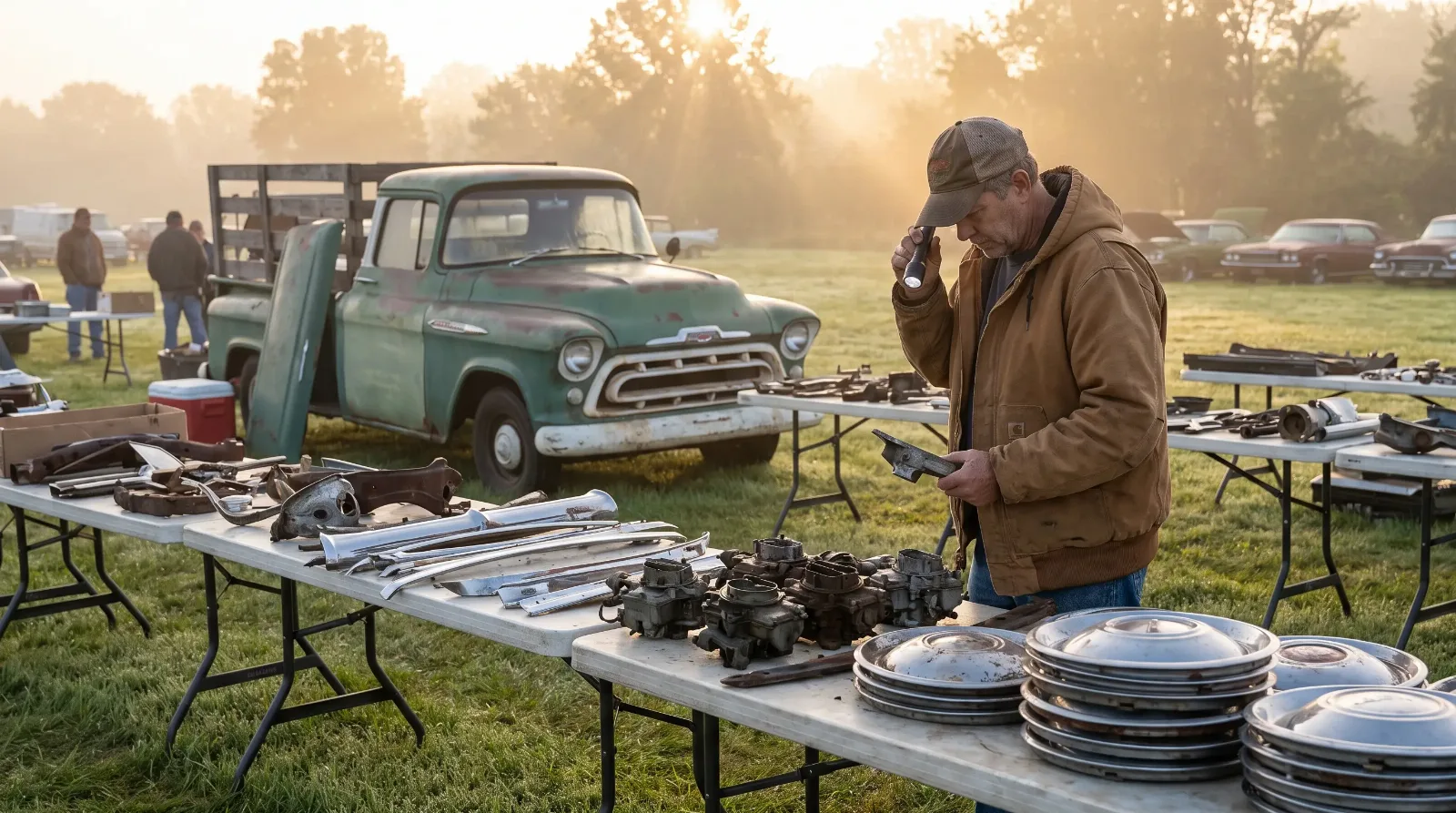
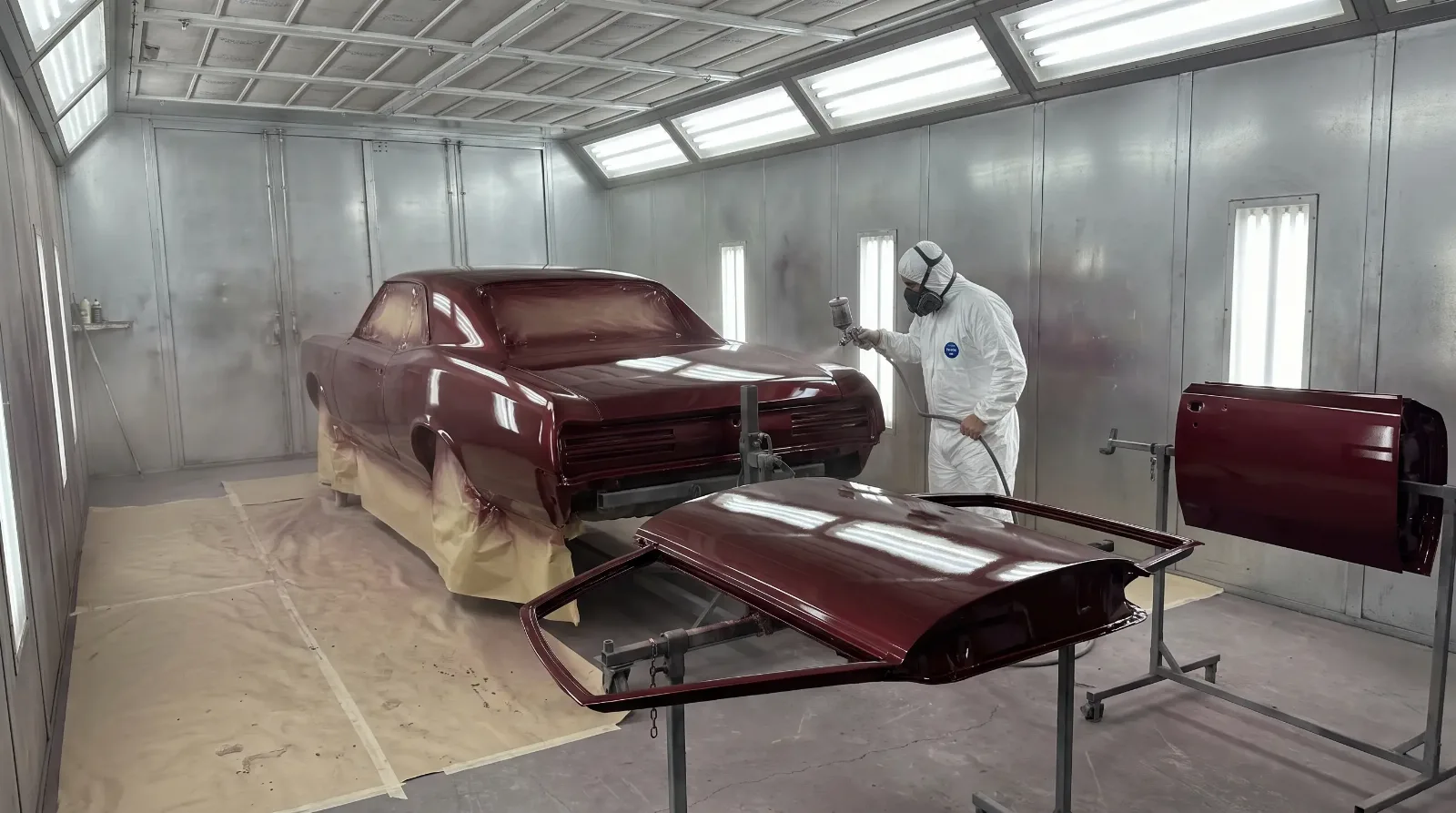
Everybody falls in love with the color first. You see a car rolling slow down the boulevard on a Sunday, the light sliding across the quarter panel like water, and you tell yourself that is the car you want. What you are really looking at, though, is the steel underneath, and the hundreds of hours somebody spent making that steel straight before a single drop of color went on. A classic car paint job is maybe a third paint and two thirds everything that happens before the gun ever comes out.
This is the honest version of how paint and bodywork on an old car goes: how rust gets found and cut out, when a panel gets repaired and when it gets replaced, what the different levels of paint really cost in 2026, and how to talk to a shop so the job you pay for is the job you get.
Why the paint job is really a bodywork job
Paint does not hide anything. People think it does, and that is where the trouble starts. A fresh coat of single-stage enamel over a dented door will show every wave the minute the sun hits it at an angle.
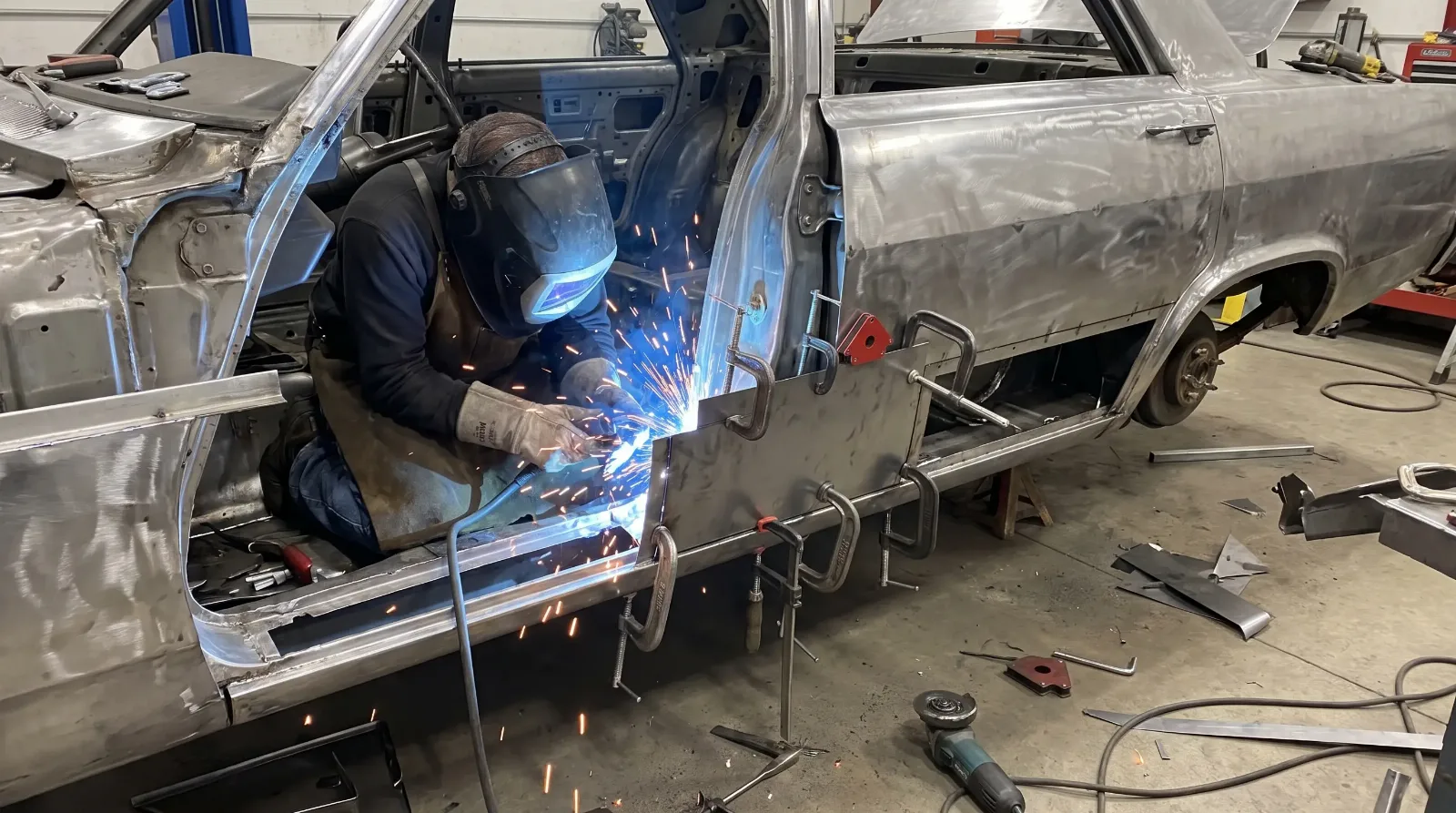
So a good painter spends most of the job on the body. Strip the old finish, find the rust, cut it out, weld in new metal, straighten the panels, get the gaps right, then block sand primer until the panels are true. On a higher-quality job several hundred hours of body prep and paint is normal, and the large majority of those hours go into prep, with color and clear being the short, exciting part at the end. When a quote seems cheap, it is almost always because the prep line is thin.
Before you sign anything with one of the shops that do paint and body, ask them to break the estimate into metal work, body and prep, paint materials, and paint and polish labor. A shop that will not split those numbers out is usually hiding a short prep stage.
Finding the rust you cannot see yet
Rust on these cars is a story told from the inside out. Steel bodies from the fifties through the seventies had very little factory corrosion protection compared with anything built today. Water got trapped in seams, in the bottoms of doors, behind trim, under the vinyl top, and it sat there for decades. By the time a bubble shows through the paint, the metal behind it has usually been going for years.
The places to check are mostly the same across American cars of the era:
- Lower quarter panels, especially just behind the rear wheel openings, where mud and salt packed in.
- Rocker panels and the inner rockers, which rust from the inside where you cannot see them.
- Trunk floor and the drop-offs on each side, often from leaking rear window or trunk seals.
- Floor pans under the carpet, especially at the front footwells where heater cores and cowl leaks dripped.
- The lower windshield channel and rear window channel, a nightmare on cars that wore a vinyl top.
- Door bottoms and the lower front fenders, where drain holes plugged with dirt.
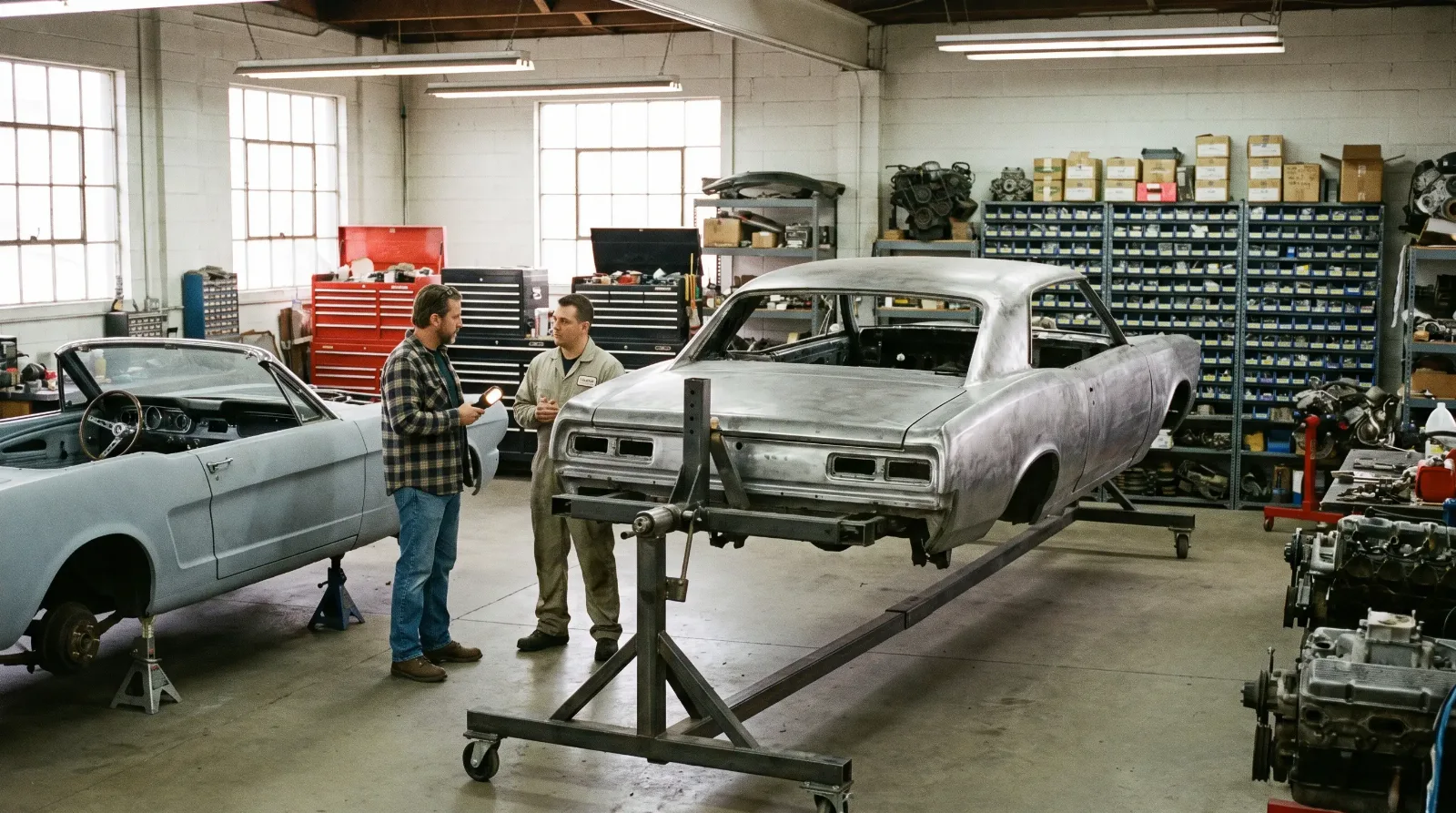
The only way to know for sure is to strip the car. Media blasting or chemical dipping takes the body to bare metal and shows you everything at once, including the old repairs somebody covered with filler. Blasting an empty body shell typically runs about $1,500 to $5,000 depending on the size of the car, the media and how much masking is needed, with small cars at the low end and big sedans and trucks at the top. After that, every estimate becomes a real number instead of a guess.
🔧 Inspection Priorities
- Structural rust first. Frame rails, torque boxes, cowl and inner rockers decide whether the car is a project or a parts donor. Repairs here can run into five figures on their own.
- Old filler hiding old damage. A magnet that does not stick, or a panel that sounds dead when you tap it, means thick filler. Under it there may be a pulled dent or a rusted hole patched with screen.
- Panel gaps and alignment. Uneven gaps can mean a bent frame or a collision repair done badly. Fix alignment before any paint, never after.
- Surface rust on outer skins. Annoying but usually the cheapest problem on the list once the structure is sound.
Repair or replace: panels, patches and metal work
Once the car is stripped, every rotten area gets the same question. Do we patch it, or do we replace the whole panel?
A patch panel replaces only the bad section, say the lower six inches of a quarter. It keeps more original steel, which matters on a car where originality counts, and it usually costs less in parts. The catch is skill: a butt-welded patch has to be stitched in slowly so the panel does not warp, then finished until the seam disappears. A full panel goes on at the factory seams, which can be faster on a car with lots of rot, but you lose original metal and the fit of reproduction panels varies a lot.
That fit is the hidden cost. Reproduction sheet metal for popular cars like first generation Camaros, Mustangs and Chevelles is easy to find, but plenty of it needs trimming, reshaping and adjusting before it lines up. A shop will often charge as many hours fitting an aftermarket quarter as it would take to patch the original one. Ask how much fitting time is in the quote.
| Metal repair | Rough 2026 shop range | What drives the price |
|---|---|---|
| Lower quarter patch, one side | $800 to $2,500 | Patch fit, rust depth into the wheelhouse |
| Full quarter panel replacement, one side | $2,500 to $6,000 | Panel quality, door and trunk gap work |
| Floor pans, full set | $1,500 to $4,500 | Seat brackets, braces, body mount condition |
| Trunk floor and drop-offs | $1,200 to $3,500 | Whether the frame rails under it are sound |
| Rocker panels, both sides | $1,500 to $4,000 | Inner rocker rot, body bracing needed |
Treat those as ballpark figures, not quotes: they are hours times rate plus parts, and they assume shop rates of roughly $85 to $150 per hour, with around $125 typical at established restoration shops. Big city and concours-level shops can charge $200 or more, and hidden rust moves every line.
Bodywork and prep: where the hours go
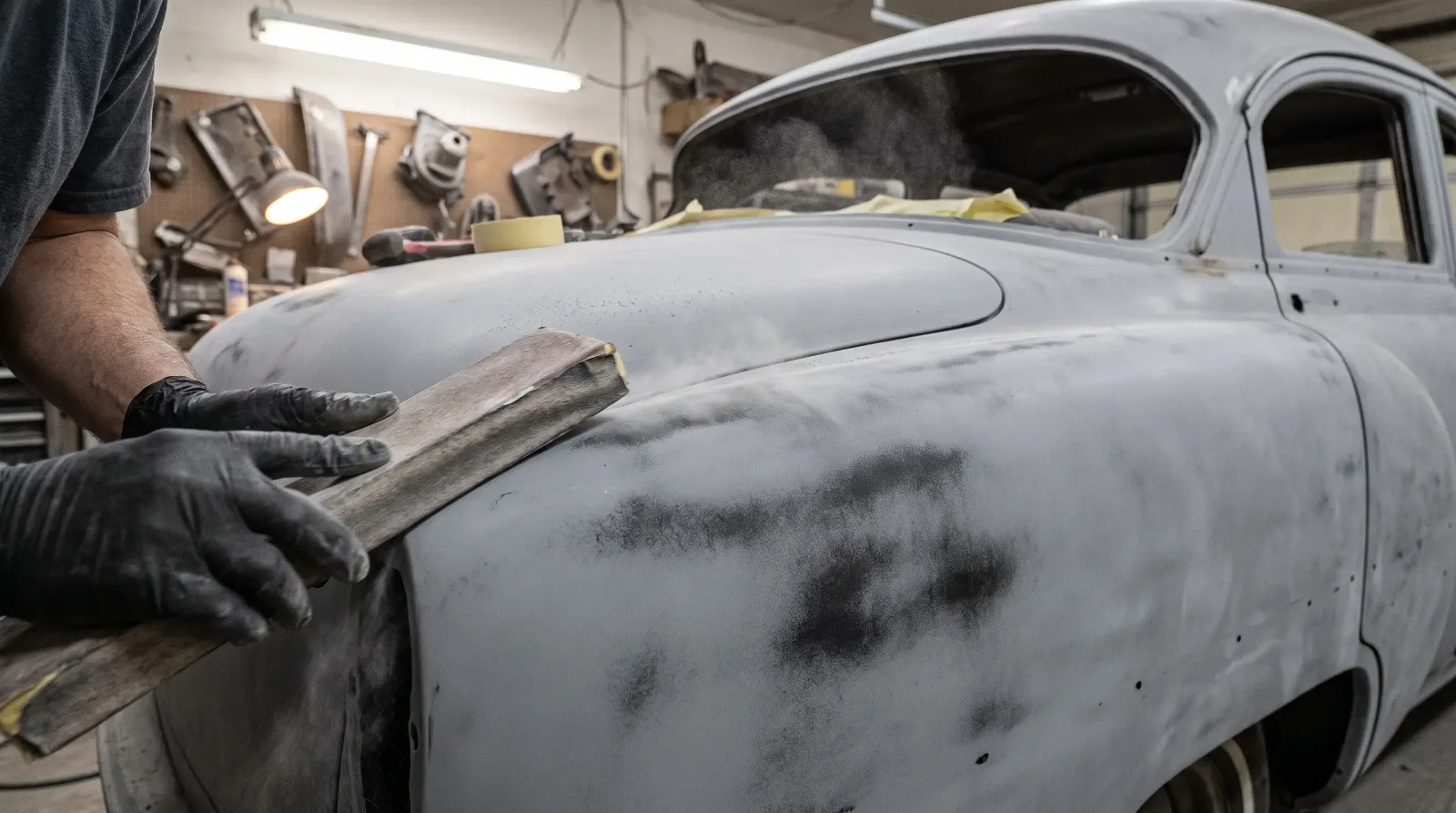
With the metal solid, the real slow part begins. The body gets epoxy primer to seal the bare steel, low spots get a thin skim of filler, then high-build primer goes on for blocking.
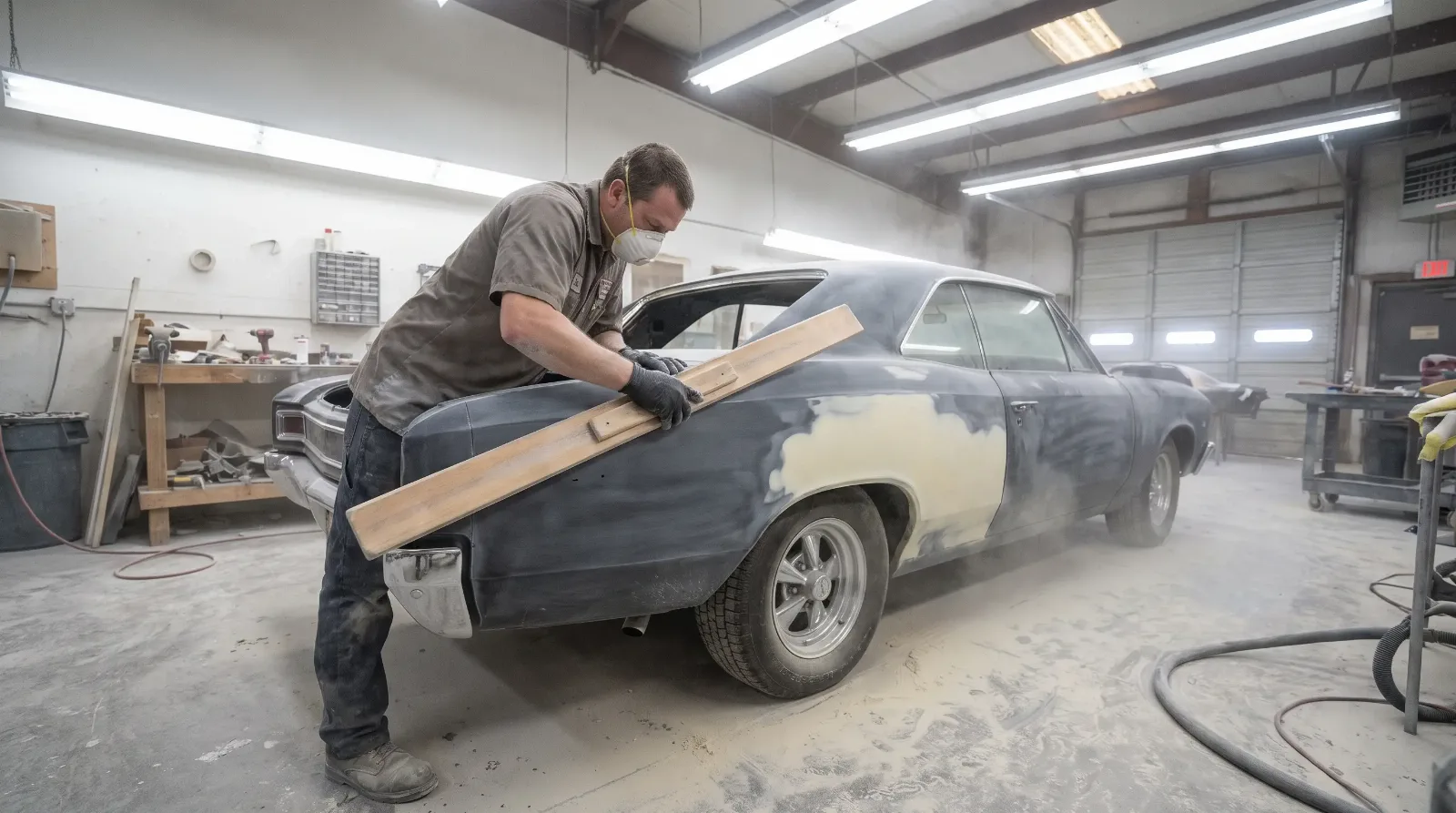
Block sanding is the job nobody films for social media. You sand the primer with long, flat blocks, a guide coat dusted on top so the low spots show up dark, and you keep going until the whole panel reads flat. On a car headed for a show-level finish the body might get blocked three or four times. The straightness you see in a long reflection down the side of a great car is the blocking, not the paint.
Gaps get set during this stage too. Doors, hood, deck lid and fenders get hung and adjusted with the car together, so that when everything comes back from the paint booth it fits like it did on the stand.
"Anybody can spray color. The car gets beautiful in the primer, when nobody is looking at it, and the guy blocking it is the one who actually made it shine."
Hector Morales
Paint systems and what they cost in 2026
Old cars left the factory in lacquer or enamel, depending on the make and the year. GM used acrylic lacquer on many of its cars through the sixties and into the seventies, while Ford and Chrysler leaned mostly on enamels. Almost nobody sprays straight lacquer today. What you choose now comes down to a few systems.
Single-stage urethane puts color and gloss in one product. It looks closer to a factory finish of the era, it is less glassy, and it suits a car being restored to stock appearance. Basecoat and clearcoat lays the color down first, then a separate clear on top. It is the modern standard, deeper and more durable, and the clear can be cut and buffed flat for a show finish. Metallics almost always go base and clear today.
Then there is the custom side, which is close to our hearts. A candy paint is a tinted, transparent color sprayed over a metallic or flake base, so light goes through the candy, hits the base and bounces back. Every coat makes it darker, so each one has to go on perfectly even or you get stripes you cannot fix without starting over. Flake adds metal flakes in the base or in an intercoat clear. That is days of booth time and real artistry, and it is priced that way.
| Paint level | Typical 2026 price range | What you actually get |
|---|---|---|
| Driver respray, minimal prep | $2,000 to $7,500 | Scuff and spray, trim masked, little or no metal work |
| Quality driver, panels off | $10,000 to $20,000 | Minor rust repair, blocked primer, base and clear, door jambs done |
| Full bare-metal restoration paint | $20,000 to $40,000 | Stripped body, metal work, multiple block rounds, cut and buff |
| Show or concours finish | $40,000 to $80,000 and up | Body off frame, every panel perfect, correct factory finish details |
| Custom candy, flake and patterns | $25,000 and up, often far more | Layered candy coats, artwork, many coats of clear, heavy color sanding |
Materials alone have climbed a lot. Good basecoat is often sold by the quart, and a gallon of it can run a few hundred dollars depending on brand and color, with reds and premium candy systems at the top. The outside of a typical car takes roughly two quarts to a gallon of color, more once the jambs, engine bay and underside of the panels get painted, and then come clear, epoxy and high-build primers, reducers, filler and a mountain of sandpaper. On a quality professional job materials can easily pass $2,000, and $4,000 or more on a premium system is not unusual, before anybody gets paid for labor.
Choosing a color and staying correct
If the car is going back to factory, find the paint code first. Most American cars of the era have a body tag or trim tag on the firewall, door jamb or cowl that records the original paint code, and many also show it on a build sheet hidden under the seat or behind the dash. Paint suppliers can mix factory colors from those codes, though matching a sixty-year-old color formula in a modern urethane takes a spray-out card and a good eye. Ask for a sprayed test panel and look at it outdoors before the car gets color.
Changing color is a bigger job than people expect. To do it right the shop paints the door jambs, the inside of the trunk lid and hood, the engine bay and the area under the trim. On cars where originality matters for value, a color change away from the original code can also cut into what a buyer will pay, so think about who might own the car after you.
Timeline, sequence and what comes after paint
A quality driver paint job with modest rust repair usually takes a shop two to four months. A full bare-metal restoration paint can take six months to a year or more, mostly because of metal work and blocking, and many good shops also have a waiting list before work even starts. Custom candy work runs on its own clock.
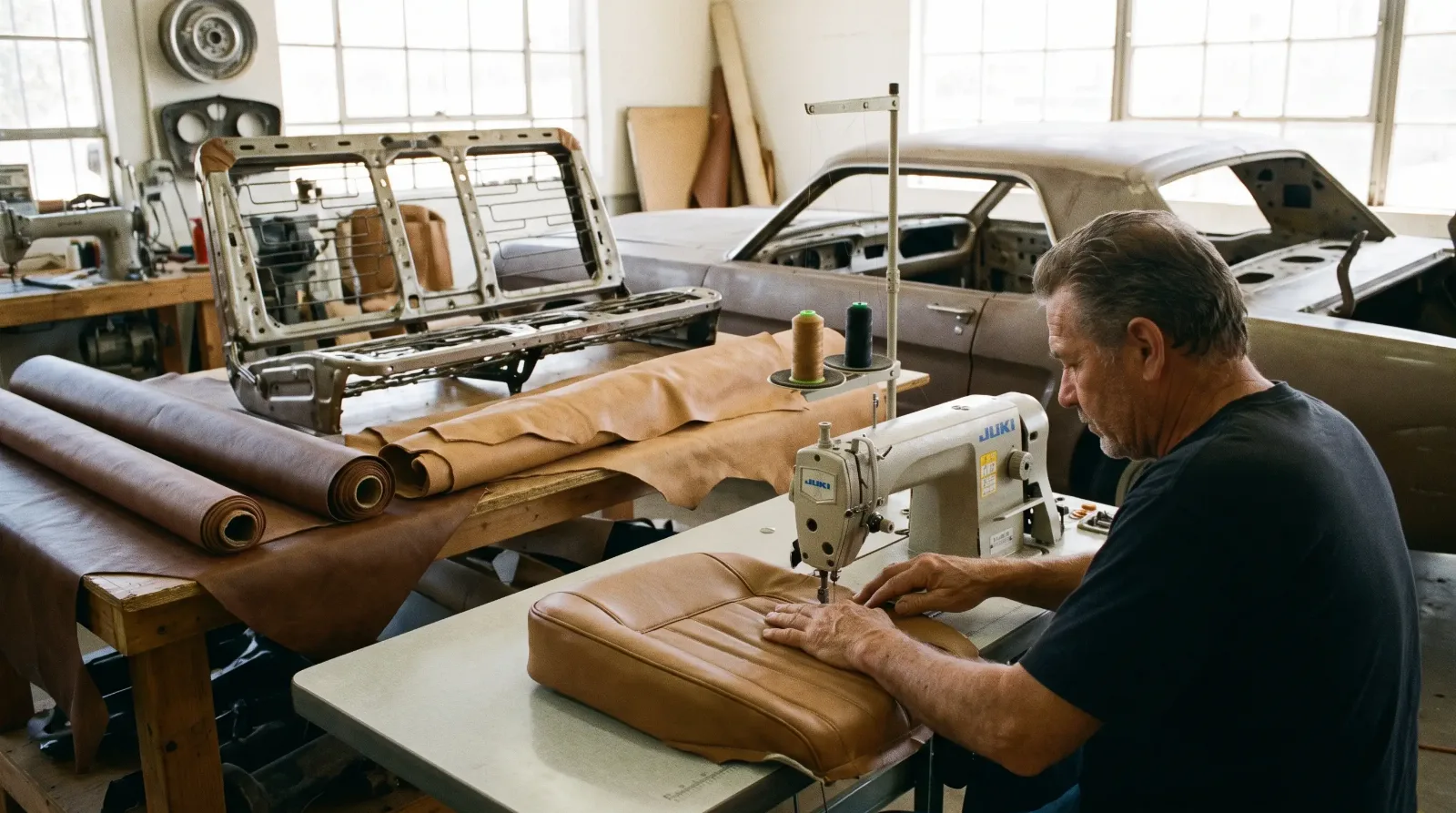
Sequence matters across the whole build. Do the metal and paint before the engine goes back in, so overspray and sanding dust are not landing on fresh mechanical work. Wiring, glass and weatherstrip go in after paint, carefully, with tape and blankets protecting the new finish. Then attention moves inside, to the interior and upholstery, where new carpet, seat covers and headliner finally make the cabin match the outside.
Paint and body usually take the biggest single piece of a restoration budget, and it is very easy to spend everything on the outside and have nothing left for seats that look as good as the quarter panels.
When the car comes home, look down each side from a low front corner. Straight lines in the reflection mean straight panels, waves mean the blocking stopped short. Check the jambs, the edges for buffing burn-through, and the clear for runs and dust nibs. A good shop will walk you around the car and point out anything they were not happy with before you find it yourself, and that honesty is worth more than any number on the estimate.
Sources and notes
- Hagerty: Why is paint so expensive?, shop paint tiers from about $13,000 daily driver to $55,000 best of show, several hundred hours of prep and paint on quality work, paint history.
- Eastwood: The true cost of a professional restoration, restoration shop labor around $125 an hour nationally, with a range of about $85 to $225.
- Eastwood: How much does it cost to paint a car?, paint quantity for a car exterior and per-quart and per-gallon pricing for basecoat and clear.
- BlastTrader: Car sandblasting costs (2026), full body shell strip pricing by car size and media type.
- Wikipedia: Body solder, lead body solder and its replacement by polyester body fillers.
- Wikipedia: Automotive paint, lacquer, enamel and modern acrylic polyurethane basecoat and clearcoat systems.