
The steering wheel is the one part of a classic you handle on every drive. It is also the part most likely to give away how an owner treated the car. Hands, sun and decades of temperature swings do their work on the rim, and a wheel that looked fine in a listing photo often shows its cracks the moment you turn it toward the light.
Restoration & Tech
6 min read
Steering Wheel Restoration: Cracks, Recasting and Woodgrain
Cracked rims, brittle hard plastic and tired woodgrain are all fixable. Here is how steering wheel restoration works, what it costs, and when to send a wheel out.

Restoring one is a narrower and more technical job than most interior work, which is why it belongs in any plan for the interior but is rarely a weekend job. Materials matter. Identify the wheel first, and the right method follows.
Know what the wheel is made of
Period steering wheels fall into a handful of material families. Many early wheels used hard plastics such as Bakelite, a brittle thermosetting phenolic resin, sometimes over a steel core. Through the 1950s and 1960s, molded plastics were common, and later cars moved to foam, urethane or vinyl-covered rims and leather wraps over steel cores. Sport and luxury cars also used wood rims, either solid laminated wood or wood over a metal frame, usually finished with lacquer or varnish. Each material fails in its own way.
Brittle plastic cracks and chips. Urethane and foam rims split along the seam and crumble. Wood checks and lifts its finish where hands and sun have attacked it. Leather wraps stretch and shine. The failure tells you the repair, and a wrong guess, such as filling a flexing foam rim with rigid filler, makes the damage return within a season.
Cracks: repair or recast
A hairline crack in a hard rim can often be bonded, filled and sanded. The usual process opens the crack into a shallow V, fills it with a compatible epoxy or specialty filler, builds the contour back up, then primes and refinishes the surface to the original color and texture. Flexible rims need flexible repair compounds. If the core has rusted or the rim has broken apart, the shop strips the rim back to the steel armature and recasts it, molding new material around the original core and then refinishing it to match the factory profile.
That recasting route is where most of the money goes. Specialist shops that publish prices start at roughly $600 for a paint-only job and about $950 to $1,075 for restoration with structural repair, plus around $100 for shipping and insurance, and severely damaged or custom wheels are quoted case by case. Many mail-in specialists assess the wheel from photos or on arrival, and turnaround is often measured in weeks, sometimes longer. A careful do-it-yourself crack repair on a hard rim can cost well under $100 in supplies, though it takes patience and many rounds of sanding. Ask whether the price includes the horn ring, the center cap and the plating, because these items are often separate line items.
Woodgrain and wood rims
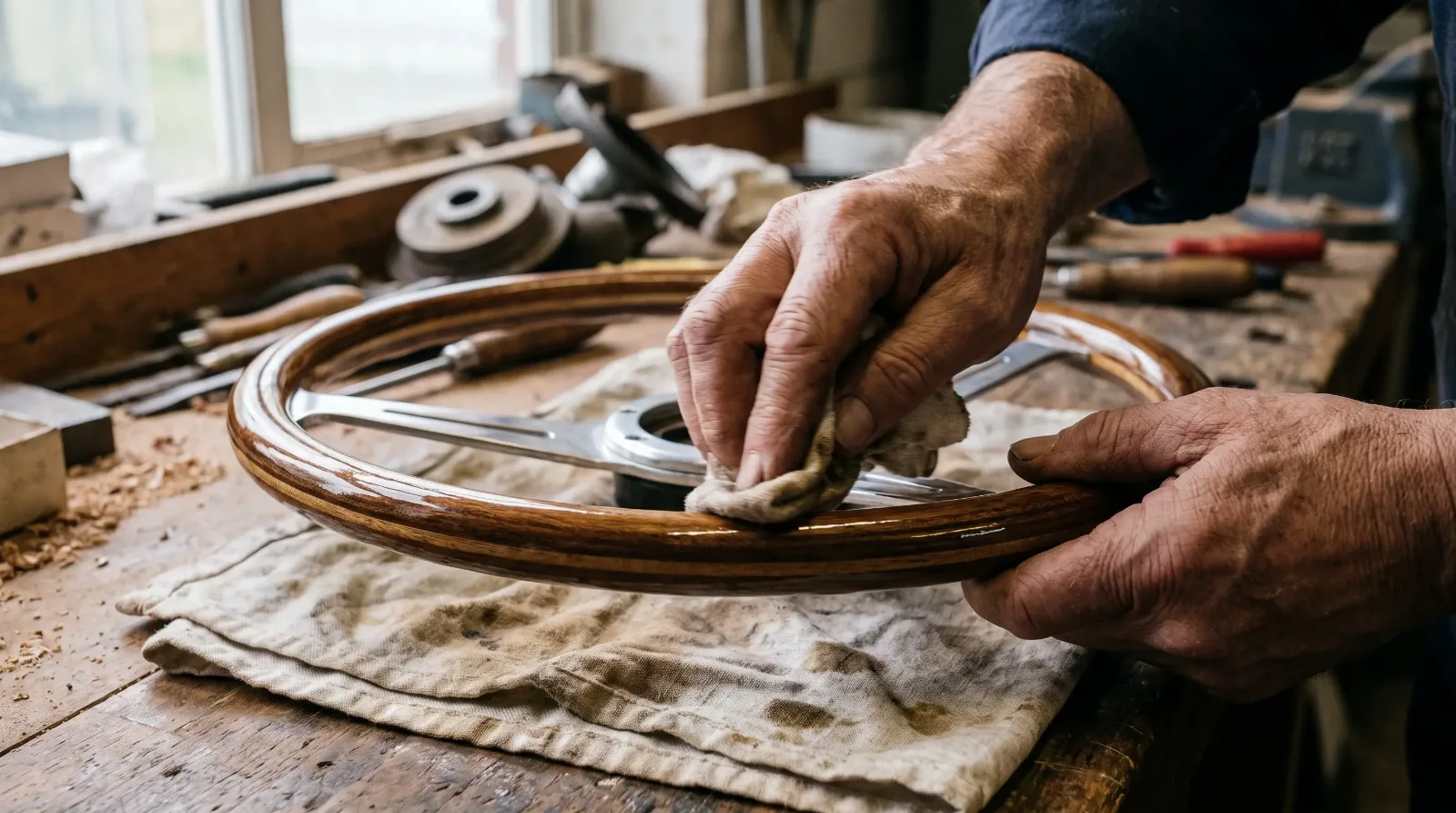
Wood is the most rewarding material to restore and the least forgiving to rush. Original finishes are often a lacquer or varnish that has yellowed, cracked or flaked, and once the clear coat breaks, moisture gets into the wood beneath. The repair starts with careful stripping, followed by repair of any lifted laminations, filling of gouges, a new stain or tint that matches the original color, and several coats of clear finish, often a marine spar varnish, built up and rubbed to a final sheen.
Printed or painted woodgrain on a plastic wheel is a different case entirely. These are decorative films or sprayed finishes, and they cannot be sanded back like real wood. Refinishing means stripping the surface, repainting the base tone and applying the graining by hand or with a transfer, then sealing with a durable clear. Matching the factory pattern is the difficult part. Photograph a surviving original, in daylight, before you start.
The cabin has other timber that ages the same way. Our existing article on refinishing the dashboard and door capping wood covers the same finishing problems on larger surfaces, and the lessons apply directly to a wooden rim.
| Wheel material | Typical damage | Usual fix |
|---|---|---|
| Bakelite or hard plastic | Hairline cracks, chips, crazing | Epoxy fill, sand, refinish |
| Urethane or foam over steel | Splits, crumbling, sticky surface | Strip and recast the rim |
| Solid or laminated wood | Lifted finish, checking, dark stains | Strip, repair, stain and clear coat |
| Printed woodgrain on plastic | Worn pattern, faded film | Strip, repaint, regrain, seal |
| Leather or vinyl wrap | Stretching, shine, torn stitching | Rewrap with matching stitch pattern |
Replace, repair or reproduce
Reproduction wheels exist for popular models and can cost less than restoring an original, but they are not always right. Check the diameter, the rim thickness, the spoke pattern and the horn contact style, and compare against photographs or the shop manual before you buy. For a documented car, the original wheel, restored, is almost always the better choice. For a driver, a well-made reproduction can be a sensible answer, especially where the original has been cut or the core has rotted beyond saving.
Whichever way you go, finish the wheel in step with the rest of the dash. Once the rim is right, the cabin may call for dyeing trim so the surrounding plastics and vinyl match the new finish. A perfect wheel in a faded cabin only shows how tired everything around it is.
"Photograph the wheel from every angle before it leaves the car. The original texture and color are the only reference the restorer will have."
Tom Ramirez
Practical notes before you send it out
- Remove the horn button or ring carefully and keep all hardware together, labeled.
- Do not solvent-clean a cracked plastic rim, because some cleaners attack old plastics.
- Ask the restorer for photos at the strip stage, so hidden damage is seen before the price moves.
- Get any recasting or replating quote in writing, with a turnaround estimate.
A restored steering wheel does not draw attention, which is exactly the point. It simply feels correct under the hands, and that is the quiet reward for doing the work properly.
Sources and notes
- Low-buck steering wheel repair on a 1967 Dodge Dart, Mopar Connection Magazine, V-cutting cracks, epoxy fill, filler primer and refinish, under $40 in supplies
- Steering wheel restoration guide, Popular Restorations, wheel materials, epoxy repair of plastic and Bakelite, spar varnish on wood rims
- Process and pricing, Steering Wheel Bob, published starting prices, shipping cost and the typical restoration steps
- Steering Wheel Bob, Bakelite, solid color plastic and wood wheels handled by a specialist
- Bakelite, Wikipedia, thermosetting phenolic resin, brittle, used in early automotive parts
- Polyurethane, Wikipedia, foam degrades with light and moisture, used to cover steering wheels
Related Reading

About the author
Tom Ramirez
Corvette researcher and historian based in Bowling Green, Kentucky. Two decades documenting Corvette production history from original factory records.
More in Restoration & Tech
Comments
Be the first to comment on this article.