
A classic car transmission rebuild is one of those jobs where the parts are cheap and the knowledge is not. I have pulled apart enough Muncies, Tremecs, Turbo-Hydramatics, and Torqueflites to tell you that the gearbox rarely fails all at once. It starts as a whine, a grind going into second, a slip when it warms up, and a leak you decided to live with. Whether you do it yourself or hand it to one of the drivetrain specialists in the directory, the same questions decide the outcome. If you are also rebuilding the drivetrain as a whole, plan the transmission and clutch or converter with the engine so the pieces are matched.
Restoration & Tech
6 min read
Transmission Rebuild in a Classic: Manual and Automatic
What a classic car transmission rebuild involves, for manuals and automatics: wear points, costs, clutch and converter choices, and installation checks.
Decide: rebuild, swap, or upgrade
Before anything gets pulled, decide what you want the car to be. A numbers-matching restoration needs the original case and date codes, so you rebuild what is there. A driver might do better with a modern overdrive unit that fits the same crossmember. The restoration choice changes cost and judging, so settle it first.
In a full restoration, the transmission and rear axle together run about $3,000 to $6,000 at driver level and $5,000 to $12,000 at show level. A single transmission rebuild by a shop is generally a four-figure job, and the final number depends on the unit and how much the case, gears, or valve body need. Rare or odd gearboxes cost more because parts are scarce. Pay attention to who is quoting. A shop that gives you a price without opening the case is guessing.
Manual transmissions: where the wear actually hides
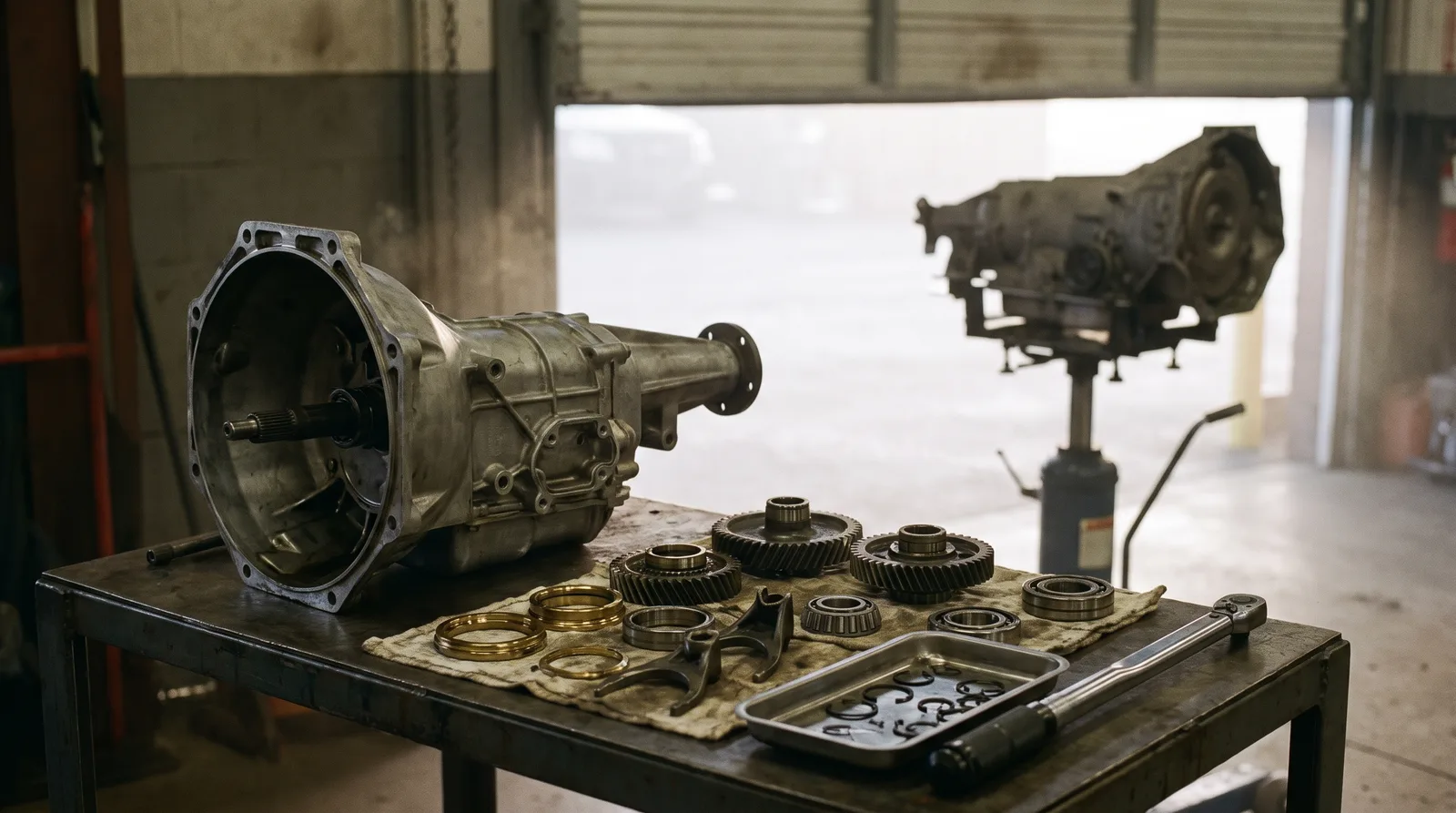
On a manual, wear concentrates in a few places. Synchronizer rings and blocker teeth wear first, which is why the car crunches on the 2-3 shift. Bearings get noisy, the input shaft pilot bushing or bearing fails, and the shift forks wear flat. The gears themselves, if the oil stayed clean, are often fine.
Look at the tailshaft bushing and the output seal, since a leak there ruins a clutch. A rebuild kit that includes synchros, bearings, seals, and gaskets costs a few hundred dollars for common units, and more for scarce ones. Replace the clutch, pressure plate, throwout bearing, and pilot bearing at the same time. Doing the gearbox without the clutch means taking it all apart again within a year.
Gear lash and endplay are measured, not guessed. Without a dial indicator and the factory spec you are assembling by feel, and feel is how you get a box that whines at 60 mph.
Automatics: heat is the enemy
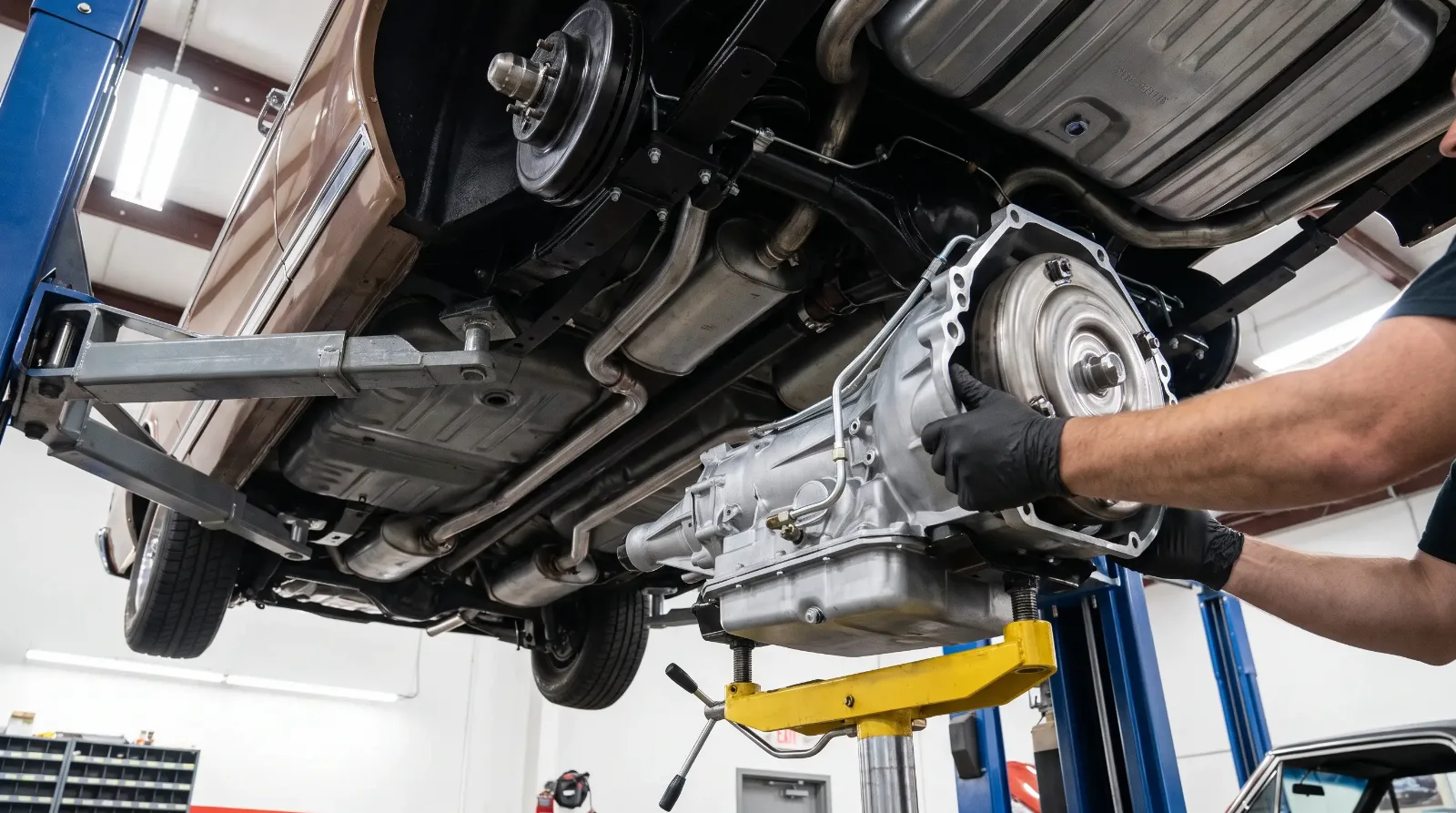
An automatic dies from heat and dirty fluid. Clutch packs glaze, bands wear out, the valve body wears its bores, and the rubber seals harden and leak. A slip between shifts almost always points to worn clutch or band material. A rebuild should replace all friction material, seals, and bushings, and include a check of the valve body for worn bores and stuck valves.
The torque converter is not a throwaway. A converter with the wrong stall speed runs hot and wears the unit, and one that has shed debris into the pump ruins a new rebuild. Have it inspected or replaced, and flush and replace the cooler lines. Without that, the old debris goes right back in. Add an auxiliary cooler if the car will tow or sit in traffic. Check shift points, line pressure, and kickdown linkage or cable as part of the job.
Four-speed muscle cars and what they ask of a rebuild
The four-speed is part of why people buy the cars. If you are shopping for four-speed muscle cars, ask for rebuild receipts, not just claims, and look at the case stampings and date codes. A mismatch is not always bad, since correct replacement units exist, but the seller should say so. For the story behind these gearboxes, see our look at the legendary muscle car four-speeds.
Reproduction cases, shifters, and linkage are available for the most popular boxes. Stay with the correct pattern for the car. A Hurst shifter with the wrong rods will not hit the gates cleanly, no matter how fresh the internals are.
🔧 Inspection Priorities
- Fluid and magnet. Metal on the drain plug magnet tells you the condition of gears and synchros.
- Case and tailhousing. Cracks and stripped threads cost more than the rebuild kit.
- Clutch or converter. Replace with the unit, not later.
- Mounts and crossmember. Worn mounts mimic internal noise.
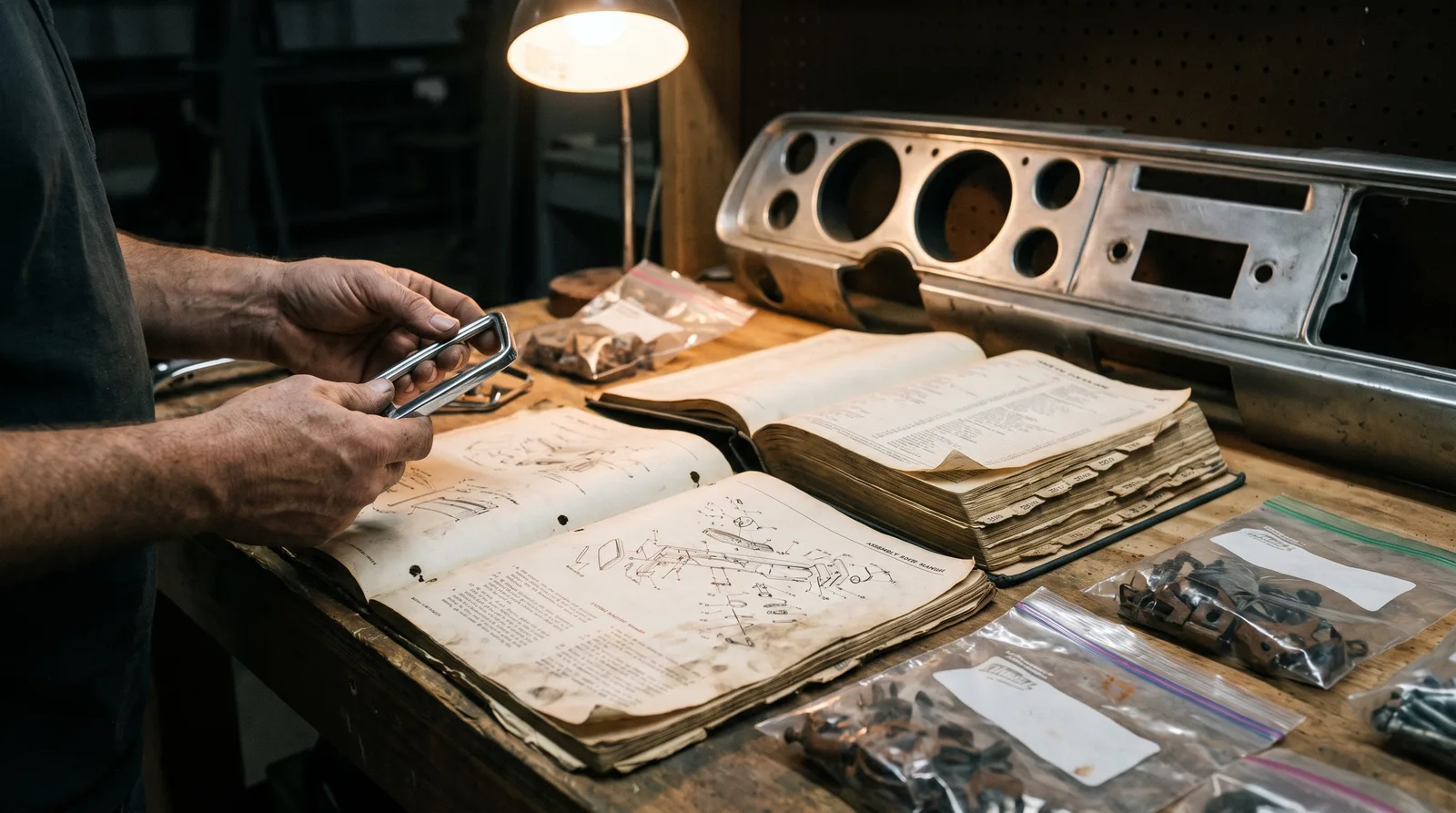
Documentation matters as much as the wrenching. Keep the old part numbers, the date codes cast into the case, and the rebuild invoice in a folder. A buyer or a judge will ask, and a transmission with a paper trail is easier to sell than one with a good story. If you take it to a shop, ask what warranty they give on labor and parts, and whether the unit is dyno or road tested before it goes back to you. A shop that stands behind a rebuild will say so in writing.
Getting it back in the car
Check the bellhousing runout and pilot alignment with a dial indicator. Bad runout kills a new input bearing in a few thousand miles. Fill with the correct fluid for the box, since some manual units need gear oil that is compatible with brass synchronizers, and some automatics call for a specific ATF. Follow the rebuilder's break-in instructions and keep the first miles gentle.
"Everybody wants to spend money on the engine. The car feels like what the gearbox lets it feel like."
Mike Sullivan
Once the transmission is in, the next stop behind it is the rear end, where gear noise and worn bearings can undo all the good work you just did.
Sources and notes
- What's the difference between the Muncie M20, M21, and M22 transmissions (Jalopnik), gear ratios, helix angles, nickel content, and M22 noise
- Allstate Gear Muncie M20, M21, and M22 parts, gear and bearing kits sold per Muncie version
- Manual transmission (Wikipedia), synchronizer wear and why worn rings let gears grind
- Automatic transmission (Wikipedia), clutches, bands, valve body, and heat and fluid degradation
- Torque converter (Wikipedia), stall speed and the effects of a mismatched converter
Related Reading

About the author
Mike Sullivan
Detroit-area muscle car enthusiast and restoration specialist with three decades of hands-on experience working on American iron.
More in Restoration & Tech
Comments
Be the first to comment on this article.