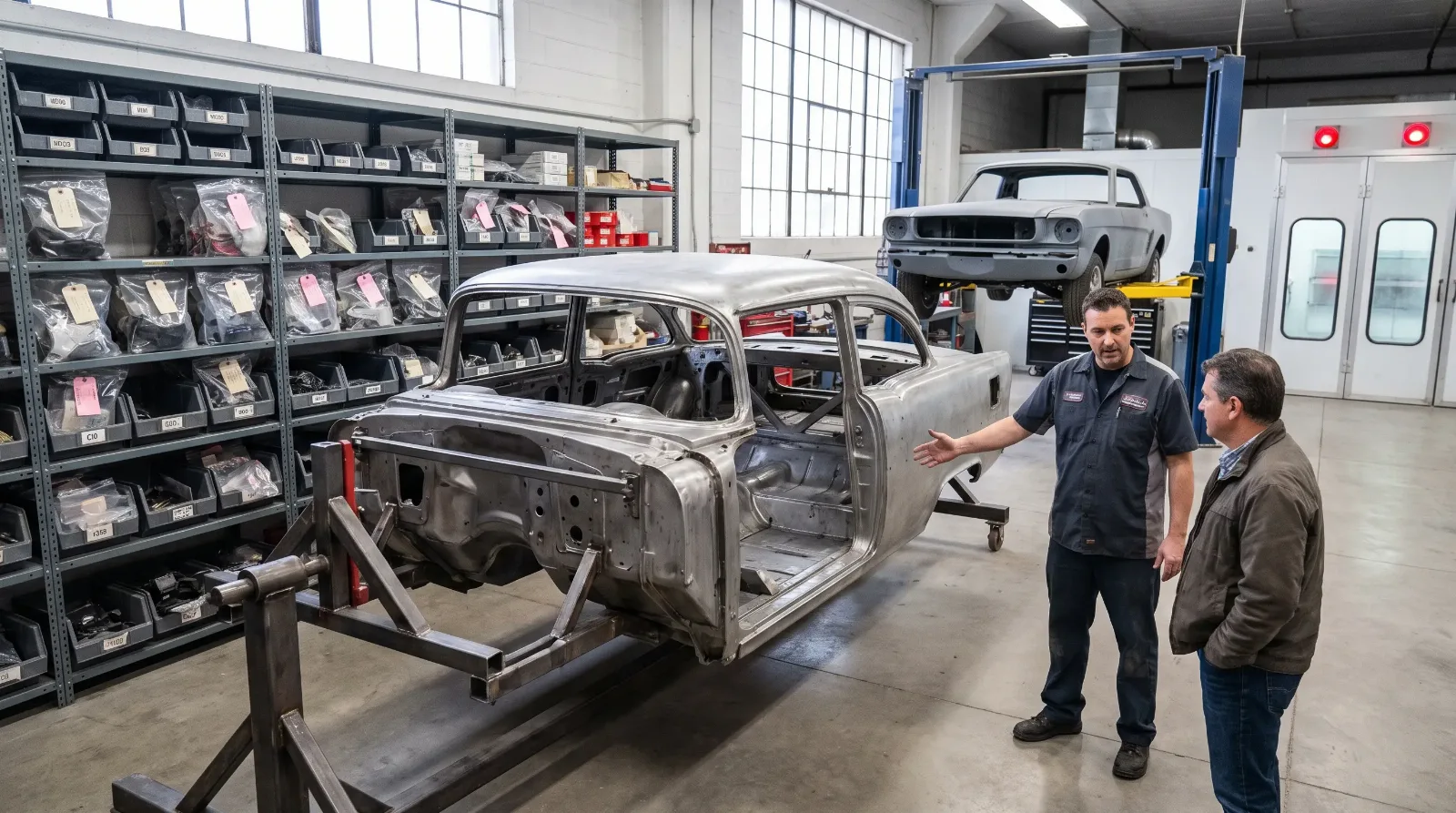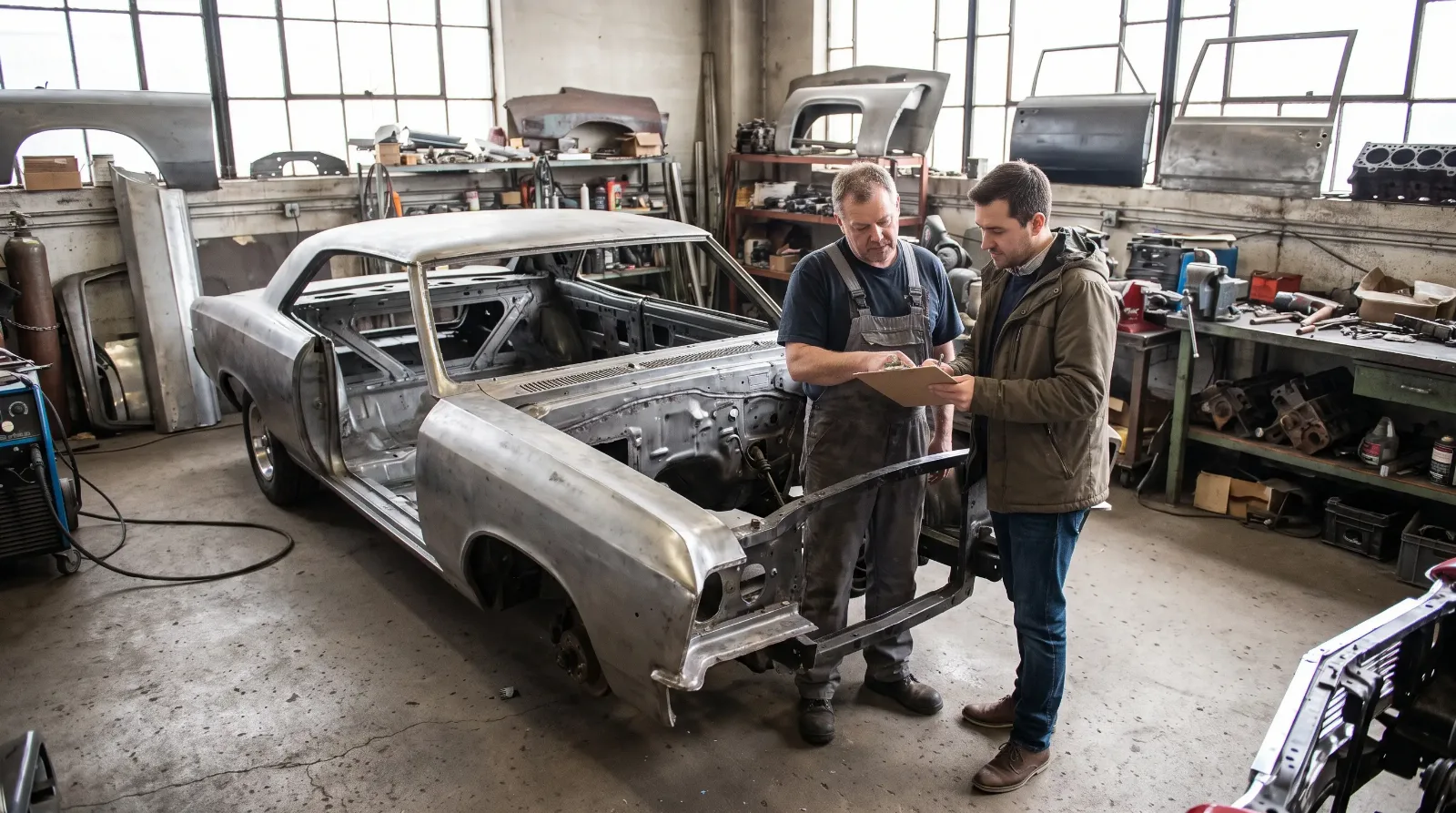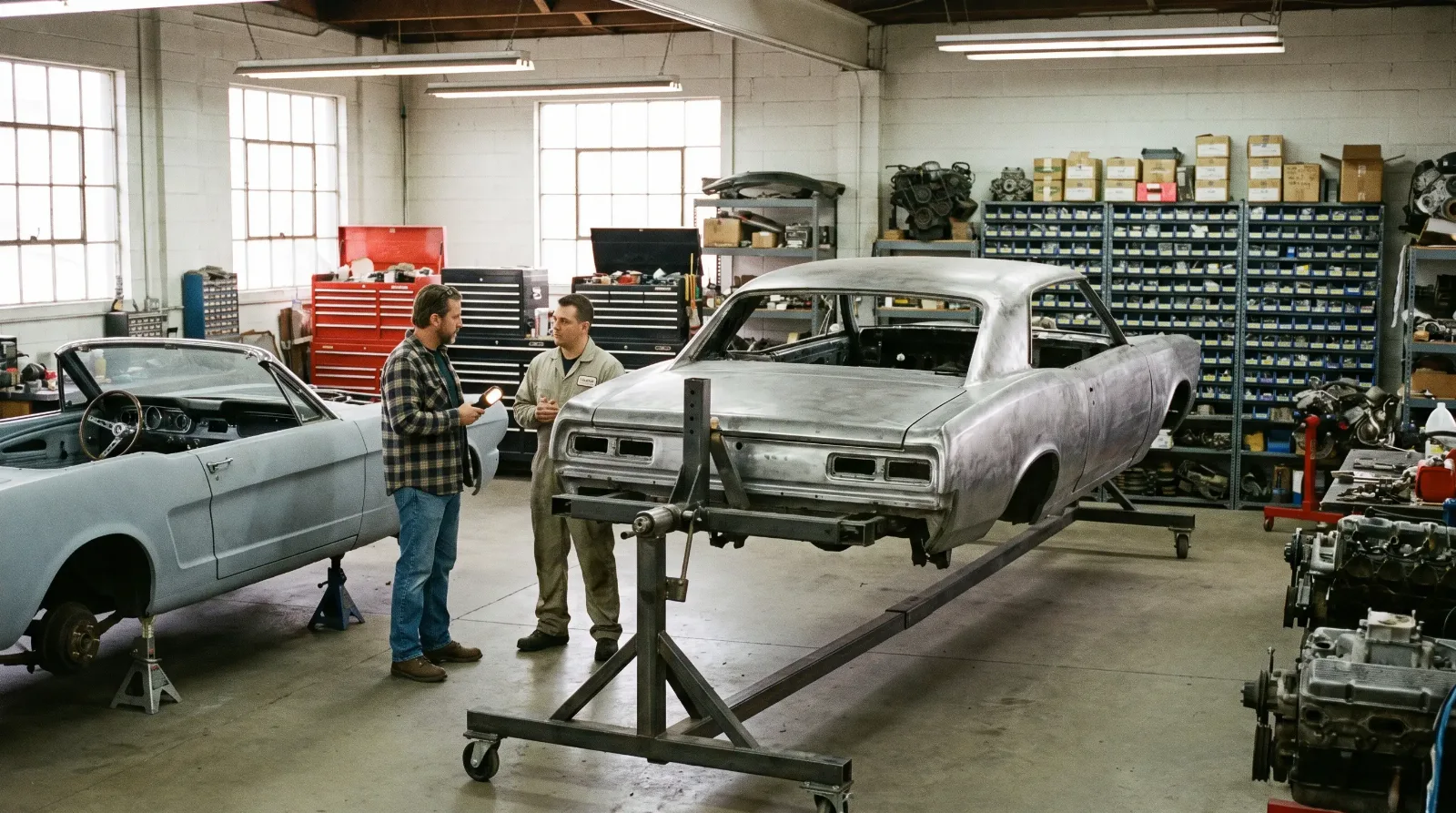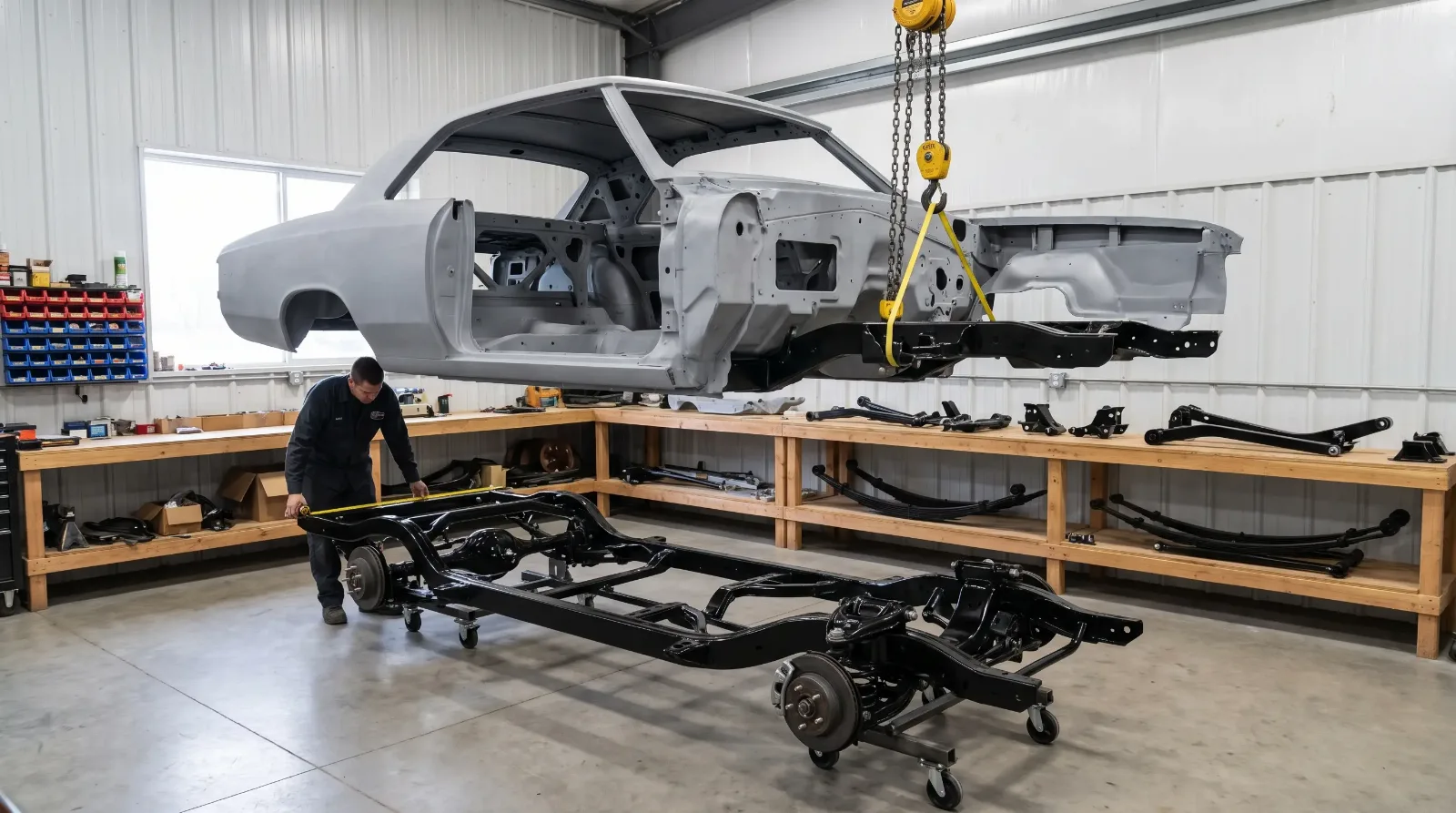
Most restoration disputes share a cause. The owner and the shop each held a different picture of the job, and nothing written told them which one was right. A handshake agreement on a project that may cost six figures and take a long time is exposure, not trust. Whatever else you do, browse restoration shops by state and ask each one for a sample contract before you commit. How a shop reacts to that request is useful information, and what it hands over tells you more.
This article is general information, not legal advice. Contract and lien law vary by state, and a restoration that can run well into five or six figures justifies an hour with a local attorney.
Scope of work and the standard of finish
The scope is the contract. If a task is not described, it is not owed. Strong scope language lists each system: body and panels, paint, chassis, engine, transmission, driveline, brakes, electrical, interior, glass, chrome and trim. For each, it states the intended outcome: repair, rebuild, replace, or leave as found.
Then it defines the finish. "Restoration" means different things. A concours-level result, a high-quality driver, and a cosmetic refresh differ by tens of thousands of dollars. State the target in terms a third party could judge, such as factory-correct finishes and hardware, or a period-correct look with modern brakes. Name the reference: a factory body style, a build sheet, a specific judging standard. Vague adjectives like "show quality" are where the arguments start.
Record the starting condition as well. Photographs and a written condition report, signed by both sides at intake, prevent later claims about damage that was there when the car arrived.
Money: deposits, milestones and change orders
Payment terms should track completed work, not elapsed time. A typical structure is an initial deposit, then payments at defined milestones: teardown complete, metalwork complete, paint complete, mechanical complete, final delivery. Ask for the deposit to be a modest share of the estimate, enough to cover parts ordering and early labor rather than a big upfront chunk. Some restoration attorneys also suggest holding back retainage, around 10 percent, until the project is finished, and in any case hold a final payment back until you have inspected and driven the car.
The weak points in most contracts are change orders. A good clause says any work outside scope needs written approval, with a described task, a price or hour estimate, and a signature or email confirmation before the work starts. It should also set a threshold, for example any single overrun above $1,000 triggers a stop and a call. Without it, shops proceed and invoice later, and you are in the position of disputing work already done.
| Clause | What it should say |
|---|---|
| Estimate type | Fixed, time-and-materials, or phased, with revision triggers |
| Deposit | Amount, what it covers, whether refundable |
| Milestones | Defined completion events tied to payments |
| Change orders | Written approval required, dollar threshold for stopping |
| Parts markup | Percentage or method, receipts available on request |
| Final payment | Due after inspection and test drive |
Insurance, storage and ownership of parts
Your car sits in someone else's building for a long time. Ask for a certificate showing the shop carries garage keepers coverage and general liability, and check the limits. Garage policies usually carry a limit per vehicle and an overall limit per loss, so the total should make sense against the cars the shop holds at once. A certificate costs the shop nothing to provide, and it should show the limits and how you are notified of cancellation. Your own collector policy may or may not extend to a car in a shop, so call your agent. If the shop sends work out to a painter or machinist, the contract should say who insures the car in transit and at the vendor.
Address parts and paperwork. Original parts removed from the car, such as numbered engine blocks, trim pieces and data plates, should be tagged, stored and returned unless you release them in writing. Title or registration should stay with you. A shop that wants the title to hold "as security" is a problem, and in many states a shop already has lien rights over a car it holds for unpaid work, so understand your state's rules before you sign.
Warranty, photographs and final acceptance
Decide what happens after delivery. A shop that stands behind its work will state a warranty period on workmanship, which varies from shop to shop, so get the period in writing, and say what it covers: paint defects, leaks, electrical faults, fit problems. Parts carry their own manufacturer warranties, and the contract should say who handles those claims. Define acceptance too. A final walk-through with a written punch list, a test drive of a stated distance, and a signed release only after the list is cleared keeps both sides honest. Keep every photograph, invoice and message in one folder. If a dispute ever comes, the paper trail you built during the job is the case you will be making.
Timeline, communication and getting out
Restorations run late. A contract cannot prevent that, but it can make delay visible. Ask for target dates per milestone and a plain statement of what the shop owes you when they slip, whether that is an updated schedule, a progress report, or nothing. Specify how often you receive photographs and invoices, and in what form. Monthly itemized statements with hours by task are a reasonable expectation.
Then plan the exit. What happens if either side wants to end the project midway? The contract should cover how work done to date is valued, how your car and parts are released, and who pays for storage during any dispute. Add a dispute step before litigation, such as an independent restoration expert to assess percent complete, then mediation and, if needed, arbitration, and a clause on who pays legal fees if it goes further. Few owners read these sections. Everyone who has needed them wishes they had.
"Treat the contract as a valuation document as well as a legal one. It states what you are paying for, and an asset's value follows its documentation. A vague agreement leaves you with a vague claim."
Marcus Feld
Read it against the rest of your due diligence
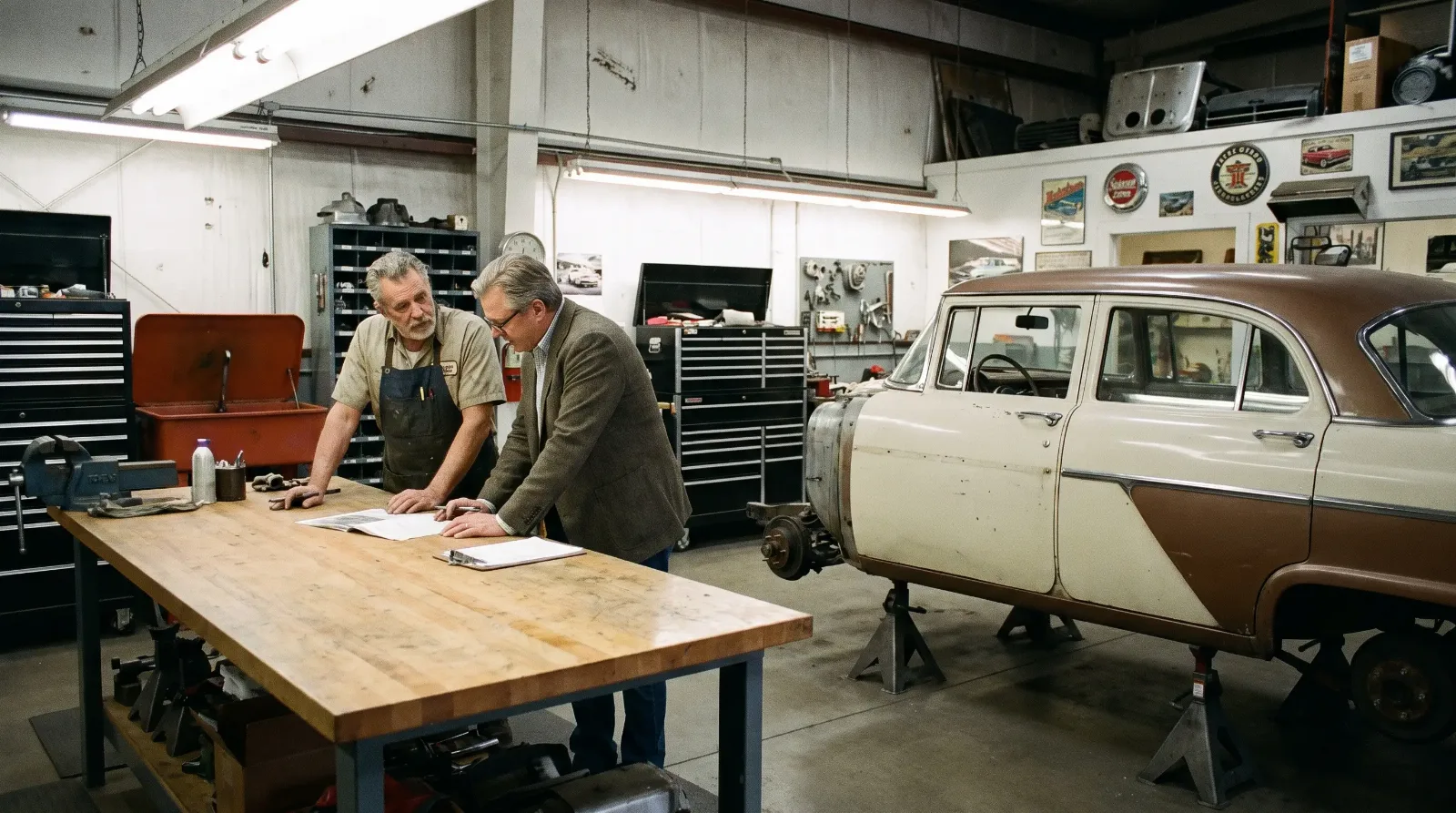
A contract is only as good as the shop signing it. Use it alongside the shop-selection guide, which covers references, build history and financial stability. Then verify what you can in person by visiting the shop floor, where the quality of the workspace either matches the paper or does not.
Sources and notes
- Avoiding the Restoration Blues (Sports Car Market, Legal Files), percentage-of-completion payments with about 10 percent retainage, phased pricing, lien waiver, expert, mediation and arbitration, termination terms
- The Shop Burned Down, Now What? (Road Scholars), garage policy per-vehicle and per-loss limits, certificate of insurance, keeping your own collector policy active
- Restoration shop insurance (Grundy), garage keepers coverage for customer vehicles under construction
- Texas Property Code 70.001, worker's lien, a repairer may keep possession until paid, example of a possessory lien
- California Civil Code 3068, vehicle repair and storage lien, written notice and consent for larger charges