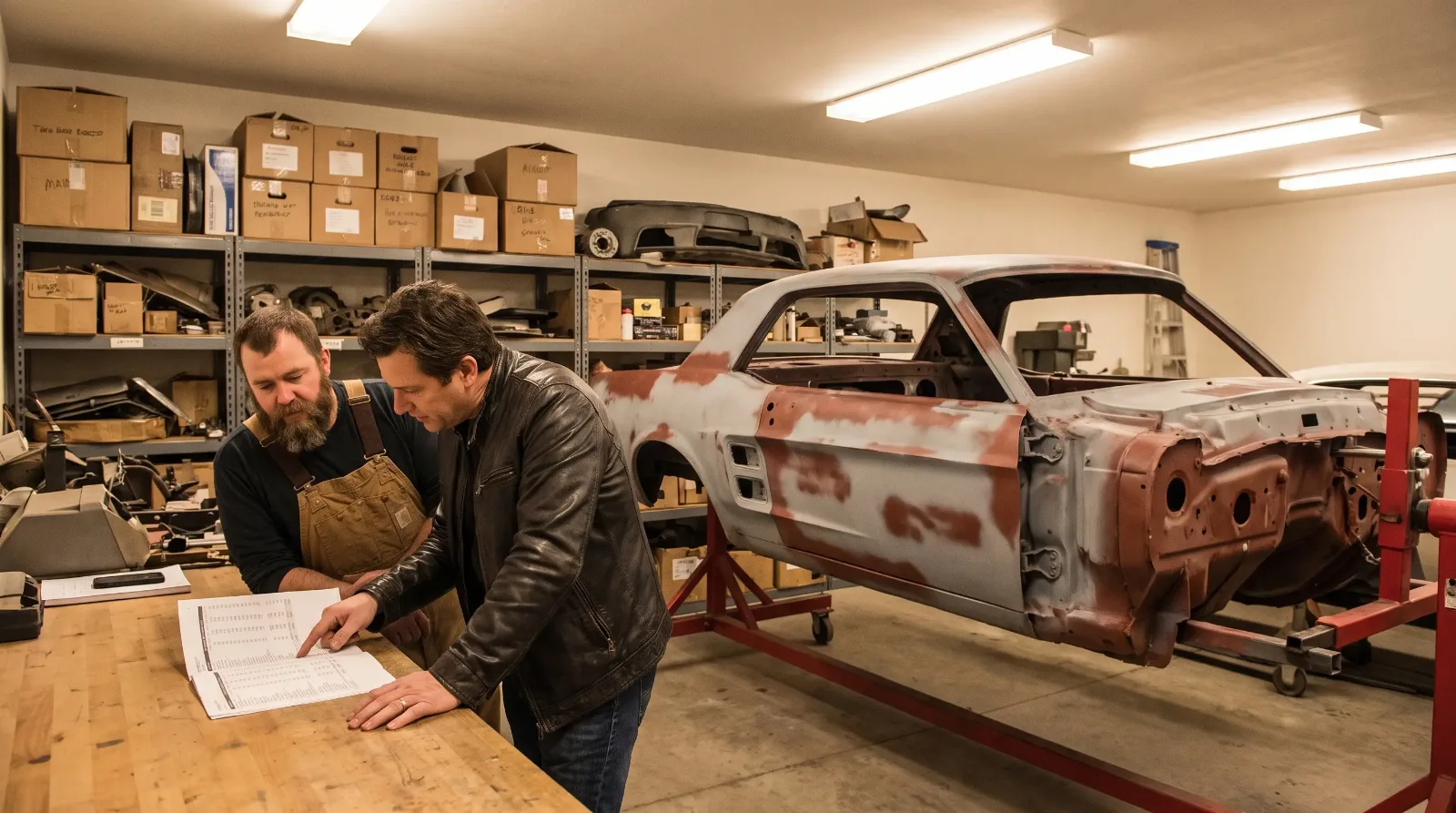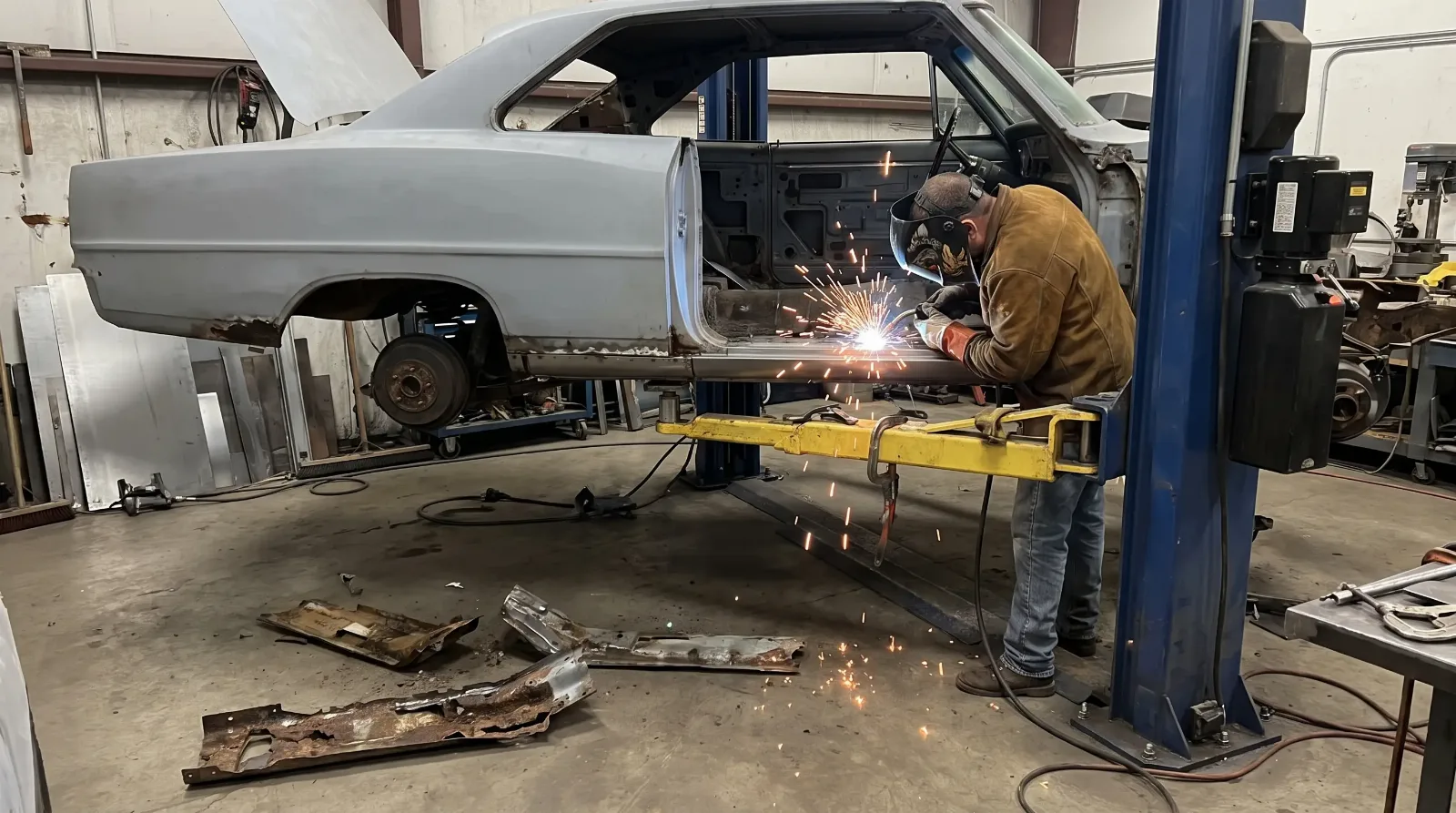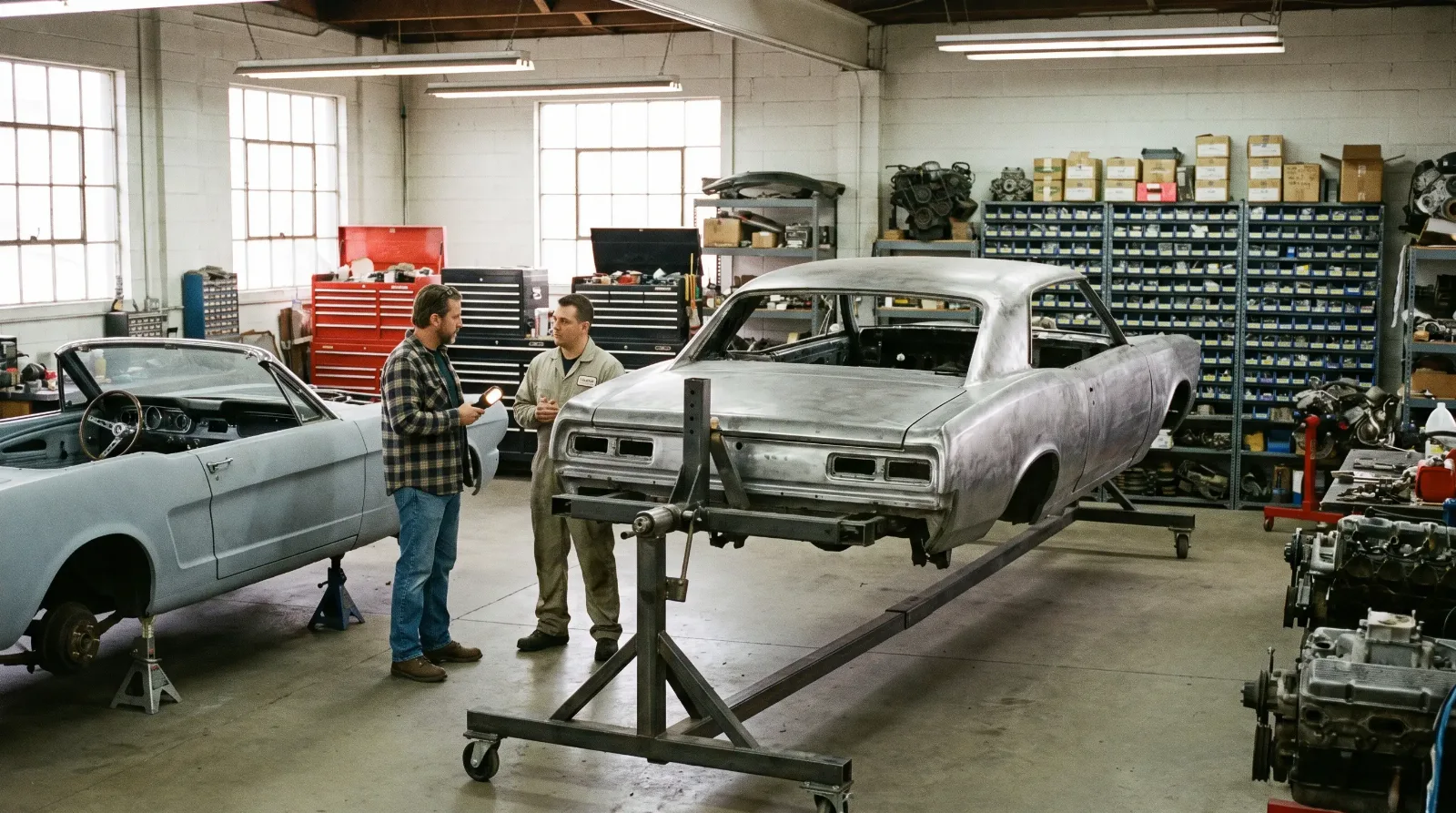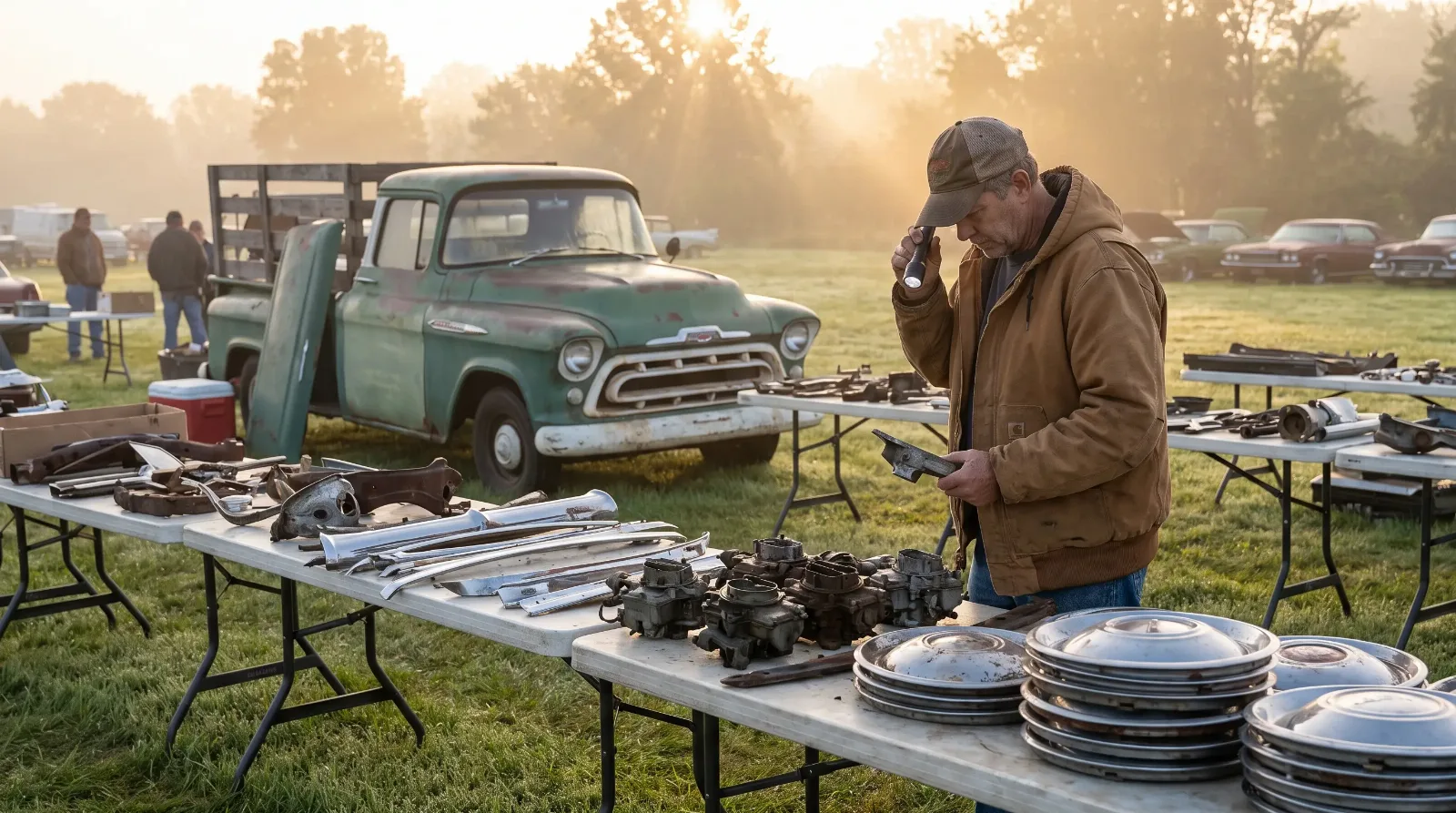
A frame-off restoration is the most expensive way to restore a car, and it is expensive for a reason: the body comes off the chassis, every component is removed, and each system is rebuilt or replaced on a bare car. Price ranges are wide, and a few categories drive most of the spread. Below is where the money goes, how the total compares with other approaches, and what a buyer should ask before signing.
What the price actually covers
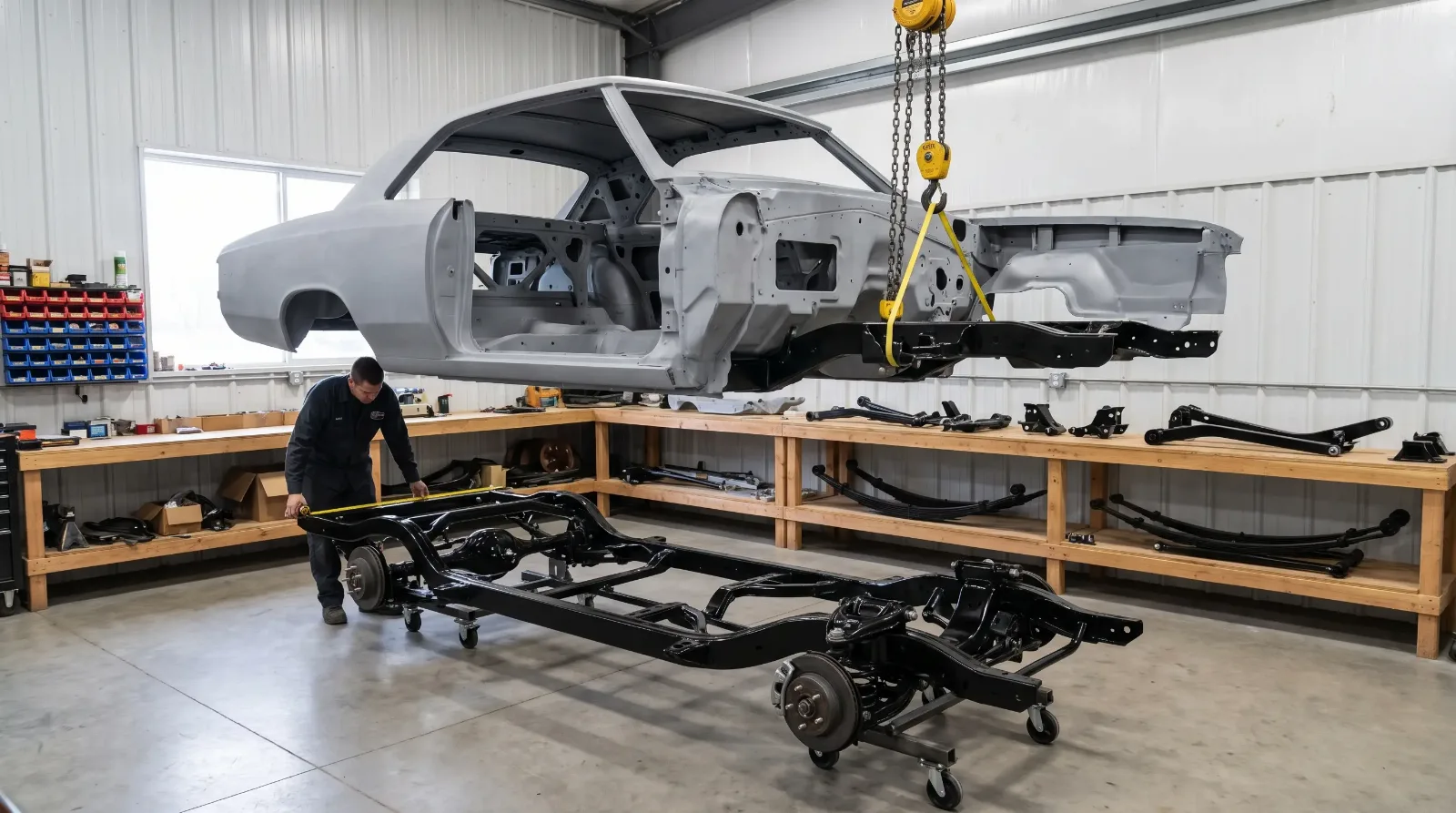
The term is used loosely, so start with the definition. In a true frame-off job the body is lifted from the frame, the frame is stripped, repaired and finished, and the body is stripped to bare metal and refinished off the chassis. The shop then rebuilds the drivetrain, suspension, brakes, wiring and interior and reassembles the car. For a full account of the process, see what a frame-off restoration involves. Ask any shop to define its use of the term in writing, because some quote a frame-off price for work that leaves the body on the car.
Typical cost ranges in 2026
At professional shop rates, a frame-off restoration on a common American car (a Mustang, Chevelle or C10, say) typically lands between $75,000 and $200,000. Show-quality work usually runs $100,000 to $225,000, and concours-level work $200,000 to $400,000 or more, especially for complex or rare cars. Pre-war and coachbuilt cars sit higher still. The bottom of these ranges assumes a car that is complete and relatively solid. Missing parts, rust and prior bad repairs push the number upward quickly.
| Category | Driver quality | Show quality | What moves it |
|---|---|---|---|
| Teardown, blasting, rust repair | $8,000 to $20,000 | $20,000 to $50,000+ | Rust, panel availability, prior bad repairs |
| Body and paint | $12,000 to $25,000 | $30,000 to $70,000 | Prep labor, gaps and fit, number of coats |
| Engine | $6,000 to $12,000 | $12,000 to $30,000 | Originality, machine work, parts supply |
| Transmission and rear axle | $3,000 to $6,000 | $5,000 to $12,000 | Correct parts, gear sets, condition of cases |
| Suspension, steering, brakes | $3,000 to $7,000 | $6,000 to $15,000 | Frame repair, bushings, brake systems |
| Interior | $5,000 to $12,000 | $15,000 to $30,000 | Upholstery, trim, reproduction quality |
| Chrome and trim | $3,000 to $8,000 | $8,000 to $20,000 | Amount of brightwork, replating costs |
| Wiring, glass, weatherstrip, small parts | $3,000 to $7,000 | $6,000 to $15,000 | Labor hours, hardware, fasteners |
These ranges are rough, and they are not the whole bill: the all-in totals above also include shop labor for teardown and assembly. They show where to expect the weight: body, paint and drivetrain together usually account for the majority of the spend.
Where the money goes
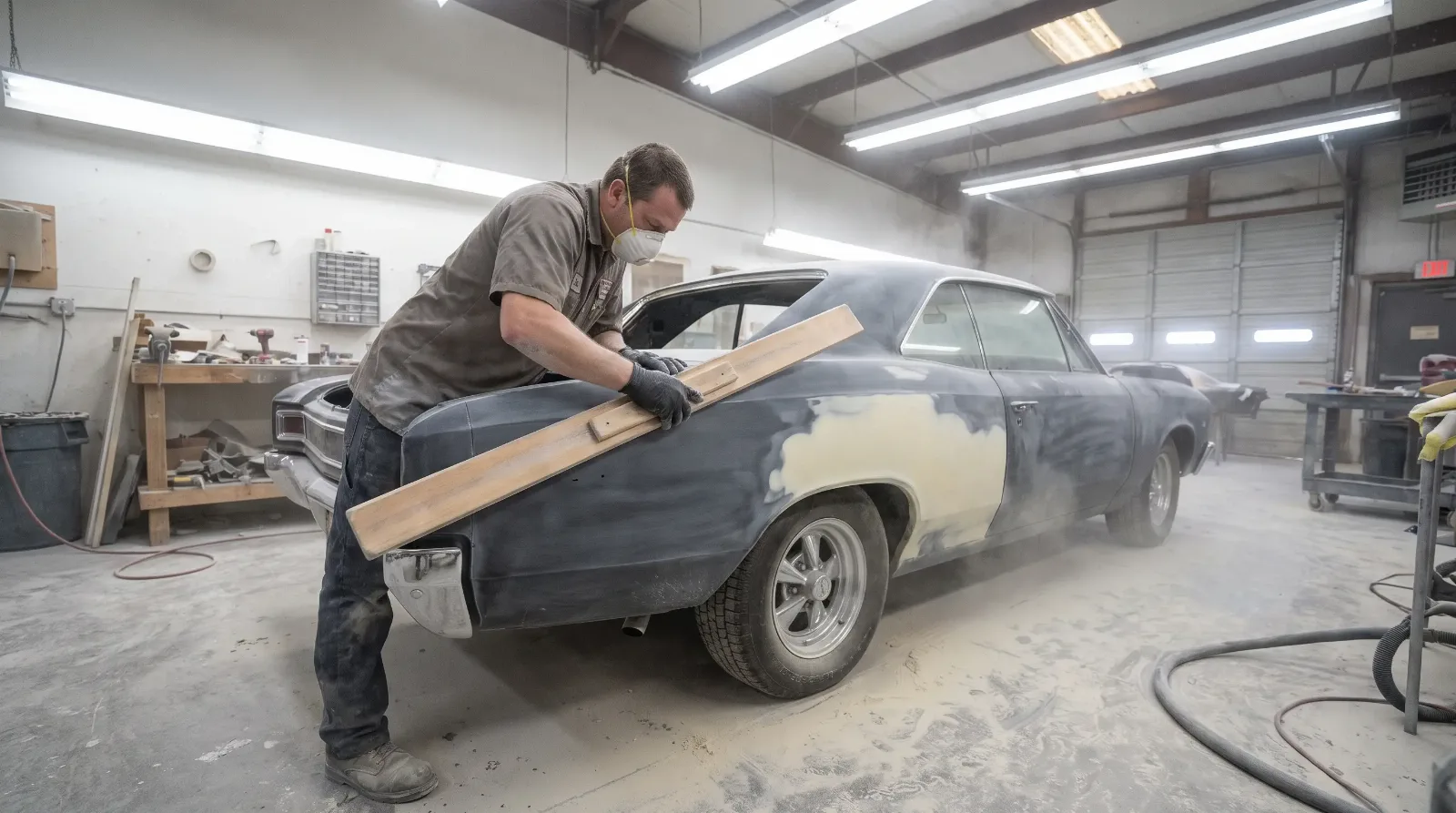
Labor is the biggest component, and the hours are what separate a frame-off job from a lesser one. A frame-off job commonly takes about 1,000 to 2,000 shop hours, and concours builds 2,500 to 5,000 or more. Shop rates run about $85 to $150 an hour at most independent restoration shops, around $125 typical, and $175 or more at marque and concours specialists, so labor alone can pass $100,000. Metal repair and body prep take the largest slice, because panel gaps, door fit and body lines are set at this stage, and every hour spent here saves paint and rework later. Paint follows. A good finish requires blocking, priming and sanding several times, and the labor outweighs the material.
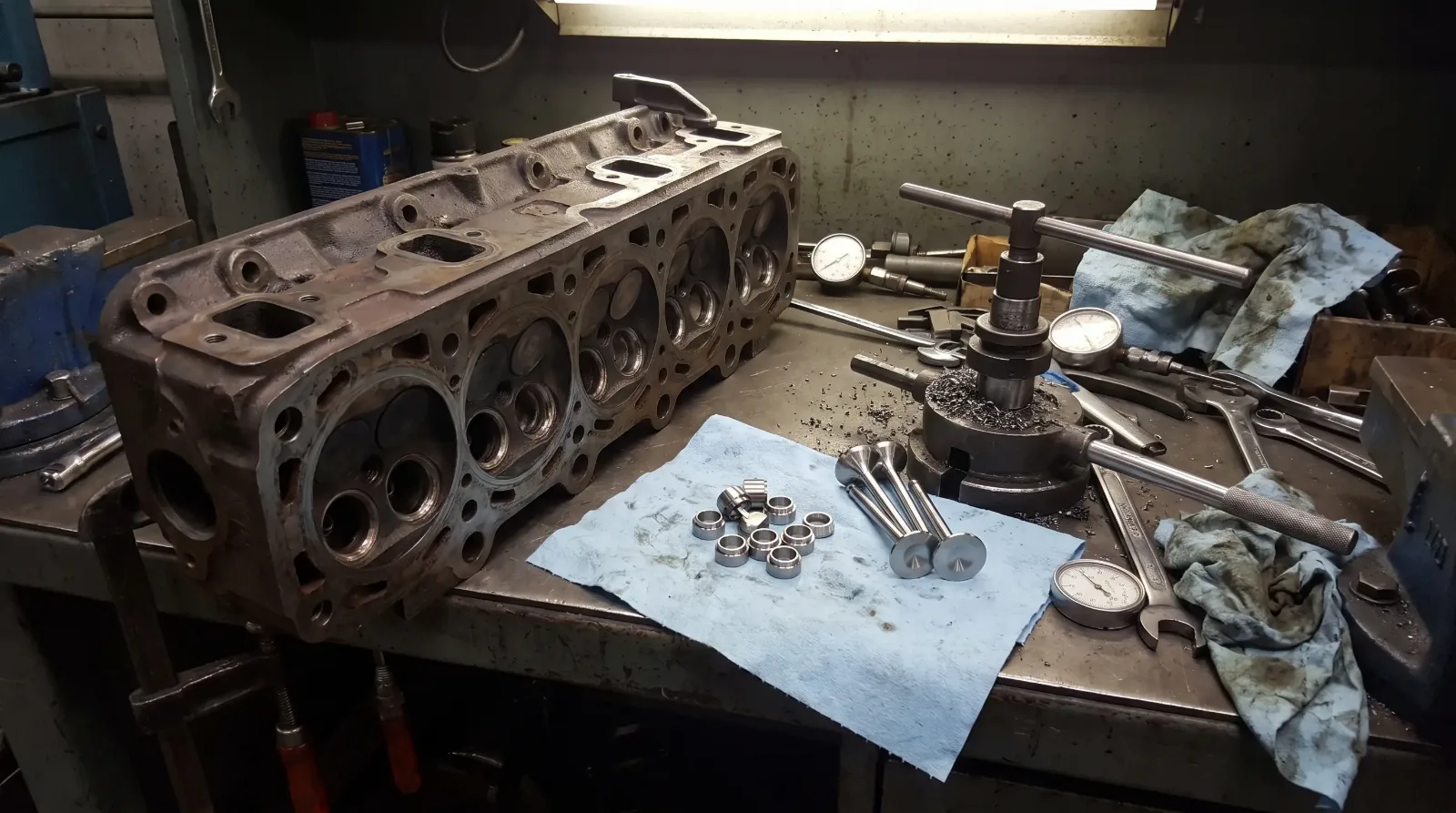
The drivetrain is a separate budget. A rebuild of an engine, transmission and rear axle with correct parts can cost as much as a late-model used car, and an engine that must be period-correct for judging costs more than one built for the road. Suspension and brakes are cheaper by comparison, but they are not optional: a bare chassis that is refinished while worn bushings and tired brake lines go back on makes little sense. The interior is next. Upholstery, carpet, headliner, door panels and dash restoration are considerable, and cars with difficult or discontinued trim need custom work. The cost of that last piece is covered in our guide to the interior bill.
Frame-off versus other approaches
A frame-off job costs more than a restoration done with the body on the frame, and the premium is mostly access. With the body off, the shop can repair and coat the frame, floors and inner panels properly, and can finish the underside to the same standard as the top. In-frame work saves money and time but leaves some areas harder to reach. A restomod or driver build often uses a frame-off approach as well, so the decision should be driven by condition and goal rather than by prestige. If the car is solid and original, a lesser approach may preserve more of its value.
It is also worth being honest about value. A frame-off restoration on a common model can cost more than the finished car will bring at sale,, and a rare model is the main place where cost and market value converge. Owners and appraisers often point out that buying a finished car is usually cheaper than restoring one. Restore for the car you want to own, not for the check you hope to cash.
How to control the price
Get the scope in writing, with the finish level stated, and ask for the estimate by phase. Decide which components are being rebuilt, replaced or reused, and which are excluded. Source rare parts early. Have the shop report changes in writing as discovered, and keep a reserve of 20 to 30 percent on top of the estimate for the unknown, more on a car from a salt-belt state. Our overall Classic Cars Arena's cost breakdown gives the ranges for each category across approaches, and it is a useful cross-check against a shop's proposal.
- Ask for the labor hours behind each phase, not just the dollar total.
- Confirm who sources parts and what markup applies.
- Agree on the process for approving discovered work.
- Request progress photographs at each milestone.
"A frame-off car is priced against the cost of building it, but it is valued against the market's opinion of the finished car. Those two numbers do not have to meet. Know the gap before you commit."
Marcus Feld
Picking a shop for the work
Frame-off work is a specialty. Not every shop is set up for body removal, chassis finishing and full documentation, and the ones that are will show you finished cars and let you speak to past customers. When you are ready to build a list, review restoration shops that do frame-off work and request written estimates on the same defined scope. Compare structure and labor hours, not only the final figure, and favor the shop that explains its assumptions.
Sources and notes
- Hagerty UK: which classic cars are worth restoring, restoration costs often exceeding owner expectations and finished cars holding value better
- Allstate Canada: buy restored or buy to rebuild, buying a finished car is usually cheaper than restoring, with a $100,000 restoration example worth far less when done
- Wikipedia: Unibody, unibody construction, the 1934 Citroen Traction Avant and the 1960s industry shift
- Wikipedia: Body-on-frame, which vehicles still use a separate frame
- Wikipedia: Concours d'Elegance, how concours judges rate each component for originality and condition
- Dollar ranges, labor hours and shop rates are 2026 estimates compiled from shop quotes and published restoration guides, and vary with car, region and shop.