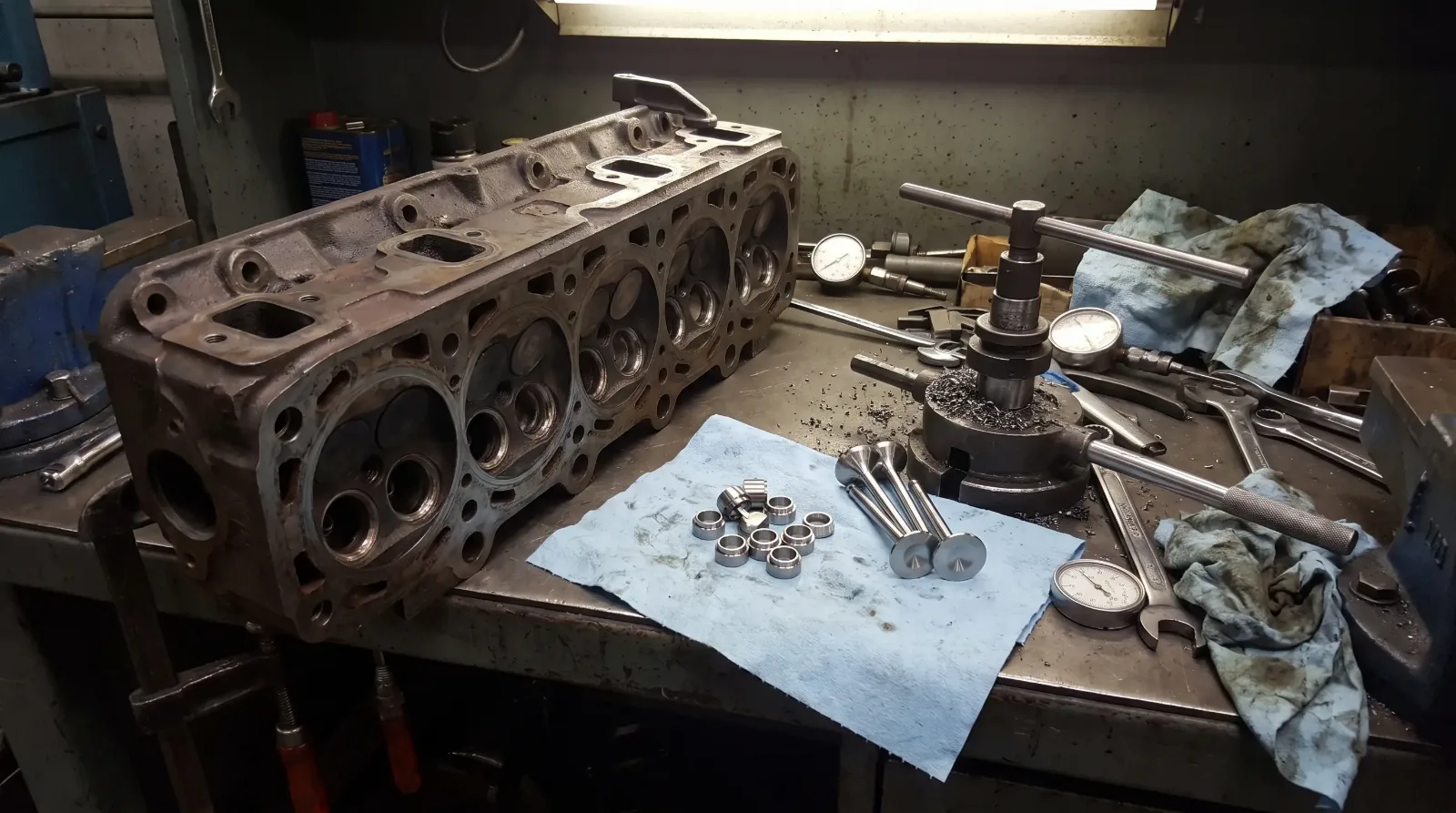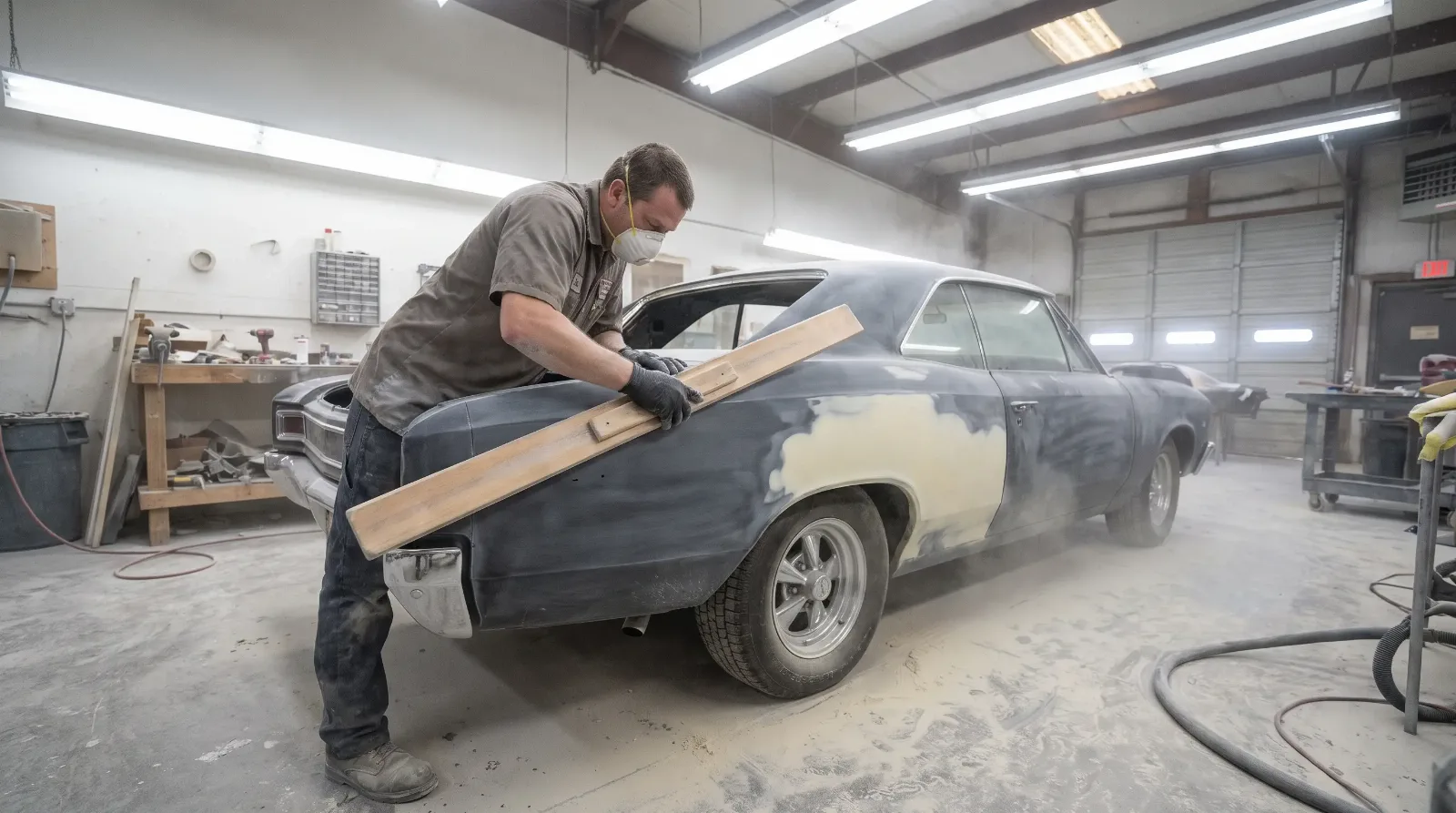
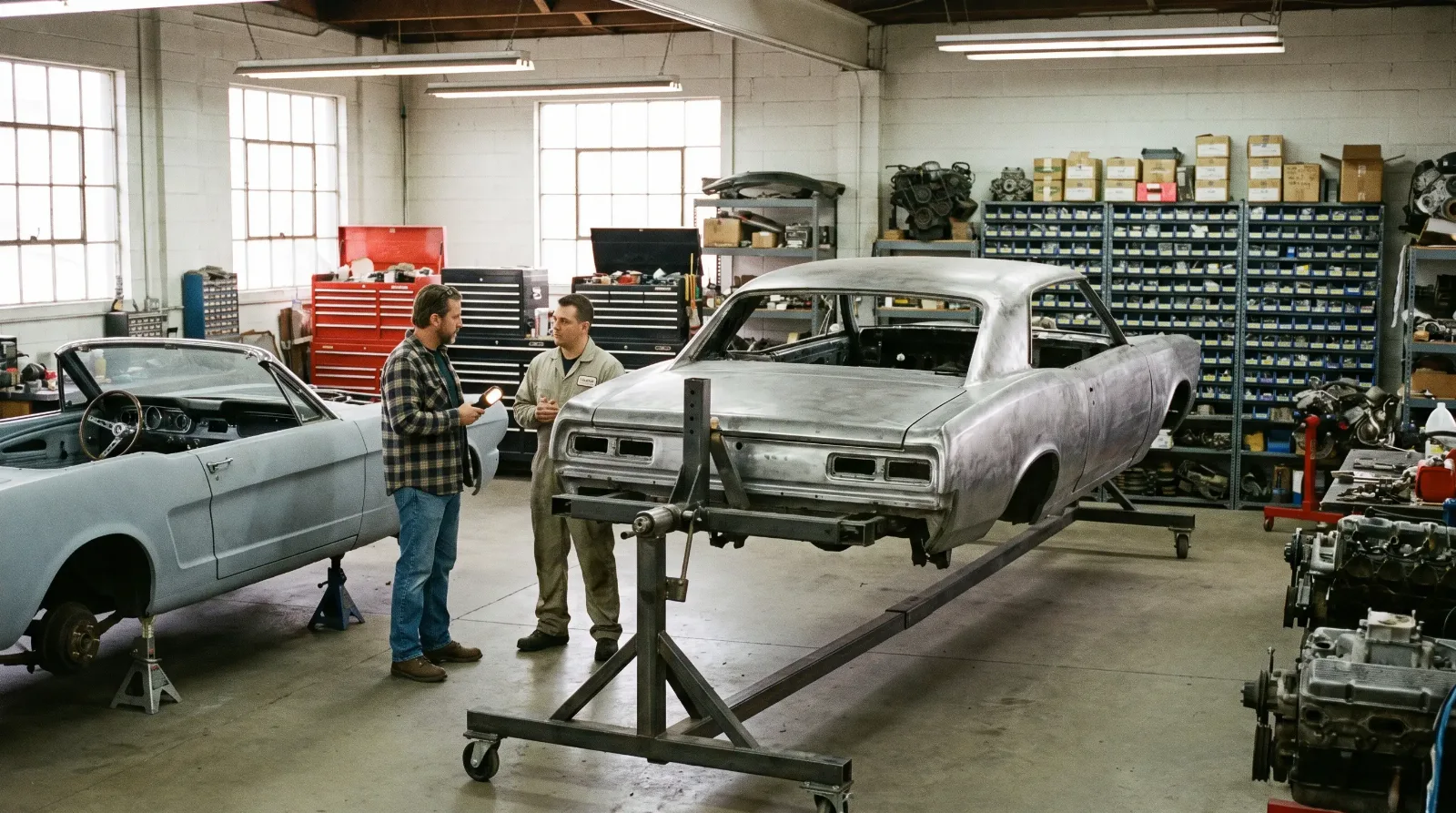
A website shows finished cars photographed under good light. The shop floor shows how those cars were made. Plan to spend at least two hours on a visit, and go on a weekday when people are actually working. A shop that only meets customers by appointment on Saturdays with the crew absent is hiding the part you came to see. Walk it the way you would inspect a car: slowly, systematically, and with a flashlight in your pocket. The guidance on finding the right shop covers the paperwork side. This is the physical side.
Start with the cars in progress, not the trophies
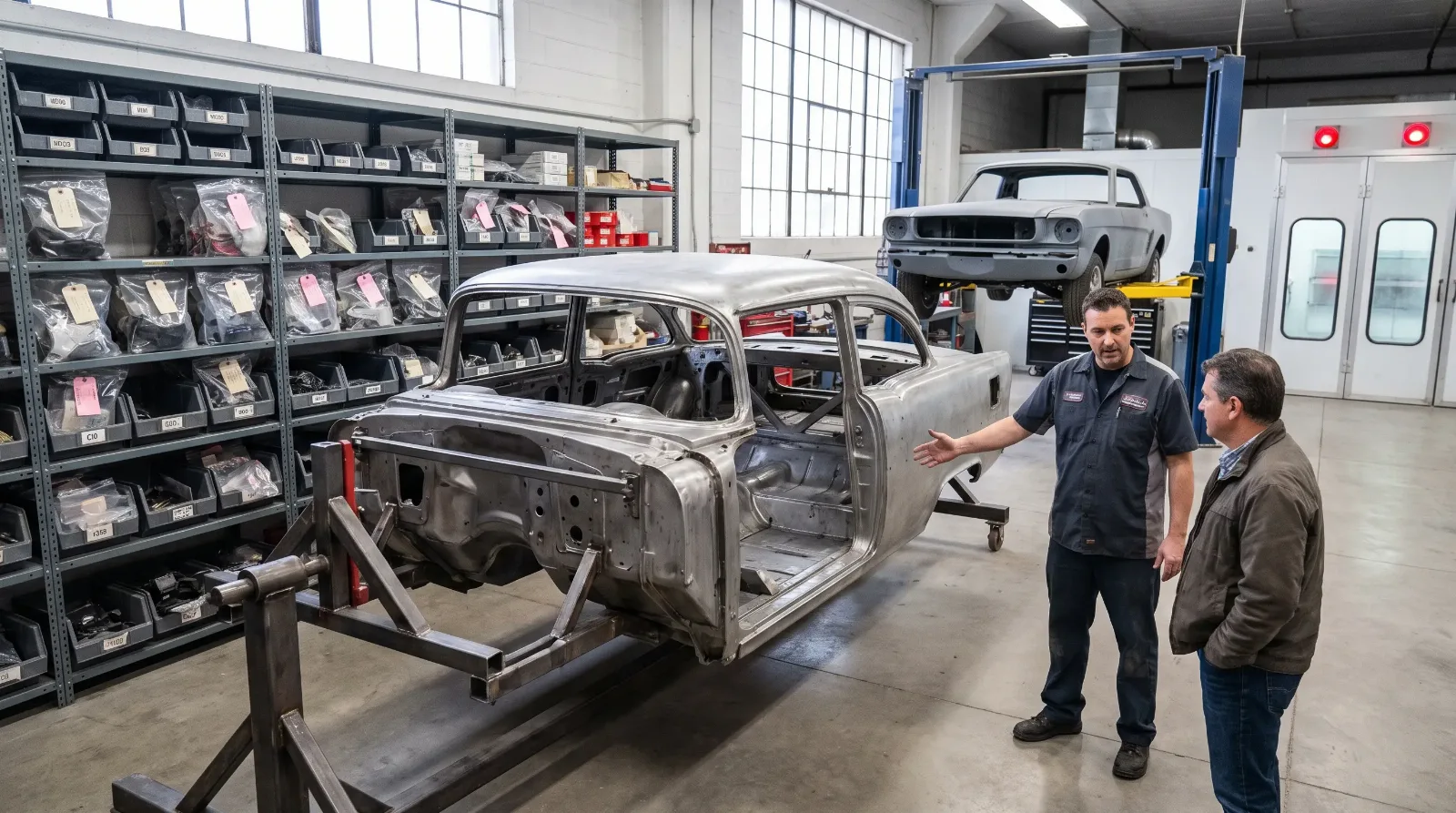
Ask to see work in progress first. Finished cars and trophies prove somebody can make a car look good once. Cars in the middle of a job show process. Look at how stripped shells are supported: on a rotisserie or proper stands, with the body braced so doors and openings do not sag. A shell that has been sitting unbraced for months can pull out of square, and every panel fitted afterward inherits the error.
Look at the sequence. Is there a car in primer, a car in bare metal, a car being reassembled? A healthy shop has projects at several stages. Ask how many cars are in the building and how many people work on them. Every project needs steady hours of attention, and a shop with far more cars than people is likely to warehouse yours. Check dust and dates too. Cars that look untouched for a long time, with tags yellowed and tires flat, tell you what priority your car will get when it is not the loudest customer.
Metalwork: where the quality hides
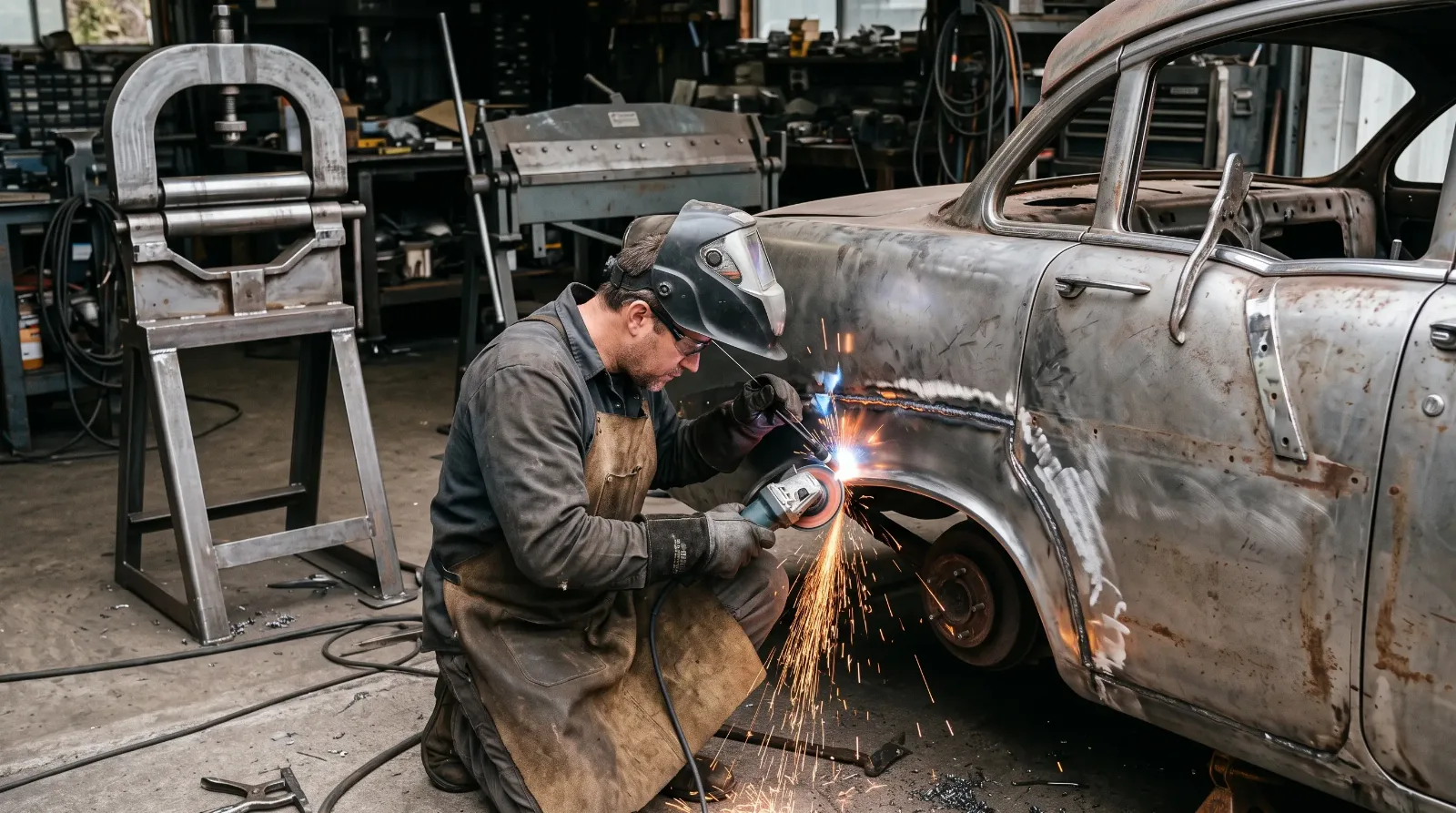
Paint covers everything, so judge the metal before the paint. Look at repaired panels in bare steel or primer. You want to see new steel welded in, with welds ground flush and clean, not thick layers of filler used to bridge rust holes. Ask if the shop uses lead or filler and where. A thin skim of filler over good metal is normal. Thick fills that bridge holes are not.
Check the tools. A shop doing real body work has a sheet metal brake for bending flat stock, a shrinker and stretcher, an English wheel (which stretches sheet steel into compound curves) or equivalent, and quality TIG and MIG welders. It does not need all of them, but it should be able to tell you how it forms a patch panel and why. Tap a primed panel and look down its length at an angle to see waves. Ask to look at a fender or quarter that has been fit but not painted, and check the gaps. Door gaps should run consistent from top to bottom, with no pinched corners.
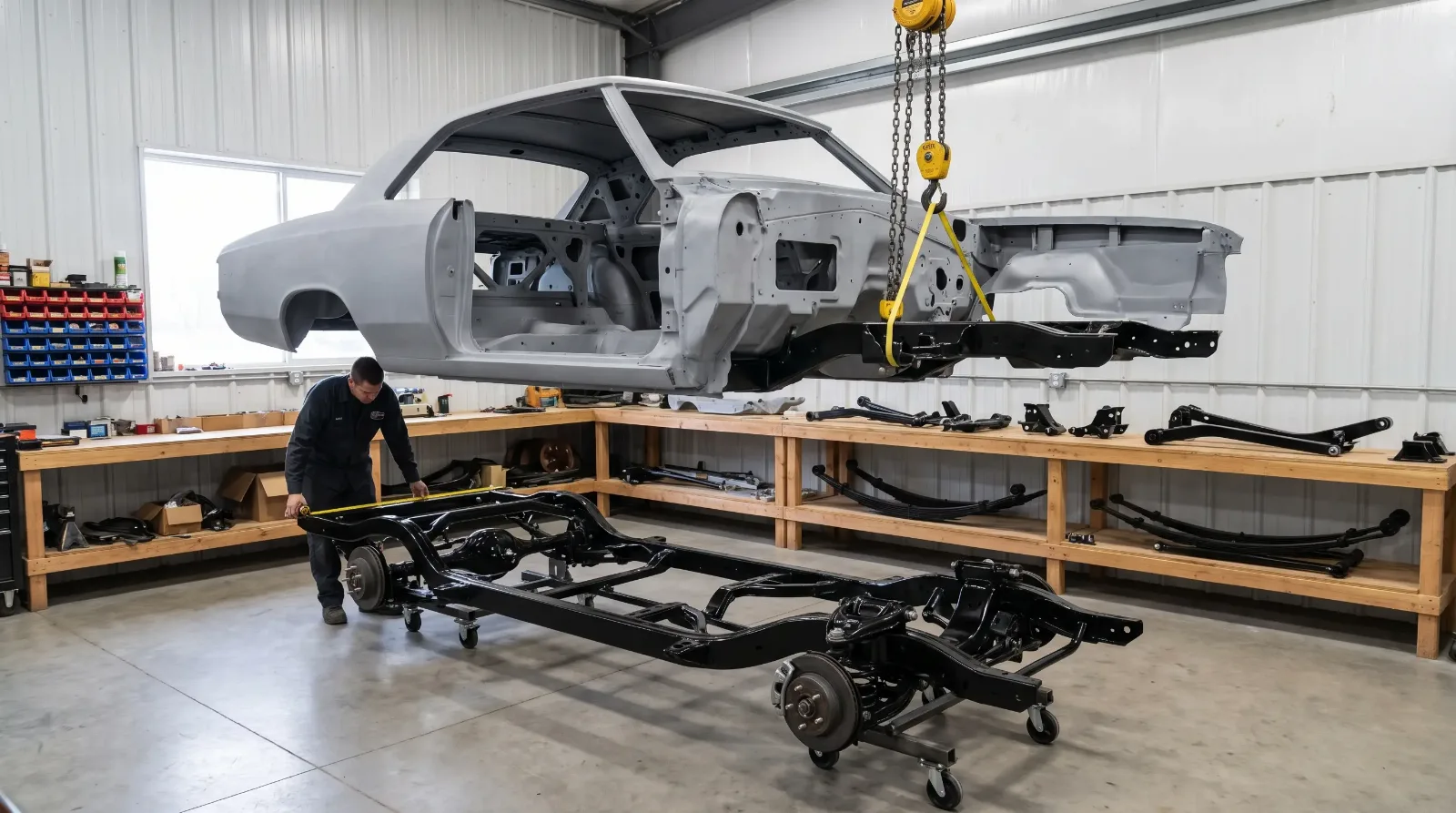
If your car needs deep structural work, ask to see a comparable project. Anyone discussing frame-off work should have a car, or photographs of one, in the middle of it, with the body off and the frame measured and straightened or replaced as needed. A shop that has never done one will learn on your car.
Paint area, assembly and parts organization
Paint needs a dedicated, clean, ventilated booth, separate from where sanding and grinding happen. Dust in the paint area is dust in your clear coat. Ask whether the booth is baked or heated and how they control temperature and humidity. You do not need a quality lecture, just a clear answer.
Then look at parts. Disassembled cars generate thousands of components, and the shops that lose nothing do it with bags, tags, labeled bins and photographs. Walk past the parts shelves. Are fasteners bagged per car? Is original trim wrapped and shelved, or tossed in a pile? Your car's data plate, original glass and numbered pieces should be easy to find. If the parts room looks like a flea market, expect reassembly to cost extra hours and original pieces to go missing.
Check the tooling for the job in front of you
Match the equipment to your car. A unibody needs a bench or fixture that can verify measurements, and a body-on-frame car needs space and stands to hold the body clear of the chassis. Look for a media blast cabinet or an outside vendor relationship, and ask how they protect thin panels from warping during stripping. Ask how they handle wiring and whether anyone on staff does it, or whether it goes out. None of these answers is disqualifying. Each tells you where the shop is strong and where your schedule may stall while someone else does the work.
The people, the housekeeping and the questions
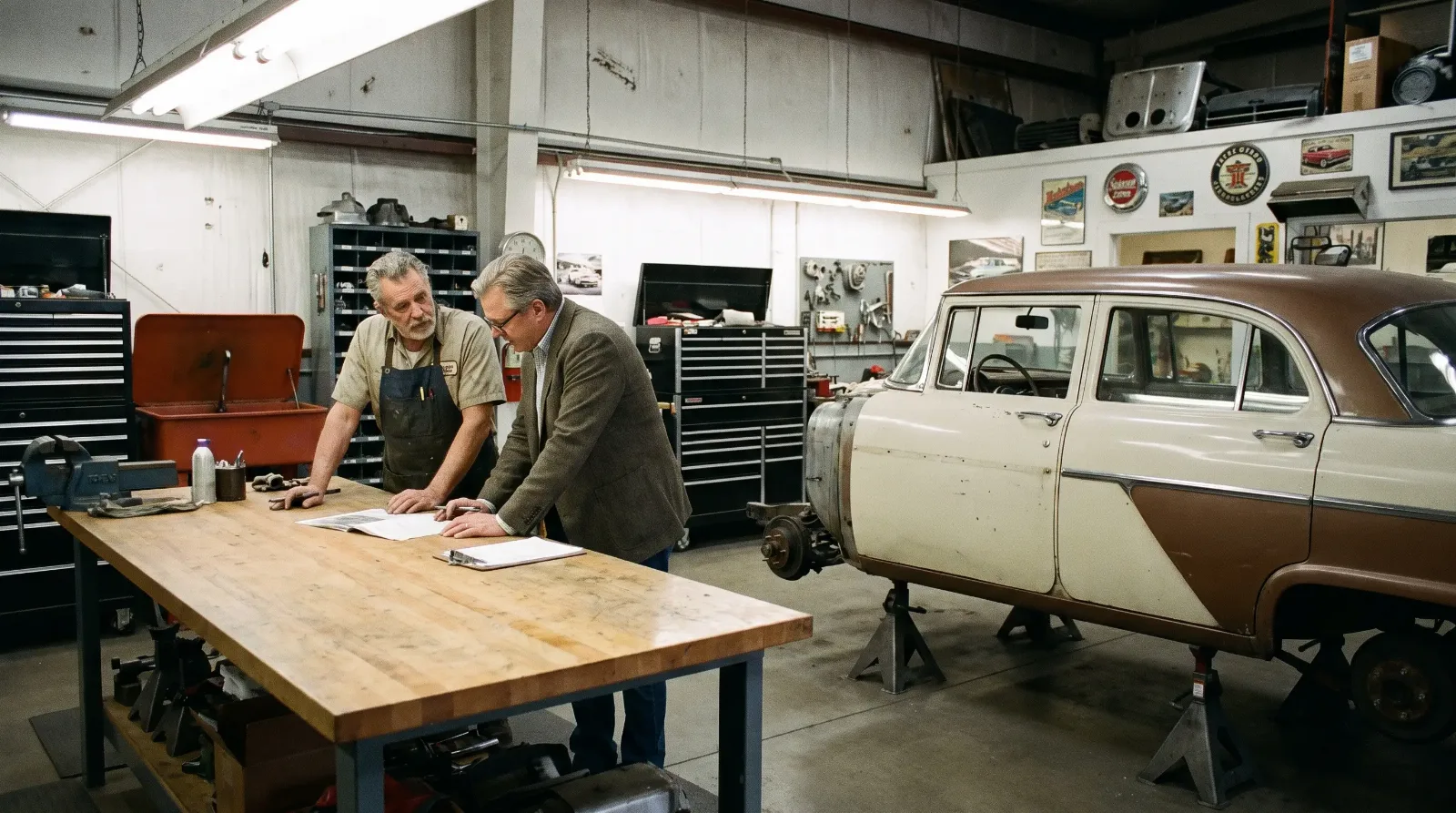
A tidy floor is not proof of good work, but a filthy one makes it unlikely. Look for clear aisles, fire extinguishers, covered cars where dust matters, and welding screens. Then watch people. Does the owner know every car in the building by name? Do the technicians speak up when you ask a question, or does everything go through the front desk? You are hiring hands, so meet them.
- Who will actually work on my car, and how many hours a week will they have?
- Can I see a job similar to mine at the stage mine is in now?
- How do you handle a surprise, such as hidden rust, and who decides?
- Which operations do you send out, and to whom?
- Can I speak with two customers whose cars were finished at least a year ago?
Pay attention to how those questions land. Good shops answer plainly and welcome a visit with a notepad. Evasive answers or irritation tell you how a disagreement over the bill will go.
"Look at what the shop did when nobody was looking. The back corner, the underside of a panel and the inside of a quarter tell you more than the show car out front."
Ray Delgado
After the visit
Write your notes the same day, while the details are fresh, and photograph anything the shop allows. Compare shops against each other on the same list. One more factor deserves thought before you decide: whether your car belongs with a shop that focuses on its brand or one that handles all kinds of work. That question is covered in specialist or generalist, and it is much easier to answer once you have stood in both kinds of building.
Sources and notes
- All Chevy Performance: tips for finding the right restoration shop, inspecting other cars' work and rust repair, staff turnover, in-house versus outsourced work, progress photos
- English wheel (Wikipedia), how the tool forms compound curves from flat sheet metal in restoration work
- Press brake (Wikipedia), the bending machines used on sheet metal
- Gas tungsten arc welding (Wikipedia), TIG welding and why it suits thin material
- Maximizing your spray booth performance, FenderBender, balanced airflow, filters, lighting and booth cleanliness
- How to avoid a restoration nightmare, ClassicCars.com Journal, monthly progress reports with photos and monthly time-and-materials billing as signs of a well-run shop