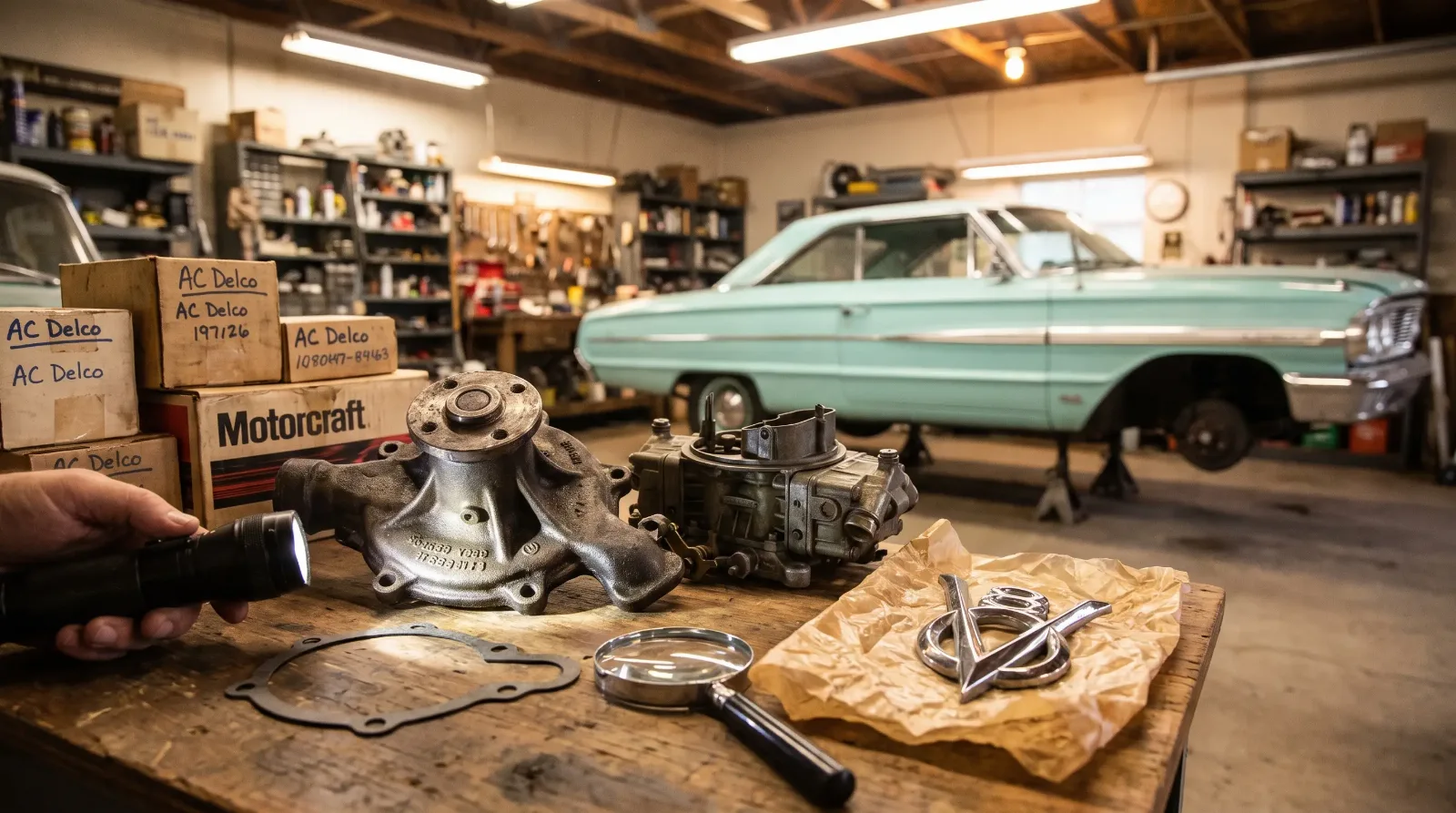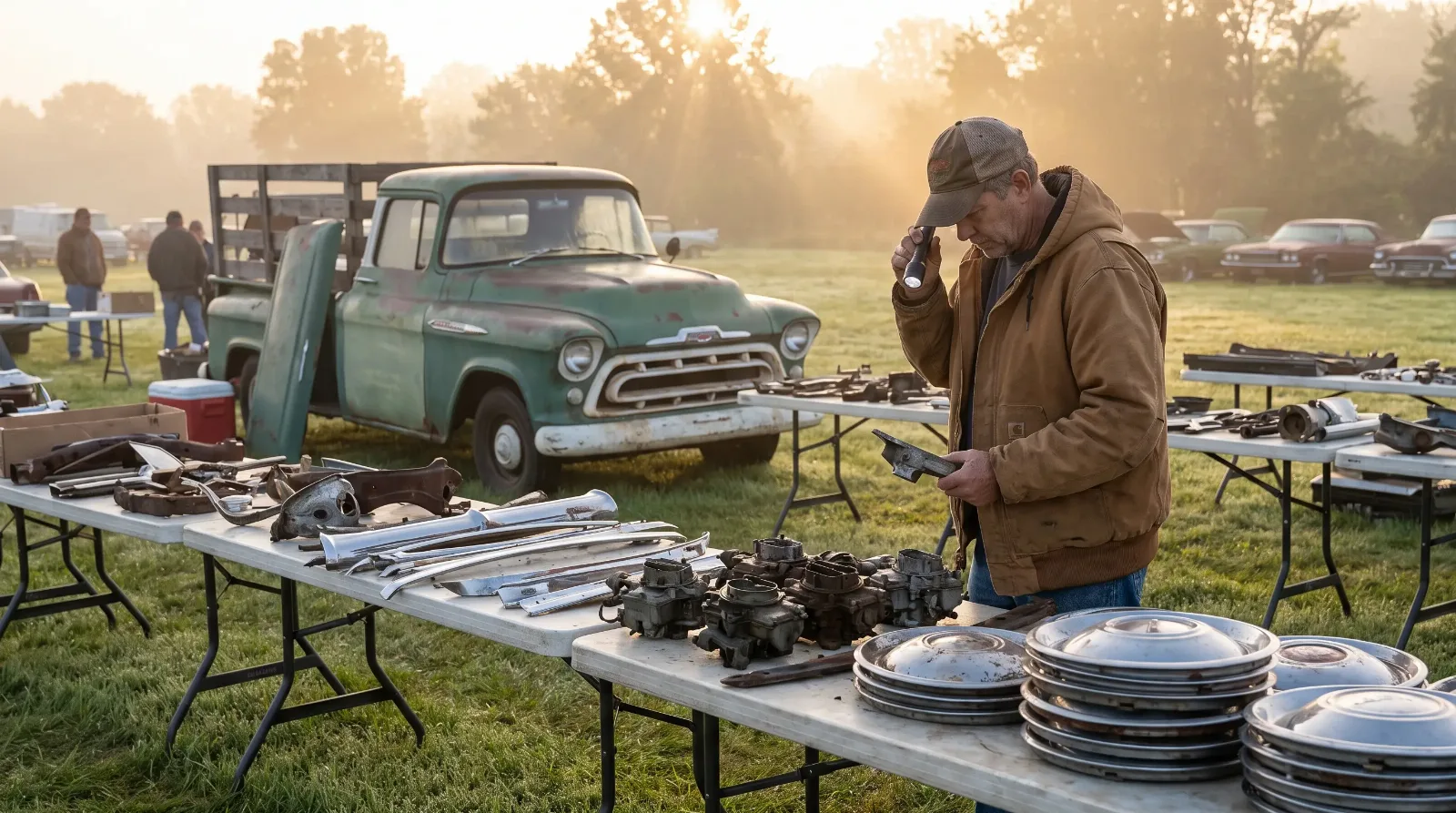
Before the sun is fully up, a man in a worn canvas jacket is already walking the second row with a flashlight in one hand and a folded list in the other. He stops at a table, picks up a cracked piece of trim, turns it over twice and sets it back down without a word. Then he walks on. He is not being rude. He is working, and he has been at it since the gates opened.
That is the rhythm of a swap meet. It looks like a flea market and behaves like one, but the stakes are different. The part you need may be on one table out of a thousand, and you will not know which until you walk past it. If you are working out where to start with finding parts, a swap meet is one of the best places in the hobby, and also one of the easiest to waste a day.
The big meets and what they are like
Hershey, in Pennsylvania, is the one most people mean when they say the swap meet. The AACA Eastern Division Fall Meet takes place there in early October, and it fills the grounds around Hersheypark and the Giant Center with roughly 9,000 vendor spaces, plus a Car Corral of cars for sale. It leans toward antiques and pre-war cars, though you will find parts for nearly everything, and sellers are limited to vehicles and parts 25 years or older. Carlisle, also in Pennsylvania, runs a series of events across the year, including Ford, GM, Chrysler and truck nationals, a Corvette weekend and spring and fall collector car flea markets. That focus helps if you are chasing a specific marque.
Pomona, in Southern California, is the West Coast answer. The Pomona swap meet and car show is held at the Fairplex about seven times a year, starting at 5 a.m., and it bills itself as the West Coast's largest automotive swap meet. Southern California cars tend to age in a dry climate, so rust-free parts are easier to find there than at many eastern fields. Dates and fees change, so check the official schedule before you plan a trip.
| Meet | Where | Best known for |
|---|---|---|
| Hershey | Pennsylvania | About 9,000 vendor spaces, antique and pre-war strength, broad selection |
| Carlisle | Pennsylvania | Marque-specific events through the year |
| Pomona | Southern California | Rust-free West Coast parts, held about seven times a year |
What to bring
Pack light and smart. Cash comes first, in small bills, because many sellers do not take cards and a stack of twenties makes haggling easier. A wagon or folding cart saves your back after the third hour. A small flashlight, a tape measure, a magnet and a pocket mirror let you inspect parts properly. A magnet tells you whether trim is steel or something else, and whether a panel has filler hiding under the paint.
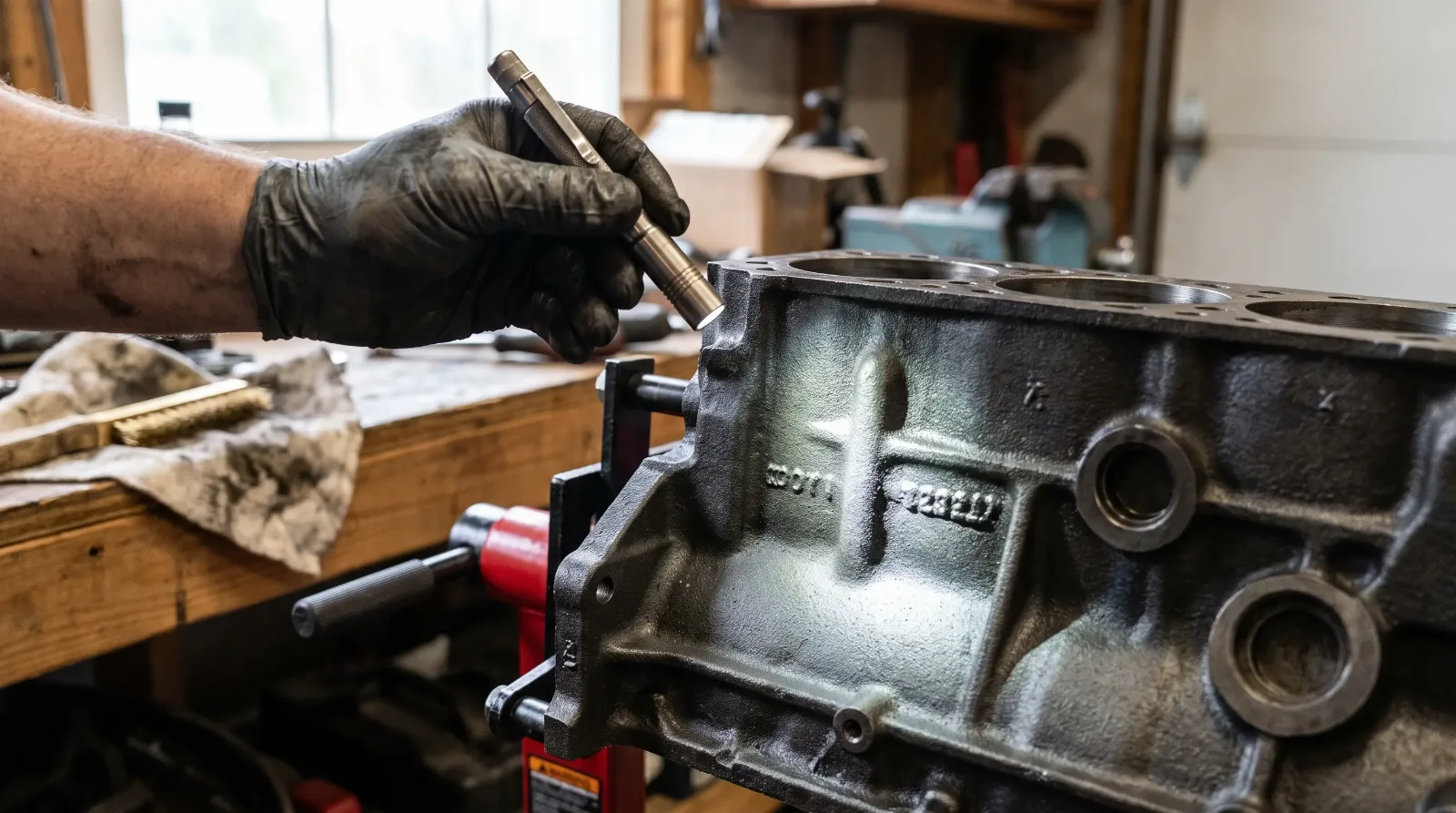
Bring a list, and bring photos of the parts you need, with numbers, dimensions and the year and model of your car. Bring a reference sheet for casting numbers and part numbers, too. Knowing how to read them is the difference between a find and a mistake. Wear good shoes. You will walk miles.
When to go and how to walk it
Early is better for the best parts. The sharpest buyers are there at dawn, and the rare pieces go first. Late is better for prices, because sellers who do not want to haul things home will deal on the last day. Neither is wrong. Decide which matters more to you.
Walk the whole field once before you buy anything unless you see a part you cannot lose. You need a sense of what things cost and who has what. Then go back for the pieces you want. A good habit is to note the row and the seller's table number for anything you plan to return to, since a field this big can swallow your memory.
How to inspect and how to haggle
Look at the part before you talk about money. Check for cracks, warping, rust-through, missing pieces and signs of repair. Look at threads and mating surfaces. Ask whether it comes from a car that ran or from a stock of unused parts. If the seller says a part is NOS, treat that as a claim and check it yourself.
Then talk price. Most sellers expect to negotiate. Ask politely what the best price is, and offer a fair amount, not an insult. Buying several things from one seller gives you leverage. Be ready to walk away, because the part you want may well appear at another table for less. And if you walk away and come back later, expect the price to have moved in either direction.
"The best deal I ever saw made was between two people who both left a little happy. Nobody won, and that is how you know it was fair."
Nora Beckett
Mistakes that cost money
The most common is buying a part that does not fit. Compare it to your old part, or to a photo with measurements, before you hand over cash. The second is buying a damaged piece because it is rare and you are excited. Rarity does not fix a crack. The third is spending the budget before you reach the table that matters.
Also watch for parts that have been dressed up. Reproductions sold as originals, and cleaned-up used parts sold as new, both appear at every large meet. Ask direct questions, and trust a seller who answers them plainly. The ones who dodge are telling you something.
Beyond the meet
A swap meet is one source among several. If you leave without what you need, you can try classic junkyards, specialist dealers and online listings. Many people use the swap meet to learn what things cost, then buy the expensive piece elsewhere once they know a fair price. Others find the part that makes the whole car possible, in the last hour of the last day, from a seller who was about to pack up.
Go with a list, a small budget for surprises and a willingness to talk to people. The parts are only half of why people keep coming back. The rest is the field at sunrise, the coffee, and the stranger at the next table who knows exactly what you need, and who might have one in the truck.
Sources and notes
- Old Cars Weekly, Full menu awaits Hershey Fall Meet visitors, 9,000 vendor spaces, Car Corral, October timing
- Merrick Auto Museum, The Hershey Fall Meet, history since 1955 and the 25-years-or-older rule for sale items
- Carlisle Events, event calendar, marque-focused nationals and collector car flea markets
- Carlisle Events, home page, Carlisle, Pennsylvania location and flea market and corral format
- Pomona Swap Meet and Classic Car Show, Fairplex location, seven events a year, 5 a.m. start