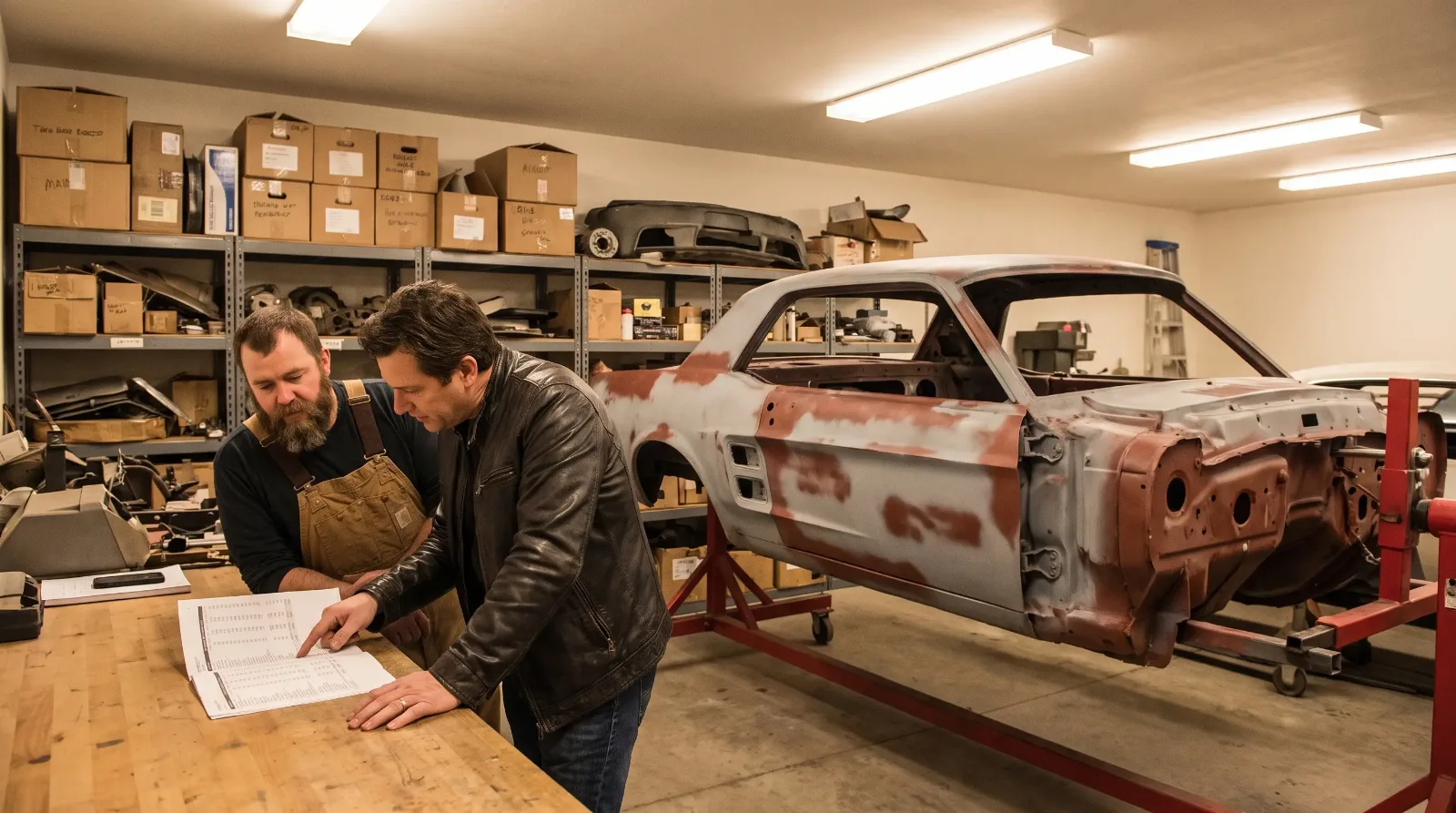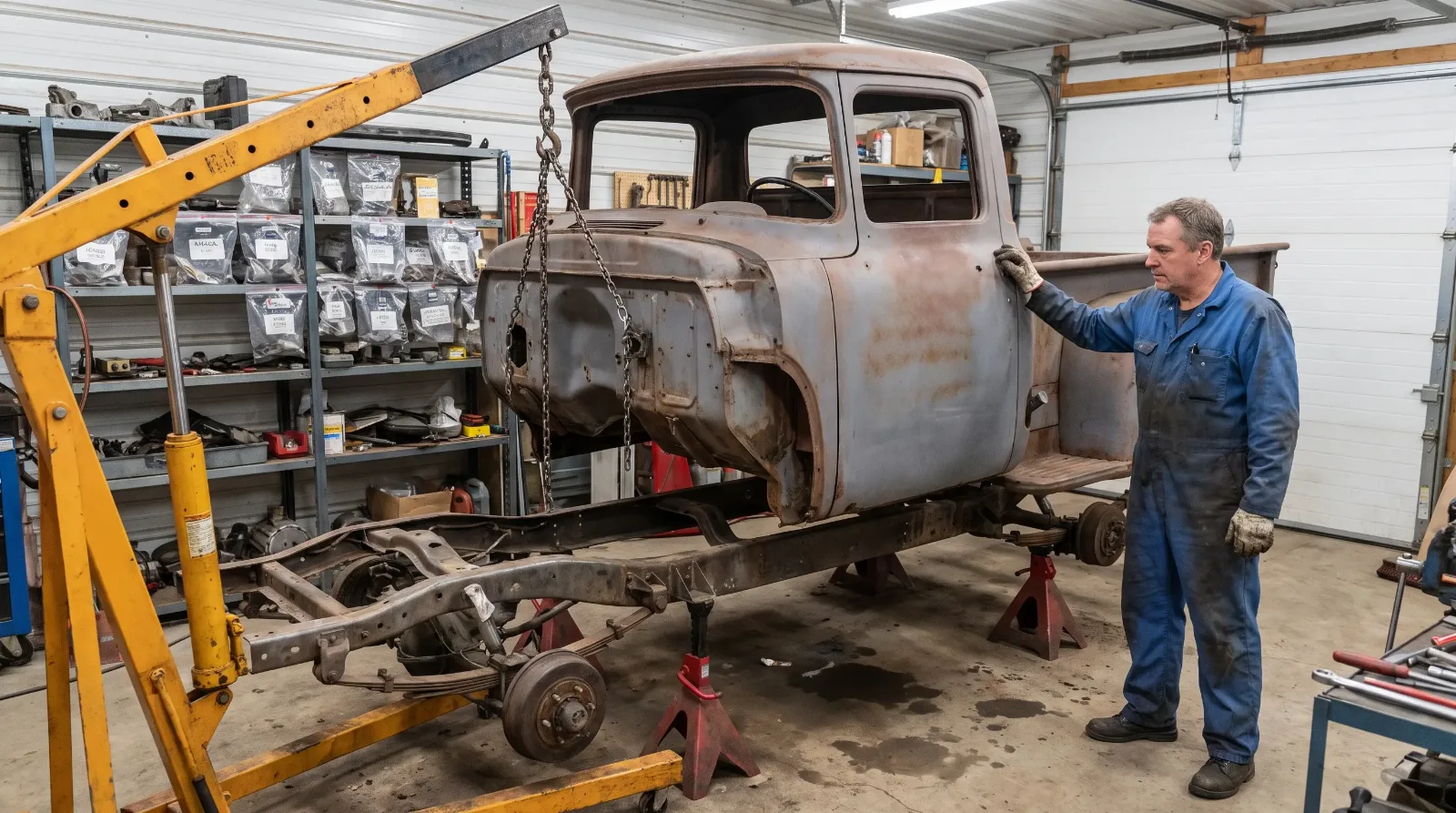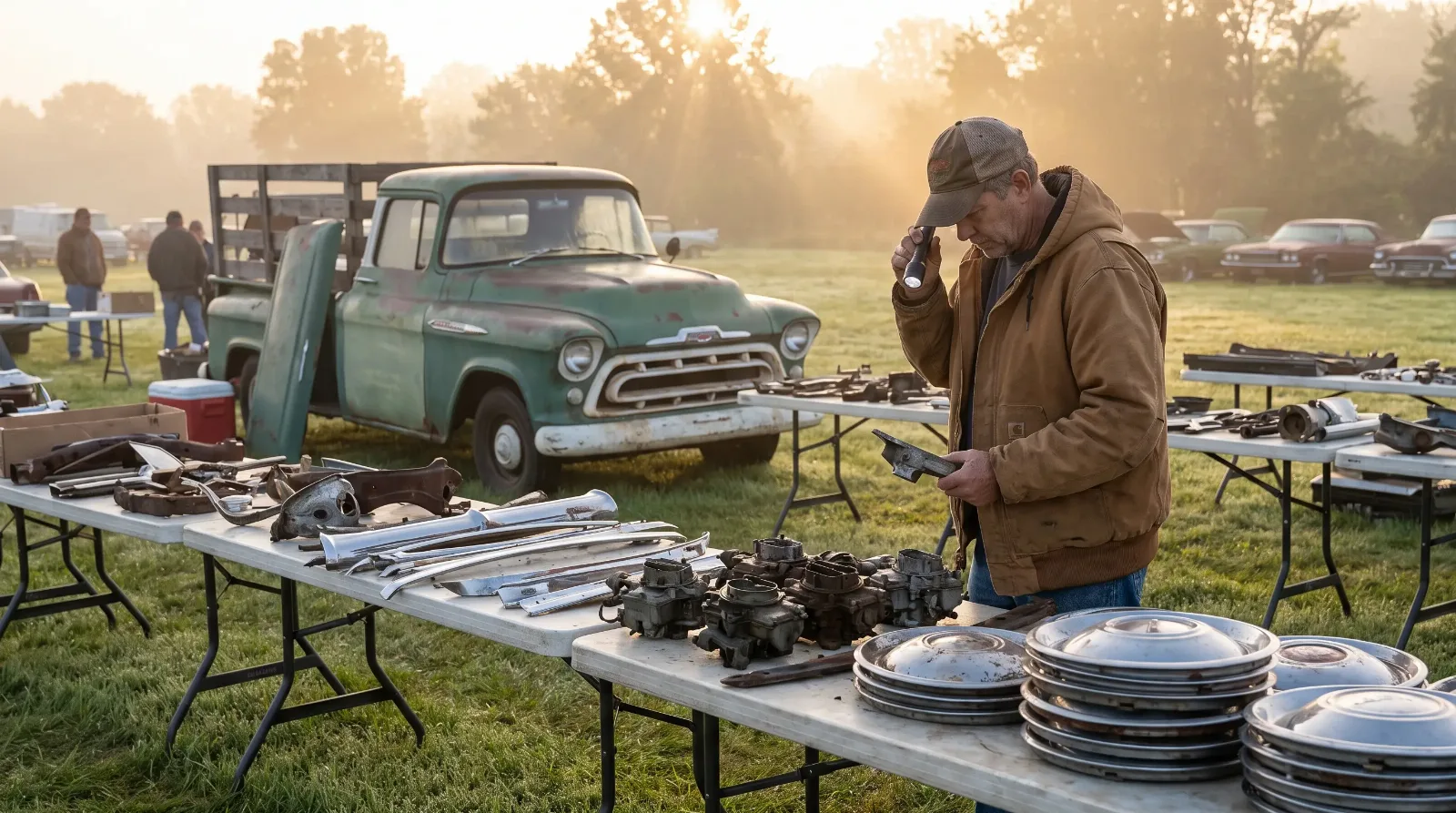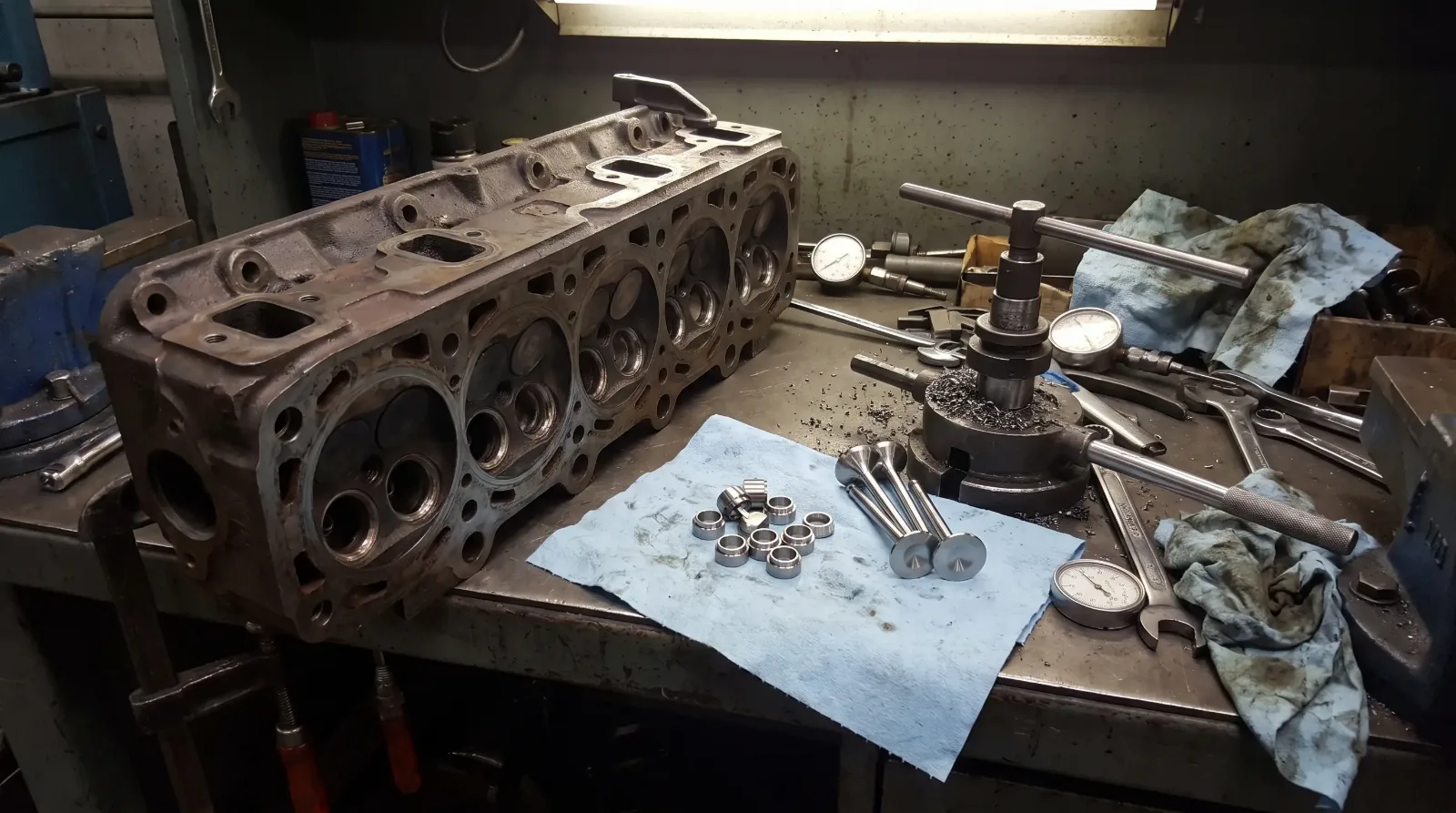
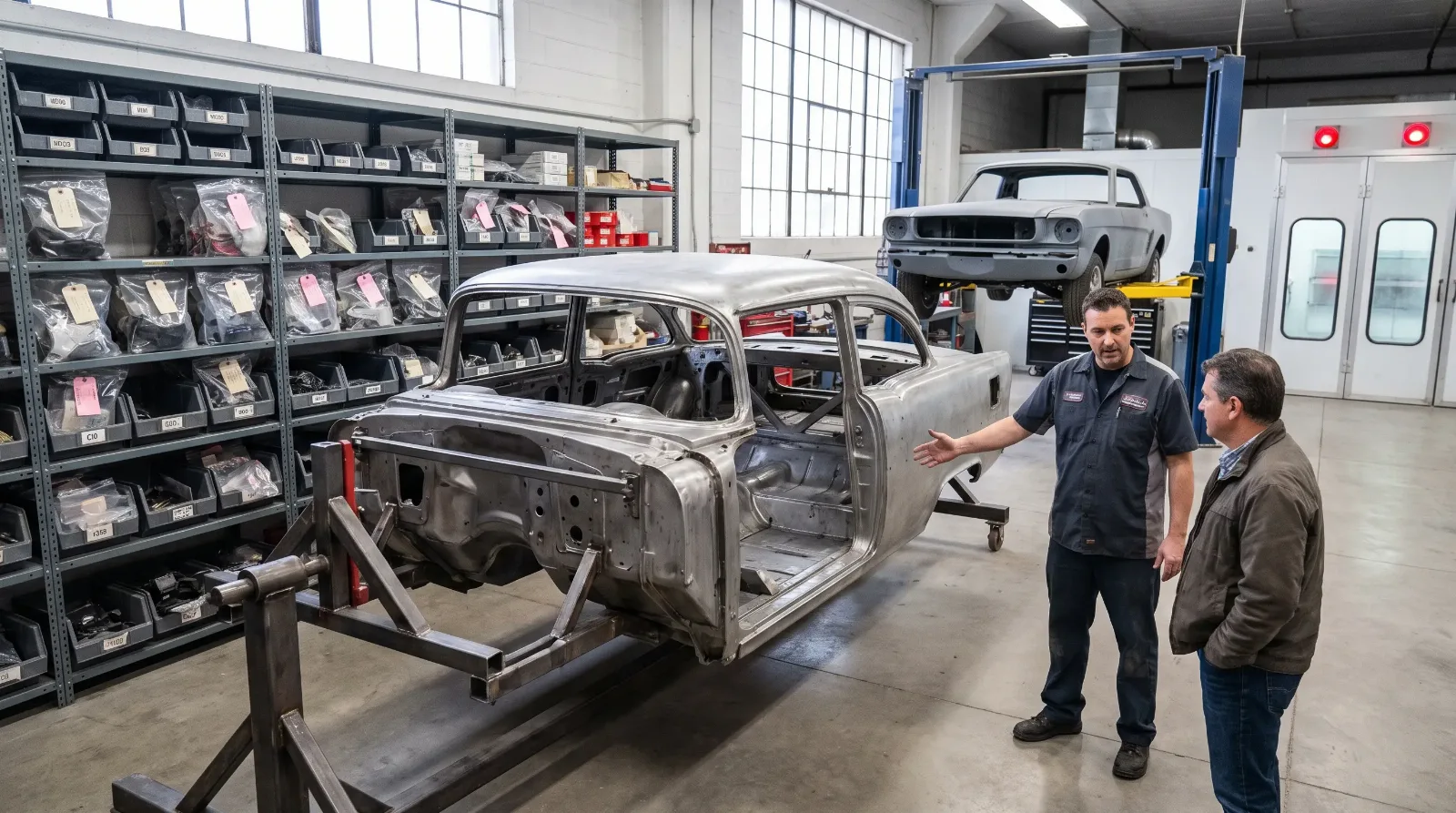
Most restoration horror stories do not start with a bad car. They start with a handshake. Somebody walks into a shop with nice cars in the lobby, agrees to a number that sounds reasonable, hands over the keys, and a year and a half later they are looking at a bare shell on a rotisserie, an invoice that is double the estimate, and a shop owner who stopped returning calls sometime in the spring.
I have watched that happen to people who knew more about their own cars than the shop did. Knowing your car and knowing how to choose a restoration shop are two different skills. This piece is about the second one: how to size up a shop before it gets your car and your checkbook, what has to be in writing, and the warning signs that show up early if you know where to look.
Know what job you are buying before you shop for a shop
A shop cannot give you a straight answer if you cannot tell it what you want. "Restore my Chevelle" means one thing to a guy who wants a clean weekend driver and something completely different to a guy chasing a judged show. The first job might be several hundred hours. The second can run into the thousands, and it needs people who know correct finishes, correct fasteners and correct markings, not just people who can lay down a straight panel.
Before you call anybody, get clear on the levels of restoration and pick the one that matches how you will actually use the car. Then shop for a shop that does that level every week. A restomod builder and a concours restorer can both be excellent and still be the wrong place for each other's customers.
| Job type | Typical scope | What the shop must be good at |
|---|---|---|
| Driver restoration | Mechanical refresh, rust repair, paint, interior, body stays on frame | Honest mechanical work, rust repair, keeping hours under control |
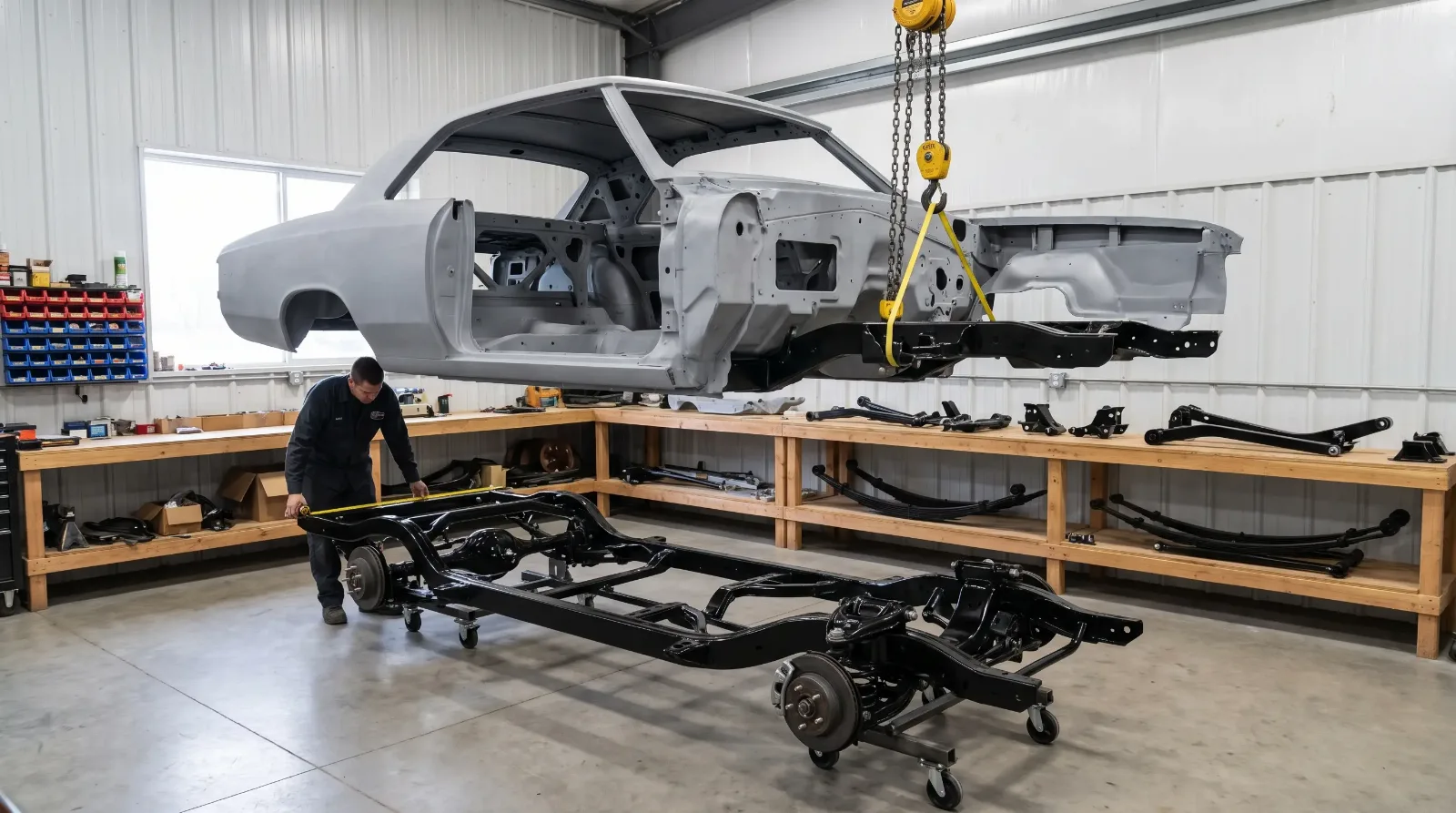
| Frame-off or rotisserie restoration | Full teardown, body off or on a rotisserie, every system rebuilt | Metalwork, parts organization, project management over a long build |
| Concours or judged restoration | Factory-correct finishes, markings, fasteners and date codes | Marque-specific research, judging experience, documentation |
| Restomod | Modern drivetrain, brakes, suspension and electronics in a period body | Fabrication, wiring, engineering the whole package to work together |
Write your goal down in a paragraph. Include how many miles a year you expect to drive, whether you care about numbers-matching components, and the most you are willing to spend before you would rather sell the car. That paragraph becomes the first page of every conversation you have with a shop, and it keeps everybody honest later.
Where good shops actually come from
The best leads are owners, not ads. Go to the shows where cars like yours are judged or driven in numbers, find the ones you would want to own, and ask who did the work. Owners will tell you, and they will usually tell you how it went, too. Ask whether the job came in on budget and on time, and whether they would go back. A long pause before the answer tells you plenty.
Marque clubs and registries are the next stop. Their members have been through this, and the technical people in those clubs know which shops do correct work and which ones just do shiny work.
Directories are a fine place to build a starting list. You can browse classic car restoration shops by location and specialty, then run every name through the checks below. A listing gets a shop onto your list. It does not get your car into its building.
Plan on talking to at least three shops. You learn more from comparing how they answer the same questions than from any one conversation.
The shop visit: what to look at
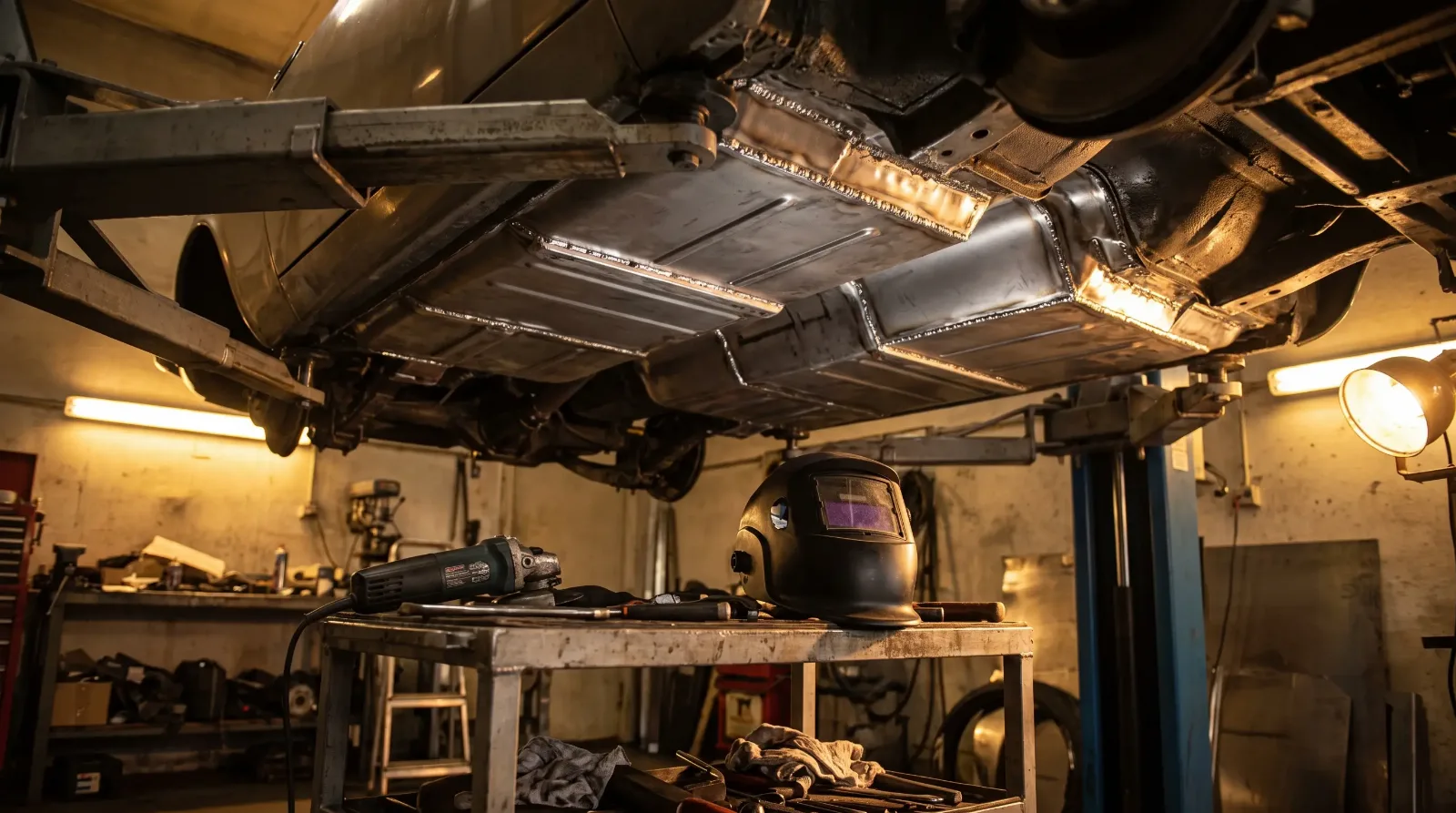
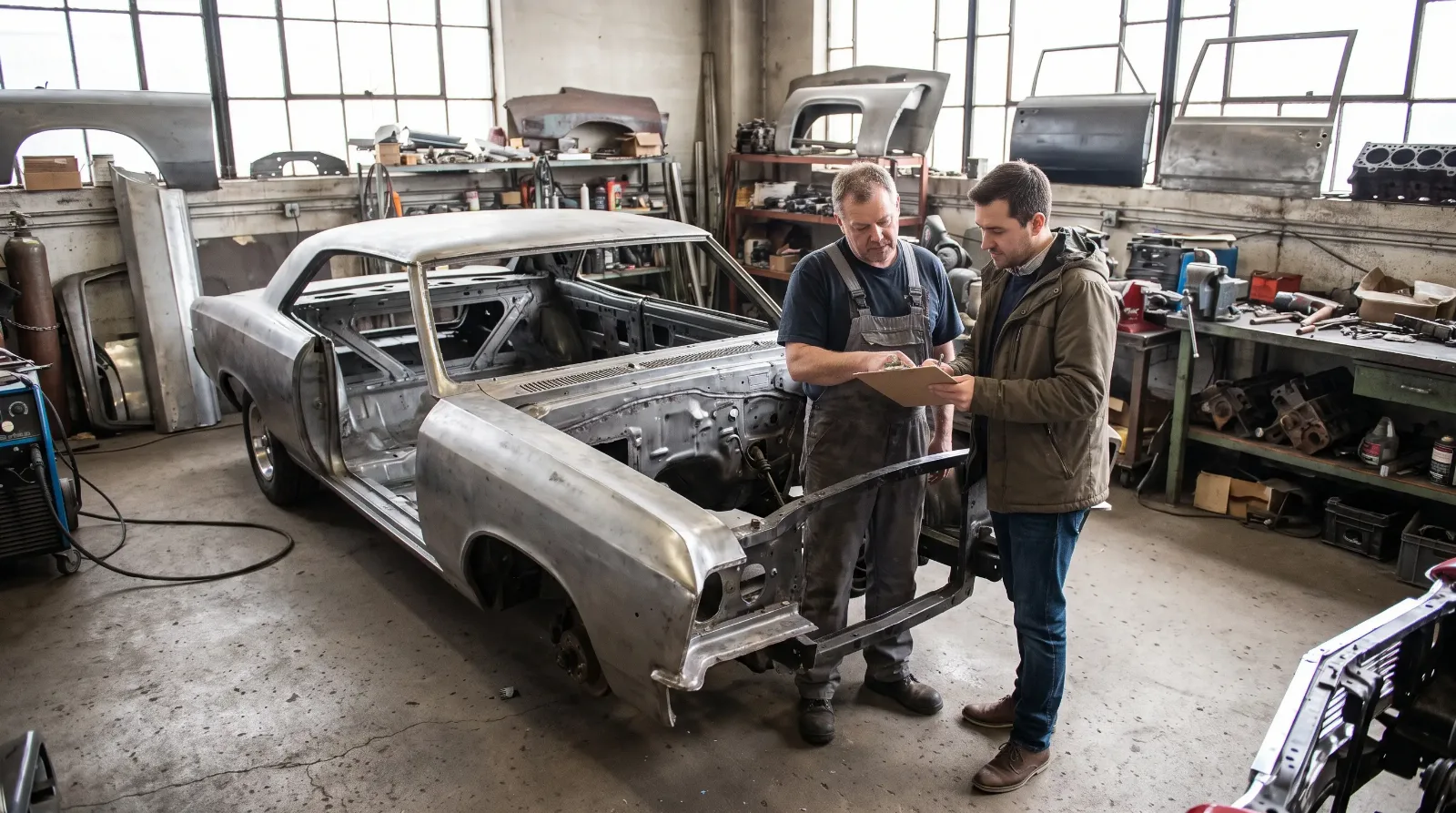
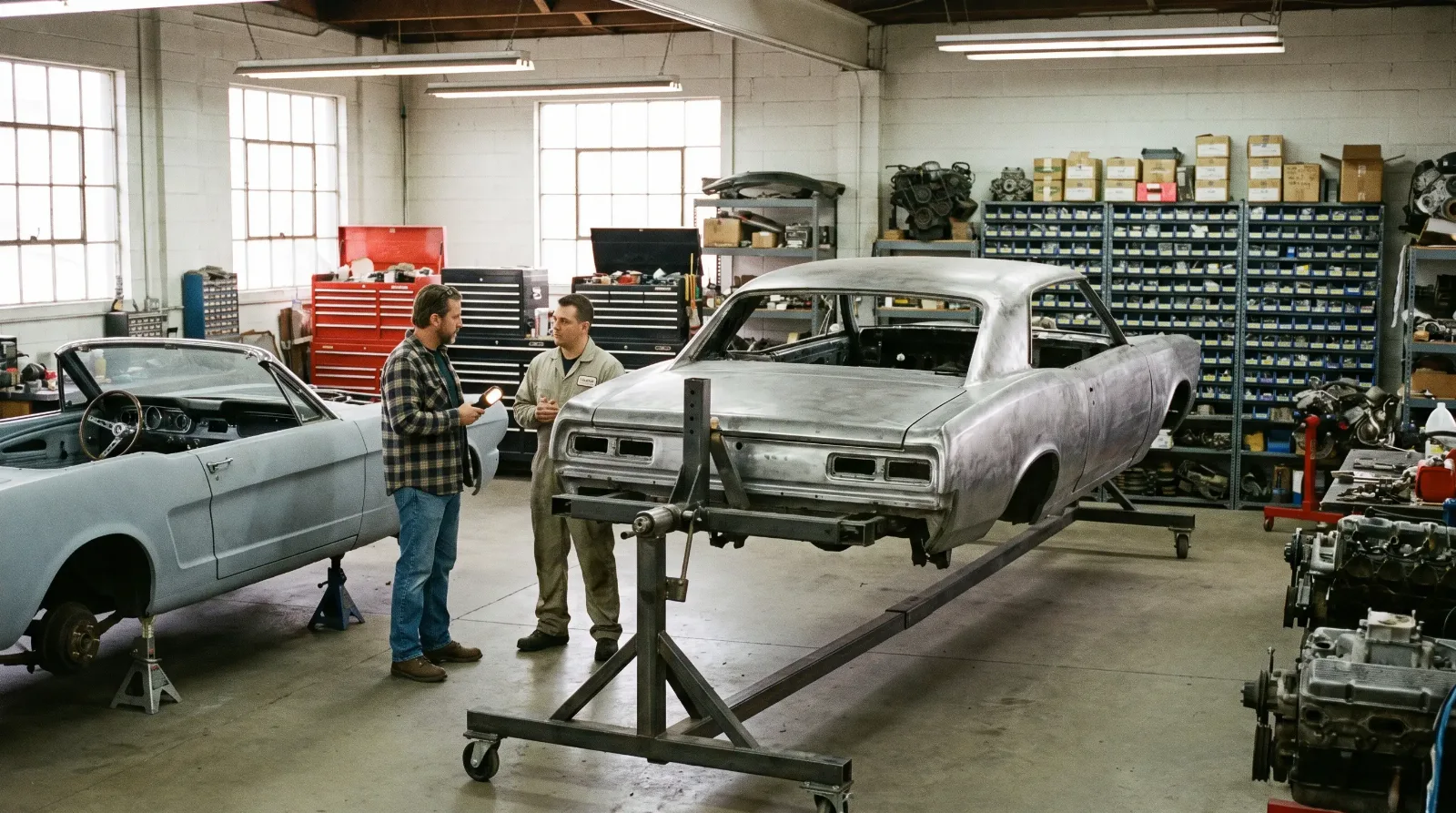
Never hire a restoration shop you have not walked through. And when you walk through, ignore the finished car parked by the front door. That car is the shop's resume, and like any resume it shows the best work it ever did. What you want to see is the work in progress, because that is what your car will look like for most of its stay.
🔧 Inspection Priorities
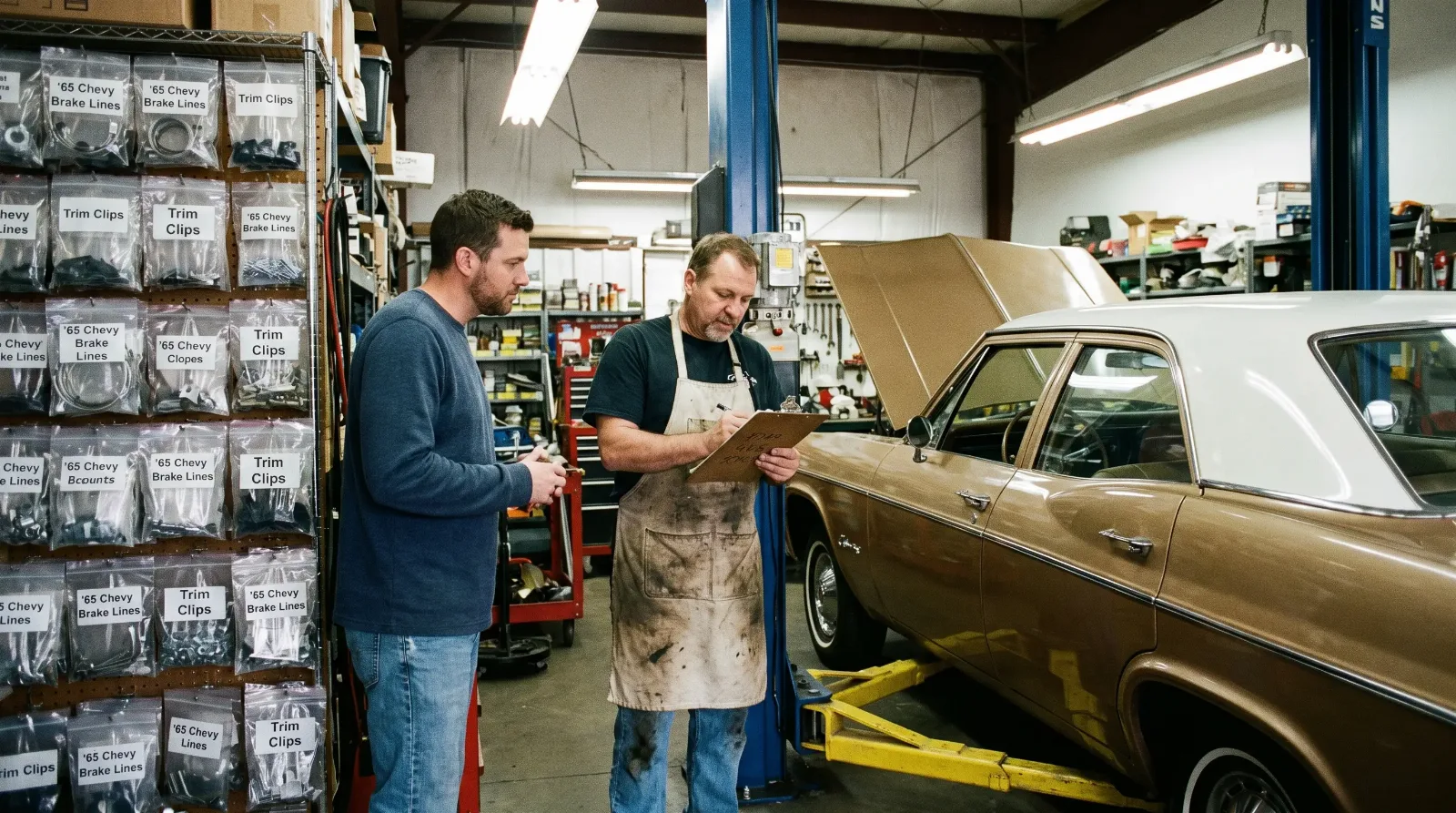
- How disassembled parts are stored. Bagged, tagged and shelved by car is what you want. Loose parts in a heap means some of yours will go missing, and chasing down correct trim and hardware later can cost more than the labor that removed it.
- Metalwork on cars in progress. Look at welded patch panels and floor repairs before they are covered in seam sealer and paint. Clean, fully welded seams are a good sign. Blobs of filler over unknown metal are a bad one.
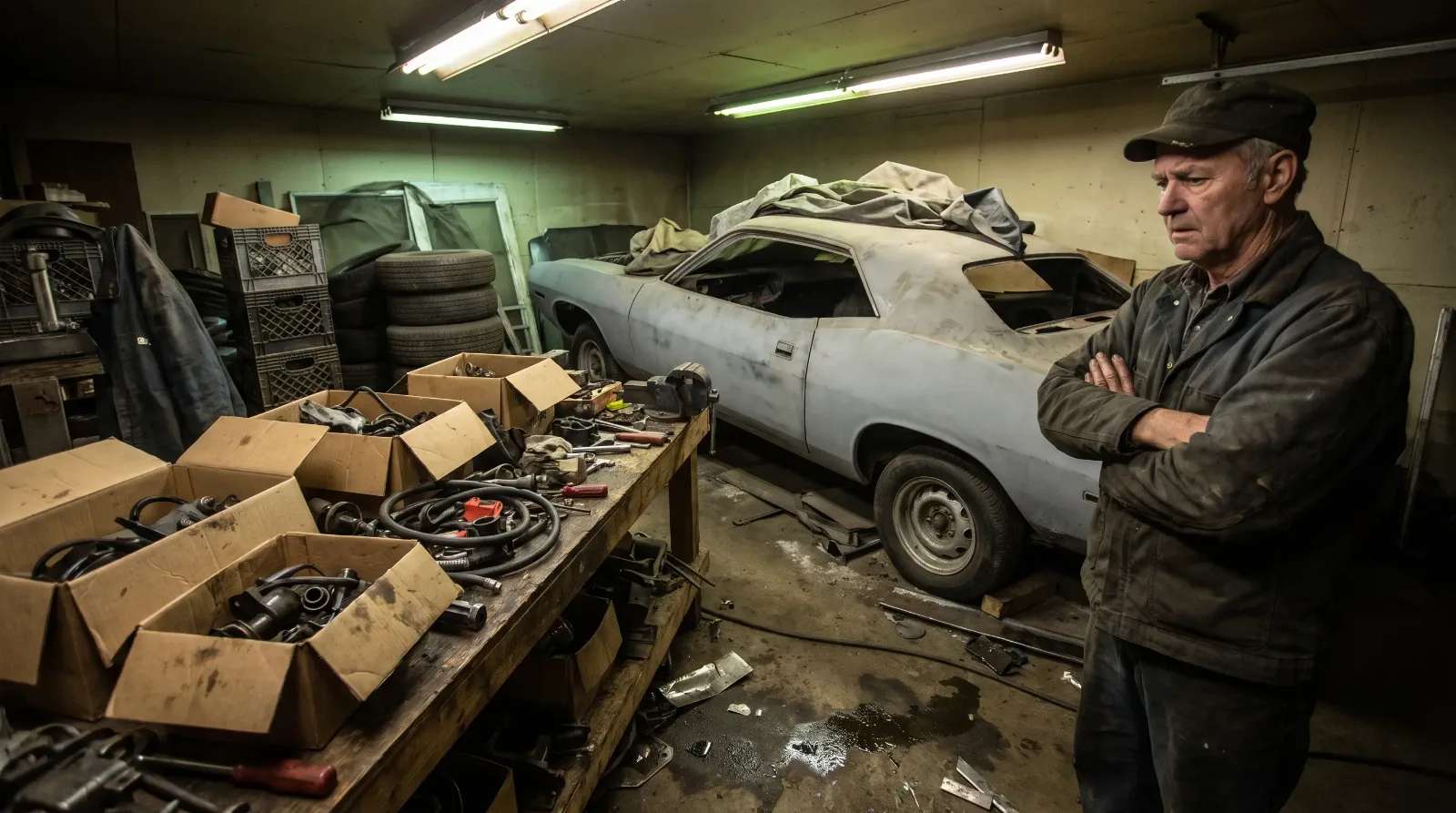
- How long cars have been sitting. Ask about the oldest project on the floor and why it is still there. A shop full of untouched cars under dusty covers is taking deposits faster than it is doing work.
- What is done in house versus sent out. Paint, upholstery, chrome plating and machine work are often subcontracted. That is normal, but you need to know who does it and how the shop marks up that work.
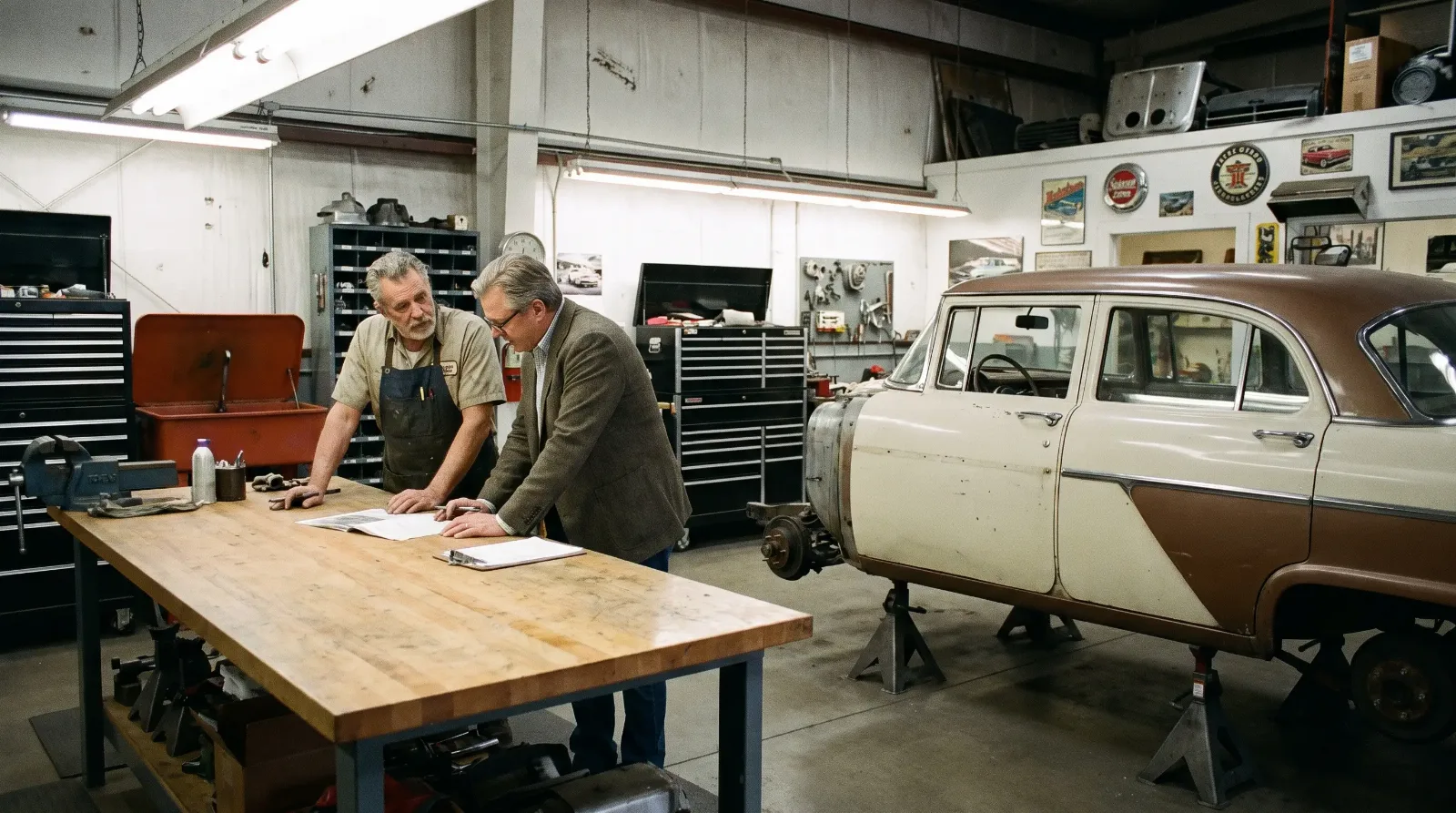
- Who does the hands-on work. Meet the people who will touch your car, not just the owner. If the owner is the only skilled person and he spends his day on the phone, your car will wait.
Also look at the basics. A dedicated paint booth, a decent lift, and a building that is secure and dry all matter on a job that may run a year or more.
Questions to ask before you sign anything
A good shop likes these questions. A shop that gets defensive is giving you your answer early.
Experience and specialization
Ask how many cars like yours they have finished in the last few years, and ask for the names of two or three of those owners. Call them. A shop that has done a dozen first-generation Camaros knows where those cars rust, which reproduction parts fit and which ones need rework, and that knowledge is labor hours you do not pay for.
Capacity and scheduling
Ask how many active projects the shop is carrying and how many technicians it has. Then ask when work on your car would actually start, not when they would take delivery of it. Some shops will happily take your car and your deposit and park it for six months. If the shop has a waiting list, that is often a good sign. Just make sure the car waits at your place, not theirs.
Documentation
Ask how they document the build. The answer you want is dated photos of the car before teardown, during disassembly, at bare metal and at each major stage, shared with you as the work goes. Those photos protect you in a dispute, and they add real value when you sell, because a buyer can see exactly what was under the paint.
Insurance and the title
Ask whether the shop carries garage keepers coverage that protects customer cars against fire and theft, and ask to see the certificate. Keep your own policy in force too. Your insurer may have specific rules for a car stored at a restoration facility, so call them before the car leaves your garage.
Estimates, billing and the contract
Here is the uncomfortable truth about restoration estimates: on a full restoration, nobody knows the real number until the car is apart. Rust hides under undercoating, previous repairs hide under filler, and some parts turn out to be unobtainable. A shop that gives you a firm, low number on a full restoration before teardown is either very experienced with your exact model or telling you what you want to hear. Ask which one it is.
Most shops bill in one of a few ways, and you should understand the tradeoffs before you agree to any of them.
| Billing model | How it works | Watch out for |
|---|---|---|
| Time and materials | You pay hours worked at the shop rate, plus parts and sublet work | Open-ended totals; insist on monthly itemized invoices and a not-to-exceed figure per stage |
| Fixed price per stage | Teardown, metalwork, paint and assembly each priced separately | Change orders; get the scope of each stage in writing |
| Fixed price for the whole job | One number for the finished car | Corners cut late in the job when the shop is losing money on it |
Hourly shop rates for restoration work commonly fall somewhere around $85 to $150 an hour in 2026, with top concours and marque-specialist shops charging more. A professional driver-quality restoration on a common American car usually lands well into five figures, while a full frame-off job that takes 2,000 hours or more can push labor alone past $100,000. Treat those as rough guides, not quotes. The shop's labor hours on your specific car matter far more than its hourly rate.
Whatever the billing model, get these points in the written agreement:
- The scope of work, tied to your written goal for the car
- The hourly rate, and how and when it can change during the job
- Parts markup and how sublet work such as plating or upholstery is billed
- Invoicing schedule, with hours itemized by task
- Payment tied to completed milestones rather than the calendar
- Storage fees, if any, and when they start
- Who owns removed parts, and that they stay with your car
- What happens if either side ends the job early
Keep the deposit reasonable. A deposit that covers parts ordering and the first stretch of labor makes sense. A big chunk paid before anyone touches a wrench puts all the risk on you.
One more legal point that catches owners off guard: in many states a shop holding your car can assert a lien for unpaid repair or storage charges (technically an artisan's or garage keeper's lien, often called a mechanic's lien), which means a billing dispute can leave your car stuck in its building. That is exactly why itemized monthly invoices matter. Settle disagreements a month at a time while they are small.
"The estimate is a guess. The invoice is a fact. Pick a shop that sends you the invoice every month, itemized, with photos, and you will never get a surprise you cannot afford."
Mike Sullivan
Red flags that should end the conversation
Some warning signs are subtle. These are not. If you see any of them, thank the shop for its time and keep looking.
- No references, or only references from years ago
- Pressure to commit and pay a deposit on the first visit
- A quote for a full restoration given over the phone, sight unseen
- Vague answers about who does the paint or the bodywork
- Customer cars stored outside, or covered and clearly untouched for months
- Reluctance to let you visit your car during the build
- Cash-only billing with no itemized invoices
Staying in charge once the car is in the shop
Signing the contract is not the end of choosing a shop. It is the start of managing one. The owners who get good results are the ones who stay involved without getting in the way.
Visit on a regular schedule, every few weeks if you are local, and look at the car, not just the photos. Compare the hours on each invoice with the progress you can see. If an invoice shows forty hours of metalwork and the floor pans look the same as last month, ask about it right away, politely and specifically.
Make decisions quickly when the shop asks. Restorations stall when a car sits waiting on an owner to approve a parts choice or a change in scope. Keep every change in writing, even a short email confirming a conversation.
If it does go wrong, move early. Settle the account to date, get the car and every bag of parts back, and take what you learned to the next shop.
The right shop is out there for almost any car. It is the one that does your kind of job every week, shows you its unfinished work without flinching, puts everything in writing, and sends you an itemized bill every month. Find that, and the rest of the restoration is just time and money, which is what it was always going to be.
Sources and notes
- Hagerty: What does it cost to restore my classic car?, labor charges and why restorations rarely recoup their cost
- EngineerFix: How much does it cost to fully restore a car?, shop rates around $85 to $300 an hour (about $125 average) and 2,000 to 3,000+ hours for a frame-off
- Hagerty: What does a car's condition really look like?, the numbered condition scale from #1 Concours to #6 Parts
- Wikipedia: Mechanic's lien, repairer liens on vehicles for unpaid work and storage
- What is garage keepers insurance and why is it important?, coverage for customer vehicles in a shop's care against fire, theft and vandalism