A restoration estimate looks like a price. It is closer to a weather forecast. The number on the first page was built from a quick walk around the car, a few probes with a magnet, and the shop's memory of similar jobs. Reading it well is the difference between a project that stays close to the figure and one that doubles. If you are trying to compare shops near you, put every estimate you collect through the steps below before you compare totals.
Start with what kind of estimate you are holding
There are three common types, and shops rarely label them. A fixed bid names one price for a defined scope. A time-and-materials estimate gives a projected range, and you pay actual hours and actual parts. A phased estimate prices one stage, usually disassembly and assessment, and promises a real number afterward. For a full restoration on a car nobody has stripped yet, the phased approach is the honest one. A fixed bid on a car with unknown rust is either padded heavily or a promise the shop will quietly walk back at change-order time.
Ask which type it is before you read anything else. If the answer is "sort of a mix," that is a finding in itself. Buyers working through the wider question of choosing a restoration shop should treat vagueness here as a ranking factor.
Labor lines: hours, rate, and who is doing the work
Labor is usually the largest block, and it is where estimates differ most. Most independent restoration shops bill about $85 to $150 an hour in 2026, with roughly $125 typical, and concours or marque specialists charge $175 or more. Metal fabrication and paint often sit at the higher end. The rate alone tells you little. What matters is the hours assigned to each task and whether those hours are plausible.
A line reading "bodywork: 400 hours" is not an estimate, it is a guess with a unit attached. Look for hours broken out by operation: disassembly, media blasting or chemical stripping, panel repair, panel fit and gap setting, primer and block sanding, final paint, reassembly. Panel fit is the one buyers overlook, and it can consume more hours than the paint itself. If the estimate has a single "body and paint" figure, ask for the breakdown in writing.
Also ask whether the rate is a flat shop rate or varies by technician. A senior metal man and an apprentice doing teardown should not carry the same rate, and a flat rate that is blended low usually means the senior hours are being underpriced somewhere else.
Parts, allowances and sublet work
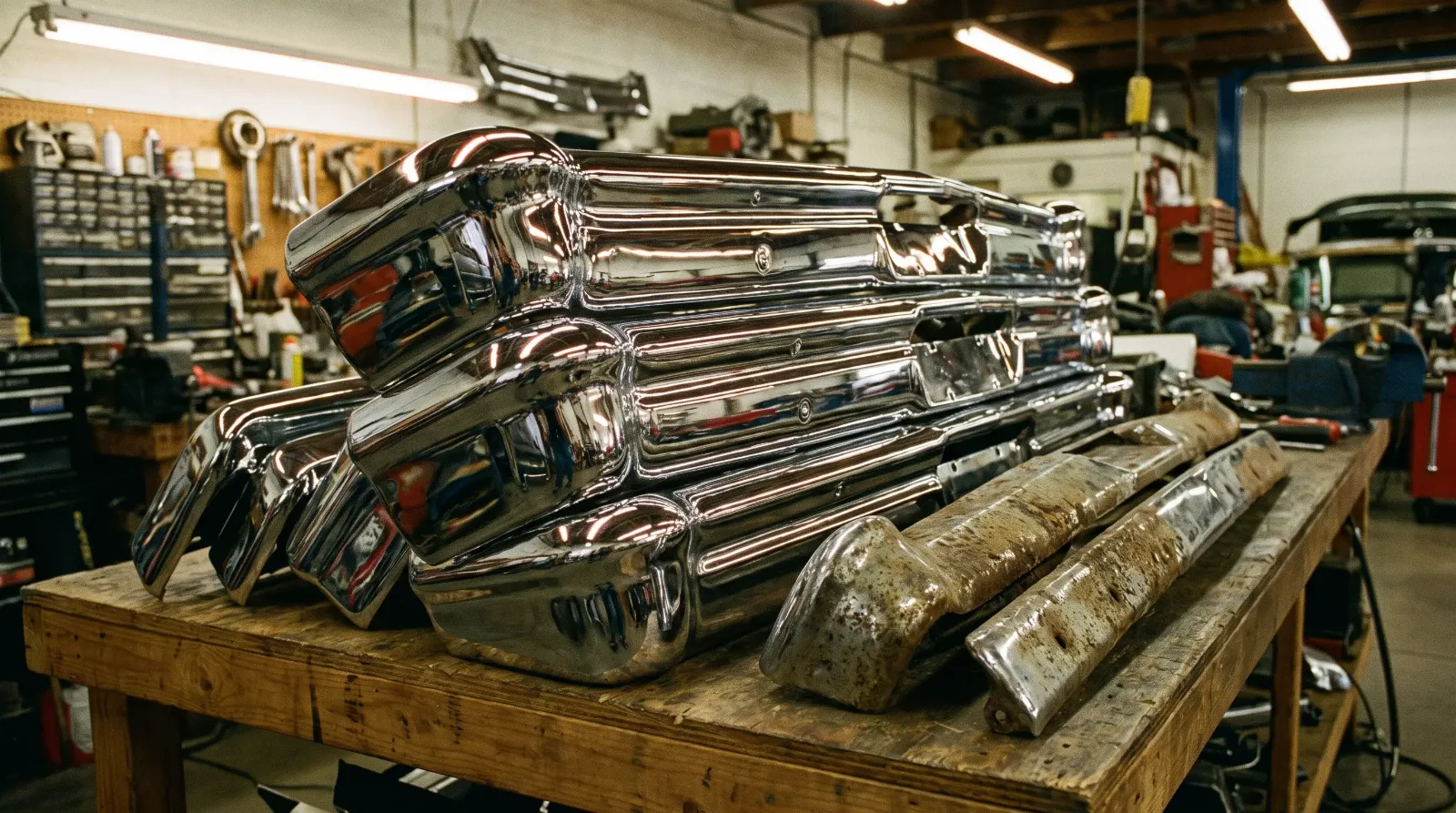
Parts lines split into three groups. Known parts are priced from a catalog: weatherstripping, gaskets, a wiring harness. Allowances are placeholders for parts nobody can price until the car is open, such as "chrome: $6,000." Sublet items are jobs sent to outside vendors: chrome plating, upholstery, engine machining, glass. Each group carries different risk.
Allowances are the ones to watch. A reasonable estimate flags them as allowances and states what happens when the real number differs. A bad one hides them in a lump sum. Chrome is the classic case. Plating commonly runs about $3,000 to $8,000 on a driver-level job and $8,000 to $20,000 or more at show level, and cars with heavy brightwork can cost far more than a lightly trimmed one. The final invoice depends on how many pieces are pitted past saving.
Ask whether the shop marks up parts and sublet work, and by how much. Many shops add a markup on parts and outside work, because the shop carries the sourcing, shipping and warranty risk. Ask for the percentage and for sublet work to appear on its own line. A markup is not a scam. An undisclosed one is.
| Line item | What a solid estimate shows | What a weak one shows |
|---|---|---|
| Bodywork | Hours by operation, panel fit listed | One lump of hours |
| Paint | Materials, number of coats, finish level | "Paint: $15,000" |
| Chrome and trim | Allowance with an agreed review point | Included in "misc" |
| Engine | Machine work and parts itemized, or excluded | "Rebuild engine" |
| Contingency | Stated percentage and trigger | Absent |
What is missing matters more than what is listed
The expensive surprises are rarely lines that are too high. They are lines that are absent. Check for exclusions: wiring, interior, convertible top, glass, engine and transmission, chassis and suspension, shipping, storage during the project, and sales tax. Some shops quote body and paint only and call it a restoration estimate. Others include everything but the engine. Neither is wrong, but you cannot compare them until you list what each leaves out.
Look for contingency language too. A good estimate states that hidden rust, broken fasteners and discontinued parts will produce additional charges, and says how they will be approved. Overruns on older cars are normal: a 20 to 30 percent contingency on top of the estimate is a sensible plan, more on a car from a salt-belt state, and overruns of 20 percent or more are common. An estimate that claims none is either padded or optimistic.
Watch for the shop-supplies line
Many estimates include a shop-supplies or consumables charge, sometimes a percentage of labor, to cover sandpaper, welding wire, gases, masking and solvents. It is normal, but it should be stated and capped. On a long project it adds up, so ask what it covers and whether it is billed on labor, on total cost, or as a flat amount per phase.
Comparing two estimates fairly
Put the estimates side by side and build a single scope list. Mark every line either included, excluded or allowance for each shop. Then convert allowances to your own best guess so the totals measure the same job. Only then compare. A shop that looks $30,000 cheaper often turns out to have left out the interior and the engine.
Context helps. If you want a market anchor for the total, the ranges in what restorations cost show where typical full, driver-quality and show-level jobs tend to land. An estimate far below those ranges deserves hard questions. One far above deserves them too, since you may be paying for a standard of finish you do not need.
"The number at the bottom of the page is the least informative thing on it. Read the exclusions and the allowances first, because that is where the final invoice is being written."
David Mercer
Questions to ask before you sign
- Is this fixed, time-and-materials, or phased, and what triggers a revised number?
- Which lines are allowances, and what happens when they are exceeded?
- What is the markup on parts and sublet work?
- How are hours tracked, and will I see a time report with each invoice?
- At what dollar amount do you stop and get my approval before continuing?
The answers belong in the paperwork, not in a conversation you will half remember in a year. Once the estimate makes sense, the next document to read with the same care is the contract, which is where those answers either become binding or evaporate.
Sources and notes
- Hagerty, what does it cost to restore a classic car, hidden overruns found during disassembly and why restorations rarely recoup their cost
- Beancount, classic car restoration shop bookkeeping guide, phased estimates, labor by task, and sublet work on its own line
- Sports Car Market, restoration shop billing advice, asking for line-item estimates and questioning lump-sum miscellaneous charges
- Popular Restorations, chrome plating article, how plating cost varies widely by car and why it often overruns
- Car Guy Chronicles, how to choose a professional restorer, shop and owner agreeing approximate costs, timeline and goals before work starts, and the point that restorations rarely recoup their cost