
The hardest part of a muscle car restoration is not the wrenching. It is finding the right parts. Anybody can order a set of spark plugs. Tracking down a correct date-coded carburetor, a specific reproduction quarter panel that actually fits, or a marque specialist who knows your car cold, that is the work that separates a smooth restoration from one that stalls for months waiting on a part. I have spent more hours chasing parts than turning wrenches on some of these cars, and knowing where to look saves both money and grief.
Restoration & Tech
6 min read
Finding Muscle Car Parts and Marque Specialists
Where to find muscle car parts and marque specialists: catalog houses, NOS dealers, clubs, and swap meets, plus how to verify correct parts and avoid fakes.
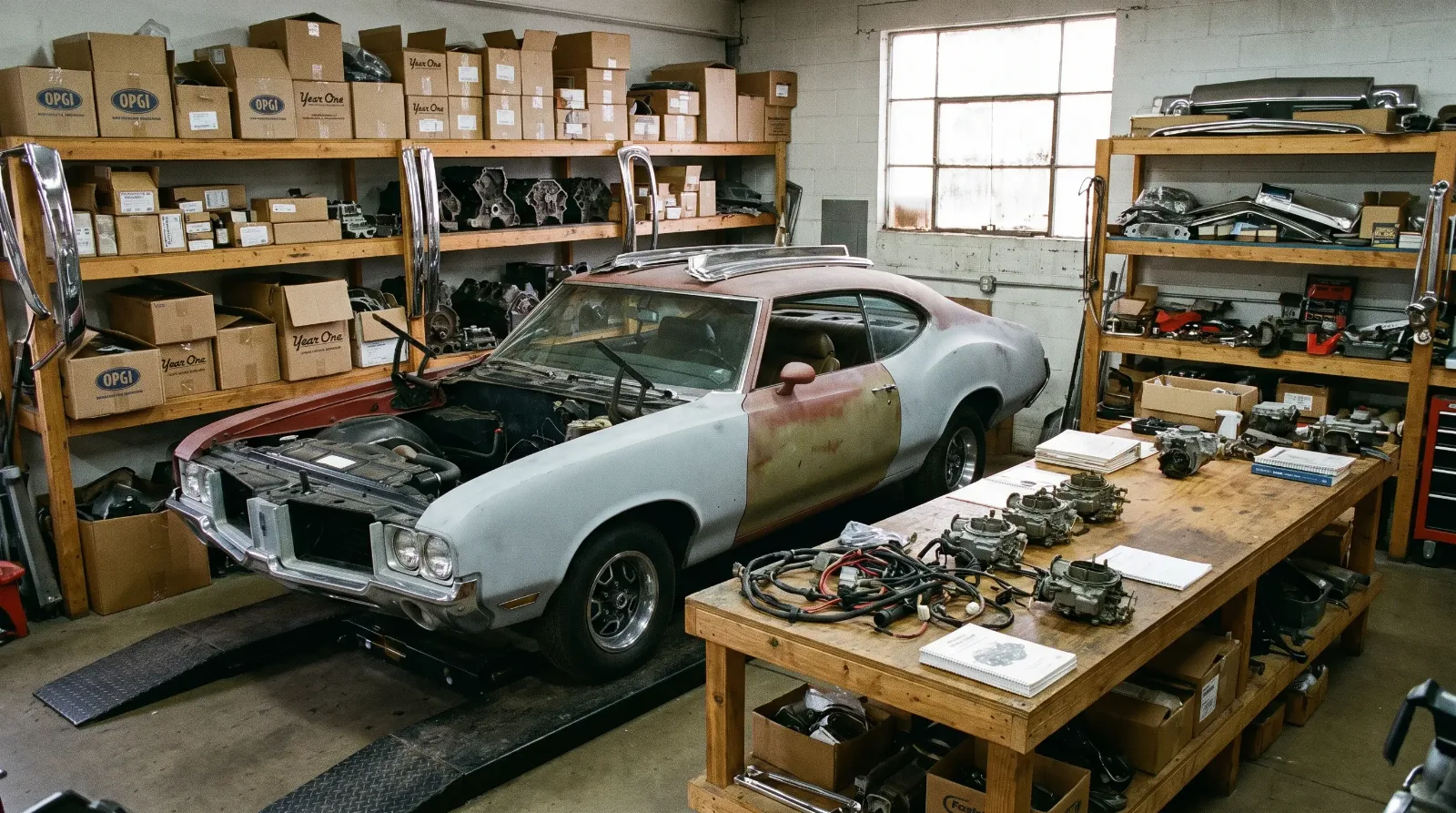
There is a whole network of suppliers out there, from big catalog houses to one-man operations who only do your model. Learning who does what, and who to trust, is half the battle. If you are just getting into a project and want to see how parts sourcing fits the bigger picture, what you need to know lays out the whole ownership and restoration path. This piece is about where the parts actually come from.
Know the four kinds of suppliers
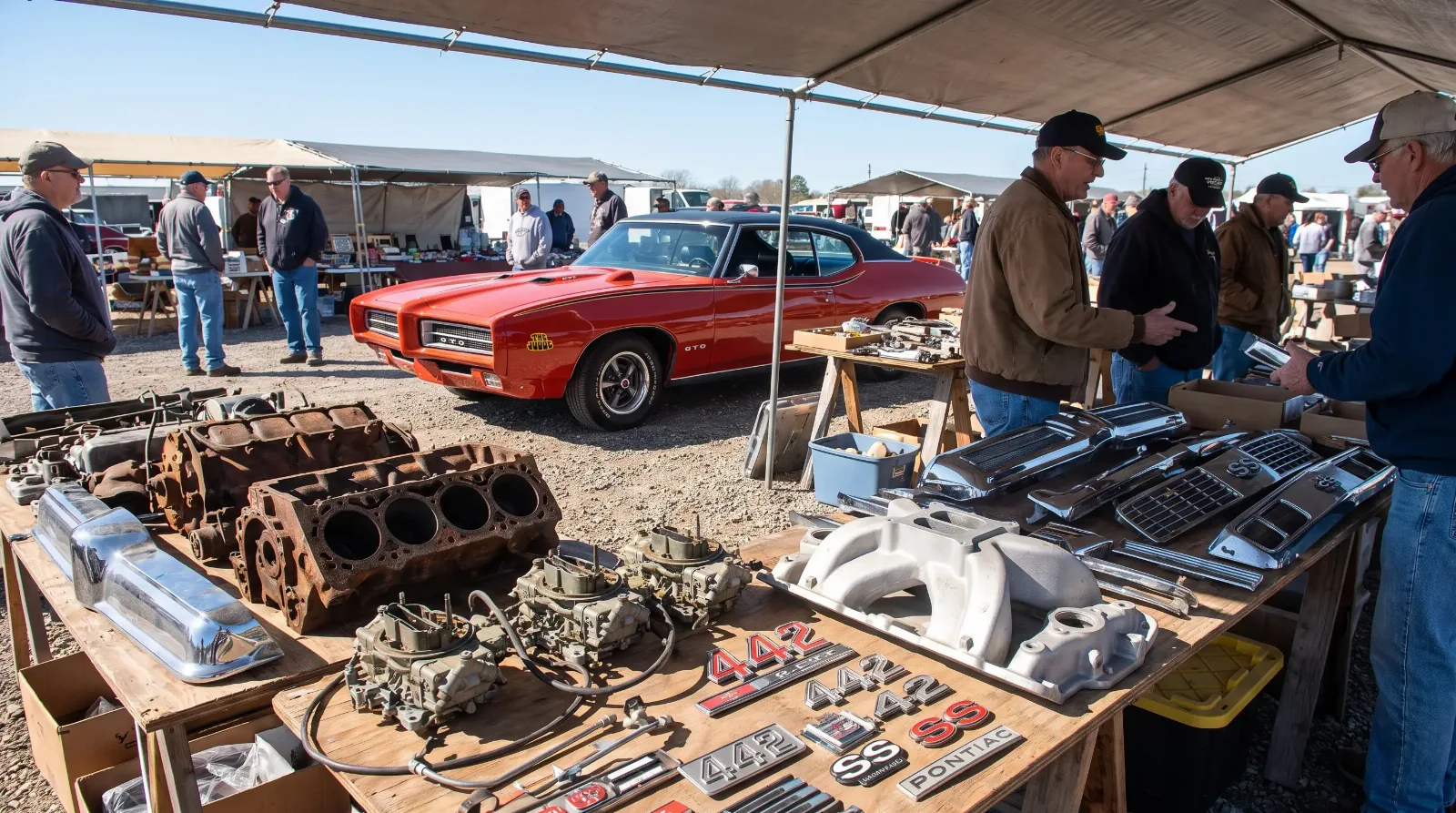
Parts sources break down into a few types, and each has a job. The big reproduction catalog houses are your first stop for common stuff: weatherstripping, trim, interior soft parts, sheet metal, brackets. They stock deep, ship fast, and the quality on the mainstream muscle platforms has gotten good over the years. For a popular car, you can restore most of the interior and a lot of the body from catalogs alone.
Then there are the marque and model specialists, the outfits that only do one make or even one model. These are the people who know which reproduction part fits and which one is junk, who have the odd bracket nobody else stocks, and who can answer a question the catalog house cannot. Add to that the new-old-stock hunters and swap-meet dealers who deal in original factory parts still in the box, and the restoration shops that source parts as part of doing the work. Knowing which one to call for a given part is the skill.
| Supplier type | Best for | Watch out for |
|---|---|---|
| Catalog reproduction houses | Common trim, interior, weatherstrip, sheet metal | Fit varies by part and by brand |
| Marque and model specialists | Odd brackets, model-specific parts, expert advice | Smaller stock, longer waits |
| NOS dealers and swap meets | Correct original factory parts, date codes | Price, condition, and fakes |
| Restoration shops | Full sourcing bundled with the work | Markup on parts they source |
| Online forums and clubs | Leads, private sellers, honest reviews | No buyer protection on private deals |
Where the real parts hide
The best parts are not always in a catalog. For anything rare or correct, the network matters more than any single vendor. Model-specific clubs and their forums are where owners trade parts, warn each other off bad reproductions, and post leads on original pieces coming up for sale. Join the club for your car before you need a part, not after. The people there have done your restoration already and know exactly who has the piece you are hunting.
Swap meets are still where original parts surface. The big ones draw vendors from all over, and you can put your hands on a part, check the casting numbers and date codes, and haggle in person. That beats guessing from a blurry online photo. Online auction sites and classifieds fill in the rest, but they take more caution, because condition gets oversold and outright fakes exist, especially on high-value correct parts. When you buy an original date-coded part sight unseen, you are trusting a photo and a description, and that is where people get burned.
Telling good parts from bad
Not all reproduction parts are equal, and not all original parts are as described. Reproduction quality varies by manufacturer and by part, so a panel from one supplier might drop right in while another brand of the same panel needs hours of massaging to fit. This is exactly where the specialists and the forums earn their keep. Ask before you buy which brand of a given reproduction part actually fits, because the catalog photo will not tell you and a bad panel costs you the return shipping plus the wasted time.
On original and NOS parts, verify before you pay. Correct casting numbers and date codes are what make an original part worth the premium, so check them against what your car should have. High-value correct parts get faked, restamped, or misrepresented, and the more a correct part is worth, the more incentive somebody has to fake it. If a deal on a rare correct part looks too good, it usually is. Buy from people with a reputation to protect, and lean on the club experts to confirm a part is what the seller claims.
🔧 Inspection Priorities
- Reproduction fit. A poorly fitting panel eats hours of labor. Confirm which brand fits before ordering, not after it arrives.
- Casting numbers and date codes. On original parts, these prove correctness. Verify them against your car before paying a premium.
- Fakes on high-value parts. Restamped and counterfeit correct parts exist. Buy from reputable sellers and get expert confirmation.
- Return policy. Know it before you order. A no-return part that does not fit is money gone.
- Seller reputation. On private and auction sales, a seller's track record is your only protection. Check it.
Building your own parts network
The owners who never seem to get stuck waiting on parts are the ones who built relationships before they needed them. Get to know a good marque specialist and they will call you when the part you have been hunting comes in. Get active in the club and you hear about parts before they are advertised. That network is worth more over a long restoration than any single supplier, because it turns up the pieces that never make it to a catalog.
Start with the club and the specialist for your car, add the big catalog houses for the common stuff, and keep an eye on swap meets and forums for the rare correct pieces. Keep notes on who had what and who came through. Over a project, that list becomes your most valuable tool. And once the parts are in the car, protecting that investment matters just as much, whether that is proper storage or the right coverage. On keeping the finished car covered, read the full story.
"The catalog is fine for weatherstrip. For the correct date-coded stuff, you need the club, the swap meet, and a specialist who knows your car. Build that network before you need it, not while the project sits waiting."
Mike Sullivan
Finding parts is a skill you build, not a transaction you make. Learn who does what, join the club for your car, verify everything before you pay, and treat the specialists and forums as part of the toolkit. Do that and the parts stop being the thing that holds up your restoration.
Related Reading
Have a
Classic Car
for Sale?
Reach thousands of serious classic car collectors across the US.
Sell It Here →
Are You a Classic Car Dealer?
List your full inventory and connect with targeted classic car buyers.
Join as a Dealer →

About the author
Mike Sullivan
Detroit-area muscle car enthusiast and restoration specialist with three decades of hands-on experience working on American iron.
More in Restoration & Tech
Comments
Be the first to comment on this article.