
Insuring a classic muscle car is not the same transaction as insuring the sedan in your driveway, and treating it like one is the fastest way to lose money after a claim. Standard auto policies pay actual cash value, which means a depreciation table decides what your 1970 Chevelle or Boss 302 is worth. Collector policies pay an agreed value you and the insurer set in writing before anything goes wrong. That single difference is the whole game.
Restoration & Tech
6 min read
Insuring a Classic Muscle Car
How agreed-value collector policies work, why mileage caps keep premiums low, and how to set a value that actually holds up after a claim.
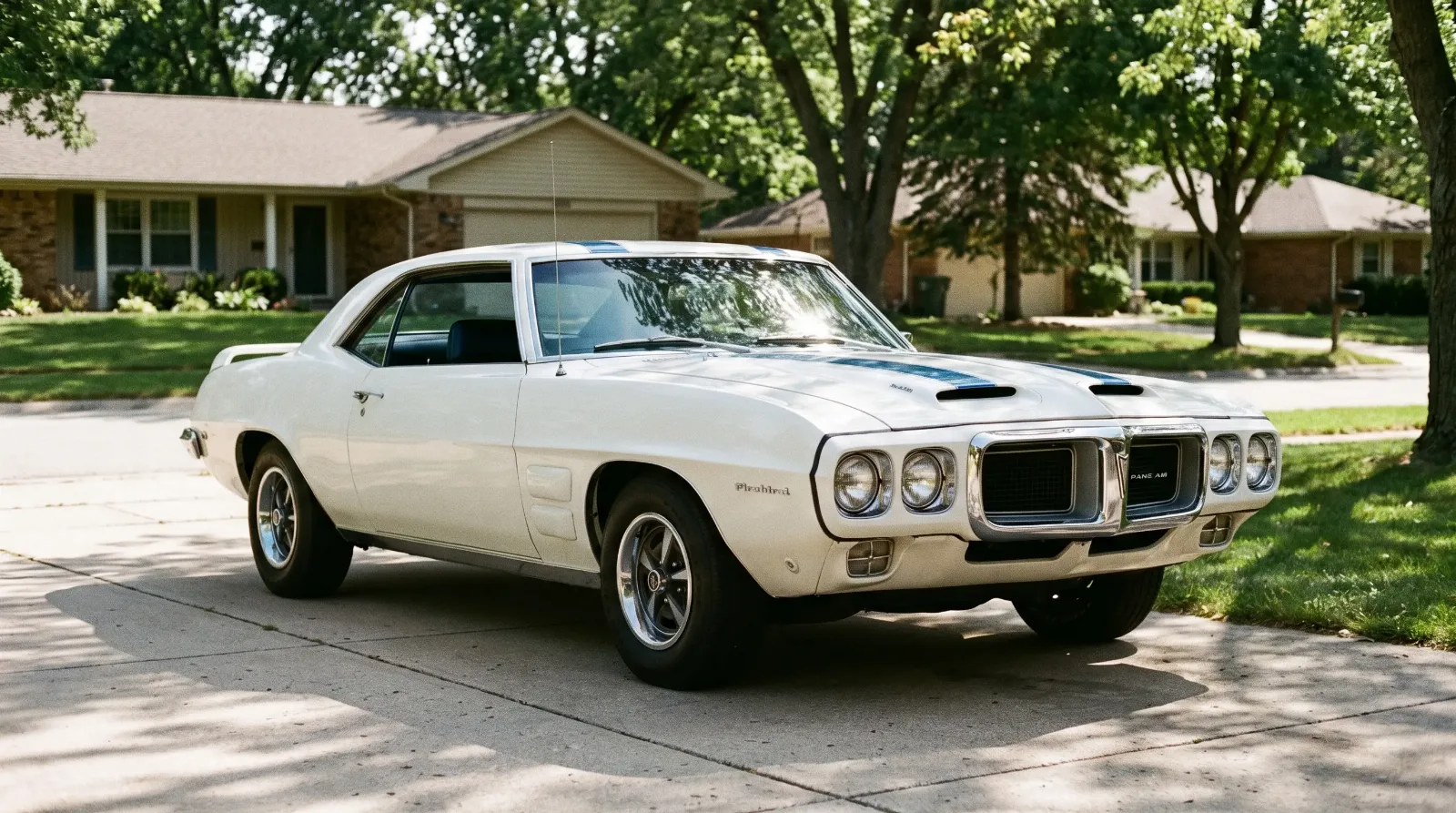
The collector market has run hot for two decades, and premiums have stayed cheap relative to the values being covered. A car that trades for $60,000 to $120,000 often insures for a few hundred dollars a year, because these policies are built on the assumption that the car sits in a garage and gets driven with care. Understanding how that math works, and where it breaks, is part of the story of muscle car restoration and ownership, which we cover as part of the story of muscle car restoration.
Agreed value versus actual cash value
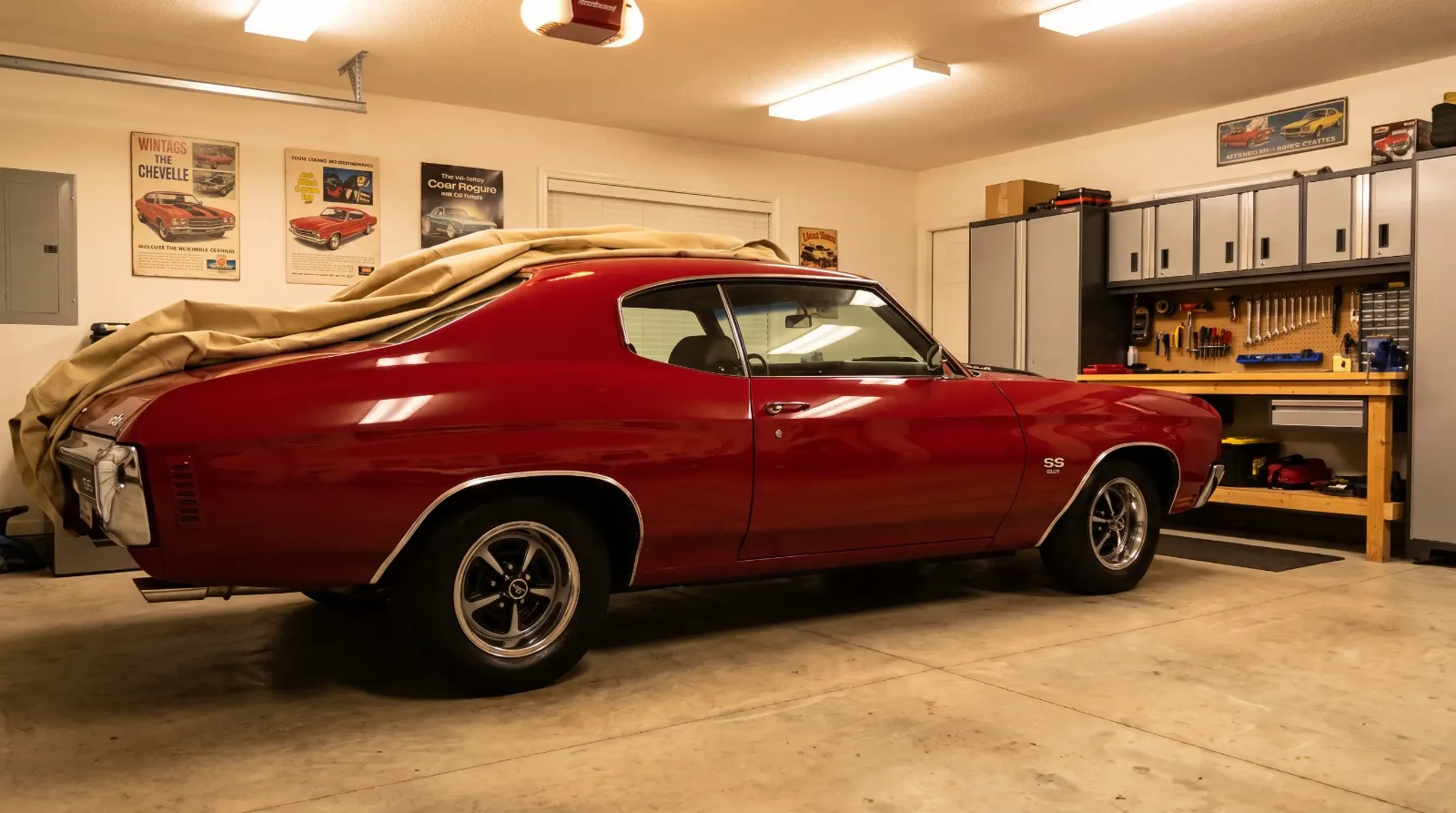
Agreed value is the number that matters. You submit documentation, photos, and often an appraisal, the insurer signs off, and that figure is what gets paid on a total loss. No haggling with an adjuster over a depreciation schedule while your car sits in a scrapyard. For a numbers-matching Hemi car or a documented COPO Camaro, the gap between agreed value and what a standard insurer would offer can run into six figures.
Actual cash value, the standard-policy default, treats a 55-year-old car as a worn-out appliance. A mainstream carrier does not have comps for a Buick GSX Stage 1, so it defaults to formulas that were never built for appreciating assets. The premium might look similar, but the payout logic is upside down. If your car is worth more than a late-model economy car, agreed value is not optional.
How mileage and usage caps work
Collector policies are cheap because they are restrictive. Most carriers cap annual mileage, and the tiers usually run somewhere around 1,000, 2,500, and 5,000 miles a year, with unlimited-pleasure options at the top from some insurers. Read the fine print. The car generally cannot be a daily driver, cannot be used for commuting, and cannot be parked outside overnight on a regular basis.
Those restrictions are not fine-print traps so much as the reason the premium is low. Break them and a claim can be denied. If you plan to drive the car a lot, price the higher mileage tier honestly rather than under-reporting. The extra premium is small next to a rejected total-loss claim on a car you spent years restoring.
Setting a value that holds up
The agreed value is only as good as the evidence behind it. This is where the collector market rewards documentation. A car with a build sheet, restoration receipts, and a recent appraisal supports a higher number and a smoother claim. A car with a good story and no paper supports a lower one, and the insurer will notice the difference when you file. That policy figure is not what a buyer will pay, either, and why your insured value and sale price differ is worth understanding before you list the car.
Watch the market and revisit the value every couple of years. Muscle car values have moved in both directions over the past decade, with blue-chip cars firming and mid-tier cars softening depending on options and documentation. If your car appreciates and your agreed value sits stale at the number you set in 2019, you are underinsured. If it softens and you are paying to insure a value the market no longer supports, you are overpaying. Before you finalize a figure, it pays to know what you actually own, which starts with read the full story.
| Coverage feature | Standard auto policy | Collector policy |
|---|---|---|
| Payout basis | Actual cash value (depreciated) | Agreed value (set in advance) |
| Annual premium (typical) | Priced like a daily driver | Often a few hundred dollars, varying by car and value |
| Mileage | Unlimited | Capped tiers, roughly 1,000 to 5,000+ miles |
| Usage | Daily driving allowed | Pleasure use, shows, occasional drives |
| Repair shop choice | Often network-restricted | Usually your choice of specialist |
Eligibility and the fine print that trips people up
Most collector carriers require the applicant to have a regular daily-use vehicle insured separately, a clean-enough driving record, and secure storage. Some ask for garage photos. These are the levers that keep premiums low, and they are also the conditions an adjuster checks after a loss. Storing the car under a carport when the policy specified an enclosed garage is the kind of detail that turns a payout into a dispute.
Read what is excluded. Track days, autocross, and any timed competition are usually not covered under a standard collector policy and need a separate event rider. Spare parts coverage, trip-interruption coverage, and coverage while the car is at a restoration shop vary by carrier and are worth asking about directly rather than assuming.
"An agreed-value policy is only as strong as the file behind it. I have watched two identical cars settle tens of thousands apart because one owner kept every receipt and appraisal, and the other kept a shoebox of gas stubs. The paperwork is the asset."
David Mercer
What it costs and whether it is worth it
For most owners the answer is clear. A collector policy on a $50,000 to $150,000 muscle car typically costs a fraction of what a standard policy would charge for the same coverage, and it pays the number you agreed to rather than a number an algorithm invents. The savings come from the usage restrictions, so the policy fits an owner who drives the car for pleasure and stores it properly, not one who wants a daily driver.
Get quotes from more than one specialist carrier, because agreed-value ceilings, mileage tiers, and event coverage differ. Keep your documentation current, revisit the value on a schedule, and match the mileage tier to how you actually drive. When you are ready to add a car to the fleet, you can discover muscle cars on the market and price the insurance before you buy rather than after.
Related Reading
Have a
Classic Car
for Sale?
Reach thousands of serious classic car collectors across the US.
Sell It Here →
Are You a Classic Car Dealer?
List your full inventory and connect with targeted classic car buyers.
Join as a Dealer →

About the author
David Mercer
Classic car market analyst with two decades of experience tracking collector car valuations, auction results, and investment trends.
More in Restoration & Tech

Comments (1)
T
Tom Addison
2 weeks ago
Good reminder that the first year of a new generation often has problems that were sorted by year two or three. Worth considering when choosing between years.