
You lower a C10, take it out for the first real drive, and somewhere around the second pothole the truck darts a little, left or right, on its own. Not a huge amount. Just enough that your hands correct for it before you've even decided to. That's bump steer, and it's not a defect in the truck. It's what happens when you change ride height and nobody corrected the steering geometry to match. The truck isn't broken. The geometry is just wrong for the height it's sitting at now.
Restoration & Tech
7 min read
Fixing Bump Steer on a Lowered Chevrolet C10
Why lowering a C10 without correcting steering geometry causes bump steer, how to identify it, and how bump steer kits and drop arms fix the underlying arc mismatch.
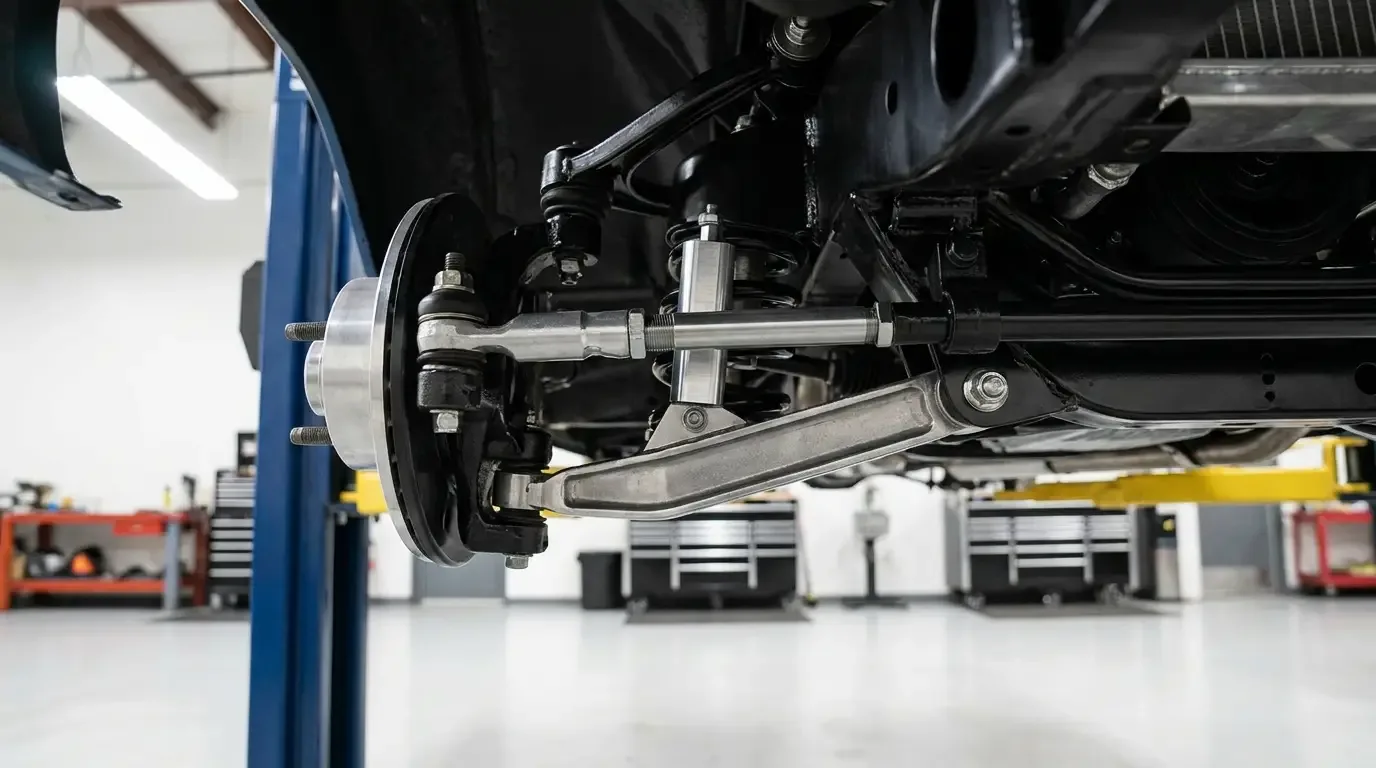
I get calls about this more than almost anything else that comes out of a static drop. Guys follow the lowering guide step by step, get the stance they wanted, and never touch the steering linkage angles because nothing in the suspension work technically requires it. The truck still steers. It just doesn't steer the same way through a bump that it did at stock height, and that difference is exactly what bump steer is.
What bump steer actually is and why lowering causes it
The tie rod and the control arm are supposed to move through roughly the same arc as the suspension compresses and rebounds. When they're matched, the wheel's toe angle stays close to constant whether you're on smooth pavement or working through a dip. Drop the truck without correcting for it, and the tie rod's angle relative to the control arm changes. Now the two components move through different arcs, and every time the suspension compresses, the tie rod pulls or pushes the wheel slightly, changing toe without you touching the steering wheel. The car steers itself, a little, every time you hit a bump. That's the whole phenomenon in one sentence, and it's purely geometric. No amount of alignment adjustment at ride height fixes an arc mismatch, because the arcs only diverge once the suspension moves off that static point.
This gets worse the more you lower a truck, because the tie rod ends were positioned by the factory for stock ride height, and a four-to-six-inch drop moves the control arm's working range well outside where the tie rod was ever meant to operate. Bigger drop, bigger mismatch, more noticeable darting.
How to tell if your truck has it
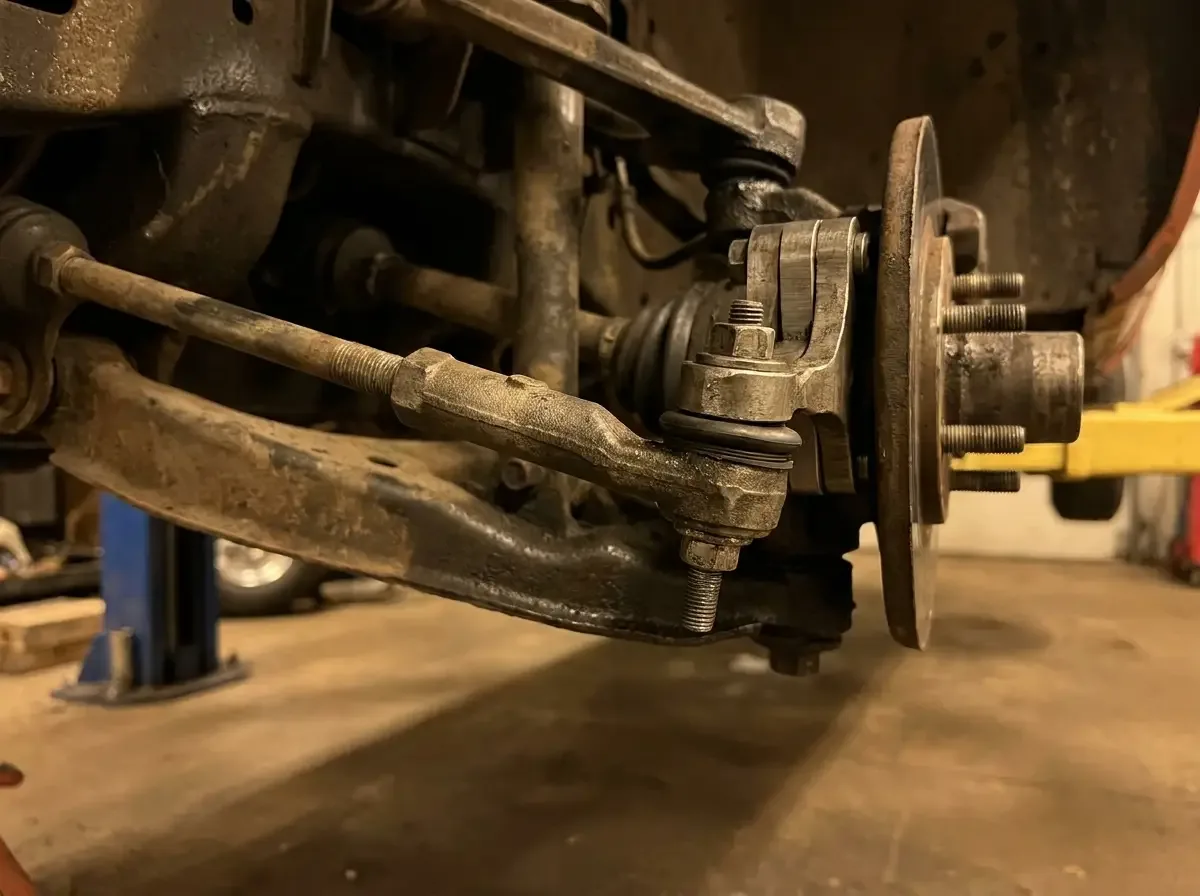
The classic symptom is the truck tugging left or right over an uneven road surface or a single sharp bump, especially at speed, even though you're holding the wheel straight. It's not the same as a pull from bad alignment or worn ball joints, because it only shows up when the suspension is actively moving, not in a straight line on smooth pavement. Jack the front end up and cycle one side through its full travel by hand while somebody watches the tie rod end relative to the control arm. If the tie rod end's arc clearly diverges from the control arm's arc as you move through the range, especially near the bottom of travel where a lowered truck spends more of its time, that's the mismatch showing itself.
Don't confuse this with a worn idler arm or a loose steering box. Both of those cause vague, sloppy steering everywhere, all the time. Bump steer is specific: it shows up on bumps, it's directional and repeatable, and the steering feels tight and normal everywhere else.
Fixing the geometry: drop arms, relocation kits, and what they do
The fix is putting the tie rod's arc back in line with the control arm's arc at the new ride height, and there are a few ways to get there depending on how the front end is set up. A bump steer correction kit typically relocates the outer tie rod end mounting point, using spacers or a redesigned arm, to shift where the tie rod attaches relative to the spindle. On some trucks, a drop pitman arm and matching idler arm correct the geometry at the center link instead, lowering the whole steering linkage to match the new ride height rather than adjusting each tie rod individually.
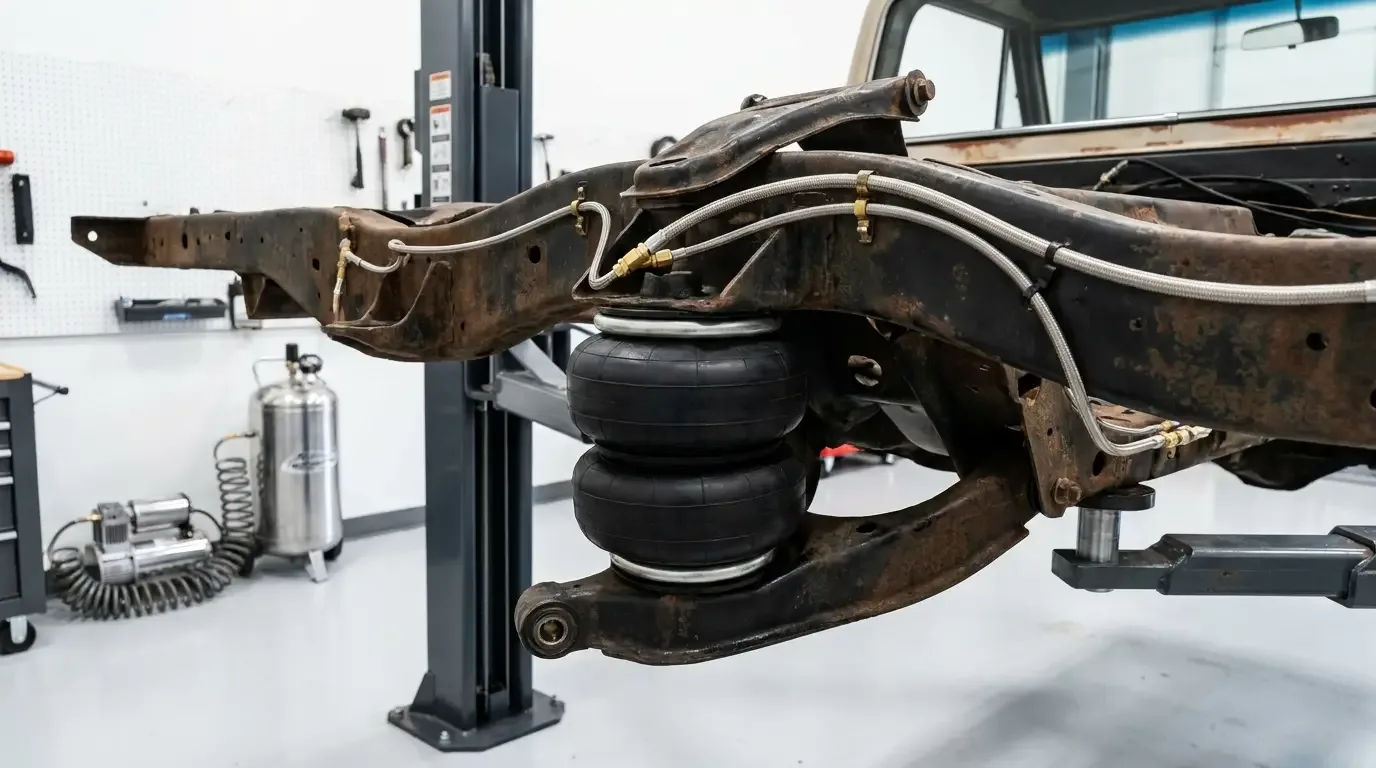
Which approach is right depends on your specific front end and how much drop you're running. A mild two-inch drop might only need a modest tie rod correction. A serious static drop, or a truck built around air ride as the alternative to a static drop where ride height itself changes constantly, needs a more complete geometry correction because the linkage has to work across a much wider range of heights, not just one fixed drop point.
| Correction method | What it changes | Best for |
|---|---|---|
| Bump steer kit (tie rod relocation) | Outer tie rod mounting height at the spindle | Moderate to aggressive static drops |
| Drop pitman/idler arm set | Center link height relative to the frame | Correcting the whole linkage geometry at once |
Setting it up correctly
Correction isn't a bolt-on-and-forget job. After installing a kit, you set the truck at actual ride height, unloaded and loaded if you want it right both ways, and measure toe change through a real range of suspension travel using a bump steer gauge, not by feel. Cycle the suspension in small increments and watch toe at each point. The goal is a flat line, toe staying close to constant across the range you'll actually drive on, not perfect only at static ride height and wandering everywhere else.
This is one of those jobs where a shortcut costs you twice. Guessing at shim thickness and driving it to see how it feels means you're road-testing a steering geometry problem at speed, which isn't where I want to find out I got it wrong. Set it on a gauge, on the ground, before it goes back on the road.
What happens if you ignore it
A little bump steer at low speed is an annoyance. The same truck at highway speed, hitting an expansion joint or a pothole in a curve, is a genuine handling problem, because the wheel darts exactly when you have the least margin to correct for it. I've had guys tell me they've gotten used to it and just hold the wheel tighter. That's not a fix. That's compensating for a truck that's actively steering itself under certain conditions, and it gets worse, not better, the longer you drive on it, because tie rod ends wear faster when they're working through a mismatched arc every single mile.
"A truck that darts over a bump isn't telling you the alignment's off. It's telling you the geometry never got updated for the new ride height. Fix the geometry and the darting goes away. Keep adjusting toe at static height and you're just chasing a symptom that comes back every time the suspension moves."
Mike Sullivan
Sources and notes
- Chevy Hardcore: Managing Bump Steer And Why You Need To Know About It
- FordMuscle: How To Measure Bump Steer And Its Effect On Toe Changes
- Suspension Setup: Bump Steer: What is it? How Do I Fix It?
- Irvan-Smith Bump Steer Gauge Instructions
- GM Full Size forum: bump steer kit vs. tie rod flip on a dropped GM truck
Related Reading
Have a
Chevrolet C10
for Sale?
Reach thousands of serious classic car collectors across the US.
Sell It Here →
Are You a Classic Car Dealer?
List your full inventory and connect with targeted classic car buyers.
Join as a Dealer →

About the author
Mike Sullivan
Detroit-area muscle car enthusiast and restoration specialist with three decades of hands-on experience working on American iron.
Related Listings - Chevrolet C10
More in Restoration & Tech
Comments
Be the first to comment on this article.